Frozen seafood shipments often experience temperature fluctuations during the North–South consolidation stage, when vehicles wait in yards longer than planned. This article helps businesses select the appropriate temperature standards, containers, documentation and safe transport schedules.
According to the General Department of Vietnam Customs, the total value of imports and exports in 2026 reached USD 930.07 billion. The Directorate of Fisheries also set a target of USD 10.5 billion in seafood exports for 2026. Drewry reported that the World Container Index rose to USD 4,526 per 40-foot container on 20 August 2026, so cargo owners should secure refrigerated transport schedules early.
What standards apply to North–South frozen seafood transportation?
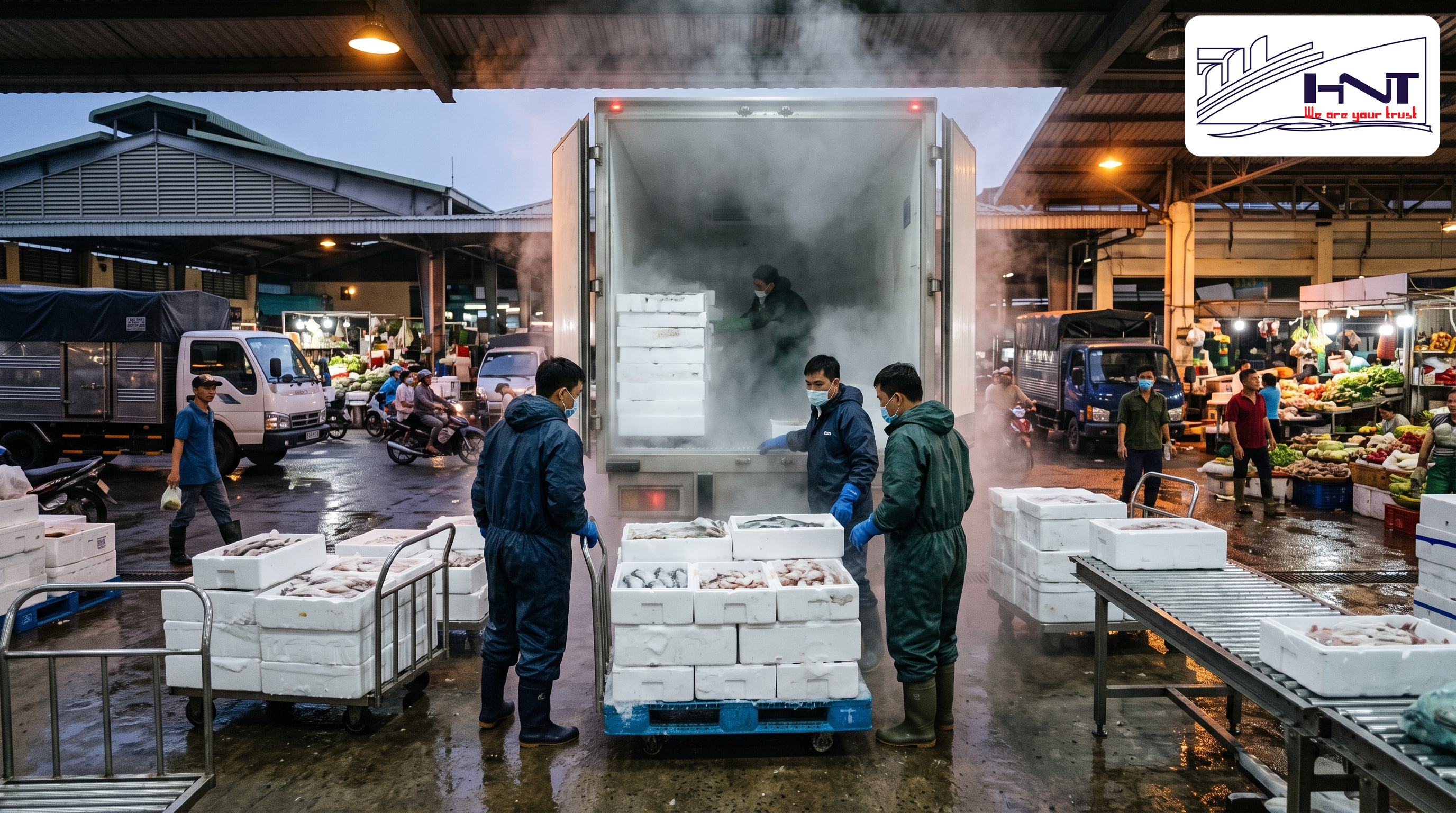
The first requirement for transporting frozen seafood is to keep products consistently frozen. For frozen seafood, temperature control is not limited to the refrigeration unit. It also involves the product core, packaging, warehouse door opening times and container integrity. Therefore, frozen seafood transportation must begin with pre-loading inspections.
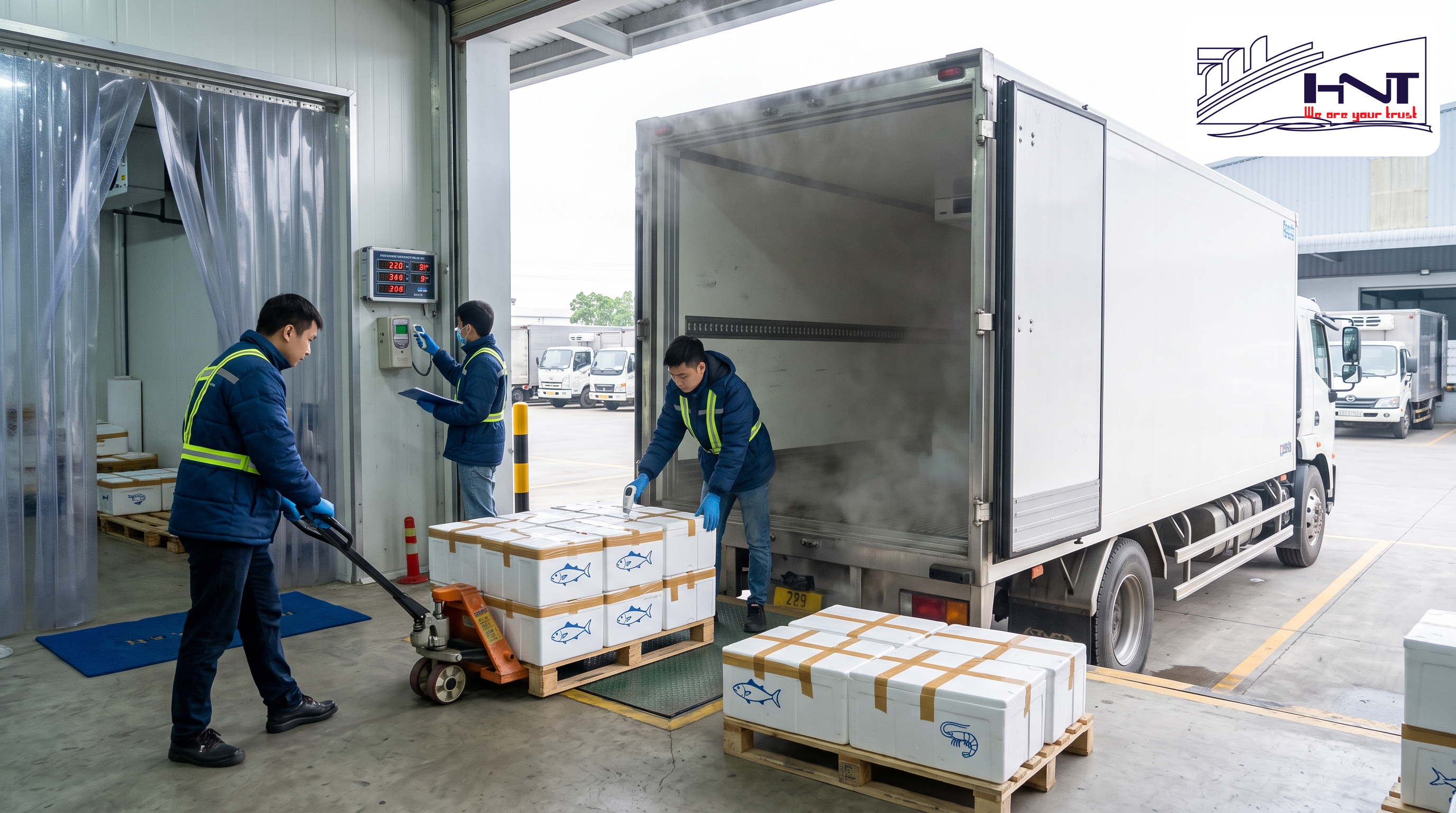
Temperature thresholds and quality control points
For frozen seafood transportation, the technical regulation QCVN 02-01:2009/BNNPT requires frozen seafood to reach a temperature of minus 18°C or below at the product core. Storage facilities typically operate at around minus 20°C, with a tolerance of approximately 2°C. HNT LOGISTICS recommends measuring the product core temperature before loading the container, as the temperature at the outer surface of the packaging does not reflect the full extent of the risk.
- Check the product core temperature using a calibrated probe before moving the goods out of cold storage.
- Keep warehouse and container doors open for the shortest possible time to minimise temperature shock.
- Use cold-resistant, moisture-proof packaging that does not obstruct airflow.
- Record photographs of the seal, container number, seal number and loading time.
- Install an independent temperature data logger for high-value or long-distance shipments.
| Cargo type | Recommended temperature | Main risks | Control point |
|---|---|---|---|
| Frozen shrimp | Minus 18 to minus 22°C | Surface thawing | Measure product core temperature |
| Fish fillets | Minus 20°C | Cold dehydration | Hermetically sealed packaging |
| Frozen squid | Minus 18°C or lower | Discolouration | Limit Door Opening |
| Processed Blue Swimming Crab | Minus 22 Degrees Celsius | Loss of Flavor | Continuous temperature monitoring |
For example, Minh Hai Food Company in Ca Mau consolidates 18 tons of whiteleg shrimp for shipment to Hai Phong Port. When the product core temperature is measured before loading, three pallets are found to be only at minus 14 degrees Celsius. The company returns the cargo to the freezing chamber for four hours, preventing quality complaints at the receiving warehouse.
In another example, Bien Xanh Company in Da Nang ships frozen squid to Hanoi. The operations team installs an additional independent temperature logger inside the container. The post-trip temperature chart shows a stable temperature of minus 20 degrees Celsius, helping the sales department demonstrate product quality to supermarket customers.
Practical summary: Confirm temperature standards in writing before booking the vehicle rather than relying on verbal agreements.
Frozen Seafood Transportation Process from Warehouse to Port
An effective frozen seafood transportation process must address risks at every handling point. North-South frozen cargo typically passes through warehouses, refrigerated trucks, container yards, ports, and receiving tractors. Each handling point can potentially increase the temperature. Therefore, frozen seafood transportation requires a schedule specifying cut-off times, power connection times, and responsible personnel.
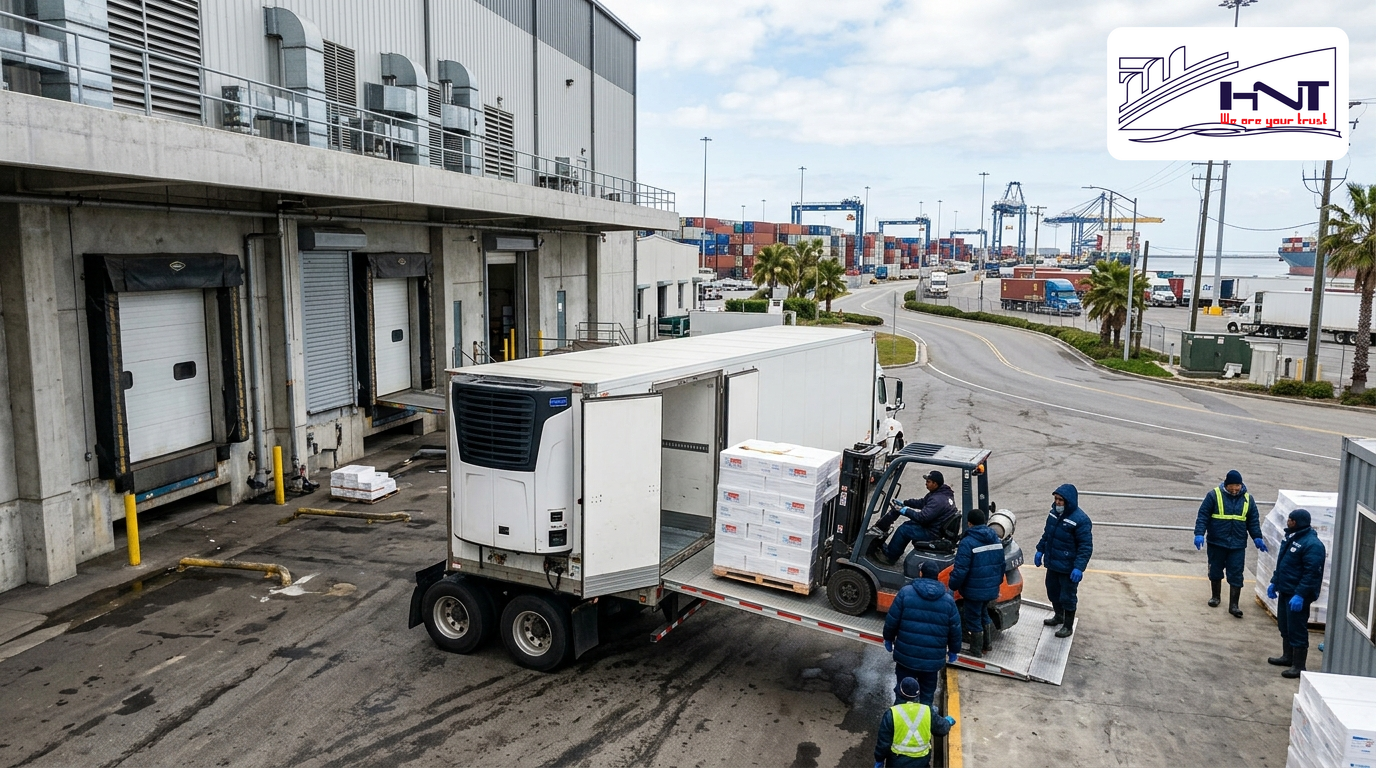
Operational Steps Before the Truck Leaves the Warehouse
- Confirm the type of cargo, number of packages, net weight, and temperature requirements on the transportation order.
- Inspect the empty container, door seals, air circulation floor, and refrigeration unit maintenance schedule.
- Pre-cool the container to the required set temperature before loading begins.
- Arrange pallets to leave sufficient airflow channels and ensure cargo does not exceed the red loading limit inside the container.
- Seal the container, prepare a photographic inspection record, and send the seal number to the receiving party.
- Monitor location, temperature, and vehicle stop durations throughout the journey.
| Phase | Task | Person in charge | Risk if omitted |
|---|---|---|---|
| Before Loading | Pre-trip refrigeration | Warehouse and Carrier | Temperature Rise at the Start of the Journey |
| During Loading | Maintain Airflow | Warehouse monitoring | Localized hot spots |
| Leaving the Warehouse | Check the Seal and Take Photos | Coordinate | Responsibility Disputes |
| Entering the Port Yard | Connect to Power on Schedule | Port agent | Loss of Refrigeration While Waiting |
Based on HNT LOGISTICS' experience, cargo on the Ca Mau – Cat Lai Port route should be consolidated at night when ambient temperatures are lower. For 22 tons of frozen fish, this approach to frozen seafood transportation reduces warehouse door opening time by 35 minutes. The container temperature also stabilizes more quickly after loading is completed.
A factory in Binh Duong previously transported frozen seafood and frozen shrimp from North to South to Hai Phong Port using refrigerated trucks for intermediate transfers. After switching to direct transportation in refrigerated containers, the company eliminated one transshipment operation. Delivery and receiving time was reduced to 58 hours, with no temperature deviations recorded.
Practical summary: The transportation schedule must include backup power connection times at the container yard, especially before public holidays.
Choosing Refrigerated Containers for Seafood and Controlling Temperature
In frozen seafood transportation, refrigerated containers do not deep-freeze cargo that is still warm. They only maintain the temperature that the products have already reached. Therefore, businesses should treat containers as mobile cold storage facilities. Choosing the wrong capacity, airflow configuration, or return-air mode can make long-distance seafood preservation less stable.
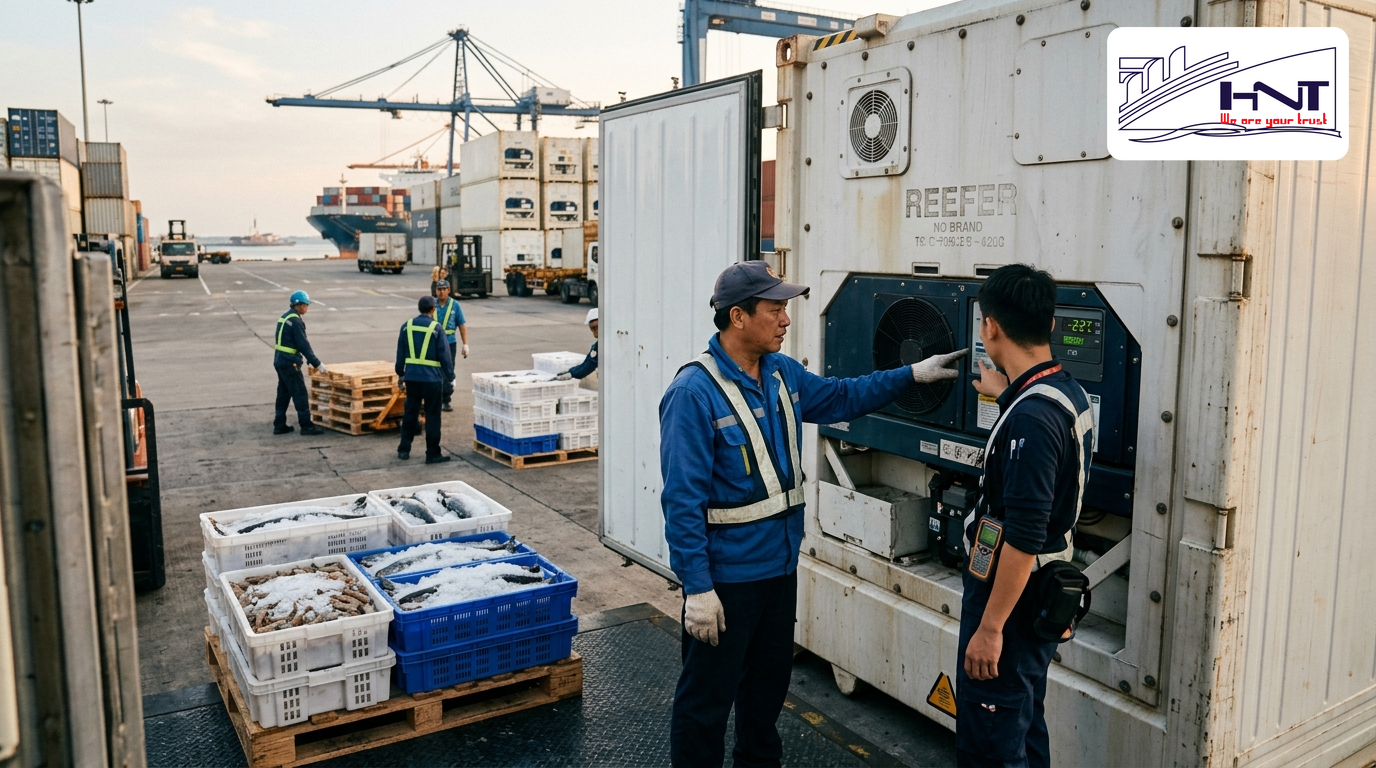
Suitable Refrigerated Container Configurations for Different Shipments
- Choose a 20-foot container for heavy cargo, short-distance routes, or receiving locations with limited yard space.
- Choose a 40-foot high-cube container for bulky shipments with numerous foam boxes and a need to optimize costs.
- Prioritize refrigeration units with clear maintenance records, reliable error reporting, and stable sensors.
- Do not stack cargo above the loading limit, as this will obstruct return airflow.
- Use spacer materials to minimize cargo shifting during long journeys.
| Criteria | 20-foot container | 40-Foot High-Cube Container | Recommendation |
|---|---|---|---|
| Heavy Payload | Suitable | Payload Verification Required | Suitable for Block-Frozen Fish |
| Large volume | Restrictions | Suitable | Suitable for Foam Boxes |
| North-South Routes | Flexible | Optimize Cost per Package | Compare Both Options |
| Small Receiving Area | Easy Maneuverability | Requires a Spacious Yard | Conduct a Site Survey First |
For example, Song Tien Seafoods Company in Tien Giang transports 16 tons of pangasius fillets to Hai Phong Port. The shipment uses a 20-foot container because of its heavy payload. By inspecting the airflow floor and pre-cooling the container, the temperature is maintained at minus 20 degrees Celsius throughout the route.
In another example, Nam Trung Seafood Company in Khanh Hoa packs 1,900 boxes of frozen cooked shrimp. The warehouse team uses a 40-foot high-cube container and leaves an airflow channel at the rear of the container. As a result, the cargo does not experience localized temperature increases, even though the waiting time for power connection at the yard extends to 70 minutes.
Practical summary: Request photos of the red loading line, airflow floor, and control panel before loading.
Documentation and Customs Procedures for Frozen Seafood Transportation
Documentation in frozen seafood transportation is just as important as the container in determining delivery speed. For export cargo, businesses must standardize product descriptions, HS codes, quantities, temperatures, and delivery terms. Frozen seafood transportation can incur additional charges if information differs between the customs declaration, commercial invoice, packing list, and Bill of Lading.
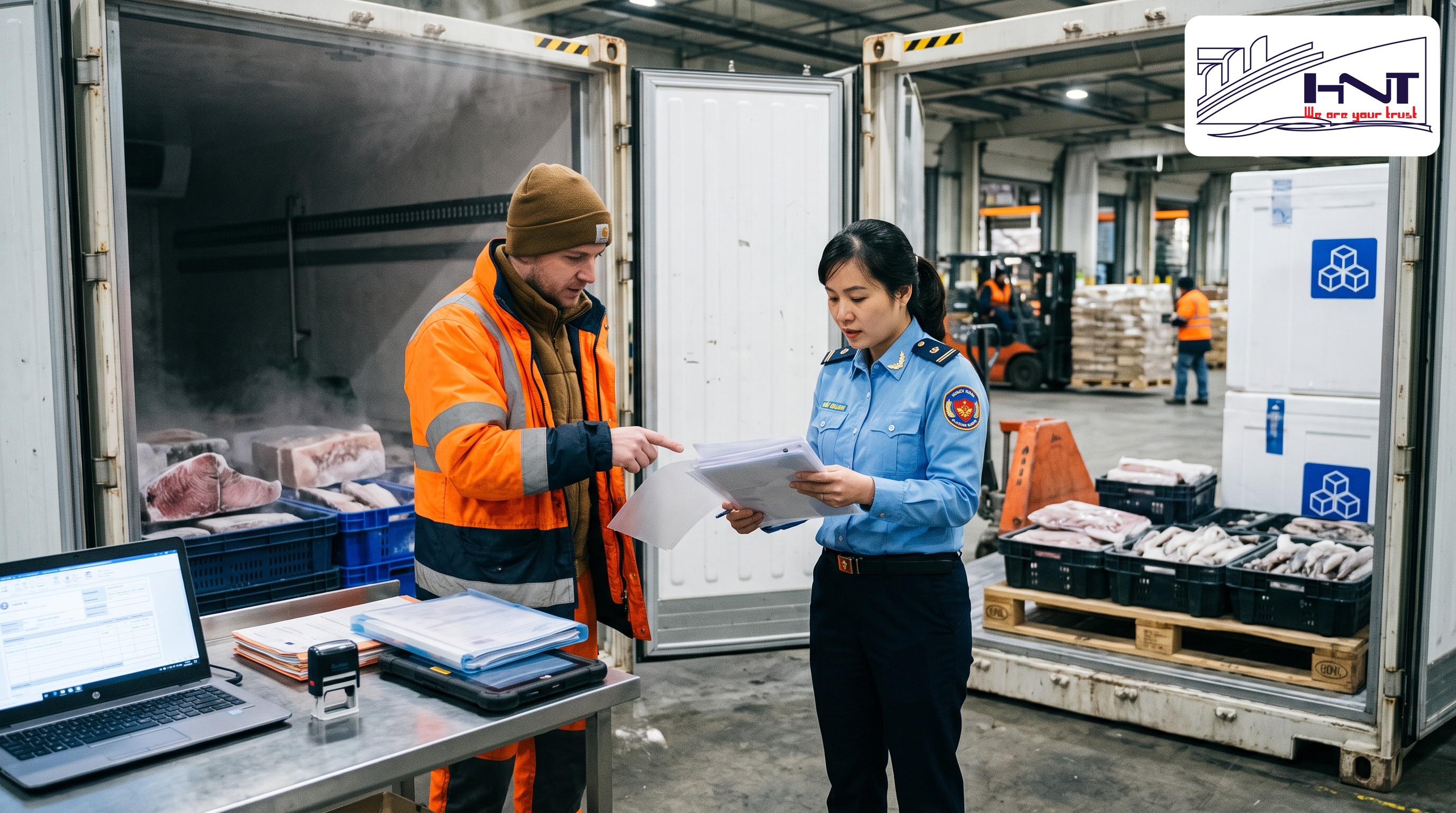
Documents to Prepare Before the Loading Date
- Electronic customs declaration through the VNACCS/VCIS system, with the correct export procedure code.
- Commercial invoice, packing list, and contract if the buyer requires verification.
- Animal quarantine certificate or health certificate for exported seafood.
- Certificate of Origin (C/O) when seeking preferential treatment under trade agreements.
- Bill of Lading showing the correct port of loading, port of discharge, temperature, and container number.
- Traceability records, particularly for shrimp, pangasius, and products entering the United States market.
| Documentation | Purpose | Inspection Timing | Common errors |
|---|---|---|---|
| Customs declaration form | Customs clearance | Before cargo cutoff | Incorrect HS Code |
| Packing | Verify Package Details | Before loading goods | Weight discrepancy |
| Inspection certificate | Meet Market Requirements | Before Vessel Departure | Incorrect product name |
| Bill of lading | Receive goods | Post-shipment | Missing Temperature Information |
The US FDA requires imported seafood to meet the same safety standards as domestic products, including hazard controls based on HACCP principles. Therefore, shipments to the United States need clear temperature records. This is an appropriate point to incorporate HNT LOGISTICS' customs clearance service.
For example, Dai Duong Company in Can Tho exports pangasius to Long Beach. The initial documentation contains inconsistent product names between the commercial invoice and Bill of Lading. The documentation team makes corrections six hours before the shipping cut-off, helping the company avoid Bill of Lading amendment fees and maintain its original vessel schedule.
In another example, Bac Hai Company in Quang Ninh sends frozen squid to Ho Chi Minh City for re-export. The company initially fails to prepare the required quarantine certificate. By completing the document according to the checklist before the truck enters the container yard, waiting time is reduced from one day to just four hours.
Practical summary: Verify all documents using a standardized product naming format before scheduling transportation.
Optimizing North-South Frozen Seafood Transportation Costs
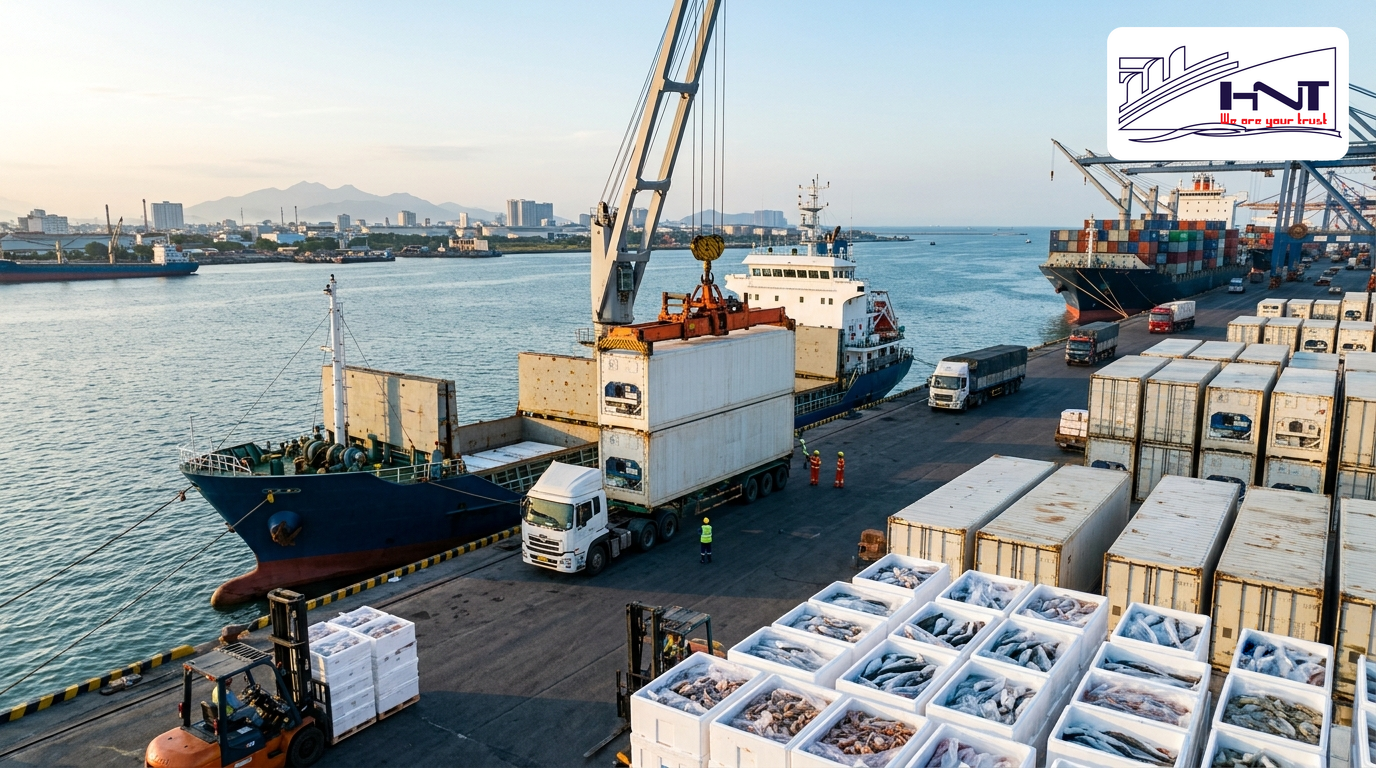
Frozen seafood transportation costs include more than trucking or ocean freight charges. For frozen seafood transportation, businesses must also calculate electricity connection fees, lifting and handling charges, storage fees, container demurrage and detention charges, and the risk of shipment cancellations. When freight rates fluctuate, booking vessels and containers early helps reduce unexpected expenses.
How to Reduce Costs Without Compromising Cold Chain Safety
- Book containers before peak seasons to avoid refrigerated equipment shortages and emergency surcharges.
- Consolidate cargo on fixed days, but do not mix products requiring different temperatures.
- Compare direct road transportation with routes combining inland and maritime transport.
- Negotiate free yard storage and container detention periods when making reservations.
- Monitor weather forecasts because storms and heavy rain can increase waiting times at container yards.
- Standardize documentation to avoid Bill of Lading amendment fees and customs declaration adjustment charges.
| Cost item | When it occurs | Control method | Impact |
|---|---|---|---|
| Yard Power Connection | Waiting for a Vessel or Truck | Accurate Scheduling | Maintain Stable Refrigeration |
| Handling | Entering and Leaving the Yard | Combine Operations | Reduce Handling Steps |
| Container detention | Late Container Return | Negotiate Free Time | Reduce fines |
| Document correction | Incorrect Information | Check Before the Cut-Off | Maintain vessel schedule |
According to experts at HNT LOGISTICS, shipments heading to Northern Vietnam should have backup plans in case of congestion on National Highway 1A or port overloading. For temperature-controlled shipments, the cheapest option is not necessarily the safest. The right solution is one that maintains temperature, documentation accuracy, and delivery schedules.
For example, Hoa Phat Seafood Company in Bac Lieu previously transported 24 tons of shrimp to Hai Phong using two smaller trucks. After switching to a single 40-foot high-cube container, the cost per box decreased by 11%. The company continued to maintain a temperature of minus 20 degrees Celsius by arranging the cargo according to the correct airflow pattern.
In another example, Mekong Blue Company in Soc Trang chose a vessel departing 12 hours later to secure a reliable power connection at Cat Lai Port. This decision increased some domestic transportation costs but avoided the risk of thawing. Total complaint-related costs were reduced to zero.
Practical summary: Cost optimization must begin with a risk map, not with the lowest quotation.
Conclusion: North-South Frozen Seafood Transportation
North-South frozen seafood transportation involves managing temperature, time, documentation, and responsibility simultaneously. Businesses need to manage every handling point rather than simply hiring refrigerated trucks. As export markets grow and container freight rates fluctuate, pre-shipment preparation will determine profit margins.
- Measure the product core temperature before loading rather than relying solely on warehouse temperature readings.
- Pre-cool containers and inspect the airflow floor, doors, red loading line, and seal number.
- Choose the right container type based on payload, volume, and receiving yard conditions.
- Standardize customs declarations, invoices, packing lists, certificates, and Bills of Lading.
- Allow backup time for power connections at container yards when shipping through Cat Lai Port or Hai Phong Port.
- Calculate all electricity connection fees, yard storage charges, container detention fees, and document amendment costs.
- Keep all photos, inspection records, and temperature data to protect your interests in the event of a dispute.
HNT LOGISTICS is a trusted freight forwarding and logistics partner for Vietnamese exporters requiring transportation of seafood, frozen shrimp, processed seafood, and high-value refrigerated cargo nationwide. For frozen seafood transportation, our team supports schedule planning, container selection, document verification, and cold chain risk management for every North-South route. As a professional transportation provider, HNT LOGISTICS is committed to delivering comprehensive supply chain solutions, helping Vietnamese businesses confidently conquer global markets. Contact us today at 8A Hoang Minh Giam, Ho Chi Minh City or via the marketing email at hntshipping.com for quotation support!