
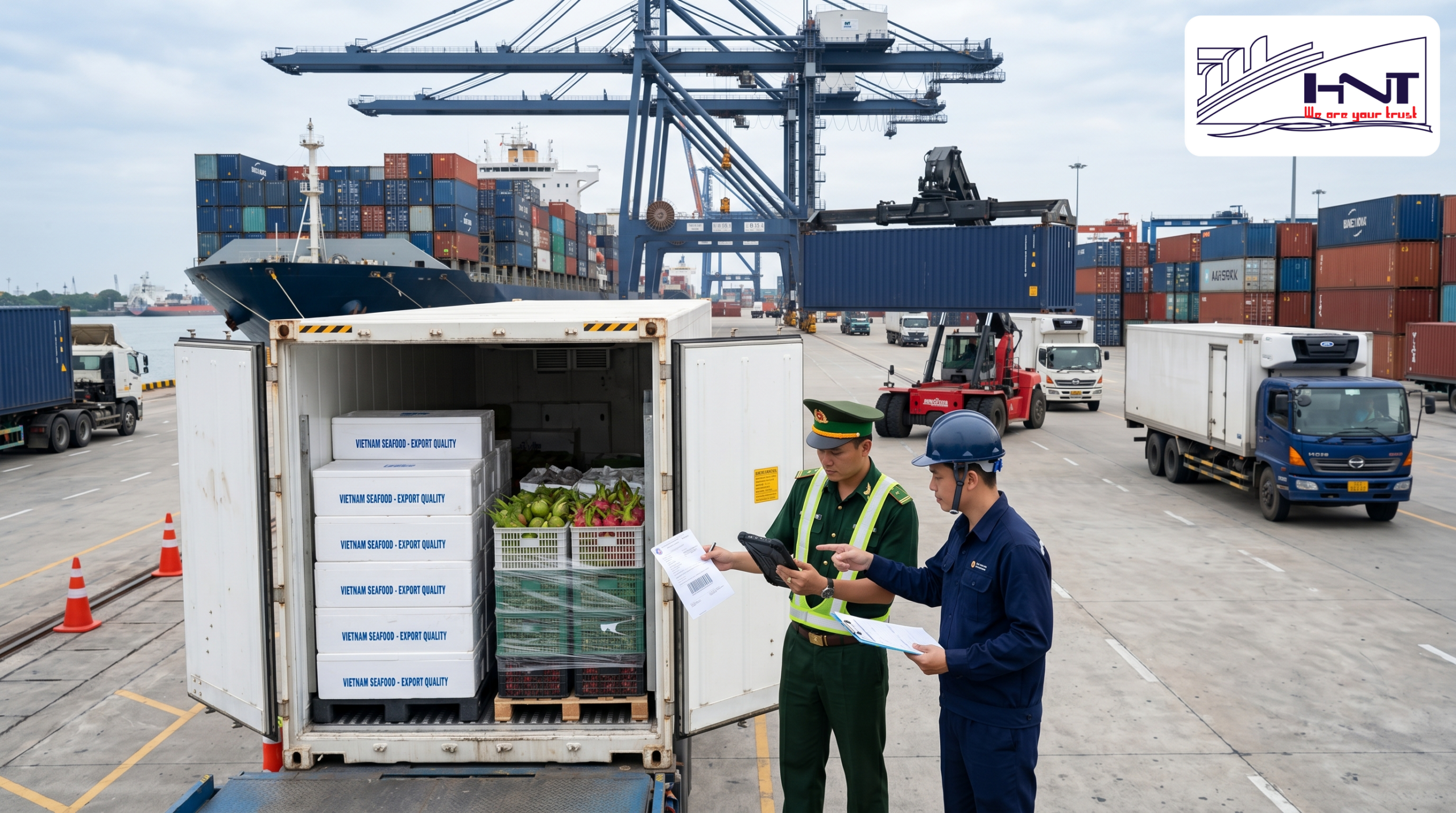
Export procedures are a major bottleneck for many businesses as shipping schedules change continuously, specialized inspection requirements increase, and customs regulations become increasingly digitized.
According to trade and logistics reports for the 2026 period, Vietnam's exports continue to grow strongly, while the seafood industry has surpassed the milestone of 11 billion USD in export revenue. At the same time, fluctuations in sea freight rates and local container shortages at Cat Lai force businesses to optimize customs declaration processes to avoid incurring storage costs.
This article provides a detailed guide to export-import customs declaration procedures, required documents, how to handle declaration channel classification, and practical experiences to help businesses reduce customs clearance risks.
Export procedures and customs regulations businesses need to update
The role of export procedures in the international supply chain
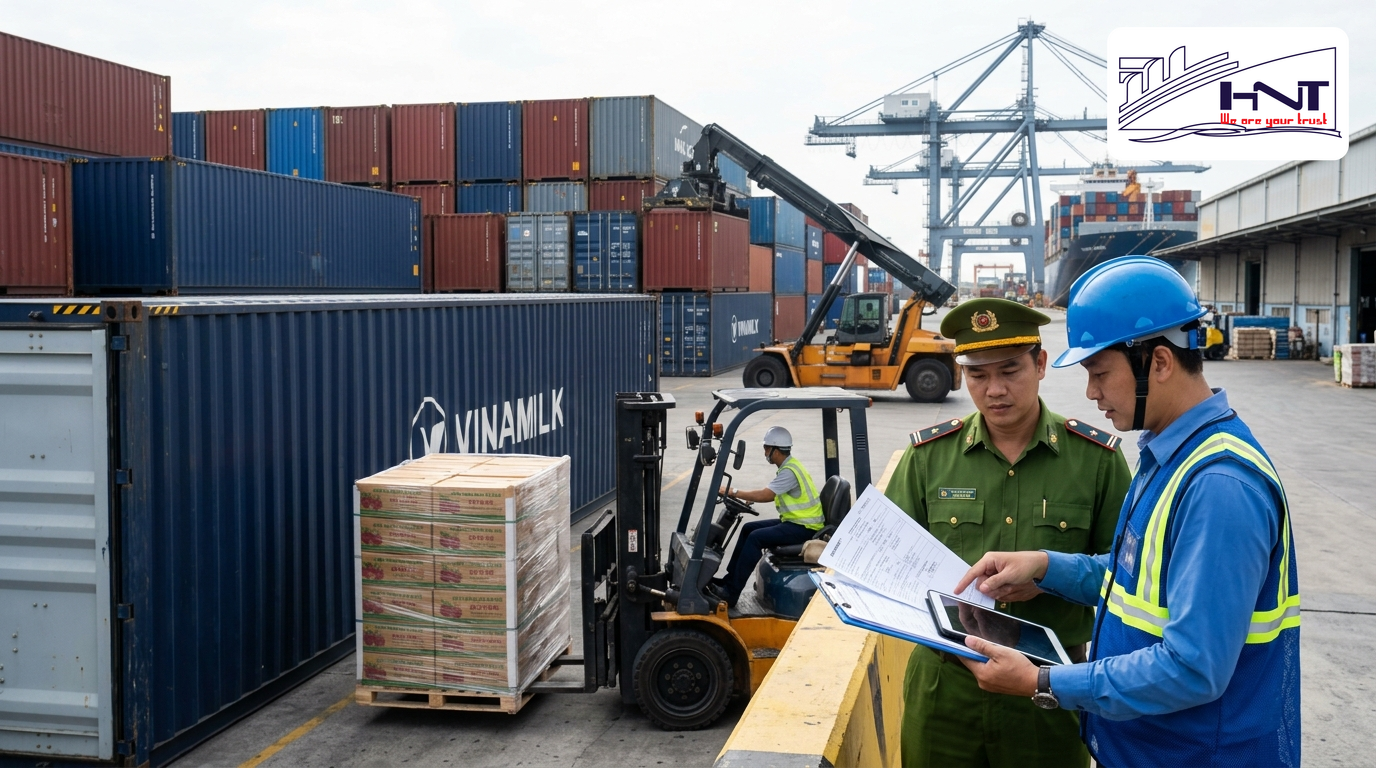
Export procedures are a mandatory legal step before goods are loaded onto international ships or aircraft. The quality of declaration directly affects clearance time, logistics costs, and delivery reputation.
For agricultural, seafood, and fresh food exporters, delays of a few hours in clearance can reduce product quality and increase cold chain costs.
Legal documents to monitor for the 2026–2026 period
Businesses need to monitor the Customs Law, Decree 08/2015/ND-CP, related amendments, and the electronic customs data management system. Recent changes focus on digitizing records and risk management based on data.
According to guidance from customs authorities, many tax management procedures are being moved to electronic form to reduce paperwork and speed up processing.
Export-import product codes and declaration channel classification
Each shipment must declare the correct product code. Choosing the wrong code can lead to tax reassessment or requests to amend documents.
| Content | Purpose | Risks when incorrect | Impact |
|---|---|---|---|
| Product code | Transaction identification | Amend declaration | Customs clearance delay |
| HS Code | Tax calculation | Tax recovery | Increase costs |
| Care of | Tax incentives | Loss of incentives | Tax increase |
| Invoice | Goods value | Recheck | Prolonged processing |
- Check the validity of the foreign trade contract before opening the declaration.
- Cross-check the HS code accurately with the actual goods description.
- Review Incoterms conditions applied in the contract.
- Confirm shipping schedule before registering transport information.
- Standardize electronic documentation sets to reduce data entry errors.
- Check quarantine or specialized certification requirements.
For example, Mekong Green Fruit Company in Tien Giang exports mangoes to Shanghai. After standardizing the HS code and quarantine documents, customs clearance time decreased from 18 hours to 7 hours.
A coconut processing enterprise in Ben Tre reduced 12% of storage yard costs by completing documentation before the container entered Cat Lai Port.
Based on HNT LOGISTICS experience, businesses should review the document set at least 48 hours before ETD to reduce the risk of being assigned to the red channel during peak export season.
A–Z export customs procedures for businesses

Prepare documents before opening the customs declaration
Export customs procedures require a complete set of documents including the contract, commercial invoice, packing list, booking, specialized permits if applicable, and certificate of origin.
Businesses need to synchronize information across all documents to avoid data discrepancies.
Declare on the VNACCS system
After data entry, the system will automatically assign the shipment to the green, yellow, or red channel. Each channel has a different processing procedure.
Physical inspection of goods
For the red channel, customs authorities may require a physical inspection of the container. Proper cargo packing helps shorten the inspection time.
Notes for refrigerated goods and seafood
Exports of seafood and refrigerated agricultural products must comply with the quarantine standards and storage temperature requirements of each market.
| Cargo type | Documentation | Additional requirements | Risk |
|---|---|---|---|
| Frozen shrimp | Health Certificate | Cold chain | Import rejection |
| Dragon Fruit | Phytosanitary | Quarantine | Cargo hold |
| Durian | Planting area code | Traceability | Return shipment |
| Pangasius | Health Certificate | Consolidated (LTL) | Damaged |
- Prepare complete electronic documents before the cargo loading date.
- Accurately declare data on the VNACCS system.
- Submit documents as required by customs authorities.
- Complete specialized inspections if applicable.
- Receive customs clearance results and finalize the declaration.
- Move the cargo into the supervised area of the seaport or airport.
Seafood Delta Company in Ca Mau exported shrimp to Rotterdam in a 40HC refrigerated container. After implementing a three-layer document verification process, the green-channel declaration rate increased from 58% to 82%.
A dragon fruit exporter in Long An reduced customs clearance waiting time by nearly 20 hours by completing quarantine documents before the container arrived at the port.
HNT LOGISTICS recommends seafood exporters prepare quarantine documents and certificates of origin from the booking stage to avoid additional container storage charges.
Import customs procedures and cargo delivery process
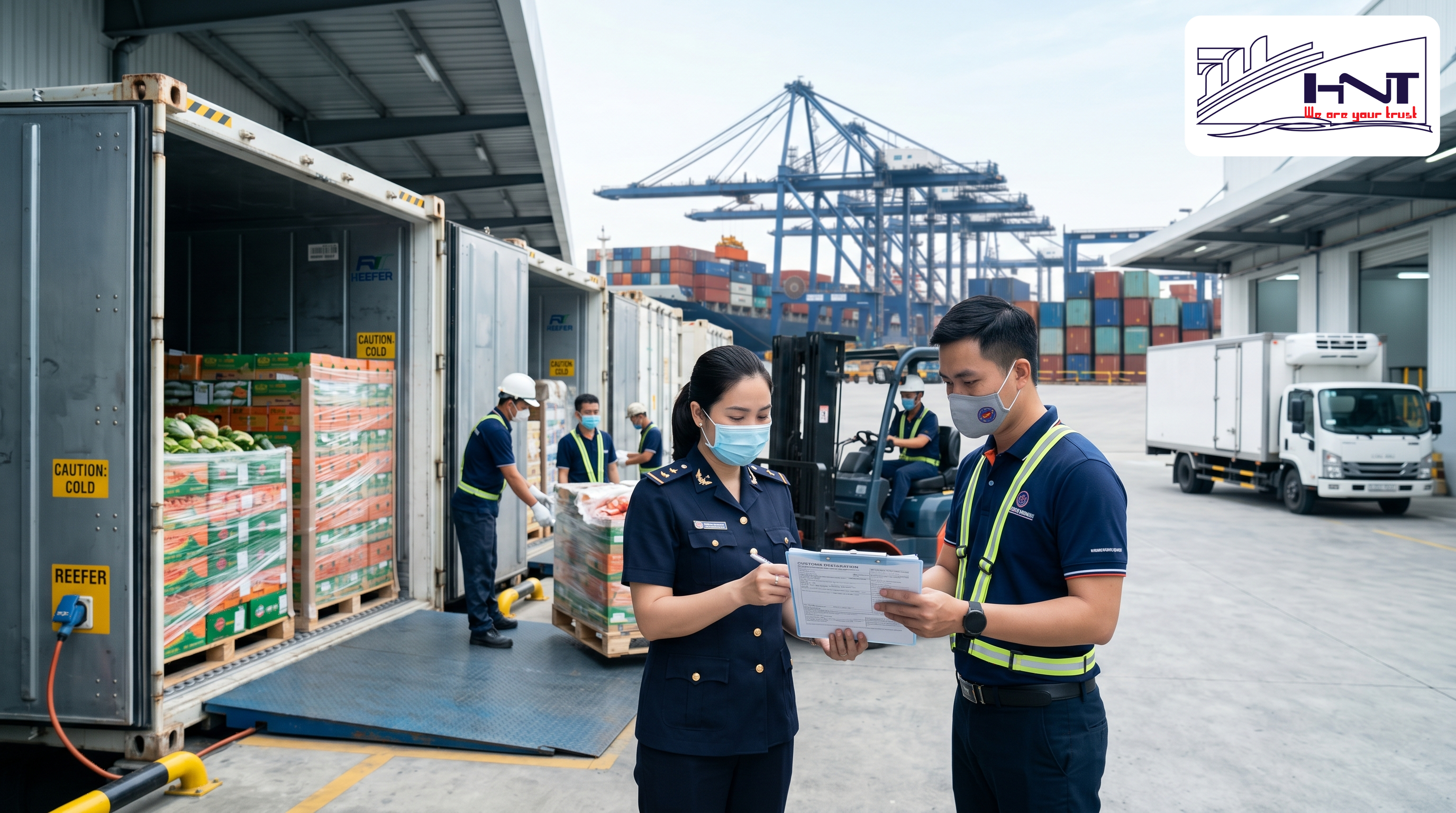
Required documents for import customs procedures
The document set usually includes the bill of lading, invoice, packing list, contract, certificate of origin, and import permit if the goods are subject to specialized management.
Customs procedures for imported goods requiring specialized inspection
Many food products, machinery, or chemicals require quality inspection before customs clearance.
Tax calculation and related fees
Businesses must correctly determine the customs value, import duty, VAT, and applicable port charges.
Cargo pickup process at the port
After customs clearance, the business exchanges the delivery order, pays local charges, and receives the container.
| Step | Execution | Documentation | Result |
|---|---|---|---|
| 1 | Receive Arrival Notice | AN | Document preparation |
| 2 | Open customs declaration | Invoice | Channeling |
| 3 | Pay taxes | Customs declaration | Customs clearance |
| 4 | Exchange delivery order | Bill of lading | Receive goods |
- Check the bill of lading information immediately after the shipping line sends the Arrival Notice.
- Compare the HS Code with the product technical documentation.
- Prepare funds to pay taxes before the cargo arrives at the port.
- Register for specialized inspection early to avoid congestion.
- Monitor the shipping line's container free time.
- Check the seal condition before receiving the cargo.
A mechanical engineering company in Binh Duong imported CNC machines from Busan and saved three days of customs clearance by registering for quality inspection before the vessel arrived.
An electronics company in Dong Nai reduced container storage charges by more than 15 million VND by completing its tax obligations on the day it received the Arrival Notice.
Import customs declaration procedures and risks to avoid
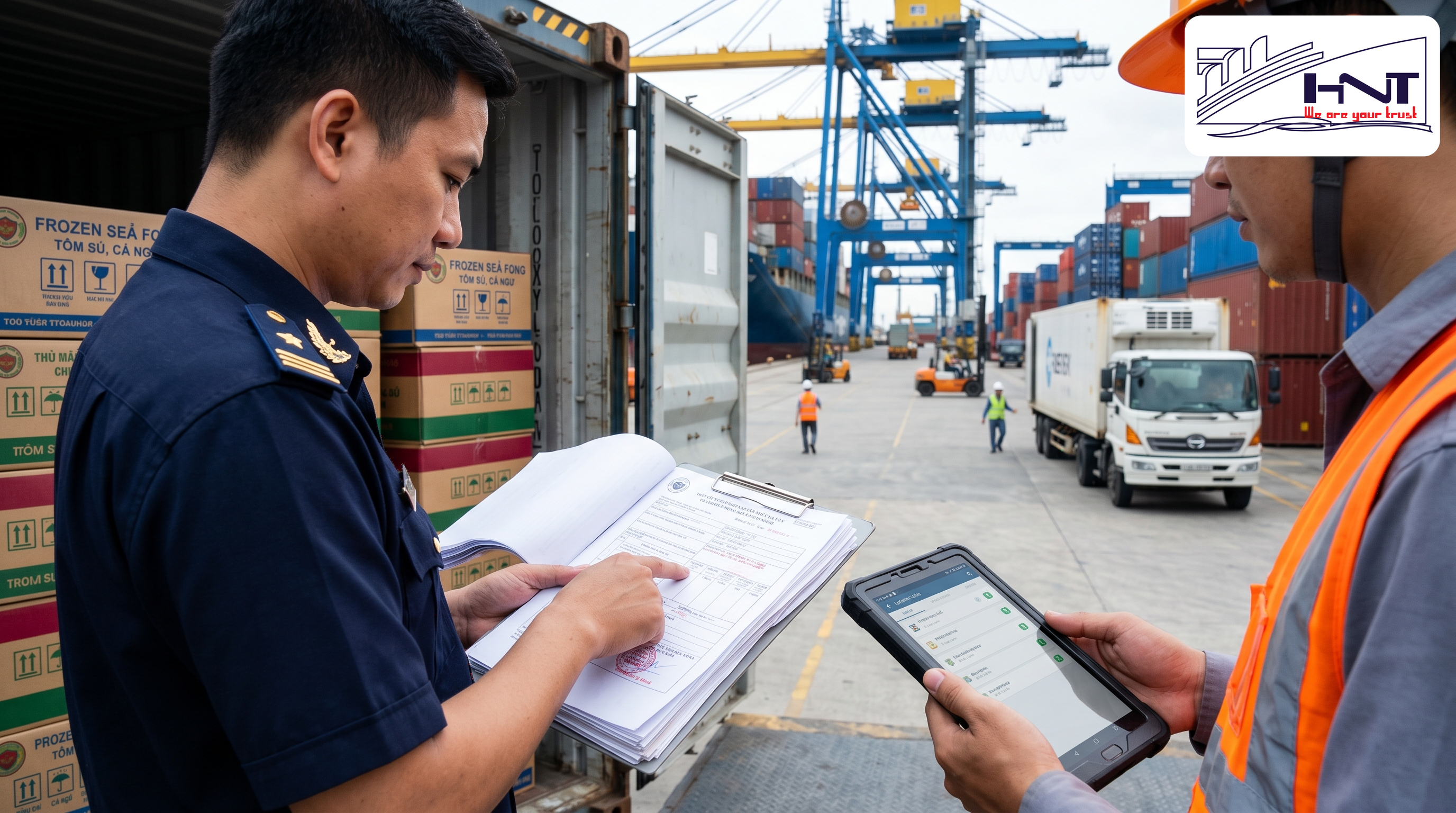
HS Code errors
This is a common cause of additional tax assessment. Businesses should retain technical documents and product catalogs to substantiate the HS code.
C/O management and FTA incentives
A valid certificate of origin significantly reduces import tax costs under many trade agreements.
Demurrage and Detention
Extended processing time can result in substantial container detention and storage charges.
Strategies to reduce customs clearance time
Businesses should standardize declaration data, digitize documents, and closely coordinate with logistics providers.
- Review HS Codes using the internal database before declaration.
- Check the validity of the C/O before the customs declaration registration date.
- Monitor the container free time of each shipping line.
- Standardize the internal document approval process.
- Use customs brokerage services for complex shipments.
- Store electronic documents for post-clearance audits.
A plastic raw material importer in Hai Phong reduced declaration errors by 70% after building an internal HS Code library.
A food company in Ho Chi Minh City avoided more than 40 million VND in Demurrage charges by completing specialized inspections before the vessel arrived.
Based on HNT LOGISTICS experience, establishing a centralized document management process significantly reduces the risk of declaration amendments and post-clearance tax reassessments.
Efficient export procedures and the trend of digital customs
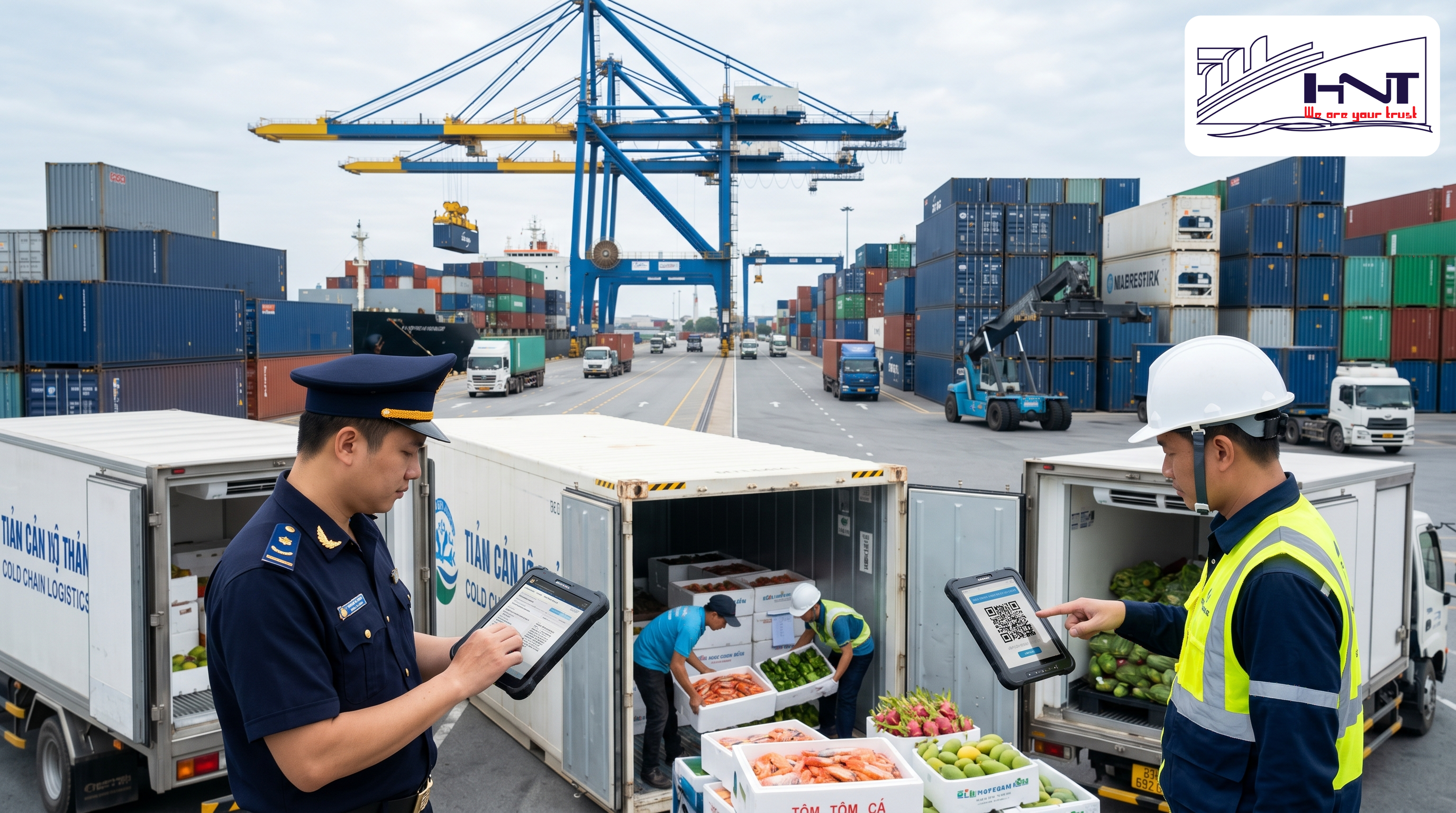
Build an internal document process
Businesses should standardize document templates for each export market.
Coordinate with the forwarder and customs broker
Coordination among the cargo owner, shipping line, and customs brokerage provider significantly reduces operational errors.
Apply data and automation
New changes in customs management are moving toward electronic data and reducing paper documents.
Logistics trends 2026
Ocean freight rates continue to fluctuate due to changes in container vessel supply and demand and global geopolitical factors. Businesses should closely monitor vessel schedules and production plans.
- Build a standard document checklist for each export product group.
- Check vessel schedules and cut-off times before cargo loading.
- Use full-service customs declaration for high-value shipments.
- Provide regular training for import-export staff on new regulations.
- Implement logistics management and electronic document software.
- Establish a post-clearance risk control mechanism.
A fruit company in Dong Thap increased its on-time delivery rate to 96% after implementing an electronic document management system.
A pangasius exporter in An Giang reduced logistics costs by 14% by optimizing booking schedules and submitting customs declarations early.
According to experts at HNT LOGISTICS, businesses should combine customs procedure consulting services import-export with international transportation planning to optimize both time and costs.
Export procedures are no longer just a mandatory declaration step but have become a key factor determining supply chain efficiency. Businesses need to continuously update customs regulations, standardize documentation, and proactively manage risks.
- Correct HS Code classification helps reduce the risk of additional tax assessments.
- Standardized documentation increases the fast customs clearance rate.
- Effective C/O management helps optimize tariff incentives.
- Early specialized inspection helps reduce storage charges.
- Document digitization helps reduce declaration errors.
- Close coordination with the forwarder helps control transportation schedules.
- Early logistics planning helps optimize international costs.
To efficiently handle export procedures, export customs procedures, and complex import processes, businesses should work with an experienced logistics partner. HNT LOGISTICS is a trusted partner of many Vietnamese exporters of agricultural products, seafood, and manufactured goods in optimizing customs declarations, international transportation, and supply chain management.