


PTI inspection of refrigerated containers is often overlooked when shipping schedules are tight, but a small sensor error can ruin an entire shipment of durians, frozen shrimp, or exported dragon fruit.
Cold-chain demand is increasing alongside Vietnam's fresh-goods exports. The General Statistics Office recorded seafood exports of approximately USD 5.8 billion in the first six months of 2026, up 12.7% year on year. The Government News also reported that fruit and vegetable exports reached approximately USD 8.56 billion in 2026 and could reach USD 9.5 billion during 2026. .
Against a backdrop of volatile ocean freight rates, Drewry recorded the global container index at USD 4,473 per 40-foot container on August 27, 2026. Therefore, a compliant refrigerated container does more than protect the cargo. It also protects delivery schedules, contractual reputation, and exporters' cash flow.
What is refrigerated container PTI inspection and why does it determine cold-chain safety
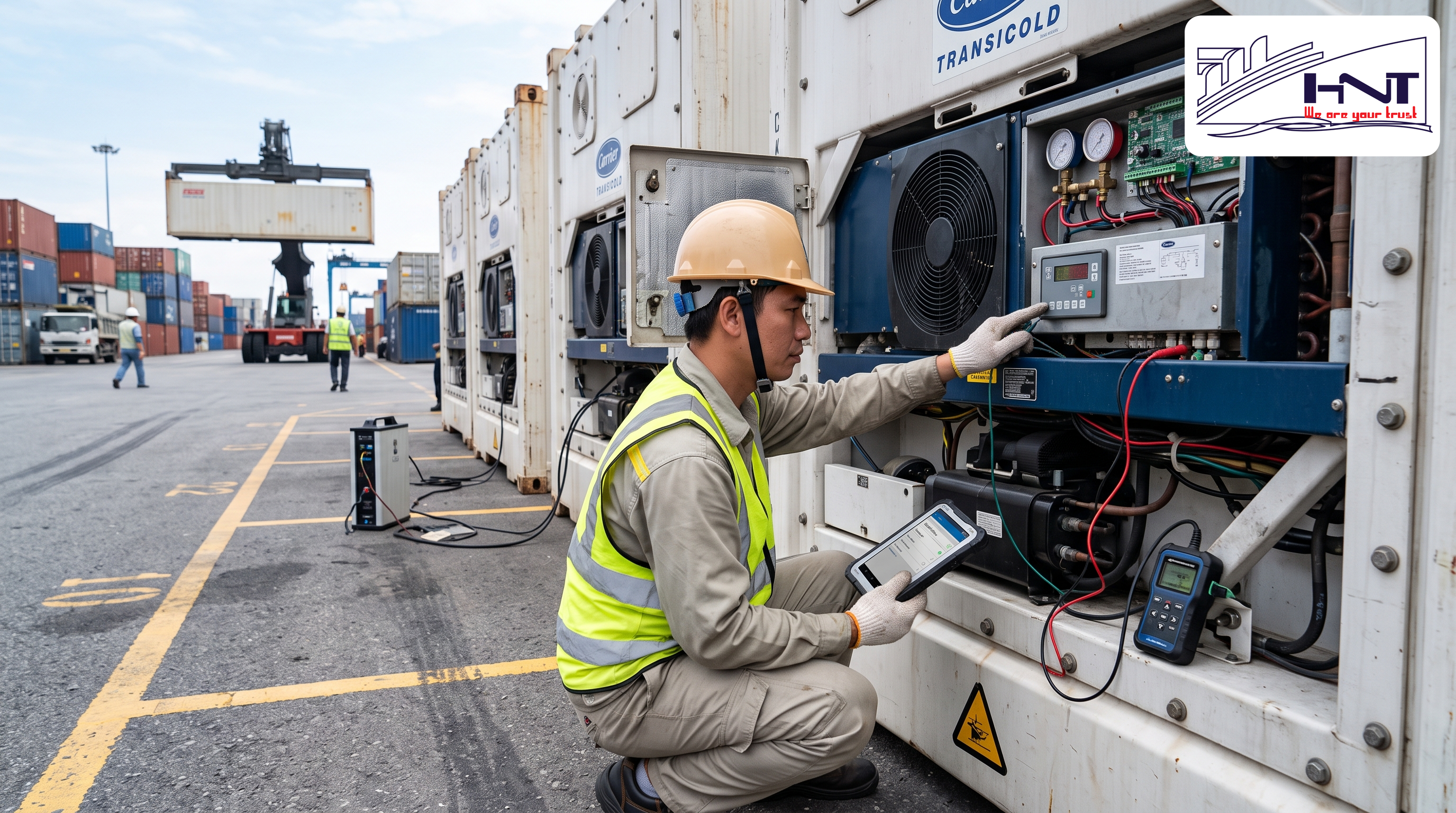
Refrigerated container PTI inspection is a pre-trip inspection performed on an empty refrigerated container. The objective is to confirm that the container body, refrigeration unit, sensors, controller, and airflow meet operating conditions. PTI does not replace quarantine inspection, but it helps reduce the risk of temperature loss before loading onto the vessel.
When should PTI be requested before loading cargo
Businesses should request PTI when shipping temperature-sensitive goods, transporting cargo over long distances, or serving strictly controlled markets. For example, fresh fruit shipped to Shanghai often needs stable temperature control from the loading warehouse onward. Frozen seafood shipped to the United States, meanwhile, requires continuous temperature evidence to reduce disputes upon delivery.
Standards that refrigerated container PTI should follow
PTI standards for containers are usually based on shipping line guidelines, shipper requirements, and the depot's technical procedures. In addition, export documentation must still comply with the Customs Law, Decree 59/2018/ND-CP, and Circular 39/2018/TT-BTC regarding customs declarations, documentation, and customs supervision .
- Confirm that the container is the correct type and size and that its CSC inspection remains valid as required by the shipping line.
- Check that the container body has no holes, severe dents, unusual odors, or chemical residues.
- Run the refrigeration unit for sufficient time to assess pull-down speed and temperature stability.
- Compare the set temperature with contract requirements, storage guidelines, and cargo certificates.
- Keep photos, the container number, the expected seal number, and the PTI report for claim purposes.
- Check the ventilation openings, floor drainage, and door gasket condition before accepting the empty container.
| Category | Inspection objective | Risks if ignored | Evidence to save |
|---|---|---|---|
| Container body | No holes, no severe deformation | Temperature loss, water entering the cargo | Photos of all four sides of the container |
| Refrigeration unit | Required pull-down performance achieved | Cargo temperature rises while waiting in the yard | Test-run report |
| Sensors | Accurate temperature readings | Data discrepancies during claims | Photo of the controller display |
| Door gasket | Airtight, no light leakage | Ice buildup, increased power consumption | Photos of the door edges |
| Floor drainage | Clear, no accumulated dirt | Mold, unusual odors | Photos of the T-floor |
Practical example: Minh Phat Fruit Company in Tien Giang shipped 18 tons of durians to Shanghai Port via Cat Lai Port. When requesting a refrigerated container PTI 24 hours in advance, the depot discovered a leaking door gasket. The container was replaced immediately, helping the company maintain a stable 13°C throughout the journey.
Practical example: Dai Nam Seafood Factory in Ca Mau shipped frozen shrimp to Long Beach. The operations team discovered that the data logger was not receiving the return-air temperature sensor signal. Replacing the container before loading helped avoid the risk of a temperature dispute worth more than USD 62,000.
Conclusion: HNT LOGISTICS recommends that shippers treat PTI as a mandatory quality-control checkpoint, not a secondary procedure. For high-value cargo, the cost of replacing a container early is always lower than the cost of a claim after delivery.
Refrigerated container PTI process before accepting an empty container
The refrigerated container PTI process should begin before the empty container is picked up, not at the warehouse gate. If a defect is discovered after the truck has arrived at the warehouse, the business often incurs additional truck waiting charges, misses the loading schedule, and faces a higher risk of container detention or storage fees. The best approach is to agree on standards in advance with the shipping line or freight forwarder.
Visual, cleanliness, and airtightness inspection
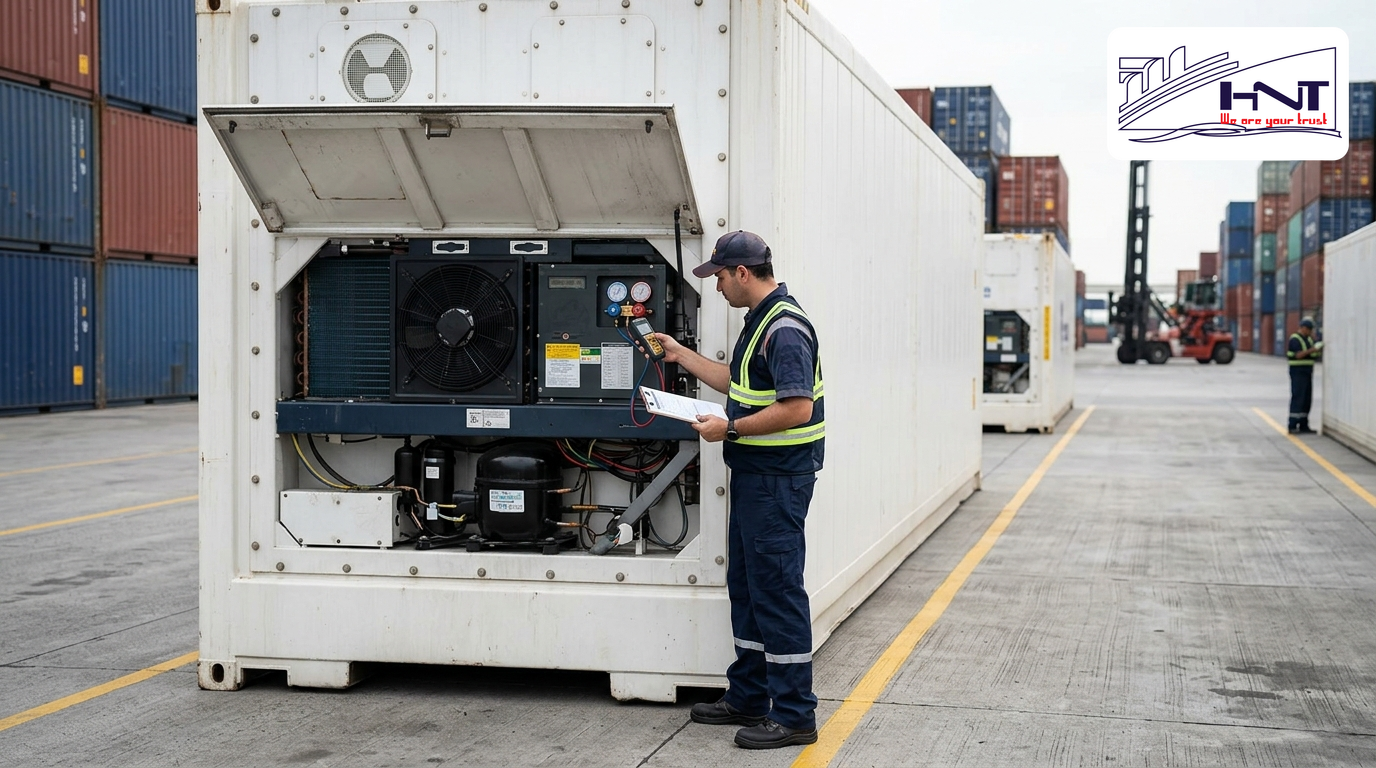
The field team should walk around the container in a fixed direction. This approach prevents missed dents, small holes, or areas of the floor with odors. For fresh fruit, a dirty floor can increase the risk of mold. For seafood, unusual odors can affect acceptance at the receiving warehouse.
Electrical, sensor, and data-recording inspection
The electrical system should be tested using a suitable power supply at the depot. The controller must clearly display the set temperature, supply-air temperature, and return-air temperature. If a data logger is installed, the business should request a report before accepting the container to confirm that the equipment is operating normally.
- Schedule PTI with the depot or shipping line, clearly stating the cargo type and desired transport temperature.
- Check the container number, year of manufacture, body condition, and compatibility with the empty-container release order.
- Run the refrigeration unit at the required temperature and monitor pull-down speed for the minimum required period.
- Read error codes on the controller, record warning codes, and ask the technician to explain them.
- Check the doors, gaskets, hinges, locking bars, and sealing capability before pulling the container out of the yard.
- Keep the PTI report, refrigeration-unit display photos, and photos of the empty container before loading.
| Step | Person in charge | Timing | Required result |
|---|---|---|---|
| PTI request | Documentation personnel | 24 hours before empty pickup | Inspection schedule and conditions confirmed |
| Container body inspection | Field personnel | When receiving the empty container | No major physical defects |
| Machine test run | Depot technician | Before handover | Stable temperature |
| Evidence retention | Transport coordinator | Immediately at the yard | Sufficient photos and reports |
| Empty pickup confirmation | Shipper | After PTI approval | Container accepted |
Practical example: An Loc Farm in Binh Thuan shipped dragon fruit to Singapore. By requesting PTI one day in advance, the field team discovered that the T-floor was clogged. The depot cleaned it within 45 minutes, keeping the loading schedule on time.
Practical example: Hoa Binh Agro in Dong Nai shipped bananas to Busan. During the electrical inspection, the display showed an evaporator-fan error. The container was replaced before the truck entered the warehouse, avoiding eight hours of truck waiting and the risk of temperature increases during loading.
Conclusion: Businesses should keep the PTI procedure together with customs brokerage services to synchronize documentation, terminal cut-off times, and container pickup schedules. Early coordination helps reduce operational errors when shipments enter peak periods.
Refrigerated container refrigeration-unit structure and technical inspection points
Understanding the structure of a refrigerated container refrigeration unit helps shippers ask the right questions when receiving a PTI report. A container refrigeration unit does more than cool. It also controls airflow, temperature stability, and data recording. Therefore, PTI technicians must assess mechanical, electrical, and airflow conditions.
Compressor, evaporator, and condenser assemblies
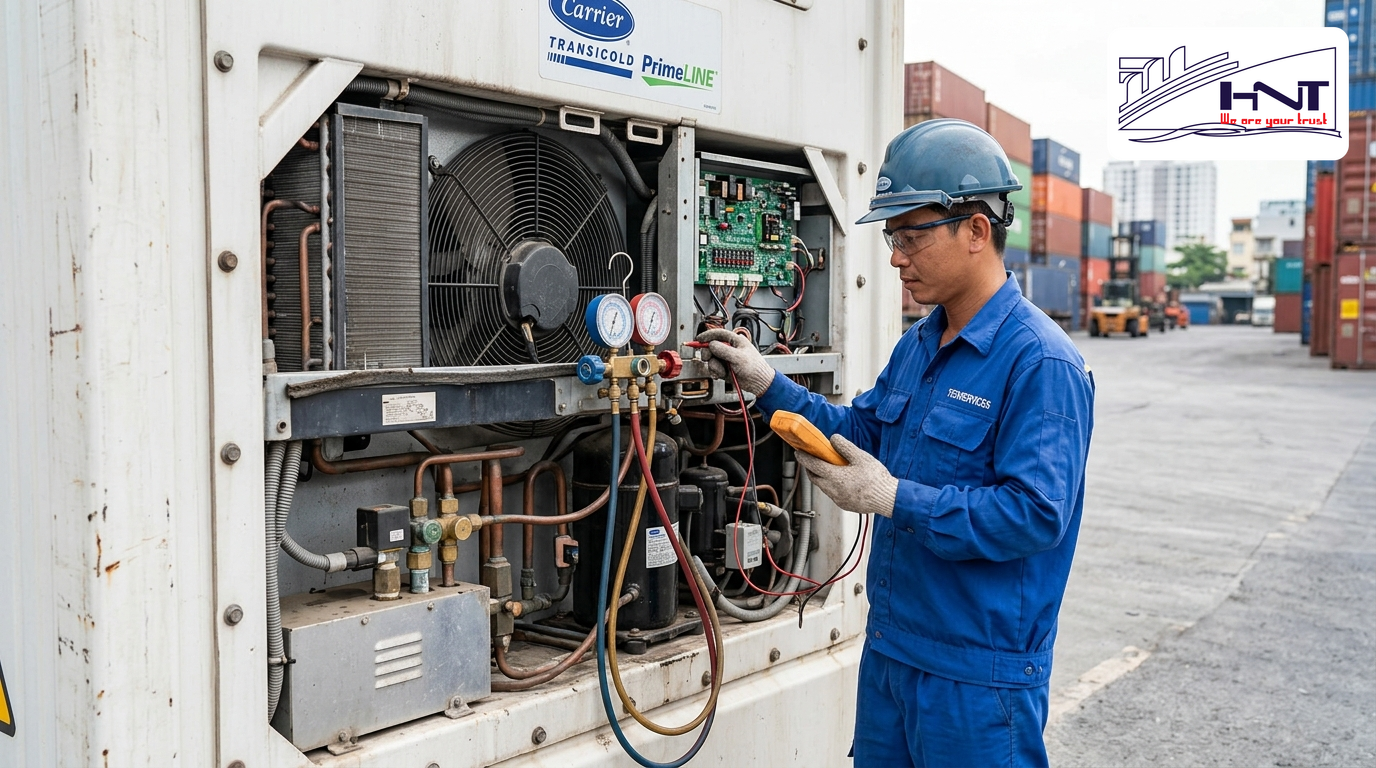
The compressor pressurizes the refrigerant. The condenser releases heat outside. The evaporator exchanges heat with the airflow inside the container. If one component performs poorly, the container may still show that it is running but lack sufficient capacity to maintain temperature once the cargo is fully loaded.
Airflow, ventilation openings, and drainage
Airflow is vital for fresh cargo. The T-floor must remain clear, the headspace at the front of the container must be correct, and cargo must not block the air outlet. For highly respiring fruit, ventilation openings should be set according to storage requirements. For frozen cargo, ventilation openings are generally kept closed.
- Check that the compressor runs steadily, without abnormal vibration or unusual noise.
- Check that the condenser is clean, free of heavy dust buildup, and unobstructed when positioned in the yard.
- Assess whether the evaporator develops abnormal ice buildup during the test run.
- Compare supply-air and return-air temperatures to detect sensor discrepancies.
- Check that the fans operate evenly, without rubbing sounds or speed errors.
- Confirm that drainage outlets are clear, free of standing water, and free of organic odors.
| Component | Passing signs | Fault signs | Transport impact |
|---|---|---|---|
| Compressor | Smooth operation, stable current | Strong vibration, frequent shutdowns | Slow pull-down |
| Condenser | Clear, fans running evenly | Dirty, weak fan performance | Poor heat rejection |
| Evaporator | Stable heat exchange | Heavy ice buildup | Uneven cold airflow |
| Sensors | Low deviation | Large reading discrepancy | Unreliable data |
| T-floor | Even airflow | Blocked air channels | Hot spots in the cargo |
Practical example: Mekong Fresh in Vinh Long shipped mangoes to Hong Kong. During PTI, the technician found a large difference between supply-air and return-air temperatures. After the condenser was cleaned, the container achieved better temperature stability and no hot spots developed.
Practical example: Nam Trung Bo Seafood in Khanh Hoa shipped frozen tuna to Osaka. The unit was still running, but the evaporator fan was making a rubbing sound. Replacing the fan before loading helped maintain -18°C and avoid the risk of surface refreezing.
Conclusion: Based on HNT LOGISTICS experience, shippers should request photos of the controller display and a Vietnamese description of technical faults. This helps the purchasing department understand the actual risk instead of receiving only the generic response that the container has been running.
Checking Carrier Daikin container refrigeration units according to export-cargo scenarios
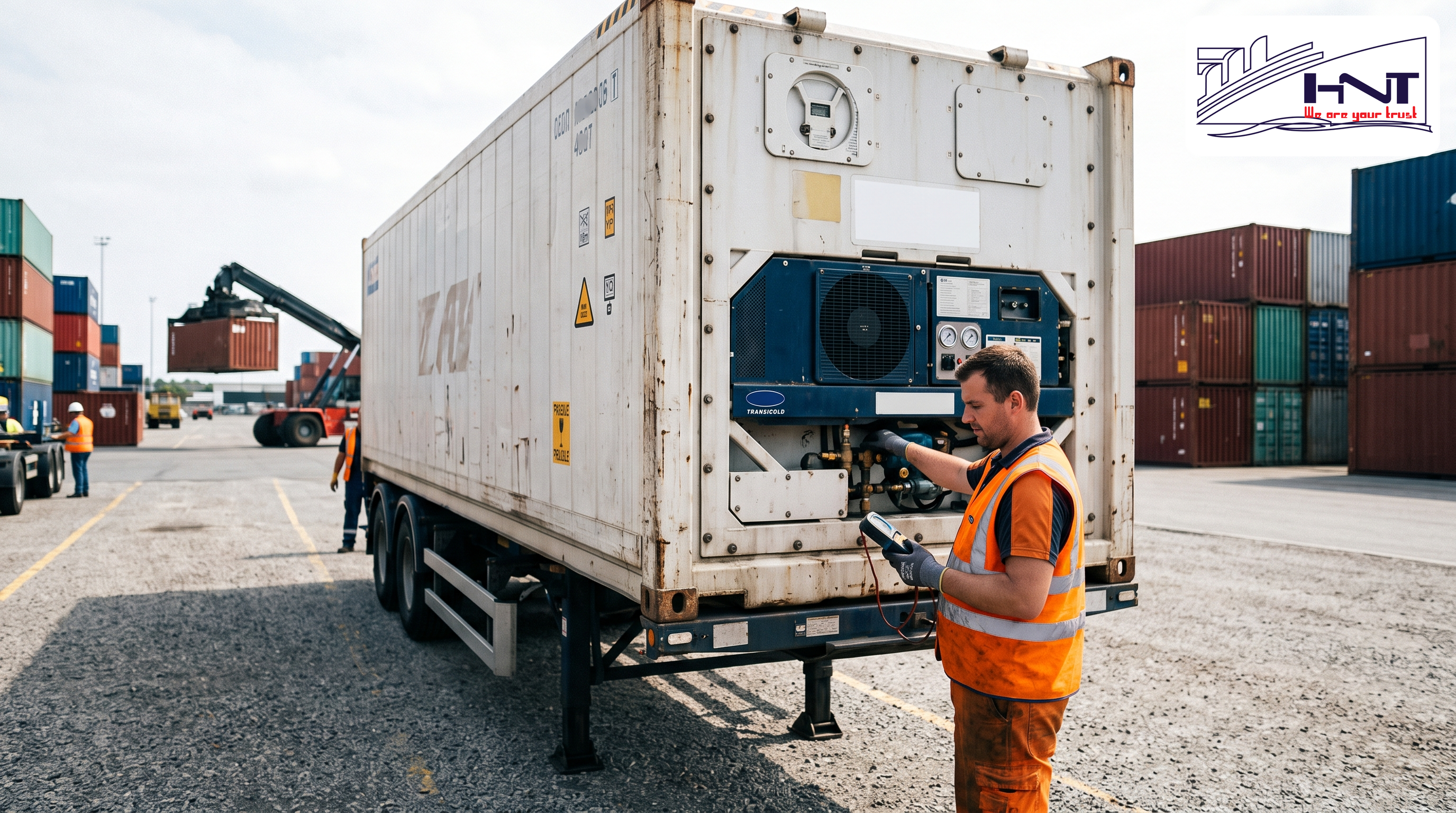
Checking Carrier Daikin container refrigeration units should be based on the specific unit model and cargo category. Carrier and Daikin are both widely used in international refrigerated transport. However, error displays, controller interfaces, and data-extraction procedures may differ between generations of equipment.
Comparing Carrier and Daikin inspection points
For Carrier units, technical personnel typically pay attention to warning codes on the controller and fan status. For Daikin units, operating modes, sensors, and error history require careful checking. Shippers do not need to repair the unit themselves, but they must know which questions to ask before signing for the empty container.
Setting temperatures by cargo category
Temperature settings must be based on the buyer's storage instructions, not general operating habits. Frozen durian, pangasius fillets, and green bananas have very different requirements. If the cargo is shipped to the European Union, phytosanitary documentation and certification requirements must still comply with current import regulations. .
- Record the machine brand, model generation, and displayed error codes in the PTI report.
- Ask the technician to run the unit at the actual transport temperature, not only in the default mode.
- Compare supply-air and return-air temperatures after the unit reaches a stable operating condition.
- Check the defrost mode to prevent ice buildup during long-distance ocean transport.
- Confirm that the data logger is still operational and that its records can be retrieved if a claim arises.
- Request a container replacement if a fault directly affects the compressor, fans, or sensors.
| Group of goods | Reference temperature | PTI notes | Main risks |
|---|---|---|---|
| Frozen shrimp | -18°C to -20°C | Deep temperature pull-down check | Refreezing, freezer burn |
| Pangasius fillet | -18°C | Temperature data check | Quality dispute |
| Green bananas | 13°C to 14°C | Ventilation-opening check | Premature ripening |
| Dragon Fruit | 5°C to 8°C | Avoid direct cold airflow | Chilling injury |
| Frozen durian | -18°C or lower | Compressor assessment | Loss of fruit flesh structure |
Practical example: Dong Hai Foods in Can Tho shipped pangasius fillets to Rotterdam. The Daikin container reported a return-air sensor error during PTI. The company requested a container replacement, avoiding the risk that the buyer would reject the temperature data.
Practical example: Phu My Banana in Tay Ninh shipped green bananas to Incheon. The Carrier container ran normally, but the ventilation opening was set incorrectly. After adjustment according to the buyer's instructions, the shipment maintained stable peel color upon arrival at the receiving warehouse.
Conclusion: According to HNT LOGISTICS experts, effective PTI must be linked to the specific cargo. A generic report should not be accepted if the shipment has special temperature, ventilation, or data-recording requirements.
PTI documentation, handover responsibilities, and fault handling before yard drop-off
PTI documentation is a layer of commercial protection when disputes arise. If cargo temperatures increase, the buyer, shipping line, insurer, and shipper will review handover data. Therefore, businesses need to define responsibilities from empty-container pickup, loading, and yard drop-off through to the container being connected to power at the port.

Reports, photos, and temperature data
The document set should include the PTI report, display photos, empty-container photos, seal photos, and the port power-connection slip. For electronic customs declarations, documents may be provided as electronic data or scanned copies authenticated with a digital signature in accordance with Circular 39/2018/TT-BTC. .
Decision to replace the container or accept repairs
Not every fault requires container replacement. Cleaning issues, minor gasket problems, or blocked drainage can be repaired at the depot if sufficient time remains. Conversely, compressor, evaporator-fan, sensor, or controller faults should be assessed strictly, especially for ocean routes longer than 15 days.
- Request a report clearly stating that the container passed PTI, including the set temperature and inspection time.
- Take photos of the controller display after the unit has stabilized, including supply and return temperatures.
- Keep photos of the empty container before loading to prove that it was clean and odor-free.
- Check the port power-connection slip to avoid a temperature gap before vessel loading.
- Clearly record who is responsible if the container develops a fault after leaving the depot but before loading.
- Prepare a U.S. ocean-shipping route or an alternative route if the container must be replaced urgently.
| Fault scenario | Risk level | Recommended action | Decision deadline |
|---|---|---|---|
| Unusual odor inside the container | Standardized, inspected | Clean or replace the container | Before loading goods |
| Leaking door gasket | Infrastructure | Repair and perform an airtightness test | Immediately at the depot |
| Sensor fault | Infrastructure | Prioritize container replacement | Before empty pickup |
| Compressor shuts down repeatedly | Incabable | Do not accept the container | Immediately |
| Missing port power-connection slip | Infrastructure | Request additional confirmation | Before terminal cut-off time |
Practical example: Long An Fresh exported melons to Port Klang. The container passed PTI at the depot, but the power-connection slip was missing after drop-off at Cat Lai Port. A follow-up check identified a two-hour power-connection gap and prompted the port to provide additional confirmation.
Practical example: Bac Giang Agritech exported frozen lychees to Los Angeles. The controller reported an error after loading. Because PTI photos and pre-loading data were available, the company was able to separate responsibility among the depot, inland transport, and yard drop-off stages.
Conclusion: The more complete the PTI documentation, the stronger the ability to protect commercial rights. Shippers should standardize photo formats, file names, and capture times for every refrigerated shipment. This approach helps resolve claims faster and reduces subjective disputes.
Conclusion: Action checklist for refrigerated container PTI inspection
Refrigerated container PTI is a small step in terms of time but a major one in protecting cargo value. For agricultural products, seafood, and fresh fruit, a container that passes PTI helps maintain temperature, reduce damage risk, and strengthen evidence when dealing with shipping lines, ports, insurers, or buyers.

- Always request PTI before empty pickup, especially for long ocean routes and high-value cargo.
- Do not only check whether the unit is running; inspect the sensors, fans, door gaskets, and airflow.
- Set the temperature according to the buyer's instructions, not general operating habits.
- Keep the report, display photos, empty-container photos, and port power-connection slip.
- Replace the container immediately when a compressor, sensor, or fan fault affects the cold chain.
- Link PTI with export documents, quarantine inspection, and yard drop-off plans to avoid breaks in the process.
- Review handover responsibilities before the Bill of Lading is issued.
In 2026, seafood and fruit-and-vegetable export turnover continues to place significant pressure on cold-chain logistics. Therefore, exporters should not regard PTI as the depot's sole responsibility. It is part of commercial risk management, similar to insurance, FOB and CIF terms, and document control.
HNT LOGISTICS is a trusted freight forwarding and logistics partner for Vietnamese exporters nationwide. Businesses that need advice on refrigerated containers, export documentation, vessel schedules, or refrigerated-container size standards can develop a dedicated PTI process for each product, market, and transport route. With its position as a professional transport provider, HNT LOGISTICS is committed to delivering comprehensive supply chain solutions, helping Vietnamese businesses confidently conquer global markets. Contact us today at 8A Hoang Minh Giam, Ho Chi Minh City or via the marketing email at hntshipping.com for quotation support!