


A shipment exported to Taiwan may incur costs exceeding the initial budget, even when the quoted ocean freight rate is relatively low. The reasons often include cargo consolidation fees, port handling charges, inland transportation, import procedures or container storage time. Therefore, when choosing a shipping service shipping goods to Taiwan, businesses should assess the total cost from the origin warehouse to the delivery destination rather than comparing ocean freight rates alone.
When researching shipping goods to Taiwan, sea freight offers advantages for commercial goods, production materials, industrial equipment and relatively large shipments. However, actual cost savings depend on cargo volume, weight, LCL or FCL arrangements, vessel schedules and customs clearance requirements in Taiwan. HNT Logistics analyses these factors from a freight operations and supply chain management perspective to help shippers choose the most suitable solution.
Shipping Goods to Taiwan by Sea: Assessing Cost Optimisation Based on Shipment Characteristics and Delivery Requirements
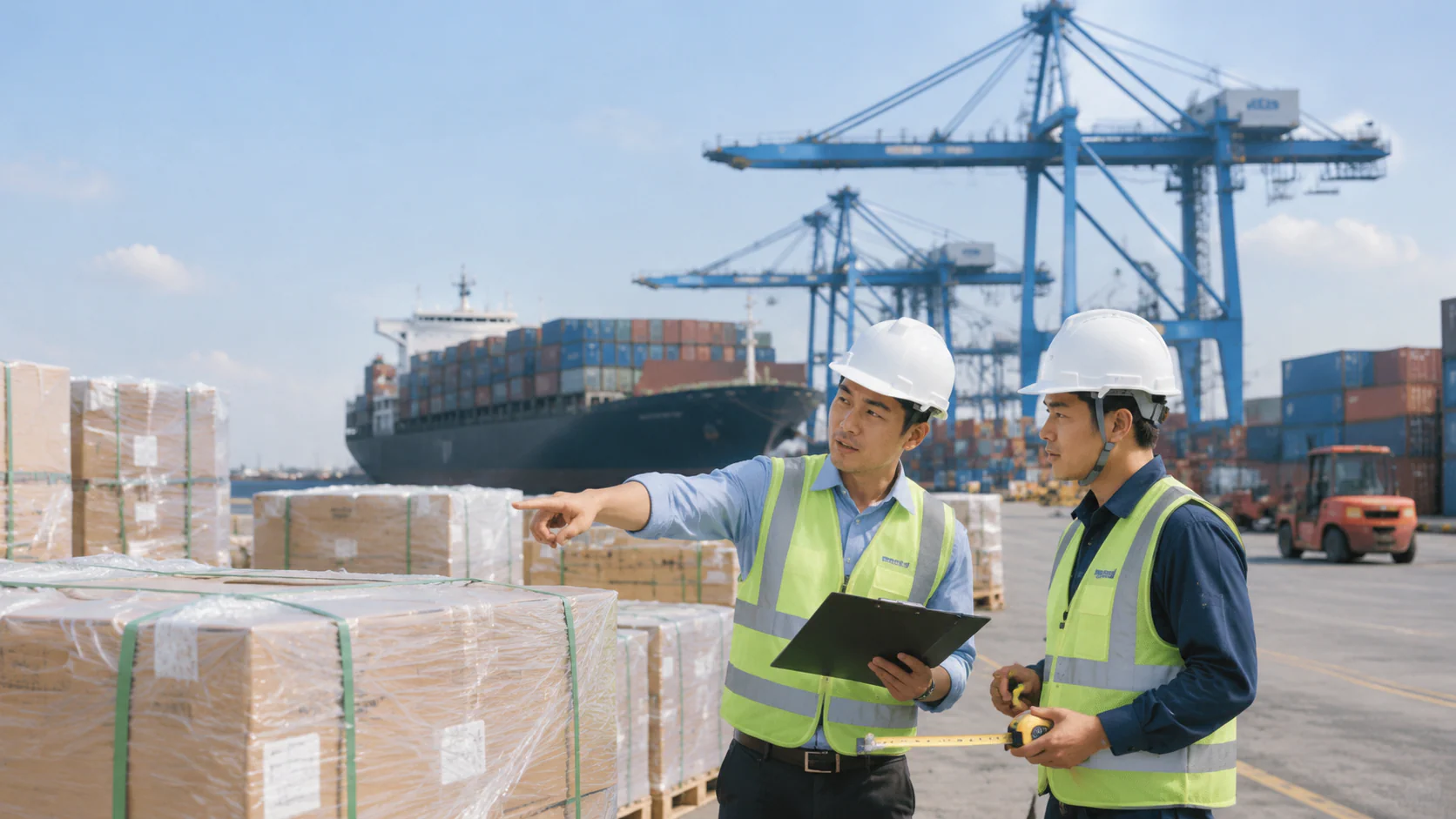
Not all shipments with the same weight are suited to the same shipping method. Lightweight goods that occupy considerable space, high-density industrial products and perishable goods each have different cost structures. Businesses should identify the characteristics of their cargo before deciding how to ship goods to Taiwan by sea to avoid choosing an option with low freight rates but high overall operating costs.
An analysis of the suitability of sea freight for commercial goods, production materials, consumer goods, machinery and equipment, and personal belongings, based on weight, volume, value and delivery deadlines.
For shipping solutions to Taiwan, uniformly packed commercial goods, factory production materials and consumer goods scheduled for regular warehouse replenishment are generally well suited to sea freight. These cargo categories can be consolidated into shipments, make efficient use of loading space and distribute transportation costs across large product quantities. In particular, regular exporters have the flexibility to establish delivery schedules that align with vessel sailing cycles.
During the transportation and customs clearance process for shipments to Taiwan, machinery and industrial equipment require careful consideration of individual package weights, actual dimensions and lifting and handling capabilities. Equipment with an off-centre centre of gravity, components exceeding container door dimensions or cargo that cannot be stacked may require specialised containers. In such cases, shipping costs depend more heavily on packing methods, securing arrangements and loading and unloading equipment than on nominal volume.
To optimise the costs and transit schedule for shipping goods to Taiwan, the requirements shipping goods to Taiwan Personal belongings usually include clothing, books, household items or everyday essentials. If the shipment is small, bulky or has a flexible delivery deadline, less-than-container-load (LCL) sea freight may be suitable. However, senders should check whether the freight consolidator accepts personal effects and verify the relevant import requirements rather than assuming that used goods are exempt from customs procedures.
The value of the goods also has a significant impact on the choice of transport method. A shipment of high-value but lightweight components may be better suited to air freight to reduce inventory holding time. Conversely, production materials with a low value per kilogram generally benefit from sea freight. For goods sensitive to temperature, humidity or transit time, additional consideration should be given to storage costs and quality risks.
Determine the efficient shipment volume threshold for less-than-container-load (LCL) and full-container-load (FCL) shipping based on cargo composition, packing density and shipping frequency from Vietnam to Taiwan.
LCL allows multiple shippers to share container space, whereas FCL involves hiring an entire container for a single shipment. LCL freight charges are generally calculated by volume or chargeable weight, together with consolidation and handling fees. FCL is primarily charged per container and is suitable when shipment volumes are sufficiently large or the goods require dedicated transport space.
At the planning stage, businesses can use volumes below 10 CBM as an initial guideline for considering LCL, while volumes of approximately 10–15 CBM or more may warrant a comparison with a 20-foot FCL container. This is not a fixed freight-rate threshold. The break-even point varies depending on route-specific freight rates, CFS surcharges, destination port charges, actual cargo weight and delivery terms.
For example, a 12 CBM shipment consisting of heavy equipment that is difficult to stack will have a different container utilisation rate from 12 CBM of uniform carton-packed goods. High-density cargo may reach the weight limit before using the full container volume. Conversely, lightweight and bulky goods are generally constrained by available loading space rather than weight.
Shipping frequency is another important factor. Businesses shipping goods from Vietnam to Taiwan every week can coordinate cargo consolidation with production completion schedules. However, waiting until there is enough cargo to fill a container must be weighed against warehousing costs, tied-up capital and delivery commitments. In some cases, sending two LCL shipments on time is more efficient than waiting to consolidate everything into a single FCL shipment.
Assess the differences between shipping goods to Taiwan by sea and by air in terms of total logistics costs, end-to-end transit time, cargo capacity and the sensitivity of the goods to delivery time.
Sea freight generally offers lower unit costs for large, heavy or bulky shipments. Air freight has the advantage of faster transit times and the ability to meet urgent delivery requirements. However, the two methods must be compared based on total transit time, including collection, origin handling, customs clearance, international transportation and delivery in Taiwan.
Flight time between Vietnam and Taiwan accounts for only a small part of the air freight process. Cargo still needs to undergo security screening, terminal handling, customs clearance and delivery arrangements. Similarly, vessel sailing time does not represent the entire sea freight schedule, as additional time is required for yard handling, waiting for vessel departure, unloading, LCL deconsolidation and completion of import procedures.
Businesses should quantify inventory holding costs during transit. A shipment worth VND 500 million, assuming an annual cost of capital of 12%, incurs approximately VND 164,000 in capital costs per day. If sea freight takes 10 days longer than air freight, the additional capital cost alone would be approximately VND 1.64 million, excluding the risk of material shortages or delayed deliveries.
For temperature-controlled goods, the choice of transport method also depends on the required temperature, permitted storage duration and ability to maintain the cold chain. Refrigerated containers can be configured for various temperature ranges, such as above-zero temperatures for certain agricultural products or approximately -18°C for suitable frozen goods. The temperature setting must be based on the product specifications rather than applying a single standard to all types of cargo.
Classify goods according to acceptance conditions, transportability and specific regulatory requirements to identify in advance any items requiring permits, specialised inspections or prohibited from import.
Before confirming transportation, shippers should classify goods based on the nature of the products and the regulations applicable at both ends of the route. Ordinary industrial goods with complete commercial documentation are generally easier to handle than food products, chemicals, lithium batteries, communication equipment or products of plant or animal origin. Each category may be subject to different regulatory requirements, even when transported in the same container.
For food and agricultural products, it is necessary to check Taiwan's import acceptance requirements, including quarantine regulations, food safety standards, product ingredients and labelling requirements. Certain plant-based products may require phytosanitary certificates and compliance with market access conditions. Goods should not be shipped solely on the assumption that similar products have been successfully transported in the past.
Chemicals, solvents, pressure vessels, batteries and goods presenting fire or explosion risks must be assessed under dangerous goods regulations. Safety Data Sheets (SDS), UN numbers and hazard classifications may be required by shipping lines before a booking is accepted. Dangerous goods approved for transportation must comply with the relevant packaging, declaration and stowage requirements. Prohibited goods or items that do not meet acceptance conditions must not be shipped under ordinary cargo descriptions.
Businesses should ask their import partners to check the CCC classification code and Taiwan's import control code before packing the goods. The International Trade Administration's search system at https://fbfh.trade.gov.tw/fh/ap/queryCCCRegFormf_e.do helps identify the relevant regulatory requirements. Search results should be cross-checked against the technical product description and regulations in force at the time of import.
Shipping Goods to Taiwan: Planning Sea Freight Routes and Organising Import and Export Logistics
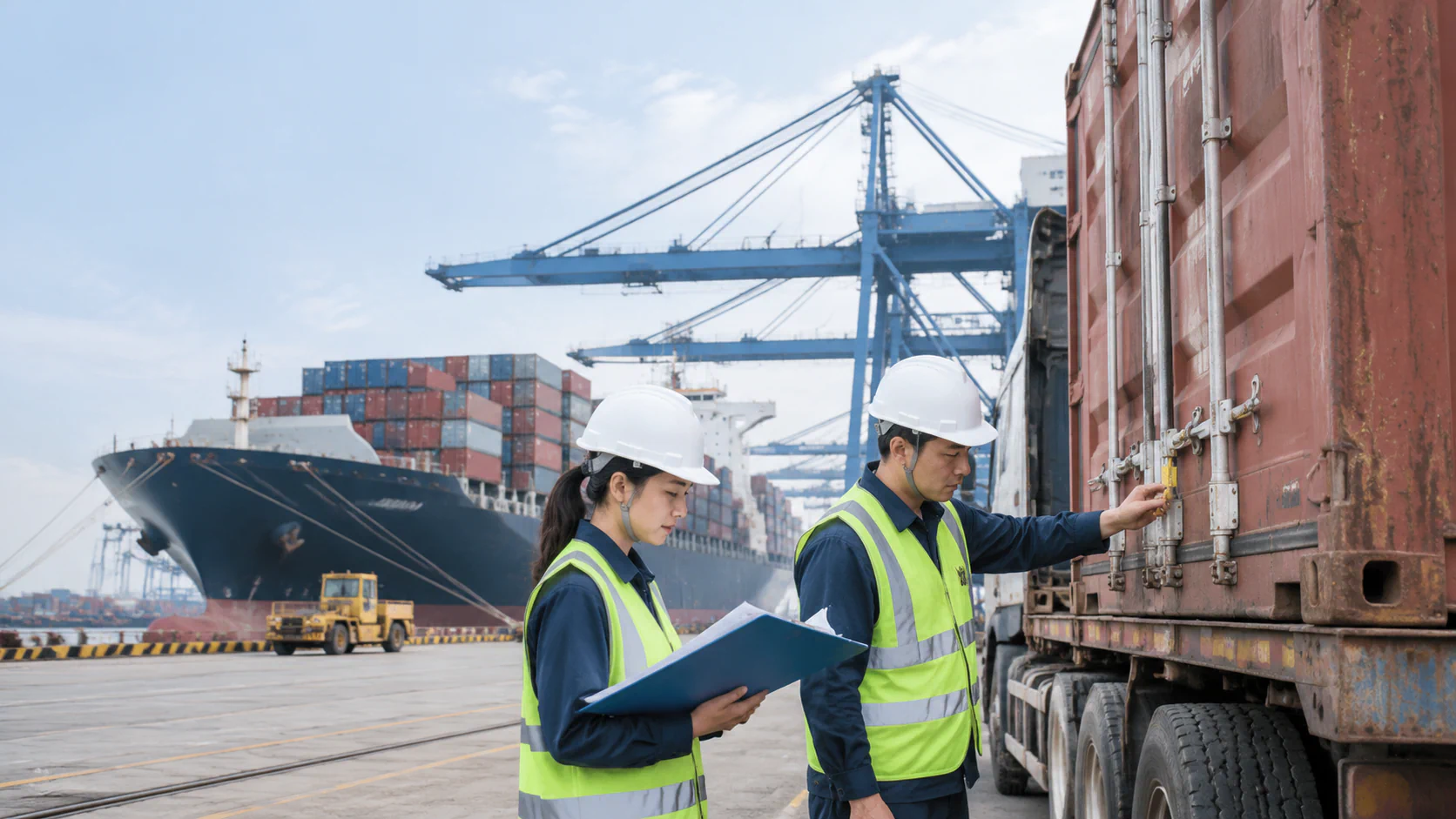
The efficiency of a sea freight route depends on more than just the distance between the port of departure and the destination port. Vessel connectivity, warehouse locations, port operating conditions and domestic transport and handling capabilities all have a significant impact on transit times and overall costs. Businesses should plan shipping routes based on the final delivery address rather than automatically assuming that the port offering the lowest ocean freight rate is the best option.
An analysis of sea freight corridors from the Ho Chi Minh City area, Cat Lai Port and Hai Phong to Taiwan's key destination ports, including Kaohsiung, Keelung and Taichung.
The Ho Chi Minh City area is a major export hub thanks to its network of warehouses, industrial parks and container ports. Goods from Binh Duong, Dong Nai, Long An and neighbouring areas can be transported by container haulage or consolidated as less-than-container-load (LCL) shipments to suitable receiving points. Cat Lai Port is commonly considered for cargo consolidation and container exports in southern Vietnam.
In northern Vietnam, goods from Hanoi, Bac Ninh, Hai Duong, Hung Yen and nearby industrial parks can be routed through the Hai Phong port complex, including the Dinh Vu, Tan Vu and Lach Huyen areas. The actual port of departure should be selected according to the terminal designated by the shipping line, container type, service route and cargo acceptance capacity at the time of booking.
In Taiwan, Kaohsiung is an important container port serving the southern region and international shipping networks. Keelung is worth considering for cargo destined for northern Taiwan, while Taichung offers geographical advantages for central Taiwan's industrial centres. However, routing through another port followed by domestic transportation may still be competitive if the sailing schedule is more favourable.
For shipments delivered to Taipei, businesses should not compare ocean freight rates to Keelung and Kaohsiung alone. They should also factor in port handling charges, domestic transport costs, customs clearance time and the destination warehouse's ability to receive containers. A route with lower ocean freight costs but a longer inland transport leg may no longer be cost-effective when the actual delivery address is taken into account.
Evaluate direct shipping and transhipment via a third-country port based on sailing frequency, transhipment waiting times, vessel connections and the reliability of operating schedules.
Direct shipping reduces the number of transhipments and limits dependence on connecting vessel schedules at intermediate ports. This is advantageous for cargo requiring reliable transit times or minimal handling. However, direct services do not always offer suitable departure schedules, particularly when businesses complete their cargo after the documentation cut-off or container yard closing time.
Transhipment services may route cargo through intermediate ports within a shipping line's operating network. This option provides wider connectivity but introduces additional risks, including missed connecting vessels, changes to transhipment schedules and congestion at intermediate ports. Shippers should pay attention to actual shipping schedules and service reliability rather than relying solely on the initially estimated transit time.
Transit time from Vietnamese ports to Taiwanese ports may be just a few days on some favourable routes, but can increase significantly when transhipment or waiting for a vessel is required. There is no fixed transit time that applies to every port and every week. The specific sailing schedule should be confirmed using the shipping line's booking information, including the port of loading, port of discharge, ETD, ETA and any transhipment legs.
Some shipping line services, such as Yang Ming, connect Vietnamese ports with Kaohsiung, Taichung and Keelung through their intra-Asia networks. Businesses can refer to the route schedule at https://www.yangming.com/en/service/service_overview/route_map?service=JTC, but should check the specific sailing again, as the port rotation and operating schedule may change.
Develop a coordinated domestic transport model from the sender's warehouse to the port of export, connecting tractor units, cargo consolidation points and delivery and collection arrangements at the port or the recipient's warehouse in Taiwan.
For FCL shipments, the usual process begins with arranging an empty container, transporting it to the loading warehouse, checking the equipment's condition and loading the cargo according to plan. After sealing, the tractor unit transports the container to the designated terminal. Shippers must carefully coordinate the container collection schedule, loading time, terminal gate-in deadline and verified gross mass declaration requirements.
For LCL shipments, cargo is usually transported to a CFS warehouse for counting, volume measurement, sorting and consolidation into a shared container. Upon arrival in Taiwan, the container is taken to an appropriate handling facility for deconsolidation before the goods are delivered to individual recipients. The two CFS handling stages can add time and costs, particularly for bulky cargo or goods requiring specialised lifting equipment.
Solution multimodal transportation This helps coordinate road transport with sea freight, thereby reducing mismatches between collection vehicles, vessel schedules and receiving warehouses. When arranging multimodal transport, businesses should clearly define each party's scope of responsibility, handover conditions and status update procedures to minimise waiting costs.
In Taiwan, delivery arrangements may end at the port, a CFS warehouse or the recipient's address. For warehouse delivery, it is necessary to confirm whether container trucks can access the premises, receiving hours, unloading equipment and booking requirements. Commercial terms such as FOB, CIF, DAP or DDP must be correctly understood in accordance with Incoterms 2026 and agreed with the service contract to avoid confusion over cost coverage and customs clearance obligations.
Establish shipment monitoring milestones from cargo collection, container loading, terminal gate-in, vessel loading and departure through to port arrival and final delivery to monitor actual progress.
An effectively controlled transport plan must identify the status of the cargo at each handover point. Cargo collection should be documented with a receipt or proof of delivery clearly stating the number of packages, packaging condition and weight. For FCL shipments, records should include the container number, seal number, loading photographs and the time when the container completes the terminal gate-in process.
After the cargo has been loaded onto the vessel, businesses should monitor the actual ETD and updated ETA rather than relying solely on the estimated schedule provided at the time of booking. If schedule changes occur, the information should be communicated to the recipient so that warehouse intake plans, unloading staff and production schedules can be adjusted. This is particularly important for businesses importing raw materials for continuous production lines.
When the vessel arrives at a Taiwanese port, the process continues with receipt of the arrival notice, completion of import customs clearance, payment of relevant charges and arrangement of domestic transport. For FCL shipments, businesses must manage the container free time, port storage deadlines and empty container return date. For LCL shipments, they must confirm when the cargo will be available at the CFS before arranging collection.
Businesses should distinguish between four milestones: vessel arrival at the port, cargo release, cargo departure from the port and actual delivery. These milestones are not interchangeable. Tracking them separately helps identify the causes of delays and clarify responsibilities among the shipping line, port operator, freight forwarder and importer.
Shipping Personal Belongings to Taiwan: Standardising Packaging Specifications, Cargo Classification and Container Loading Capacity
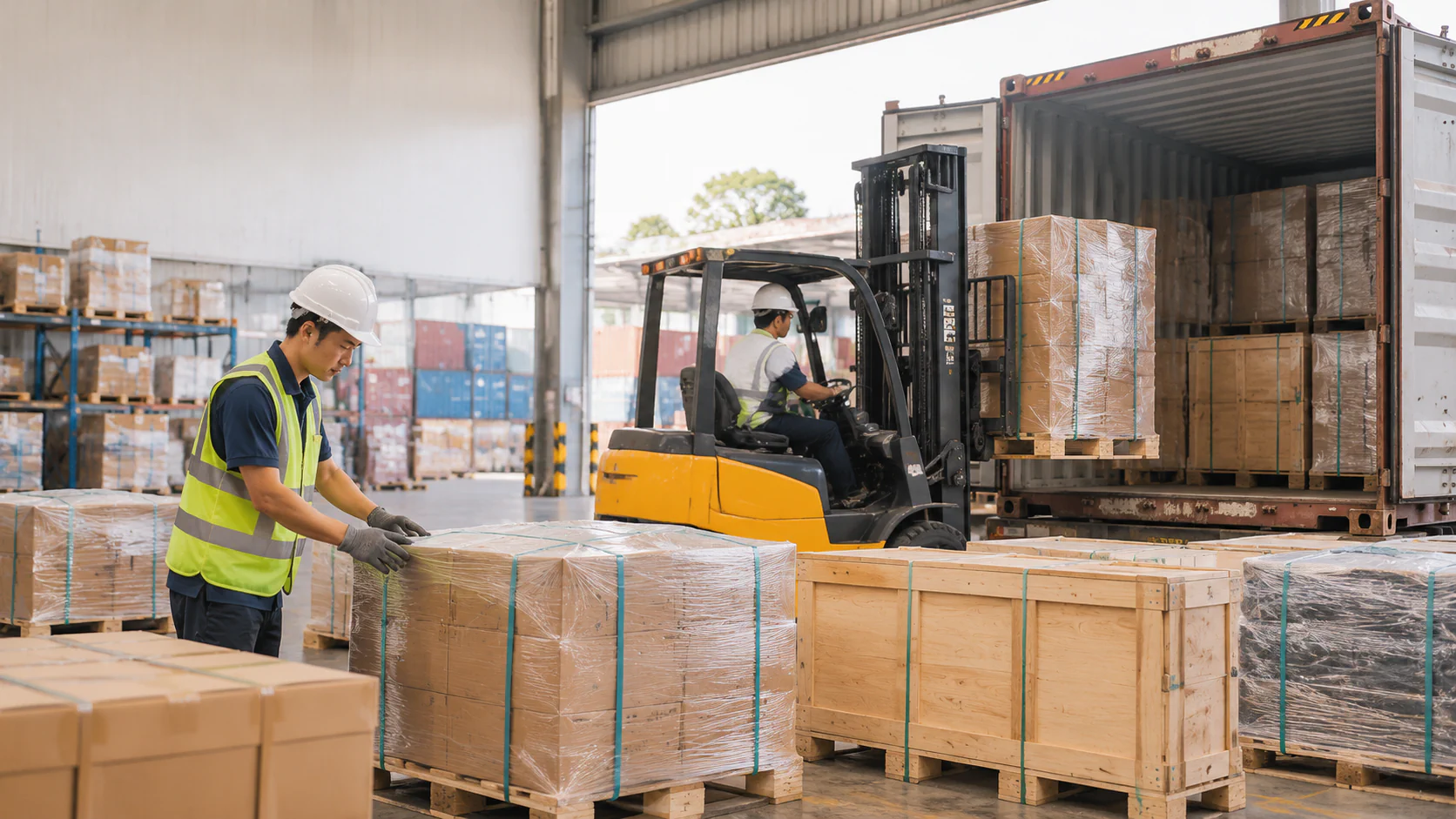
Packaging for sea freight is not simply intended to protect products from impacts during loading and unloading. Cargo may be exposed to vibration, temperature fluctuations, humidity and physical forces throughout the journey. For services shipping personal belongings to Taiwan, packaging specifications also affect chargeable volume, cargo consolidation capacity and handling costs at both the origin and destination warehouses.
Develop packaging selection criteria based on cargo characteristics, including compression resistance, moisture protection, impact resistance, leak prevention and product protection during long-distance sea transport.
Cardboard cartons used for sea freight must have an appropriate compression strength to withstand the weight and stacking height. Cartons in the lower layers must bear the load from those above, potentially under conditions of high humidity. Businesses should assess paper quality, corrugated structure, carton strength and reinforcement methods rather than simply choosing the lowest-cost packaging.
For electronic components, metal equipment and precision machinery, moisture-resistant materials should be combined with anti-vibration cushioning and internal securing measures. Desiccant bags or anti-corrosion materials are only effective when selected to suit the packaging environment. Unnecessarily sealing packages without proper assessment should be avoided, as moisture trapped inside may increase the risk of condensation.
Liquid goods must be packed in leak-proof packaging that is compatible with the product's composition. For chemicals, packaging specifications are also subject to dangerous goods regulations if the product falls within a regulated category. Using a sturdy container does not replace the requirements for approved packaging, hazard labels and declaration documents under the relevant regulations.
Fragile goods such as ceramics, glassware and measuring instruments require multi-layer protection, including a product-contact layer, an impact-absorbing layer and an outer load-bearing packaging layer. Empty spaces inside the package should be minimised using suitable cushioning materials. For high-value goods, photographing their condition before packing helps provide supporting evidence if a claim arises.
Analyse packaging options, including crating, cardboard carton packing, palletisation and cargo reinforcement, based on dimensions, weight, stackability and handling conditions at transhipment points.
Cardboard cartons are suitable for products that are relatively small and easy to stack. Wooden crates are more suitable for machinery, equipment or goods requiring a rigid protective structure. For heavy equipment, the lifting and handling points, the load-bearing capacity of the crate base and the clearance required for safe operation by forklifts or specialised equipment must be carefully calculated.
Palletisation improves loading and unloading efficiency, reduces the number of times packages must be handled directly and facilitates quantity management. However, pallets increase the overall height, weight and chargeable volume. Businesses should calculate the overall cost-effectiveness, particularly for LCL cargo, where rates are based on CBM or volumetric weight.
For example, 20 cartons have a total packaged product volume of 2.4 CBM, but after palletisation, stretch wrapping and the addition of protective clearance, the external volume increases to 2.9 CBM. If the consolidator calculates freight charges based on the outermost dimensions, the additional 0.5 CBM will directly affect costs. Therefore, carton dimensions should be optimised before deciding on the pallet arrangement.
For pallets or wooden crates used in international trade, businesses must check the requirements for wood packaging material treatment under ISPM 15 and Taiwan's plant quarantine requirements. Natural wood pallets that do not meet the applicable standards may cause difficulties during import inspections. Processed engineered wood materials may be subject to different requirements, depending on their composition and the applicable regulations.
Assess the potential utilisation of 20-foot and 40-foot container capacity based on package dimensions, cargo weight, operational payload limits and requirements for even weight distribution.
A standard 20-foot container has an internal volume of approximately 33 CBM, while a standard 40-foot container has approximately 67 CBM. However, nominal volume does not represent the actual quantity of cargo that can be loaded. Gaps between packages, container door dimensions, securing and dunnage requirements, and stackability all affect actual loading efficiency.
For cartons with uniform dimensions, volume utilisation may be higher than for machinery or irregularly crated cargo. Where pallets are used, a loading plan should be prepared based on pallet dimensions, cargo height and operational clearance. Businesses should not assume that a 40-foot container can accommodate exactly twice as much of every type of cargo as a 20-foot container.
Payload limits must also be determined separately for each container. A 20-foot container may have a nominal carrying capacity exceeding 28 tonnes, depending on its configuration. However, the permitted operational payload also depends on the tare weight, maximum gross weight, road weight restrictions, lifting equipment and shipping line regulations. The maximum technical payload must not be treated as the default cargo loading limit.
For heavy cargo, the loading plan must account for floor load distribution, concentrated loads and the centre of gravity. Heavy packages should be placed on suitable supporting structures to prevent concentrated forces from damaging the container floor. The verified gross mass of the entire container, commonly known as VGM, must be provided in accordance with SOLAS requirements before the container is loaded onto the vessel.
Establish a plan for cargo zoning, dunnage, cargo securing and compatibility checks between product groups to minimise shifting, deformation or damage during the sea voyage.
The stowage principle is to ensure load-bearing capacity, maintain centre-of-gravity stability and minimise movement. Heavy goods are generally placed at the bottom on a suitably load-bearing floor; lightweight and easily deformable goods must not be used to support packages carrying heavy loads. The loading layout should be based on the mechanical properties of each product group rather than simply maximising the use of available space.
Dunnage materials may include specialist inflatable air bags, wooden battens, anti-slip sheets, lashing straps and suitable reinforcement structures. Their selection depends on the weight and shape of the packages and the forces generated during transportation. Lashing straps must have an appropriate load-bearing capacity, be attached to the correct anchor points and must not exert pressure that could damage product surfaces.
Goods with strong odours, goods that readily absorb odours, food products and chemicals should not be loaded together if this could affect product quality or breach compatibility regulations. For dangerous goods, segregation must comply with the requirements of the IMDG Code and relevant stowage guidelines. Conventional dunnage methods cannot be used as a substitute for mandatory segregation requirements.
Before closing the container doors, the operator must check the stability of the cargo, the condition of the dunnage, any gaps that could allow the cargo to shift and the condition of the doors. Photographs taken at each stage of loading are important records for quality control. For FCL shipments, the seal number must match across the loading report, transport documents and delivery records.
Affordable Shipping to Taiwan: A Comparison Table of Transport Options and a Model for Calculating Actual Total Costs

A quotation affordable shipping to Taiwan is only meaningful when businesses clearly understand which charges are included and which are excluded. Low sea freight rates may be accompanied by high destination handling charges, short container free-time periods or restrictive delivery conditions. To assess financial efficiency, all options must be compared using the same service scope, currency and charging conditions.
Prepare a comparison table of LCL and FCL shipping based on minimum shipment volume, freight charging units, available capacity, cargo consolidation time, flexibility in departure schedules and the ability to control the goods.
LCL and FCL operate under different handling arrangements, so they cannot be compared solely on the freight rate per CBM. LCL is suitable for businesses that do not have enough cargo to book an entire container, while FCL offers greater control over the loading process and reduces the need to consolidate cargo with shipments belonging to other shippers. The following table highlights the key differences to consider when planning a shipping solution.
| Criteria | Less-than-container-load cargo (LCL) | Full container FCL |
|---|---|---|
| Shipment volume | Suitable for small shipments, subject to the consolidator's minimum acceptance requirements | Suitable when the shipment volume or nature of the goods justifies using a dedicated container |
| Freight charging unit | CBM or weight/measurement (W/M), together with applicable minimum charges | By 20-foot, 40-foot container or other equipment type |
| Usable volume | Sharing space with multiple shippers | Flexible use of space within the container's technical capacity limits |
| Cargo consolidation time | Subject to the CFS schedule and the consolidation container loading time | Subject to cargo readiness, container collection schedules and the terminal cut-off time |
| Flexible export scheduling | Subject to consolidation schedules and operational routes | Generally offers greater scheduling flexibility when a booking and a suitable container are available |
| Cargo control | Additional handling procedures at the CFS warehouse | Minimises cargo consolidation and deconsolidation handling |
| Destination charges | Additional charges may apply for deconsolidation, CFS handling and LCL delivery | Includes terminal charges, container handling, container storage and empty container return fees |
| Suitable cargo | Small consignments, standard packaging and flexible delivery schedules | Large shipments, uniform cargo, or cargo requiring dedicated space |
For shipments below 5 CBM, LCL is generally the first option to consider. For volumes of around 10–15 CBM, businesses should request parallel quotations for both LCL and 20-foot FCL. As volumes increase further, 20-foot and 40-foot containers should also be compared. These thresholds are intended only for preliminary option screening and do not replace an actual calculation of the total cost for each shipment.
Create a specification table for 20-foot and 40-foot containers, covering internal dimensions, indicative usable capacity, maximum payload, pallet loading capacity, and actual operational limits for each shipping line.
Container specifications should be verified against the actual equipment supplied by the shipping line. Containers with the same nominal dimensions may differ in tare weight, payload capacity and internal dimensions. The data below uses commonly referenced values for standard dry containers, cross-checked against equipment documentation from Maersk and DSV.
| Parameters | 20-foot dry container | 40-foot dry container | 40-Foot High-Cube Container |
|---|---|---|---|
| Internal length | Approximately 5.90 m | Approximately 12.03 m | Approximately 12.03 m |
| Internal width | Approximately 2.35 m | Approximately 2.35 m | Approximately 2.35 m |
| Internal height | Approximately 2.39 m | Approximately 2.39 m | Approximately 2.69 m |
| Nominal volume | Approximately 33 CBM | Approximately 67 CBM | Approximately 76 CBM |
| Indicative maximum cargo payload | Approx. 28 tons | Approximately 26–28 tonnes | Approximately 26–28 tonnes |
| 1.2 × 1.0 m pallets, single-layer loading | Approximately 9–10 pallets | Approximately 20–21 pallets | Approximately 20–21 pallets |
| Indicative cargo volume with relatively efficient loading | Approximately 27–30 CBM | Approximately 55–61 CBM | Approximately 62–69 CBM |
The usable volume and pallet quantities shown in the table are only estimates for planning purposes, not guaranteed loading capacities. Actual results depend on package dimensions, pallet orientation, clearance space, securing and lashing arrangements, and stacking capability. In particular, heavy cargo may reach the payload limit before the available space is fully utilised.
For technical checks, businesses can refer to Maersk's dry container documentation at https://www.maersk.com/~/media_sc9/maersk/local-information/files/europe/italy/export/equipment-flyer.pdf and DSV's container information at https://www.dsv.com/en/our-solutions/modes-of-transport/sea-freight/shipping-container-dimensions/dry-container. The final loading decision must still be based on the container allocated, the weight limits of the shipping route and the operational limits of each relevant service provider.
Analysis of the cost structure for shipping goods from Vietnam to Taiwan, including collection charges, domestic transportation, packaging fees, CFS warehouse charges, THC, documentation fees, ocean freight, destination port handling charges and domestic delivery costs
Origin-side costs typically start with collection from the warehouse, transportation to the port or CFS facility, additional packaging and document processing. For FCL shipments, businesses need to calculate empty container transport, loaded container drayage, lifting and handling charges, and any additional costs arising from waiting times. For LCL shipments, CFS fees and individual consignment handling costs can account for a significant proportion of the total.
THC is a terminal handling charge, but its scope of application and the party collecting it may vary depending on the shipping terms. Documentation fees, bills of lading, customs declarations and shipping line surcharges should be clearly itemised in quotations. Businesses should avoid double-counting items already included in a service package or overlooking mandatory charges at the destination port.
In Taiwan, costs may include delivery order fees, port handling charges, CFS fees for LCL cargo, import customs declarations, taxes and specialised inspection charges where applicable. Domestic delivery costs depend on the distance, vehicle type, unloading conditions and accessibility of the warehouse. Import duties and taxes payable at destination should be listed separately from freight charges to provide an accurate assessment of the cost structure.
For FCL shipments, two charges that require particularly close monitoring are demurrage and detention, as defined in the shipping line's tariff. Demurrage generally relates to the time a container remains at the port beyond the free time allowance, while detention relates to the period a container is used outside the port beyond the free time allowance. Terminal storage charges may also apply. Free time allowances and calculation methods must be confirmed against the specific booking and tariff.
Developing a cost calculation model per CBM or per kilogram of goods actually delivered, and comparing the financial efficiency of LCL shipping, full container hire and combined transport options
To compare the options, businesses should determine the total logistics costs from the collection point to the delivery destination under consistent conditions. The basic formula is: Total cost = origin charges + international freight + destination charges + domestic transportation at destination + estimated additional costs. Taxes and inventory financing costs can be included in an expanded model depending on the analysis objectives.
Cost per CBM is calculated by dividing the total cost by the actual volume of goods delivered. Cost per kilogram is calculated by dividing the total cost by the actual weight of goods delivered. These two indicators help compare transport efficiency but do not replace the freight measurement units used by shipping lines or freight consolidators. Actual volume, chargeable volume and the volume occupied inside the container must be distinguished.
For LCL cargo, the W/M principle generally uses whichever is greater: the volume in CBM or the weight measured in revenue tonnes, depending on the quotation terms. For example, a shipment measuring 3 CBM and weighing 4,000 kg may be charged at 4 W/M units if the rule is to use whichever is greater between one CBM and one tonne. Rounding conditions and minimum charges should be confirmed before preparing the budget.
For example, the assumed total LCL cost for an 8 CBM shipment is VND 15 million, equivalent to VND 1.875 million per CBM. If the assumed total cost of a 20-foot FCL option is VND 22 million for the same transport scope, LCL offers a cost advantage of approximately VND 7 million. However, if the volume increases to 16 CBM and the LCL cost rises to VND 28 million, FCL may become the more cost-effective option.
With a combined transport option, businesses can ship planned inventory by sea and use air freight for urgently needed materials. The objective is not to reduce the unit price of every shipment at all costs, but to optimise the total cost of meeting production requirements. Expediting part of the cargo can help prevent production line disruptions, while the remaining goods can still benefit from the cost advantages of sea freight.
Simulating three budget scenarios for small shipments, medium-sized shipments and large commercial consignments; analysing the impact of surcharges, warehouse storage time, container detention and changes to vessel schedules on total costs
To illustrate the budgeting method, the table below assumes three shipments of general dry cargo from the Ho Chi Minh City area to the Kaohsiung area, none of which is subject to specialised inspection. The amounts are constructed to demonstrate the calculation, and do not represent actual quotations from HNT Logistics or market prices verified at the time of shipment.
| Assumed cost item | Small shipment: 3 CBM LCL | Medium shipment: 12 CBM LCL | Large shipment: 28 CBM, 20-foot FCL |
|---|---|---|---|
| Cargo collection, origin-side domestic transport and packaging | VND 1.5 million | VND 3 million | VND 6 million |
| Origin-side warehousing, terminal and documentation | VND 1.8 million | VND 3.5 million | VND 4 million |
| Assumed ocean freight | VND 2 million | VND 5 million | VND 8 million |
| Origin handling and domestic delivery | VND 2.7 million | VND 5.5 million | VND 6 million |
| Contingency for additional surcharges | VND 1 million | VND 2 million | VND 3 million |
| Simulated total budget | VND 9 million | VND 19 million | VND 27 million |
| Average cost per CBM | VND 3 million | Approximately VND 1.58 million | Approximately VND 0.96 million |
The table shows that the average cost per CBM tends to decrease as shipment volume increases and fixed costs are spread across more goods. However, the three scenarios involve different shipment volumes and transport arrangements, so they cannot be used directly to establish the cost savings of FCL. Businesses should obtain LCL and FCL quotations for the same shipment, at the same time and under identical delivery terms.
In the small-shipment scenario, an additional handling charge of VND 1 million would increase the total budget by approximately 11.1%. For a 28 CBM commercial shipment, the same additional charge would increase total costs by only around 3.7%. This demonstrates that fixed charges have a greater impact on smaller shipments and explains why an exceptionally low sea freight quotation does not necessarily result in a lower overall cost.
For an FCL shipment with a budget of VND 27 million, assume that container detention and terminal storage charges total VND 4 million due to customs clearance delays or the lack of an available collection vehicle. The total cost would then rise to VND 31 million, an increase of approximately 14.8%. This is an illustrative estimate; actual charges must be determined based on the shipping line's and terminal's tariffs, the number of days incurred and the applicable free time.
Changes to the vessel schedule may also incur storage charges at the port of origin or increase inventory financing costs. If the goods are ready but the vessel departure is postponed, the business needs to assess whether the goods can be held in storage, the booking can be transferred, or an alternative route can be used. The most suitable option is the one with an acceptable level of total expected costs and scheduling risks, not necessarily the route with the lowest published freight rate.
Shipping Goods to Taiwan by Sea: Customs Controls, Import Policies and Potential Risks at Destination
Acceptance of goods for carriage by a shipping line does not automatically mean they are eligible for import into Taiwan. Customs clearance depends on the classification code, nature of the goods, origin, commercial documentation and applicable industry-specific regulations. Businesses should check import requirements before packing the goods to minimise the risk of port storage charges, document amendments, re-export or the handling of prohibited imports.
Build a product data set to determine HS codes, declared values, origin, composition, intended use and applicable regulatory requirements for each category of goods exported to Taiwan
The product data set should clearly describe the trade name, technical name, composition, materials, intended use, relevant manufacturing processes and whether the goods are new or used. For machinery, additional information should include the model, capacity, technical documentation and identification images. For food products, details should cover ingredients, packaging specifications, intended use and storage conditions.
The HS code used for export declarations in Vietnam must be determined in accordance with Vietnam's commodity nomenclature and applicable classification rules. In Taiwan, the importer must cross-check it against the CCC classification system and the corresponding regulatory codes. Businesses should not assume that the code declared in Vietnam can be used unchanged for every classification level and regulatory requirement in Taiwan.
The declared value must be determined in accordance with the actual transaction and each party's customs valuation regulations. The Commercial Invoice must accurately reflect the goods, unit price, total value, payment currency and trade terms. Declaring a value lower than the actual transaction value to reduce tax liabilities may result in additional tax assessments, penalties and prolonged inspections.
Origin must be determined based on the rules applicable to the product, rather than solely on the location from which it is shipped. Products manufactured in Vietnam using imported materials may need to be assessed against specific origin criteria. The cargo owner should retain records of materials, manufacturing processes and relevant supporting documents to facilitate verification if requested by the competent authorities.
Analyse the roles of the Commercial Invoice, Packing List, international sales contract, Bill of Lading and Certificate of Origin (C/O) in export declarations and the preparation of import documentation
The Commercial Invoice sets out the commercial basis of the transaction, including seller and buyer details, goods descriptions, quantities, values and delivery terms. The Packing List provides packaging details such as the number of packages, net weight, gross weight and dimensions. These two documents must be consistent in terms of product descriptions, quantities and specifications to avoid discrepancies during inspections.
The international sales contract specifies delivery obligations, payment terms, the transfer of risk and the allocation of costs. In practice, customs declarations may not require the contract to be submitted in every case, but it remains an important reference document in the event of disputes or customs valuation checks. Businesses should ensure that the contractual terms are consistent with the invoice and the selected transport method.
The Bill of Lading is an important document in the shipping and cargo collection process. Depending on its form of issuance, it may be linked to the right to claim the goods and requirements for presenting shipping documents. Before approving the final Bill of Lading, businesses should ensure that the shipper, consignee, notify party, goods description, number of packages, container details and seal information are all consistent.
A Certificate of Origin (C/O) is used when required by law, import policies, commercial transactions or the buyer. Not every shipment exported to Taiwan automatically qualifies for a preferential Certificate of Origin. Businesses should check the applicable arrangements, the types of origin documents accepted and any eligibility conditions for preferential treatment, avoiding confusion between confirmation of origin and entitlement to reduced customs duties.
When carrying out customs declaration, businesses must ensure that commercial data, transport data and goods information are declared consistently. For shipments requiring licences or industry-specific certificates, the relevant documents must be prepared before the declaration is submitted, in accordance with applicable regulations. Completing the documentation only after the vessel arrives may increase the risk of additional charges at the destination.
Information on regulations issued by Vietnam Customs can be accessed through its official information system at https://www.customs.gov.vn. For imports, guidance from Taiwan Customs at https://web.customs.gov.tw provides information on procedures and documentation. Cargo owners should refer to regulations currently in force and confirm specific requirements with their customs clearance agent in Taiwan.
Xác định nhóm hàng cần giấy phép nhập khẩu, kiểm tra an toàn thực phẩm, kiểm dịch thực vật hoặc chứng nhận chuyên ngành theo quy định của cơ quan quản lý Đài Loan
Đài Loan áp dụng hệ thống quản lý nhập khẩu theo mã phân loại hàng hóa và mã quy định tương ứng. Một số sản phẩm cần giấy phép hoặc chứng từ chấp thuận trước khi nhập khẩu. Các nhóm có thể chịu quản lý chuyên ngành bao gồm thực phẩm, nông sản, động thực vật, sản phẩm y tế, hóa chất, thiết bị điện và những mặt hàng thuộc diện kiểm tra tiêu chuẩn hoặc an toàn.
Với thực phẩm, cơ quan Taiwan Food and Drug Administration có thẩm quyền quản lý nhiều yêu cầu liên quan đến an toàn và kiểm tra nhập khẩu. Doanh nghiệp cần đối chiếu thành phần, phụ gia, mục đích sử dụng, điều kiện bảo quản và yêu cầu ghi nhãn. Việc sản phẩm được phép lưu thông tại Việt Nam không tự động chứng minh sản phẩm đáp ứng điều kiện nhập khẩu và phân phối tại Đài Loan.
Đối với rau quả và sản phẩm có nguồn gốc thực vật, cần kiểm tra quy định kiểm dịch của Animal and Plant Health Inspection Agency thuộc Bộ Nông nghiệp Đài Loan. Điều kiện nhập khẩu có thể thay đổi theo loại sản phẩm, nước xuất xứ, tình trạng tươi hoặc đã chế biến và nguy cơ sinh vật gây hại. Một số mặt hàng cần chứng thư kiểm dịch, phương án xử lý hoặc điều kiện tiếp cận thị trường riêng.
Hàng điện, thiết bị cơ khí và một số sản phẩm tiêu dùng có thể thuộc diện kiểm tra của Bureau of Standards, Metrology and Inspection. Việc xác định có phải kiểm tra BSMI hay không cần dựa trên mã hàng và phạm vi sản phẩm thực tế. Doanh nghiệp không nên tự áp dụng yêu cầu kiểm định cho toàn bộ hàng điện tử hoặc bỏ qua kiểm tra chỉ vì sản phẩm có chứng nhận của thị trường khác.
Để giảm rủi ro, nhà nhập khẩu nên tra cứu cơ sở dữ liệu phân loại và quản lý hàng hóa của International Trade Administration tại https://fbfh.trade.gov.tw trước khi xác nhận giao dịch. Đây là cơ sở quan trọng để nhận diện mã quản lý, điều kiện cấp phép và các yêu cầu liên quan. Việc xác nhận kết quả cần thực hiện theo mã hàng thực tế và quy định còn hiệu lực tại thời điểm nhập khẩu.
Thiết lập phương án kiểm soát các tình huống hàng bị giữ tại cảng, sai lệch thông tin khai báo, thiếu chứng từ, phát sinh kiểm tra thực tế hoặc không đáp ứng điều kiện nhập khẩu; phân định trách nhiệm xử lý giữa người gửi, người nhận và đơn vị logistics
Khi hàng bị giữ tại cảng, bước đầu tiên là xác định nguyên nhân từ thông báo của cơ quan hải quan hoặc đơn vị khai thác. Trường hợp sai thông tin khai báo, cần đối chiếu hóa đơn, Packing List, vận đơn và dữ liệu điện tử trước khi đề xuất điều chỉnh. Không nên tự sửa một chứng từ riêng lẻ khi các chứng từ liên quan chưa được kiểm tra đồng bộ.
Nếu thiếu giấy phép hoặc chứng nhận chuyên ngành, người nhập khẩu cần xác định khả năng bổ sung hồ sơ theo quy định của Đài Loan. Một số trường hợp có thể được xử lý bằng việc hoàn thiện chứng từ hoặc kiểm tra bổ sung, nhưng không phải mọi vi phạm đều được hợp thức hóa sau khi hàng đến. Hàng không đủ điều kiện nhập khẩu có thể phải tái xuất, xử lý hoặc thực hiện biện pháp khác theo quyết định của cơ quan có thẩm quyền.
Đối với kiểm tra thực tế, cần chuẩn bị dữ liệu nhận diện hàng hóa, vị trí kiện, thông tin lô hàng và phương án mở container hoặc tách hàng. Công việc này có thể kéo dài thời gian nhận hàng và phát sinh phí nâng hạ, lưu bãi hoặc kiểm hóa. Chủ hàng nên cập nhật tiến độ cho bộ phận mua hàng, sản xuất và kho nhận để điều chỉnh kế hoạch vận hành.
Trách nhiệm giữa các bên phải được phân định theo hợp đồng mua bán, Incoterms áp dụng và hợp đồng dịch vụ logistics. Người gửi thường chịu trách nhiệm về tính chính xác của dữ liệu hàng hóa và nghĩa vụ chứng từ thuộc phạm vi của mình. Người nhận thực hiện nghĩa vụ nhập khẩu theo thỏa thuận và quy định địa phương. Đơn vị logistics chịu trách nhiệm đối với những công việc đã cam kết thực hiện trong phạm vi dịch vụ.
Doanh nghiệp nên xây dựng cơ chế thông báo sự cố theo từng mốc: phát hiện vấn đề, xác định nguyên nhân, ước tính chi phí, đề xuất phương án xử lý và phê duyệt thực hiện. Các khoản phí bổ sung cần có căn cứ từ hãng tàu, terminal, đại lý hoặc cơ quan liên quan. Cơ chế này giúp hạn chế tranh chấp và tránh tình trạng chi phí phát sinh nhưng không có đầu mối chịu trách nhiệm.
HNT Logistics Đồng Hành Gửi Hàng Đi Đài Loan Với Giải Pháp Vận Tải Biển Tối Ưu Và Kiểm Soát Chi Phí Toàn Trình
HNT Logistics định hướng tư vấn phương án vận chuyển dựa trên đặc điểm hàng hóa, lịch giao nhận và tổng ngân sách dự kiến. Với năng lực chuyên môn về vận chuyển container, tổ chức vận tải đường bộ, kết nối cảng biển và hỗ trợ thủ tục logistics, HNT có cơ sở để đánh giá các phương án xuất hàng từ Việt Nam. Phạm vi dịch vụ cụ thể trên tuyến Đài Loan cần được thống nhất trước khi triển khai.
Tiếp nhận thông tin loại hàng, số lượng kiện, trọng lượng, kích thước, thể tích, trị giá, địa điểm lấy hàng và địa chỉ nhận tại Đài Loan để đánh giá khả năng khai thác
Để lập phương án chính xác, HNT Logistics cần tiếp nhận tên hàng, mục đích sử dụng, số kiện, trọng lượng và kích thước đóng gói thực tế. Thể tích cần được tính theo kích thước ngoài của từng kiện hoặc pallet. Những thông tin này giúp xác định loại hình vận chuyển phù hợp, khả năng gom hàng và những yêu cầu đặc biệt về thiết bị, đóng gói hoặc khai báo.
Địa chỉ lấy hàng tại Việt Nam và địa điểm nhận hàng ở Đài Loan là dữ liệu bắt buộc để đánh giá phương án giao nhận. Đồng thời, doanh nghiệp cần cung cấp thời điểm hàng sẵn sàng, ngày giao mong muốn và điều kiện thương mại dự kiến. Với hàng có yêu cầu bảo quản, cần bổ sung nhiệt độ, độ ẩm hoặc hướng dẫn kỹ thuật từ nhà sản xuất.
Trị giá hàng hóa được sử dụng phục vụ đánh giá rủi ro, yêu cầu bảo hiểm và tính toán hiệu quả tài chính. Đối với hàng dễ vỡ, máy móc giá trị cao hoặc hàng cần kiểm soát đặc biệt, nên cung cấp hình ảnh và tài liệu kỹ thuật trước khi xác nhận phương án đóng gói. Thông tin càng đầy đủ, khả năng xác định chi phí và nhận diện rủi ro càng tốt.
Tư vấn lựa chọn phương án LCL hoặc FCL, tuyến tàu, cảng xuất, cảng đến và phương thức giao nhận phù hợp với ngân sách cũng như thời hạn giao hàng
Sau khi xác định đặc điểm lô hàng, phương án LCL và FCL cần được so sánh theo tổng chi phí cùng phạm vi dịch vụ. HNT Logistics có thể tư vấn dựa trên quy mô hàng, đặc điểm đóng gói và điều kiện vận chuyển. Các yếu tố như thời gian gom hàng, lịch tàu, chi phí đầu đến và khả năng giao hàng nội địa cần được đưa vào phân tích trước khi chủ hàng lựa chọn.
Với lô hàng nhỏ, phương án LCL có thể giúp giảm chi phí thuê nguyên container chưa được khai thác hết. Với lô hàng lớn, FCL thường mang lại khả năng kiểm soát đóng hàng và lịch giao nhận tốt hơn. Tuy nhiên, quyết định cuối cùng cần dựa trên báo giá của chuyến cụ thể, không sử dụng ngưỡng CBM chung để áp dụng cho mọi trường hợp.
Giải pháp vận tải đa phương thức tiếp tục có vai trò quan trọng khi hàng cần kết nối từ nhà máy đến cảng xuất và từ cảng nhập đến kho nhận. Việc thiết kế đồng bộ các chặng giúp doanh nghiệp dự báo thời gian, phân định điểm bàn giao và giảm nguy cơ phát sinh chi phí do thiếu phương tiện hoặc chậm phối hợp giữa các bên.
Phối hợp tổ chức vận chuyển nội địa, đóng hàng, kết nối cảng biển, xử lý chứng từ và khai báo hải quan theo phạm vi dịch vụ được thống nhất với khách hàng
HNT Logistics có chuyên môn trong vận tải container đường bộ và hoạt động kéo container tại các cụm cảng trọng điểm như Cát Lái và Hải Phòng. Đây là nền tảng để xây dựng phương án vận chuyển hàng từ kho đến cảng xuất phù hợp với đặc điểm lô hàng. Kế hoạch thực hiện cần tính đến vị trí kho, giới hạn phương tiện và lịch tiếp nhận tại terminal.
Đối với công đoạn đóng hàng, cần thống nhất trách nhiệm chuẩn bị vật tư, nhân lực, thiết bị nâng hạ và kiểm tra tình trạng kiện. Với hàng FCL, phương án niêm phong và bàn giao container phải được ghi nhận rõ ràng. Với LCL, cần xác định địa điểm CFS, thời hạn nhận hàng và phương thức kiểm đếm để tránh sai lệch dữ liệu khi gom container.
Trong phạm vi dịch vụ được thỏa thuận, HNT Logistics có thể phối hợp xử lý các công việc chứng từ, vận tải và hỗ trợ thủ tục xuất khẩu phù hợp với năng lực triển khai. Đối với nhập khẩu tại Đài Loan, các yêu cầu chuyên ngành, giấy phép và thủ tục cần được xác nhận với người nhập khẩu hoặc đối tác đủ điều kiện tại địa phương trước khi cam kết thời gian và chi phí.
Chất lượng dịch vụ logistics không chỉ được đo bằng khả năng đưa hàng lên tàu. Doanh nghiệp cần một cơ chế theo dõi lịch trình, tiếp nhận và xử lý thông tin phát sinh, đối chiếu chứng từ và kiểm soát chi phí trong toàn bộ chu trình. Những đầu việc này cần được thể hiện rõ trong báo giá, xác nhận dịch vụ và quy trình phối hợp giữa các bên.
HNT Logistics đồng hành cùng khách hàng gửi hàng đi Đài Loan bằng giải pháp vận tải biển kết hợp vận chuyển nội địa và hỗ trợ thủ tục logistics, hướng đến tối ưu tổng chi phí, minh bạch từng khoản thu và kiểm soát an toàn hàng hóa xuyên suốt hành trình từ Việt Nam đến Đài Loan.
Đối với doanh nghiệp xuất nhập khẩu, phương án gửi hàng đi Đài Loan hiệu quả phải đồng thời đáp ứng ba điều kiện: chi phí hợp lý, tiến độ phù hợp và tuân thủ quy định vận chuyển cũng như nhập khẩu. Vận tải biển có khả năng tiết kiệm đáng kể đối với hàng thương mại và hàng có sản lượng lớn, nhưng hiệu quả cần được kiểm chứng bằng phép tính tổng chi phí thay vì chỉ nhìn vào đơn giá cước.
HNT Logistics hướng đến việc phối hợp vận tải biển với vận tải nội địa, hỗ trợ chuẩn bị chứng từ và kiểm soát những điểm phát sinh quan trọng trong quá trình giao nhận. Mỗi lô hàng cần được đánh giá riêng theo loại sản phẩm, sản lượng, cảng xuất, cảng nhập và yêu cầu giao hàng. Cách tiếp cận này giúp doanh nghiệp lựa chọn giải pháp phù hợp với hoạt động kinh doanh và kế hoạch tài chính.
Để nhận tư vấn phương án ship goods to Taiwan by sea theo thông tin lô hàng thực tế, doanh nghiệp có thể liên hệ HNT Logistics via hotline 096 309 78 19 hoặc email marketing@hntshipping.com. Trụ sở tại số 8A Hoàng Minh Giám, Thành phố Hồ Chí Minh. HNT Logistics đồng hành cùng doanh nghiệp trong quá trình đánh giá phương án vận tải, hướng đến minh bạch chi phí, kiểm soát rủi ro và nâng cao hiệu quả chuỗi cung ứng.