Shipping fresh durian from Ho Chi Minh City to Hong Kong presents businesses with a challenging problem: the fruit must reach commercial ripeness by the time it reaches buyers, while remaining firm, intact, and sufficiently shelf-stable to withstand consolidation, inspection, international transportation, and delivery. A shipment that arrives on schedule but contains cracked, overripe, or rejected fruit can still result in significant losses.
Fresh durian is characterized by its respiration rate, ability to continue ripening after harvest, strong odor, and sensitivity to temperature. Therefore, shipping fresh durian to hong kong must be organized as a continuous quality-control chain rather than simply an activity involving airline bookings or refrigerated containers. The logistics plan must begin with the quality of the sourced produce and end when the importer confirms that the goods meet the required standards.
When exploring fresh durian shipping to Hong Kong, HNT Logistics leverages its sea, road, and air freight capabilities, together with import-export customs clearance support, to develop transportation solutions tailored to each durian shipment from Ho Chi Minh City. The following sections analyze operational procedures, Hong Kong receiving requirements, reference storage standards, freight cost components, and cost-control methods. Technical specifications must be reconfirmed based on the durian variety, actual conditions, and carrier requirements.
Transporting Fresh Durian to Hong Kong: Developing a Logistics Plan Around the Fruit's Quality Window
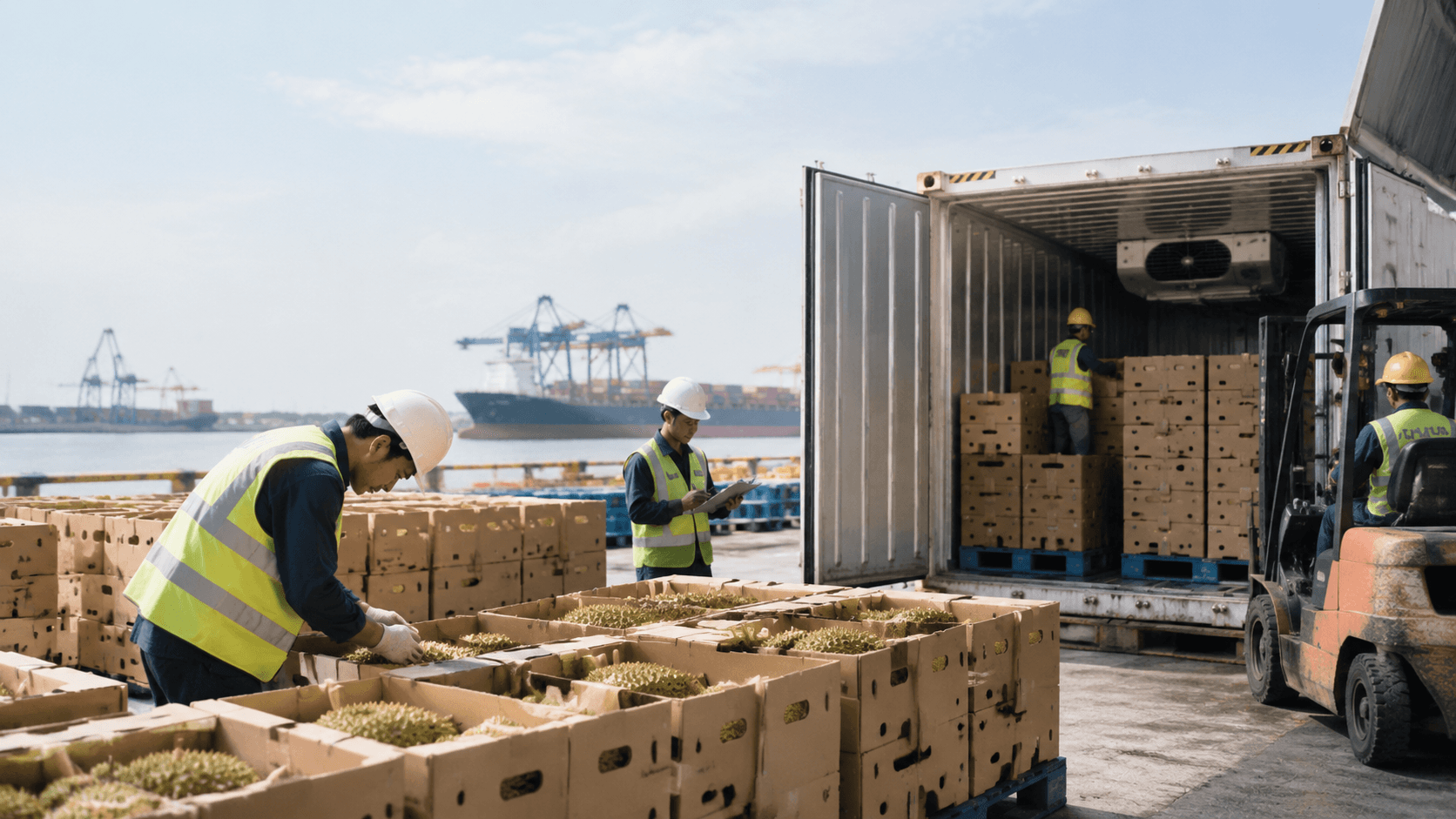
For fresh durian shipping to Hong Kong, the starting point of the transportation plan is determining how long a shipment can continue meeting commercial requirements, known as the quality window. This period is not equivalent to the maximum storage life under research conditions, as actual performance also depends on harvest maturity, variety, temperature, handling procedures, and the importer's acceptance standards.
Analyse harvest ripeness, aroma characteristics, skin integrity and commercial shelf life to determine the viable transport window for fresh durian
Durian is a fruit that can continue ripening after harvest. When evaluating a shipment, businesses must simultaneously consider fruit age, variety, physiological maturity, stem condition, spikes, segment development, and signs of rind cracking. Immature fruit may fail to achieve the required flesh quality when ripe, while fruit harvested too mature may enter rapid ripening before completing its international journey.
For Ri6, Monthong, and other commercial varieties, harvesting criteria must follow the specific technical procedures of each growing region. A fixed maturity percentage should not be applied to all varieties. Indicators such as tapping sounds, spike shape, stem color, and segment development should only be used in combination with cultivation records and the grading experience of the packing facility.
According to the postharvest technical materials of the University of California, Davis, the recommended reference storage temperature range for durian is 13–15°C, with relative humidity of approximately 90–95%. The document mentions a potential storage period of approximately 7–14 days for ripe fruit and 3–5 weeks for mature but unripe fruit under suitable conditions. These are postharvest physiological data, not guaranteed commercial shelf-life commitments for every export shipment. Reference: postharvest.ucdavis.edu/produce-facts-sheets/durian.
Temperature selection must take into account the risk of chilling injury, differences between varieties, and physiological maturity. Excessively low temperatures may cause rind discoloration, affect the ripening process, and reduce commercial value. In practice, the equipment setpoint, air temperature inside the storage compartment, and core temperature of the fruit are not exactly the same. Therefore, measurements should be taken after precooling and monitored throughout transportation.
Durian odor is also an important operational consideration. Some airlines refuse to transport durian, including as cargo, or only consider shipments when approved packaging specifications are used. Businesses must confirm the policies of the airline, ground handling operator, and cargo warehouse before collecting the fruit. Odor-sealing packaging should not be considered a guaranteed method of securing shipment acceptance.
Determine whether to use air or sea freight based on the delivery deadline, shipment volume, receiving requirements and the sensitivity of each consignment
Air freight is generally suitable for high-value shipments, moderate volumes, urgent delivery requirements, or short quality windows. However, flight time accounts for only a small portion of the total journey. Cargo must also pass through warehouse acceptance, security screening, flight loading queues, unloading, import processing, and delivery to the buyer's warehouse in Hong Kong.
Sea freight offers advantages when businesses need to transport large volumes, organize regular deliveries, and optimize costs per kilogram. Refrigerated containers can help maintain suitable temperature conditions, but vessel schedules, port waiting times, refrigeration power connections, and container pickup arrangements in Hong Kong directly affect fruit freshness.
Some sea routes from the Ho Chi Minh City area to Hong Kong may operate through direct sailings or transshipment, depending on the shipping line and timing. Businesses should not make their selection solely based on the advertised number of transit days. They must verify the period from container loading until the cargo can actually be delivered to the importer, including vessel waiting times and cargo handling at both ports.
When the shipment volume is insufficient to fill an entire refrigerated container, consolidated cargo is only feasible if the operator confirms that a suitable service is available. Durian has a strong odor, generates respiratory heat, and is sensitive to storage conditions. Therefore, combining it with food products that easily absorb odors or goods requiring different temperatures may introduce additional risks.
Establish timelines covering harvesting, preliminary processing and packaging in Ho Chi Minh City through to when the goods are ready for distribution in Hong Kong, helping to minimise quality deterioration
The transportation plan should be established backward from the time the buyer needs to receive the goods. If the importer requires the shipment to be ready for distribution on a specific morning, the business must determine in advance when import procedures will be completed, when cargo can be collected from the airport terminal or seaport, which international transportation service will be used, and the latest time the goods must leave the packing facility in Ho Chi Minh City for the departure point.
For air shipments, businesses can establish an internal target of approximately 24–48 hours from completion of packaging to delivery in Hong Kong, provided a suitable flight is available and procedures proceed smoothly. This is only a planning scenario, not a guaranteed transit time. If the airline requires cargo delivery several hours before departure or additional inspections arise, the entire schedule must be adjusted.
For sea freight, businesses must separately calculate the time from the packing facility to the port, vessel loading queues, the ocean voyage, container unloading, and final delivery transportation. These milestones should be expressed as estimated durations and acceptable maximum time limits. When the total duration exceeds the quality window, businesses need to change the harvesting schedule, transportation method, or delivery terms.
Each shipment should have a time log recording the harvest time, completion of grading, start of cooling, packing time, handover to the vehicle, and delivery to the recipient. These records help trace the causes of complaints involving rapid ripening, rind cracking, or a reduced proportion of acceptable-quality goods.
Define cargo control responsibilities among growers, packing facilities, transport providers, exporters and importers at each handover point
Growers are responsible for controlling product origin, pest and disease conditions, cultivation procedures, and harvesting time. Packing facilities are responsible for incoming inspections, grading, cleaning, packaging specifications, and pre-export storage. Exporters are responsible for commercial matters, declaration documents, the quality commitments made to buyers, and selecting appropriate delivery terms.
The carrier controls the vehicles, schedules, equipment conditions, and operational stages covered by the accepted service scope. The importer is responsible for fulfilling its obligations in Hong Kong under the agreement, coordinating customs clearance, arranging receiving warehouse facilities, and confirming cargo condition. The risk transfer point under Incoterms and separate compensation responsibilities under the logistics service contract must be clearly defined.
Delivery and handover records should include the number of packages, weight, packaging condition, temperature if available, time, and confirmation details of the receiving party. For refrigerated containers, additional records should include the container number, seal number, temperature setting, refrigeration unit condition, and available monitoring data. Clear evidence at every handover point helps minimize disputes when losses are discovered after transportation.
Fresh Durian Transport Process to Hong Kong: Controlling Every Stage from the Growing Area to the Delivery Point
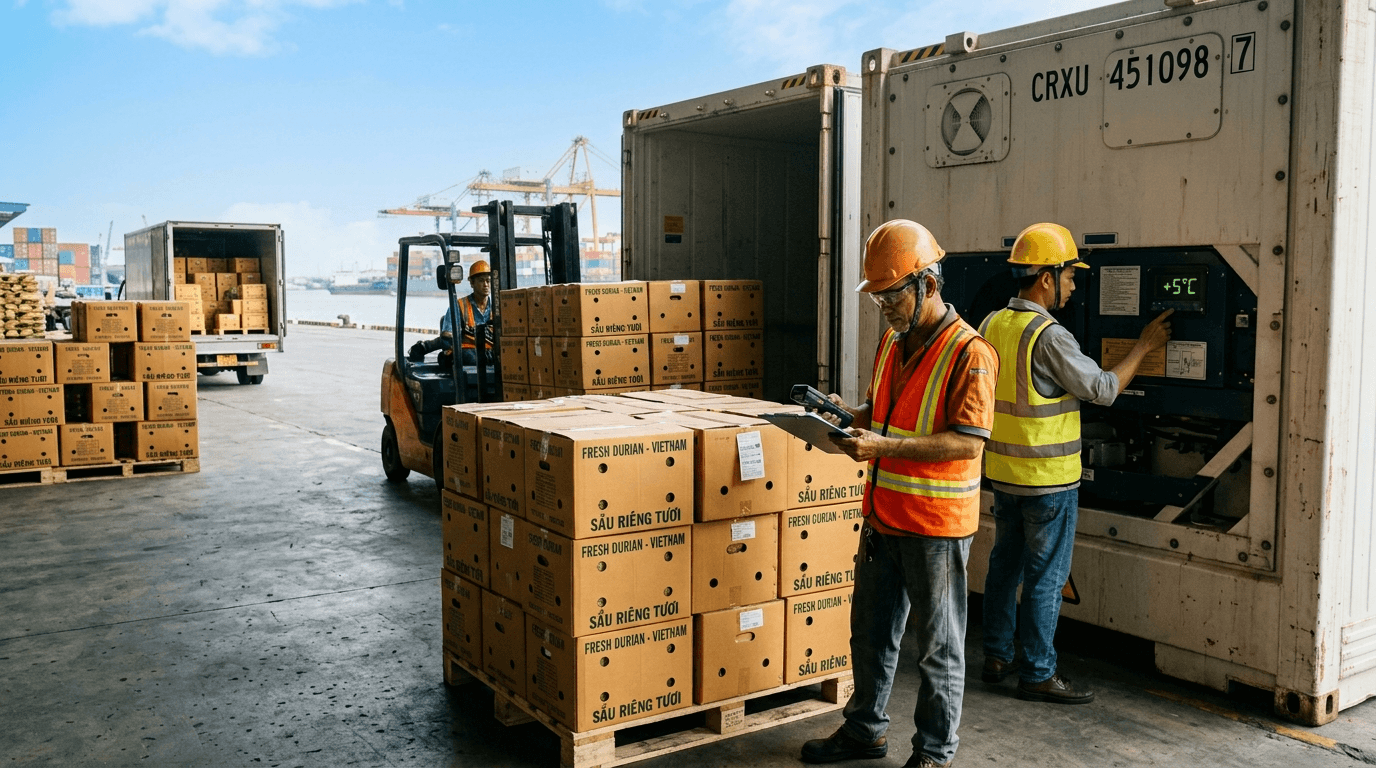
An effective fresh durian transportation process to Hong Kong must connect quality inspections with vehicle scheduling and document control. If the packing facility focuses only on output, the documentation department focuses only on declarations, and the carrier follows only departure schedules, discrepancies may accumulate until the cargo reaches its destination.
Establish consignment acceptance criteria based on ripeness, skin defects, signs of pests and diseases, size uniformity and the ability to meet buyer requirements
Before accepting the goods, businesses must agree on a set of quality criteria with the importer. These criteria must specify the durian variety, weight range per fruit, physiological maturity, stem condition, acceptable limits for external defects, and permitted tolerance rates. General descriptions such as premium-quality fruit or Grade 1 are insufficient for resolving commercial disputes.
At the receiving area, inspection personnel must cross-check growing-area records, harvest dates, and individual shipment information. Fruit showing signs of pests or diseases, leaking liquid, cracked segments, severe bruising, or unusual odors must be isolated for evaluation. For large orders, sampling can be conducted by harvest group, but sampling methods and rejection thresholds must be agreed upon in advance.
Size uniformity directly affects carton-packing efficiency and stacking safety. Placing oversized fruit together with smaller fruit may create empty spaces or uneven pressure points. Therefore, weight grouping, such as approximately 2–3 kg or 3–4 kg per fruit, should only be used as an operational example and adjusted according to the actual variety, season, and purchase order.
Standardise preliminary processing, grading, carton packing and protective cushioning arrangements to minimise impacts, juice leakage, odour release and damage during handling
Preprocessing should prioritize removing soil, sand, impurities, and unacceptable stem portions without damaging the fruit rind. Durian surfaces should be suitably dry before packing. The use of postharvest treatment chemicals must comply with food safety regulations, residue limits, and importer requirements. Chemicals must not be applied arbitrarily to extend freshness.
Export cartons must have sufficient compression resistance under humid conditions, a bottom structure that prevents opening, and appropriate ventilation arrangements. Cushioning materials should minimize movement between fruits and reduce concentrated pressure on the spikes. Solutions involving molded trays, liners, or dividers should be tested under actual conditions before large-scale implementation.
For air shipments, carton specifications must simultaneously satisfy handling safety, dimensional limits, and the carrier's odor-control policies. Completely sealed packaging may hinder gas exchange and cause moisture accumulation. Conversely, packaging that is too ventilated may allow odors to escape beyond the operator's acceptable limits.
A trial configuration may use cartons with approximate external dimensions of 50 × 40 × 30 cm, containing a quantity of fruit appropriate to fruit size and carton load-bearing capacity. These dimensions are not a mandatory standard. Before mass production, the packing facility should test fruit arrangement, weigh the packages, check stability, and obtain confirmation from the carrier.
For refrigerated containers, airflow must be maintained through and around the packages. Cargo must not block air supply outlets, exceed the cargo loading limit, or be pressed against the container ceiling. If wooden pallets are used, applicable ISPM 15 requirements for wood packaging material treatment must be checked, while ensuring that pallets do not obstruct the refrigerated air distribution system.
Coordinate collection vehicles, cargo consolidation times and handover schedules at the cargo terminal or export port in accordance with the confirmed transport plan
Coordination should begin after the airline or shipping line confirms its ability to accept the cargo. For air freight, businesses must check the booking reference, cargo delivery deadline, odor-control policy, perishable cargo acceptance procedures, and security screening time at the cargo terminal. Scheduling a truck too close to the delivery deadline may cause the entire shipment to miss its flight.
For routes departing from Ho Chi Minh City, pickup vehicles may need to connect local packing facilities or nearby growing areas with the cargo terminal at Tan Son Nhat International Airport. Vehicles with suitable storage conditions should be selected, outdoor stops minimized, and the time spent opening the truck compartment during cargo collection controlled.
For sea export shipments, the operations department must review vessel schedules, container gate-in deadlines, document submission deadlines, and refrigerated container availability at Cat Lai Port or the designated operating location. Before loading, the container's cleanliness, unusual odors, door gaskets, refrigeration system, and pre-trip inspection requirements must be checked.
If a container must wait at a yard or transshipment area, the availability of power for the refrigeration unit, monitoring responsibilities, and incident notification procedures must be confirmed. An unrecorded power outage may affect fruit quality but remain undetected until the buyer opens the container in Hong Kong.
Establish cross-checking points for quantities, weights, package labels, batch codes and packaging condition before handing the goods over to the international handling operator
Before loading the truck or delivering cargo to the port, the packing facility and exporter must reconcile the actual quantity against the packing list. Information must be consistent across batch codes, carton counts, net weight, gross weight, and product categories. Any changes made after packing must be communicated to the documentation department so that transportation data can be updated before submission.
Package labels should display the product name, variety if required, Vietnamese origin, batch code, package count, weight, and traceability information as specified in the contract. For the Hong Kong market, commercial label content and language must be agreed upon with the importer according to the sales channel. Businesses should not assume that all labels used for domestic distribution are suitable for imported goods.
The final inspection stage should combine packaging photographs, loading photographs, weighing records, and handover reports. For containers, the seal number must match the transportation documents. For air freight, airway bill labels and perishable cargo identification labels must be checked according to the operator's instructions. Minor discrepancies in package information may delay international cargo acceptance.
Exporting Fresh Durian to Hong Kong: Controlling Documentation, Acceptance Conditions and Customs Clearance Risks

Fresh durian exports to Hong Kong must be assessed under the legal framework specifically applicable to Hong Kong and should not automatically be treated as equivalent to fresh durian exports to mainland China. Differences may involve plant quarantine, importer registration requirements, food safety inspection mechanisms, and commercial documentation.
Review Hong Kong's current import requirements for fresh durian, plant quarantine, food safety, and traceability records before finalizing the shipment schedule
For fresh durian imported for consumption, Hong Kong's Agriculture, Fisheries and Conservation Department states that fruits and vegetables intended for consumption are exempt from plant import permits and phytosanitary certificates under the Plant (Importation and Pest Control) Ordinance, Cap. 207. This is an important distinction from regulations governing seedlings, propagation materials, or goods subject to separate controls.
Therefore, businesses should not assume that every fresh durian shipment entering Hong Kong is legally required to have a Phytosanitary Certificate under the territory's import regulations. However, the Vietnamese side must still review export quarantine regulations, specific contractual requirements, carrier requirements, and the possibility of additional control conditions arising at the time of export. Official source: www.afcd.gov.hk, Plant Import section.
Regarding food safety, Hong Kong's Centre for Food Safety (Centre for Food Safety – CFS) manages imported food under the Public Health and Municipal Services Ordinance, Cap. 132 and the Food Safety Ordinance, Cap. 612. Applicable food importers or distributors must fulfill registration obligations or qualify for valid exemptions, while also maintaining records for traceability purposes.
Businesses must pay particular attention to pesticide residues, hygienic quality, and product compliance with Hong Kong food regulations. The fact that the importing authority does not require a separate permit for fruits intended for consumption does not mean that the goods are exempt from inspections, sampling, or enforcement measures when food safety violations are detected.
Traceability records should retain information about growing areas, packing facilities, varieties, harvest dates, postharvest treatment history, and batch codes. If goods are sourced from multiple farms, the business must maintain the ability to identify each product group within the same shipment. A clear traceability structure helps importers isolate risks when recalls or inspections arise.
Businesses should consult information directly at www.cfs.gov.hk and www.afcd.gov.hk before finalizing shipments. Specific regulations for fruit entering mainland China, such as export protocols or growing-area registration code requirements applicable to that market, must not automatically be considered mandatory import requirements for Hong Kong.
Determine the expected HS code based on product characteristics and cross-check export policies and tax obligations under the regulations applicable at the time of declaration
Fresh, whole, unprocessed durian is generally considered under HS heading 0810, subheading 0810.60 for durian. The expected code under Vietnam's eight-digit classification structure is 0810.60.00. However, the official classification must be checked against the tariff schedule and the import-export goods nomenclature in force when the customs declaration is opened, as well as the actual condition of the product.
If the goods consist of separated durian flesh, frozen products, dried durian, or processed durian, the HS code may differ from that of fresh whole durian. Businesses must clearly describe the product condition and processing procedures before determining the code, avoiding the use of the same code for products with different commercial characteristics and processing levels.
For export taxes in Vietnam, the product code must be checked against the current export tariff schedule. For many fresh fruit products not listed in the export tariff schedule, the export tax rate may be 0%, but this should not be treated as a substitute for checking the applicable legal documents. Value-added tax and invoice treatment also depend on the product type, parties involved, and transaction conditions.
Hong Kong operates under a free-port system and generally does not impose import customs duties on ordinary goods. However, shipments may still incur declaration fees, port handling charges, inspection fees, and logistics service charges. Hong Kong Customs requires import declarations for goods subject to declaration, generally within 14 days after importation.
Standardize contracts, commercial invoices, packing lists, bills of lading, certificates of origin, and specialized certificates according to the actual requirements of each shipment
The documentation package should be prepared before packing is completed and subsequently updated using actual shipment figures. The contract specifies the product name, variety, quantity, quality standards, selling price, delivery terms, payment method, and procedures for handling non-conforming goods. The commercial invoice must contain information consistent with the contract and declaration requirements.
- Foreign trade contract or equivalent transaction documentation, as required in practice.
- Commercial Invoice and Packing List accurately stating the description, package count, weight, value, and details of the parties.
- Export customs declaration and documents required for presentation under Vietnamese regulations.
- Air Waybill for air freight or Bill of Lading for sea freight.
- Certificate of Origin (C/O) if requested by the buyer, stipulated in the contract, or required for a specific commercial purpose.
- Phytosanitary certificates, testing documents, quality certificates, or specialized records when required by law or contractual obligations.
- Traceability records for growing areas, packing facilities, batch codes, and documents monitoring storage conditions.
A C/O does not replace a phytosanitary certificate and is not equivalent to a food safety certificate. For Hong Kong, the actual purpose of the certificate of origin should be considered because this market generally does not impose ordinary import customs duties. Obtaining unnecessary documents may prolong processing time and increase costs for a product that is highly sensitive to freshness.
For shipments requiring phytosanitary certificates under applicable regulations or buyer requirements, businesses must allocate sufficient time for registration and physical inspection. Completing procedures after the goods have been fully sealed or close to departure may cause difficulties if inspection authorities need access to the shipment for sampling.
Cross-check shipper and consignee details, cargo descriptions, package counts, and weights across all documents to minimize declaration amendments, cargo holds, or delivery delays
Common discrepancies involve the importer's legal name, consignee information, carton quantities, net weight, and gross weight. Businesses must distinguish the kilograms used for commercial transactions from chargeable freight weight, as these figures may differ considerably, especially when volumetric weight applies to air freight.
Before the bill of lading is issued, the documentation department must cross-check the booking, invoice, packing list, and declaration data. If the business changes the package count at the last minute, the change must be reflected in the transportation system and corresponding documents. Amending a bill of lading after the cargo has arrived may delay delivery and incur amendment fees.
Logistics customs declaration HNT Logistics' services can be combined with export documentation reviews within the scope of authorization. Businesses must still provide truthful cargo information and valid documents. Cross-checking before submitting customs declarations is generally more effective than correcting errors after the shipment has reached the departure terminal or port.
Fresh Durian Shipping to Hong Kong: Comparison of Transportation Methods, Transit Times, and Logistics Costs
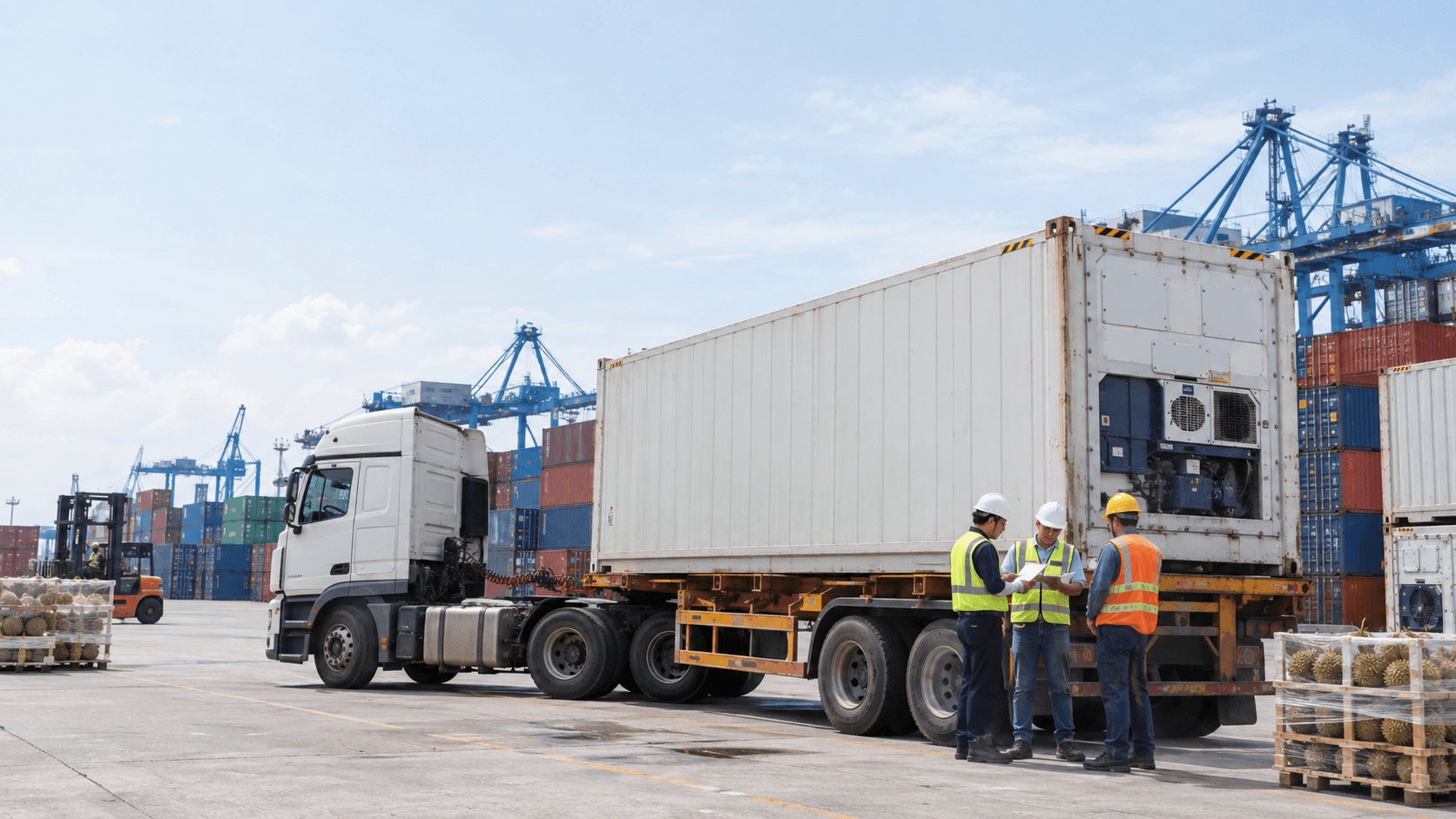
Evaluating fresh durian shipping costs to Hong Kong requires looking beyond the international freight rate quoted per kilogram or container. Businesses should compare the total cost to the receiving destination, the time from packing to delivery, and the proportion of products meeting the required standards. A lower freight rate accompanied by longer storage time may increase the actual cost of goods sold.
Comparison table of air and sea freight based on estimated transit times, suitable shipment volumes, packaging requirements, and quality-control capabilities
The following table uses estimated time ranges for preliminary planning and does not represent schedules confirmed by carriers. Actual transit times depend on flight schedules, shipping routes, cargo loading times, space availability, specialized inspections, and delivery procedures in Hong Kong.
| Criteria | Air | Refrigerated sea freight |
|---|---|---|
| Common departure point | Tan Son Nhat Cargo Terminal, Ho Chi Minh City | Cat Lai Port or a port designated by the shipping line |
| International transportation time | Direct flight duration in hours, excluding handling time | Must be confirmed against direct or transshipment vessel schedules |
| Delivery milestone for planning | A scenario of 1–2 days after packing may be planned under favorable conditions | Usually requires several days to be allocated for sea freight and handling at both ends |
| Suitable shipment volume | Small to medium shipments, depending on weight and the carrier's acceptance policy | Large shipments, especially when there is enough cargo to fill a refrigerated container |
| Packaging requirements | Sturdy cartons with odor control, dimensions and weight complying with the carrier's requirements | Cartons suitable for container loading, ensuring proper cold air circulation |
| Reference temperature | Storage conditions must be agreed upon for the warehouse and each transport leg | A range of approximately 13–15°C may be considered after confirming the variety and ripeness |
| Main risks | Cargo rejection due to odor, missed departures, and waiting for connecting shipments | Vessel delays, refrigeration power failures, port storage, and ripening beyond expectations |
| Cost advantage | Shorter transit time, but the unit rate is usually higher | Better cost allocation when operating at full capacity |
For 20-foot or 40-foot refrigerated containers, the actual capacity cannot be determined by nominal volume alone. The limits also depend on equipment payload, pallets, carton dimensions, ventilation clearance, and cargo stacking requirements. Do not try to increase the number of cartons to reach the maximum payload if doing so reduces airflow or places excessive pressure on the lower layers of cargo.
For air freight, it is particularly important to note that not all airlines operating the Ho Chi Minh City–Hong Kong route accept durian as cargo. Some airlines may completely prohibit it because of its odor. Therefore, harvest and packaging should only be confirmed after the carrier has clearly identified the type of cargo, packaging specifications, and provided appropriate acceptance approval.
Breakdown of fresh durian shipping costs to Hong Kong, including pickup in HCM, preliminary processing and packaging, domestic transportation, international freight, cargo handling, and documentation
To calculate the budget accurately, the quotation should be itemized rather than providing only a single total rate. This approach helps businesses identify which items vary with shipment volume, which depend on the shipping schedule, and which costs are the responsibility of the seller or buyer under the trade terms.
| Cost item | Common billing basis | Factors to confirm |
|---|---|---|
| Pickup from the supply area or HCM warehouse | Truck trip, route, payload | Pickup location, number of stops, refrigerated truck requirements |
| Preliminary processing and sorting | Kg of cargo or per shipment | Rejection rate, labor costs, handling procedures |
| Carton and pallet packing | Carton, pallet, or kilogram | Cartons, cushioning materials, stretch wrap, package labels |
| Cold storage and refrigeration charges | Duration, volume, or weight | Temperature, power supply, waiting time |
| Domestic transportation to the port or airport | Truck or container service | Waiting time, road conditions, refrigerated truck surcharges |
| International air freight | Chargeable kilograms | Carrier acceptance, freight rate, surcharges |
| International sea freight | Container and voyage | Container type, vessel schedule, refrigeration surcharges |
| Terminal or port handling | Kilograms, packages, containers, or shipments | Acceptance, lifting, storage, and refrigeration charges |
| Documentation and procedures | Dossier or declaration | Declarations, certificates, and C/O if required |
| Delivery in Hong Kong | Vehicle, location, and delivery conditions | Customs clearance, receiving warehouse, loading and unloading, waiting time |
| Risk contingency | Internal contingency budget | Schedule changes, inspections, storage, document amendments |
The table does not provide USD/kg or USD/container rates because no quotations are available for the specific date, volume, carrier, and delivery terms. Publishing a fixed rate without confirming the carrier's ability to transport durian may cause businesses to miscalculate costs or commit to selling prices that fail to cover additional expenses.
Comparison table of air freight pricing factors, including actual weight, volumetric weight, package dimensions, and special cargo handling surcharges
In air freight, chargeable weight is generally determined by whichever is greater: actual weight or volumetric weight, after applying the rounding rules of the airline or agent. A commonly used volumetric formula in centimeters is length multiplied by width multiplied by height, then divided by 6,000. The applicable divisor must be checked in the specific quotation.
| Illustrative specifications | Value | How to determine |
|---|---|---|
| Number of packages | 100 cartons | Hypothetical example |
| Dimensions of each carton | 50 × 40 × 30 cm | External dimensions |
| Volume per carton | 60,000 cm³ | 50 × 40 × 30 |
| Volumetric weight per carton | 10 kg | 60.000 / 6.000 |
| Actual weight per carton | 8 kg | Assumed to include packaging |
| Total actual weight | 800 kg | 100 × 8 |
| Total volumetric weight | 1,000 kg | 100 × 10 |
| Preliminary chargeable weight | 1,000 kg | Use the greater value before applying separate rounding rules |
In this example, the shipper actually hands over 800 kg but may have to pay freight based on 1.000 kg. If the assumed freight rate is USD 3/kg of chargeable weight, the basic freight alone amounts to USD 3.000, excluding surcharges and other handling charges. The figure of USD 3/kg is for illustrative purposes only, not a market freight rate or a quotation from HNT Logistics.
Guidelines from the International Air Transport Association (IATA) provide a useful reference for volumetric principles and air cargo operations. However, rounding methods, minimum weight requirements, odor control policies, and special surcharges must be confirmed against the actual carrier's tariff and conditions of carriage.
Operators may consider charges related to perishable cargo storage, special handling, security screening, fuel, documentation, and delivery and collection. Notably, booking acceptance does not automatically guarantee cargo acceptance if physical inspection reveals odors or packaging that does not meet operational requirements.
Table analyzing additional costs arising from changes to transportation schedules, storage, specialized inspections, document amendments, or delayed acceptance at the destination
Additional costs may arise even when the exporter has fully paid the original freight charges. For fresh durian, the most serious impact often lies not only in the additional fees but also in the deterioration of quality during prolonged handling.
| Situation | Potential costs | Control measure |
|---|---|---|
| Flight change or cancellation | Booking change fees, storage, retransportation | Confirm alternative flight arrangements and the remaining storage time |
| Vessel delay or port omission | Refrigeration, yard storage, recoordination costs | Check the vessel schedule and incident notification procedures |
| Specialized inspection and sampling | Loading and unloading, inspection, storage, laboratory testing fees if applicable | Prepare traceability documents and a cargo access plan |
| Incorrect bill of lading information | Amendment fees, document processing, and delivery delays | Cross-check data before issuance |
| Importer has not received the goods | Warehouse storage, container detention, refrigeration, redelivery | Confirm receiving schedule, warehouse, and contact person |
| Fruit ripening or damage exceeds the permitted tolerance | Regrading, price reduction, destruction, or cargo disposal | Quality control and early intervention threshold identification |
Businesses should request quotations that clearly specify included and excluded charges, free storage periods, and conditions for applying surcharges. For refrigerated containers, container detention charges, port storage charges, and electricity charges must be distinguished because each may be incurred under different mechanisms.
End-to-End Fresh Durian Shipping Services to Hong Kong: Cost Optimization and Loss Control
End-to-end fresh durian shipping services to Hong Kong should focus on the cost of compliant goods at the receiving destination rather than simply reducing initial transportation expenses. This provides a basis for comparing options with different delivery times, packaging investment levels, and loss risks.
Calculate logistics costs per kilogram of accepted delivered goods, combining freight, packaging, expected losses, and additional handling expenses
A suitable performance indicator is logistics cost per kilogram accepted by the buyer. It can be calculated by dividing total logistics costs by the quantity of goods meeting quality requirements at the delivery point. Total logistics costs include transportation, packaging, preservation, documentation, handling at both ends, and additional expenses within the calculation scope.
Assume a shipment of 1,000 kg of durian has total logistics costs of VND 25 million. If all goods meet the required standards, logistics costs equal VND 25,000/kg. However, if only 900 kg are accepted, allocated logistics costs increase to approximately VND 27,778/kg. This is a hypothetical example for efficiency analysis and does not reflect actual service rates.
When calculating overall commercial performance, businesses must also consider the cost of rejected goods, liquidation expenses, or recoverable value. The cost of losses should not automatically be added to total logistics costs and then counted again in the cost of goods sold, as this may result in double-counting expenses.
This evaluation method shows that reducing a small portion of freight charges does not necessarily generate savings if longer delivery times increase the rejection rate. For fresh fruit, performance must be measured through a combination of delivery time, loss rate, commercial quality, and final total costs.
Optimize carton specifications, package dimensions, and cargo consolidation arrangements to improve load utilization while protecting the fruit during transportation
Packaging optimization should begin with testing package dimensions according to fruit weight groups. Oversized cartons create empty spaces and increase volumetric weight in air freight. Undersized cartons may subject the spikes and rind to excessive pressure, increasing the risk of cracking or puncturing the cartons during handling.
For air freight, multiple carton configurations can be compared to find the right balance between the number of fruits per package, external dimensions, and safety. If reducing volume compromises ventilation or causes more fruit collisions, the solution is not truly optimal. Carton samples should be tested for stacking, vibration, and condition after simulated transportation periods.
For sea freight, container loading plans must account for weight distribution, airflow clearance, and the load-bearing capacity of each carton layer. In particular, refrigerated container systems primarily maintain established storage conditions and cannot completely replace precooling for shipments that still contain substantial heat from the growing area.
Cargo consolidation should only be used when compatibility in temperature, humidity, odor, delivery schedules, and shipper responsibilities has been established. If consolidation increases collection time or forces durian to wait for other products, the freight savings may not offset the risk of losses.
Develop contingency plans for situations where fruit ripens faster than expected, flights or vessels are rescheduled, additional documents are required, or the receiving party is not ready
Contingency plans should be established as soon as the booking is confirmed. First, businesses must determine the time and quality thresholds beyond which a shipment is no longer suitable for the original transportation plan. If inspections reveal an unusually high rate of rapid ripening, businesses must assess the possibility of switching to an earlier departure, regrading the fruit, or adjusting sales plans.
For air freight, businesses should not rely on a single flight when shipment volumes are large or delivery schedules are particularly strict. They should check alternative flight availability, booking change conditions, and preservation capabilities during waiting periods. However, switching airlines is not feasible if the alternative carrier also refuses to transport durian.
For sea freight, contingency plans should consider vessel schedule changes, container transshipment, and refrigeration system failures. The operations department must maintain contact points with the shipping line, port operator, and Hong Kong agent to verify container conditions. Temperature data must be retained and reviewed whenever alerts occur.
If additional documents are required, processing responsibilities must be clearly assigned among the commercial department, documentation department, and importer. Documents that can be prepared in advance should be completed during the ordering stage. If cargo inspections arise, the parties must coordinate package opening, sampling, and resealing as required, while recording any changes in cargo condition.
The Hong Kong side must also have a contingency receiving plan. If the destination warehouse cannot accept the goods at the scheduled time, businesses should identify suitable storage facilities, alternative delivery vehicles, and applicable free-service periods in advance. This is particularly important for shipments arriving on holidays or outside the recipient's working hours.
HNT Logistics supports the implementation of fresh durian shipping services to Hong Kong within the agreed scope, coordinating transportation, customs declarations, and schedule monitoring to ensure cost transparency, preserve cargo quality, and help businesses proactively manage delivery and receiving plans
HNT Logistics provides sea, road, and air freight forwarding solutions, together with import-export services. For fresh durian shipping requirements to Hong Kong, HNT can receive shipment information to evaluate transportation options, coordinate resources, and determine an appropriate service scope. Actual cargo acceptance depends on transportation schedules, operating conditions, and approval from the carrier.
Based on information about durian varieties, estimated weight, harvest dates, pickup locations, and delivery deadlines, HNT Logistics can develop transportation arrangements for each stage and review cost components. Services such as refrigerated trucks, storage warehouses, specialized packaging, specialized procedures, or delivery in Hong Kong must be clearly confirmed in the quotation and service contract.
Within the authorized scope, HNT Logistics supports coordination, customs declaration, document verification, and progress monitoring between packing facilities, carriers, and recipients. Establishing a unified coordination contact helps reduce the risk of missing information when vessel schedules, flight schedules, or cargo data change.
Businesses can explore transportation and import-export services on the official website https://hntshipping.com.vn. When requesting a quotation, they should provide shipment volume, pickup location, packaging condition, expected delivery timeframe, and commercial terms so that HNT can accurately assess the scope of work.
A solution end-to-end fresh durian shipping to hong kong is only truly effective when fruit quality, delivery time, and costs are managed within a single plan. Durian must be harvested at the correct maturity, consistently graded, suitably packaged, maintained under appropriate storage conditions, and handed over with accurate documentation. No transportation method can completely correct quality deviations originating at the beginning of the supply chain.
If your business is preparing exporting fresh durian to hong kong from Ho Chi Minh City, please contact us HNT Logistics via the website https://hntshipping.com.vn or the hotlines 0911 446 060 and 0949 393 300 to discuss transportation solutions, verify acceptance conditions, and request quotations based on actual shipment details. HNT Logistics aims to provide transparent coordination regarding schedules, responsibilities, and costs, helping businesses take greater control of international fresh fruit transportation and delivery.