


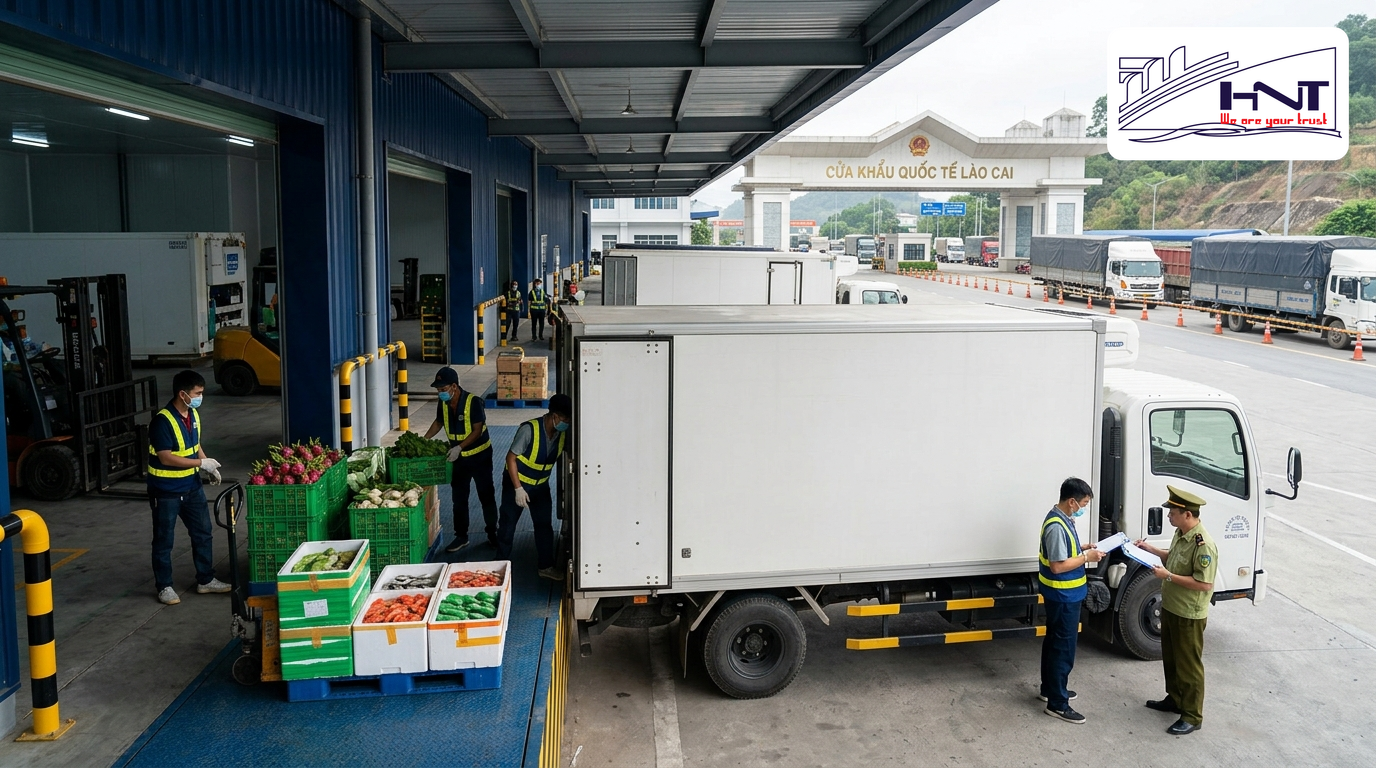
The refrigerated truck has arrived at the border gate, but the growing area code is wrong or the quarantine certificate does not match, which is enough to make the entire shipment wait for days. Transporting agricultural products to China requires simultaneous management of documentation, temperature, and customs clearance schedules. In 2026, Vietnam's fruit and vegetable exports reached 7.12 billion USD; the Chinese market remains a vital outlet.
Pre-export checklist to ensure agricultural shipments passing through the Chinese border are not blocked from the starting point
The first control point is not at the border gate. It is at the raw material area, packing facility, and sales contract. Businesses should lock shipment data before hiring trucks. This avoids the situation where goods are already palletized but no longer meet the conditions for official export.
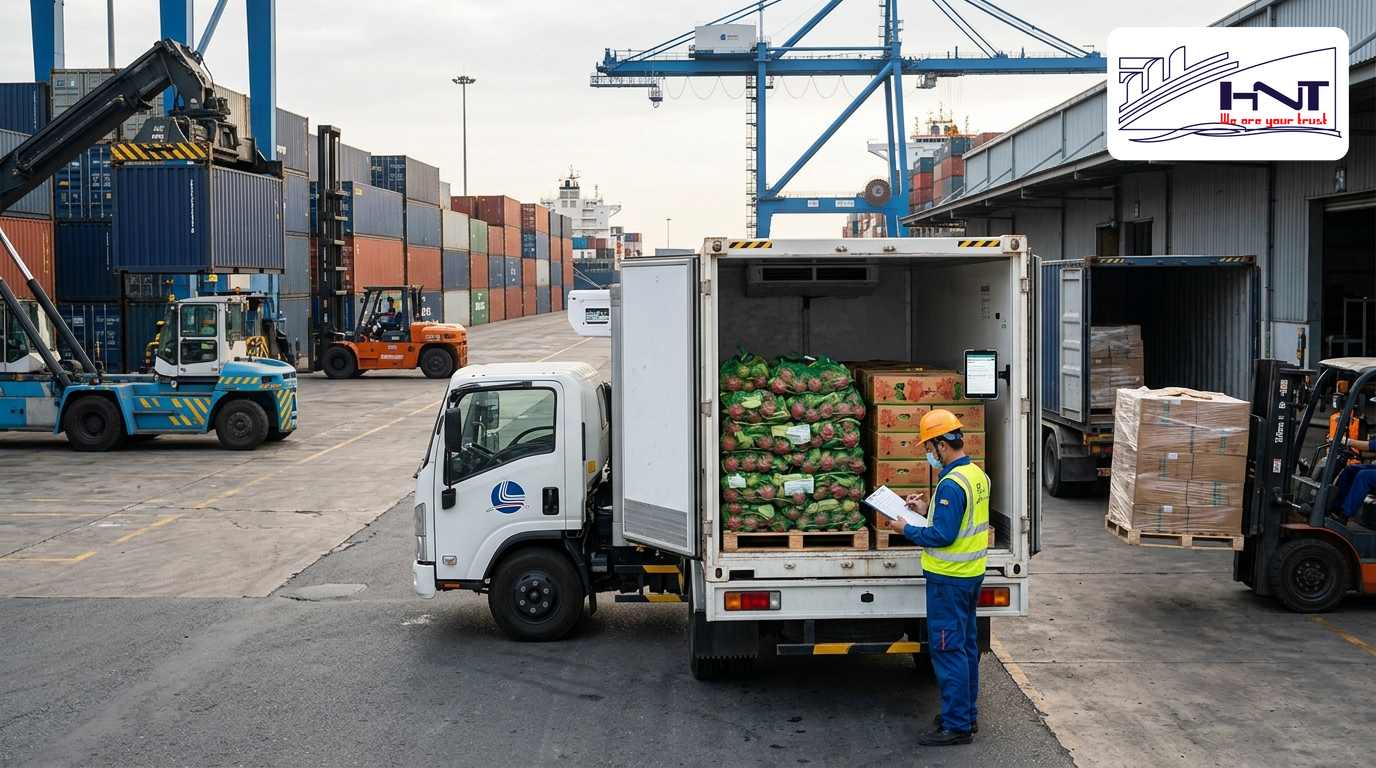
Verify growing area codes, packing facilities, and traceability conditions before closing the order
Cross-check growing area codes and packing facilities against the list published by the competent authority. Do not use codes from other units. The code must match the commodity, actual location, and harvest time. China has approved an additional 829 growing area codes and 131 durian packing facilities for Vietnam in 2026.
Check labeling, packaging, and import standards requirements for each agricultural product
Box labels must show at least the product name, origin in Vietnam, name or code of the packing facility, growing area code, and traceability information as required by each protocol. Packaging must be clean, free of soil, leaves, or foreign organisms. Use a pre-approved label template before mass production.
Plan output volume and refrigerated truck schedule according to border clearance times
Dispatch trucks according to the receiving time frame and actual customs clearance capacity. Do not bunch multiple trucks into the same trip if the import partner has not confirmed their receiving capacity. Based on the experience of HNT LOGISTICS, businesses should leave at least an operational buffer between the loading time and the expected delivery schedule.
Errors before the export date that cause shipments to be rejected right at the border
- The growing area code on the box does not match the previously registered shipment file.
- Goods purchased outside the area but using the shared traceability information of the standard-compliant area.
- Damp, torn, or plant-contaminated cartons increase the risk of additional inspection.
- The weight on the commercial invoice is significantly different from the actual packing list.
- The refrigerated truck is not pre-cooled, causing the core temperature of the goods to rise right from the starting point.
| Hạng mục | Confirming person | Completion time | Risk if omitted |
|---|---|---|---|
| Mã vùng trồng | Procurement | Before contract signing | Shipment rejection |
| Packing facility code | Packing facility | Before boxing | Hold goods for inspection |
| Box label | Quality control | Before label printing | Label correction at the border |
| Truck schedule | Dispatch | One day before | Increase timeout |
Practice tip: only allow stock release when the cultivation area profile, product photos, and label samples have been signed and verified by a responsible person.
Prepare documents and procedures for Chinese border export before the truck departs
Chinese border export procedures need to be completed according to a timeline, not based on intuition. Documents must accurately reflect the actual shipment. Any changes in the number of packages, weight, or vehicle must be controlled before submitting the customs declaration.
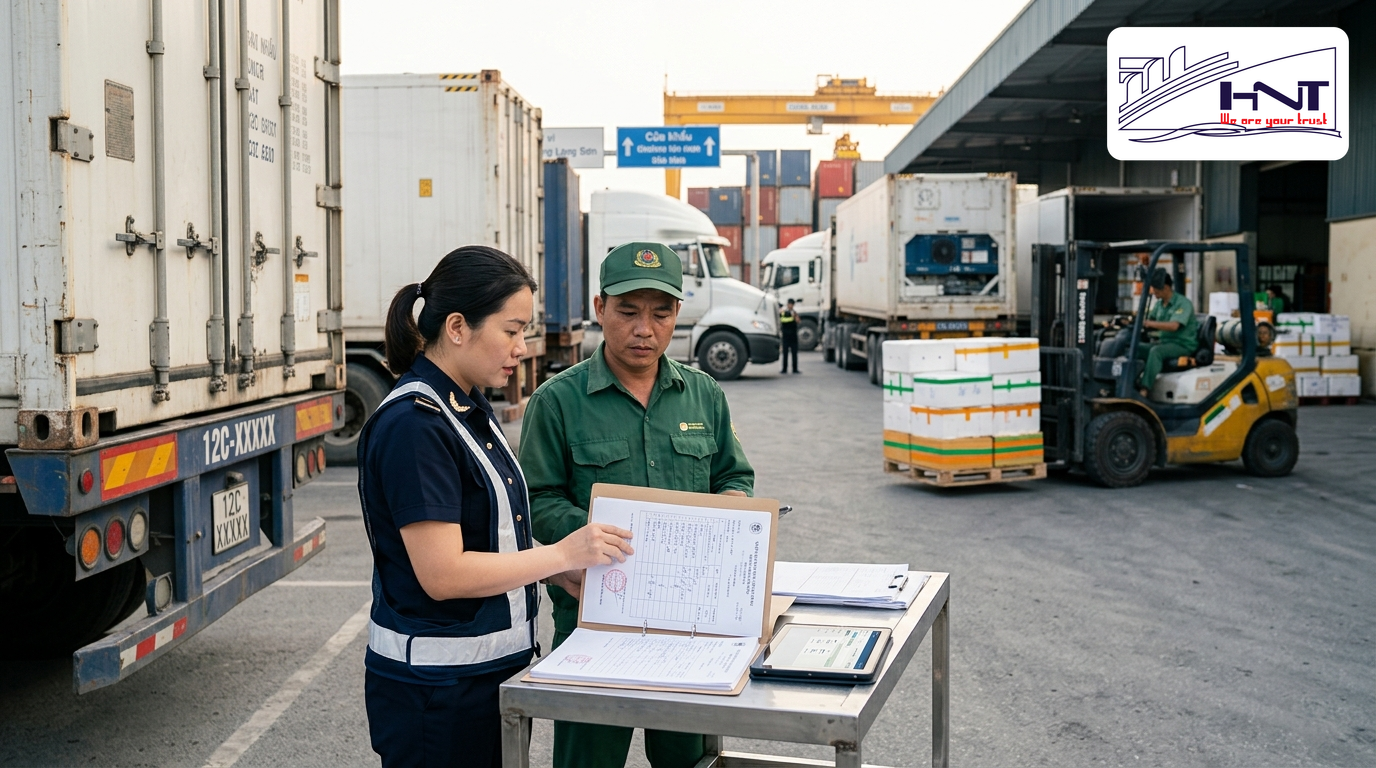
Required document set for transporting agricultural products to China by road
The document set usually includes a contract, commercial invoice, packing list, customs declaration, phytosanitary certificate when applicable, and certificate of origin (C/O) when the partner requires tax incentives. Some items must also comply with separate protocols between the two countries.
Timing for phytosanitary inspection and applying for certificate of origin
Schedule inspection after finalizing the shipment and before the truck leaves the warehouse. Do not take samples too early if the cargo is still subject to change. The C/O needs to be consistent with the invoice, product description, and HS code. The Department of Crop Production and Plant Protection is implementing cultivation area code management according to Decree 38/2026/ND-CP.
Electronic customs declaration and timelines to be completed
Transmit the declaration after commercial documents are locked. Check the Vietnamese product name, HS code, value, vehicle number, and export border gate. For fresh goods, review should be completed at least before the truck arrives at the yard. This allows time for error correction without breaking the cold chain.
Document errors often arise before transmitting the declaration and how to handle them
- Reconcile the number of packages on the invoice, packing list, and data pasted on the outside of the boxes before declaring.
- Check the scientific name or trade name of the goods according to the quarantine requirements for each agricultural product group.
- Confirm that the buyer, recipient address, and delivery terms have not changed after issuing the invoice.
- Review the phytosanitary certificate number and issue date before submitting with the electronic document set.
- Save the final version by lot code to handle quickly when customs authorities require reconciliation.
| Documentation | Purpose | Checkpoint | Timing |
|---|---|---|---|
| Commercial invoice | Valuation | Product name, product quantity | Pre-declaration |
| Packing | Package reconciliation | Number of packages, weight | Before loading |
| Inspection certificate | Meet plant requirements | Lot code, issue date | Before truck departs |
| C/O | Tax incentives | Origin, HS code | According to contract |
Hypothetical example: Nong Phu Tien Giang Company exports 18 tons of dragon fruit via Huu Nghi. Due to certificate reconciliation before the truck departed, the company discovered a package count error and fixed it within the day. The shipment did not have to wait for re-declaration. Build a professional page customs brokerage for export so that the sales team does not interpret documents on their own.
Process for transporting agricultural products by refrigerated truck from warehouse to border gate
Refrigerated vehicles only protect quality when the correct load capacity, configuration, and temperature are chosen. The set temperature does not replace pre-cooling of the cargo. Businesses must view the vehicle as part of the storage system, not just a means of transport.
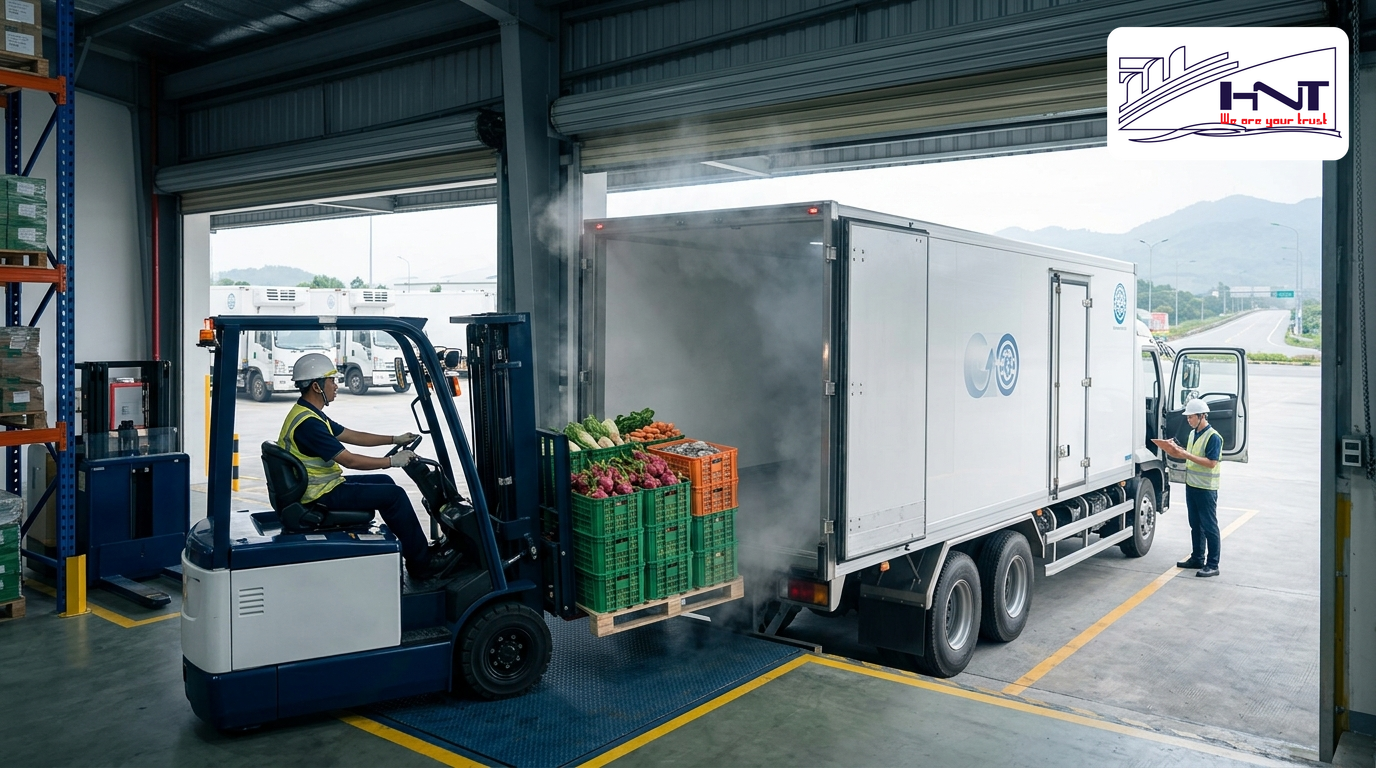
How to choose refrigerated trucks for transporting Chinese agricultural products by product group
Refrigerated trucks for transporting Chinese agricultural products must be suitable for the thermal sensitivity of each item. Dragon fruit, mangoes, and rambutan require different temperature levels than durian. Do not group products with strong odors with items that easily absorb odors. Request a temperature log and vehicle container cleaning report.
Setting temperature, humidity, and storage plans throughout the journey
Reference settings must be confirmed according to variety, ripeness, and buyer requirements. Airflow must pass through the cargo instead of being blocked by pallets. Do not place goods against the vehicle walls. According to experts at HNT LOGISTICS, independent sensors placed in the middle of the vehicle help detect temperature differences before cargo quality declines.
Controlling waiting time at the border gate to limit quality loss
Waiting time cannot be completely eliminated. Therefore, businesses must prepare fuel, driver change plans, and coordination phone numbers for both ends. Do not turn off the air conditioner when the vehicle is queuing. Monitor the border gate daily instead of using the previous week's customs clearance schedule.
Risks arising during transportation and response plans
- If the air conditioning unit reports an error, a backup vehicle or technician must be activated before the core temperature of the cargo increases.
- Prolonged traffic congestion requires updating the ETA for importers to adjust the receiving schedule.
- Broken seals must be recorded in minutes, photographed, and immediately notified to all relevant parties.
- Heavy rain near the border gate requires protecting box labels and limiting unplanned door openings.
- Insufficient fuel for the air conditioning unit must be considered a quality risk, not just a cost.
| Group of goods | Reference temperature | Loading notes | Monitoring indicators |
|---|---|---|---|
| Dragon Fruit | 5-8°C | Ventilated | Core temperature |
| Mango | 10-13°C | Avoid impact | Ripeness |
| Durian | 13-15°C | Odor control | Ventilation |
| Leafy vegetables | 2-5°C | High humidity | Wilted leaves |
Hypothetical example: Minh Khai Cooperative in Long An transports 16 tons of mangoes to Pingxiang. They pre-cool for six hours and place sensors between pallets. The temperature fluctuated only 1.2°C during the journey. The rejection rate at the receiving point decreased from 4.5% to 1.8%.
Customs clearance and delivery steps after arriving at the Chinese border gate
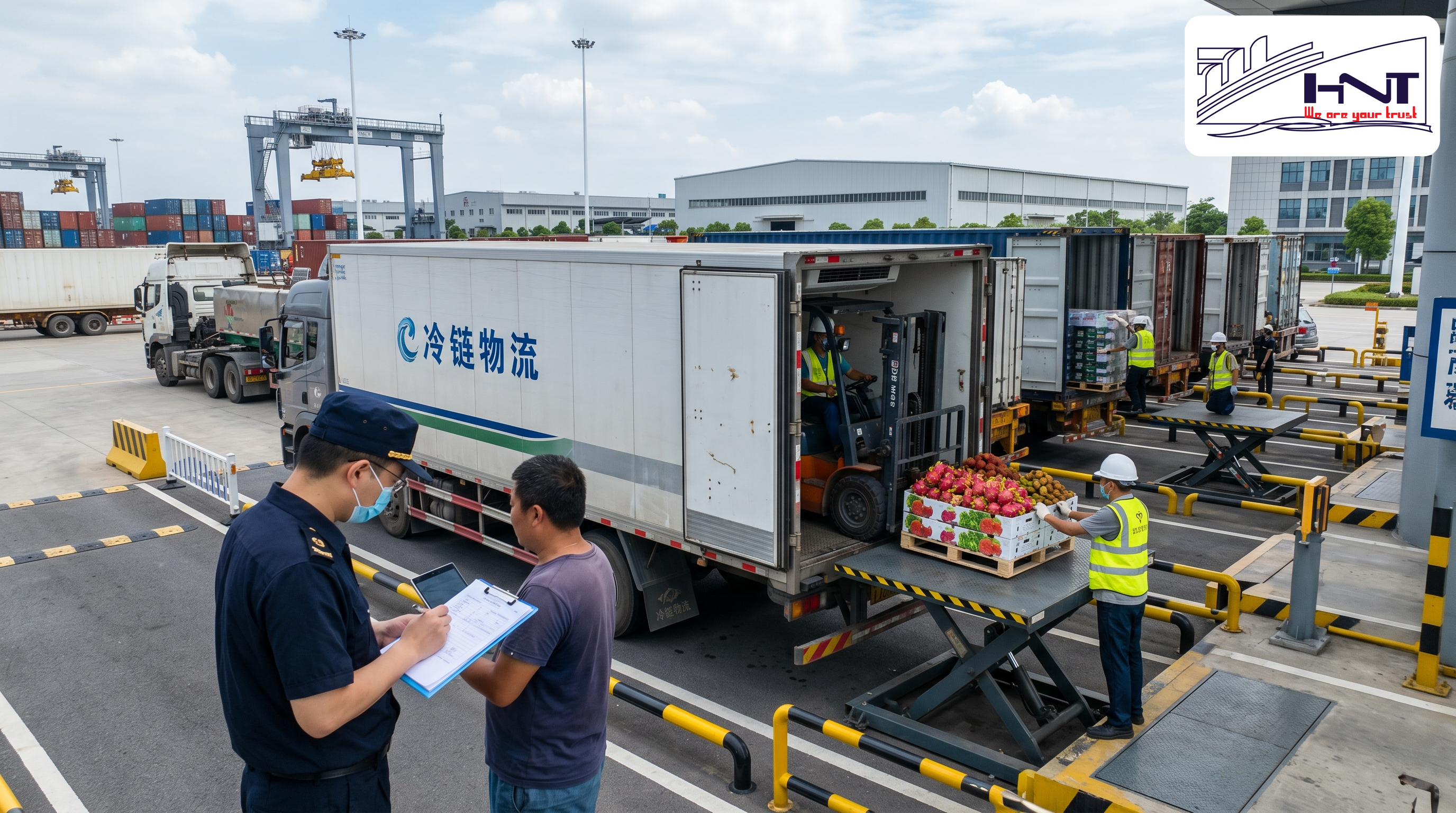
Arriving at the border gate does not mean the shipment is complete. This stage requires coordination between the driver, customs declaration unit, importing partner, and receiving warehouse. The goal is to respond immediately when the inspection side requests document verification or physical inspection.
Procedures for document inspection and physical inspection on the Chinese side
The importer carries out declarations according to China's regulations. Goods may be cross-checked against labels, certificates, growing area codes, packing facility codes, and actual condition. When designated for inspection, do not unload goods arbitrarily. All operations must follow the guidance of the authorities.
Criteria causing shipments to be held for additional inspection
Risks often stem from labels missing information, invalid traceability codes, signs of pests, excessive residues, or inconsistent documents. A truck with multiple shipments needs each set of documents clearly separated. Confusion between growing area codes can increase verification time.
Hand over goods to the importing partner and confirm completion of handover
The handover record must clearly state the time the truck door was opened, the recorded temperature, the number of packages, and the condition of the packaging. Take photos of pallets upon delivery. The importing partner should confirm in writing the actual quantity received. This is important evidence if quality disputes arise later.
How to handle cases where goods are required for re-inspection or additional documentation after arriving at the border gate
- Request a clear written statement of the reason for inspection or an official notification from the receiving end.
- Isolate the error related to labels, documents, quarantine, or quality so as not to handle the wrong focus.
- Send documents with version control to avoid creating multiple conflicting files at the same time.
- Maintain the air conditioner running and record the temperature throughout the waiting time for re-inspection.
- Assess truck detention costs, loss, and redirection plans after official results are available.
| Situation | Initial reaction | Responsible party | Evidence to save |
|---|---|---|---|
| Missing label | Compare with sample label | Packing facility | Photos of shipping boxes |
| Incorrect documents | Check original copy | Documentation staff | Document version |
| Re-inspection | Maintain temperature | Dispatch | Temperature log |
| Missing package | Re-count pallets | Driver and warehouse | Delivery minutes |
Practical tip: a single point of contact should be responsible for responding to requests from the border gate to avoid overlapping information.
How are China road freight rates calculated and how to optimize costs
China road freight rates are not just the truck rental price. An accurate quote must separate tractor costs, refrigerated truck costs, tolls, parking fees, customs clearance, fuel, and surcharges. Comparing the cheapest quote without comparing the scope of services often creates budget risks.
Factors directly affecting the cost of refrigerated trucks for exporting agricultural products
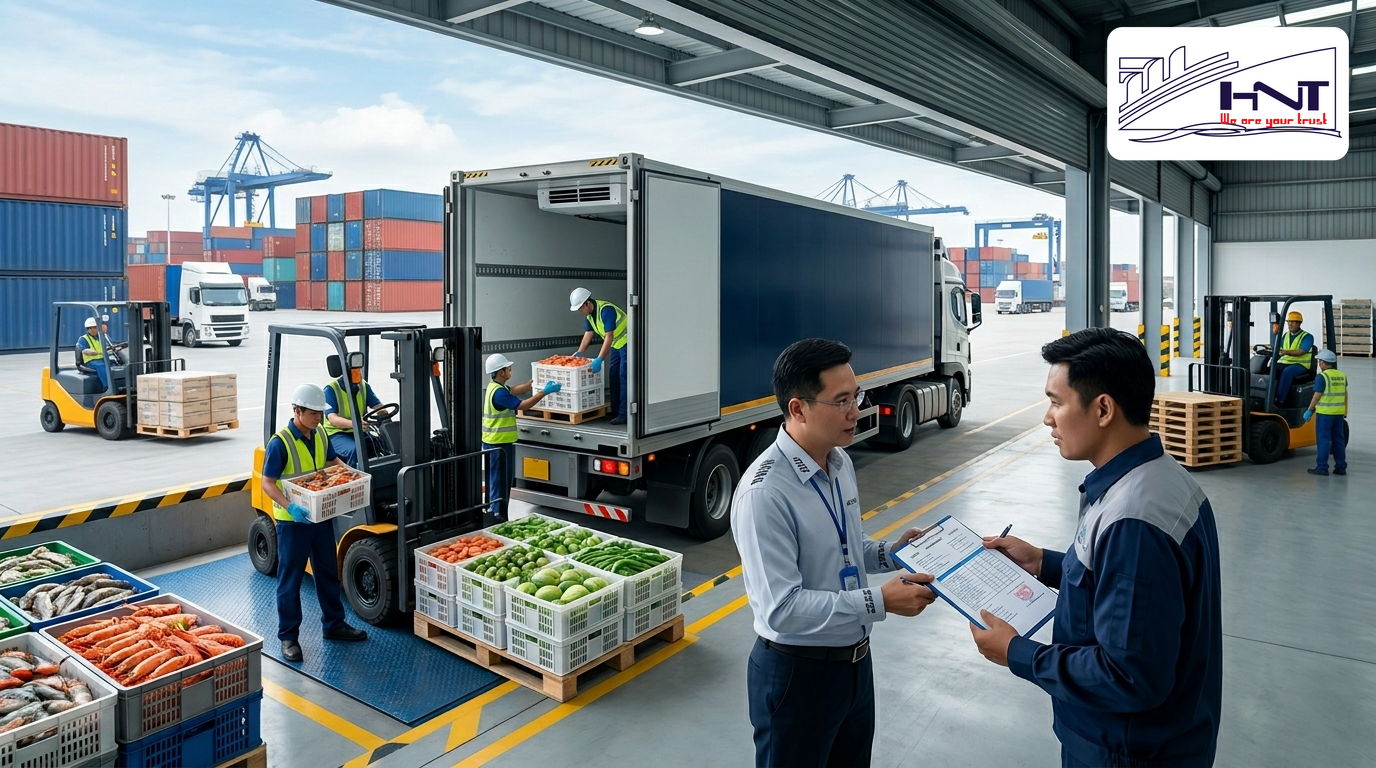
Costs change according to pick-up point, border gate, payload, seasonality, waiting time, vehicle configuration, and delivery conditions. Trucks running from the Mekong Delta to the border have a longer total distance than trucks departing from Lang Son. Goods requiring lower temperatures also increase fuel consumption.
Compare costs by border gate route and peak season
There is no standard price that applies to every shipment. The concentrated harvest season often causes a shortage of refrigerated trucks and extends waiting times. Businesses should request quotes with short validity, clear fuel terms, and waiting fee limits. HNT LOGISTICS recommends securing truck capacity before finalizing procurement schedules.
Surcharges that businesses often overlook when budgeting for exports
- Waiting fees for exceeding free time at the loading warehouse or border waiting yard.
- Costs incurred due to changing delivery points, rescheduling, or increasing refrigerated truck operating time.
- Re-loading costs when inspection authorities require opening the truck or counting pallets.
- Fees for processing additional documents, adjusting declarations, or correcting invoice information.
- Quality loss costs when goods wait for a long time but the contract does not clearly define responsibility.
| Cost group | Common calculation method | Strong fluctuations when | Control method |
|---|---|---|---|
| Refrigerated truck freight | Per trip | Peak season | Book trucks early |
| Fuel | According to terms | Long wait | Fix limits |
| Yard waiting | By hour or day | Border gate congestion | Daily cargo tracking |
| Re-loading | Per occurrence | Kiểm hóa | Standard pallet packing |
Hypothetical example: Dai Loc Fruits Company in Binh Duong exports 20 tons of jackfruit via Mong Cai. They moved the truck loading schedule to the night, reduced warehouse waiting time by three hours, and saved 6% of refrigerated truck operating costs. Businesses should maintain the page refrigerated container size standards so the purchasing team understands the difference between refrigerated trucks and refrigerated containers.
Solutions to reduce costs while maintaining product preservation quality
Reducing costs the right way is about reducing fluctuations, not lowering storage temperatures or skipping insurance. Consolidating batches with the same temperature conditions, standardizing pallets, and using border gate forecasts will reduce truck waiting risks. For recurring contracts, costs should be measured per kilogram delivered successfully rather than just looking at truck rental prices.
Risk management plan after each shipment to maintain stable exports to China
Each truck shipment must generate data for the next one. Businesses should not evaluate performance only by whether the truck has passed the border. Metrics should include loss rate, waiting time, temperature deviation, incurred costs, and number of times document supplementation was required.
Track loss rate and product quality after delivery
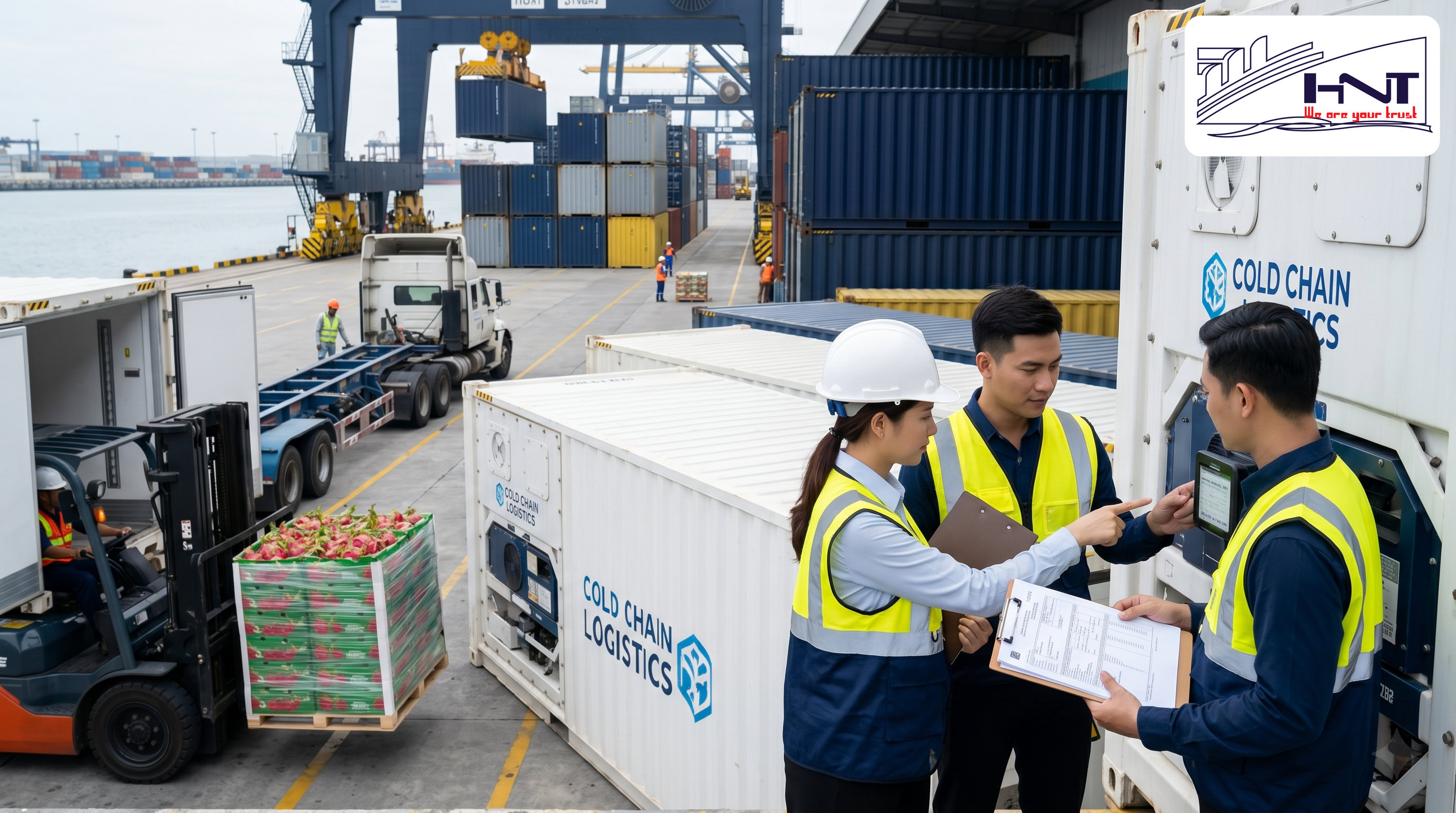
Record damage rates by product, growing region, route, and season. Compare photos taken during loading with photos taken at delivery. When the loss rate increases, it is necessary to analyze by cause: harvesting, pre-cooling, loading, waiting time, or receiving conditions.
Archive records for future re-export shipments
Save an electronic record set by batch code, including documents, label photos, temperatures, delivery reports, and buyer feedback. This storage method helps shorten preparation time for the next batch. It also helps businesses prove consistency when audited.
Evaluating the effectiveness of China road export services by trip
China road export services should be measured by on-time delivery rate, temperature stability, response speed during incidents, and cost transparency. Do not choose a provider solely based on the offered price. A low quote without clear vehicle waiting terms can lead to higher costs.
Develop contingency plans when border policies change abruptly
- Establish a list of contacts for border updates, customs, importers, and refrigerated truck units.
- Prepare at least one alternative border gate suitable for the type of goods and permit scope.
- Maintain short-term cold storage capacity to avoid being forced to sell off goods when truck schedules are interrupted.
- Review sales contracts regarding responsibility when policies change or inspections are extended.
- Drill the process of notifying customers when ETA changes to reduce delivery disputes.
| Indicator | Tracking goal | Data source | Action when deviating |
|---|---|---|---|
| Loss rate | By batch | Minutes of receipt of goods | Cold chain review |
| Waiting time | By border gate | Truck log | Reschedule |
| Temperature deviation | By route | Temperature sensors | Cooling unit check |
| Additional costs | Per trip | Quotation and settlement | Negotiate terms |
Sustainable agricultural transport to China requires management before, during, and after the trip. Remember these points:
- Only confirm orders when the planting area code and packing facility are matched to the correct item.
- Lock documents before the truck departs, especially the number of packages, weight, and buyer information.
- Cold storage funds and independent temperature monitoring are more important than nominal temperature settings.
- Calculate China road freight rates based on total successful delivery costs, not just truck rental prices.
- Save all shipment data to identify the cause of losses and optimize the next trip.
- Prepare alternative border gates, cold storage, and communication plans when policies change suddenly.
For businesses needing to standardize the process of transporting agricultural products to China, HNT LOGISTICS is a forwarding and logistics partner that supports designing refrigerated truck plans, controlling documents, and coordinating operations throughout the journey. Do not wait until the truck is at the border to handle risks.