


What is a customs declaration when a shipment of components arriving at Cat Lai Port is held due to an incorrect HS Code? It is the core document that enables Customs to identify the goods, calculate taxes, assign an inspection channel, and authorize customs clearance.
In 2026, the total import-export turnover of goods in the first quarter reached USD 202.52 billion, with imports increasing by 17.0%. Vietnam's seafood exports also reached USD 11.3 billion in 2026. These figures show that import documentation is no longer a minor administrative task.
Amid sharp fluctuations in container freight rates, a single incorrect field on a customs declaration can lead to storage charges, bill of lading amendments, and delayed delivery. This article helps readers understand what customs declaration means, prepare an import declaration step by step, identify common mistakes, and control risks before cargo arrives at the port.
What is a customs declaration and why does it determine customs clearance speed?
A customs declaration is a declaration of import and export goods information submitted by the declarant to the customs system. For imported goods, the declaration includes the importer, exporter, declaration type code, HS Code, customs value, tax rate, port of discharge, bill of lading, and supporting documents.
In practice, what is a customs declaration in operations? It is the intersection between commercial documents and legal obligations. If the data on the commercial invoice, packing list, bill of lading, and certificate of origin do not match, the system may assign the shipment for inspection. Therefore, understanding what a customs declaration is helps businesses avoid corrections after the goods have arrived.
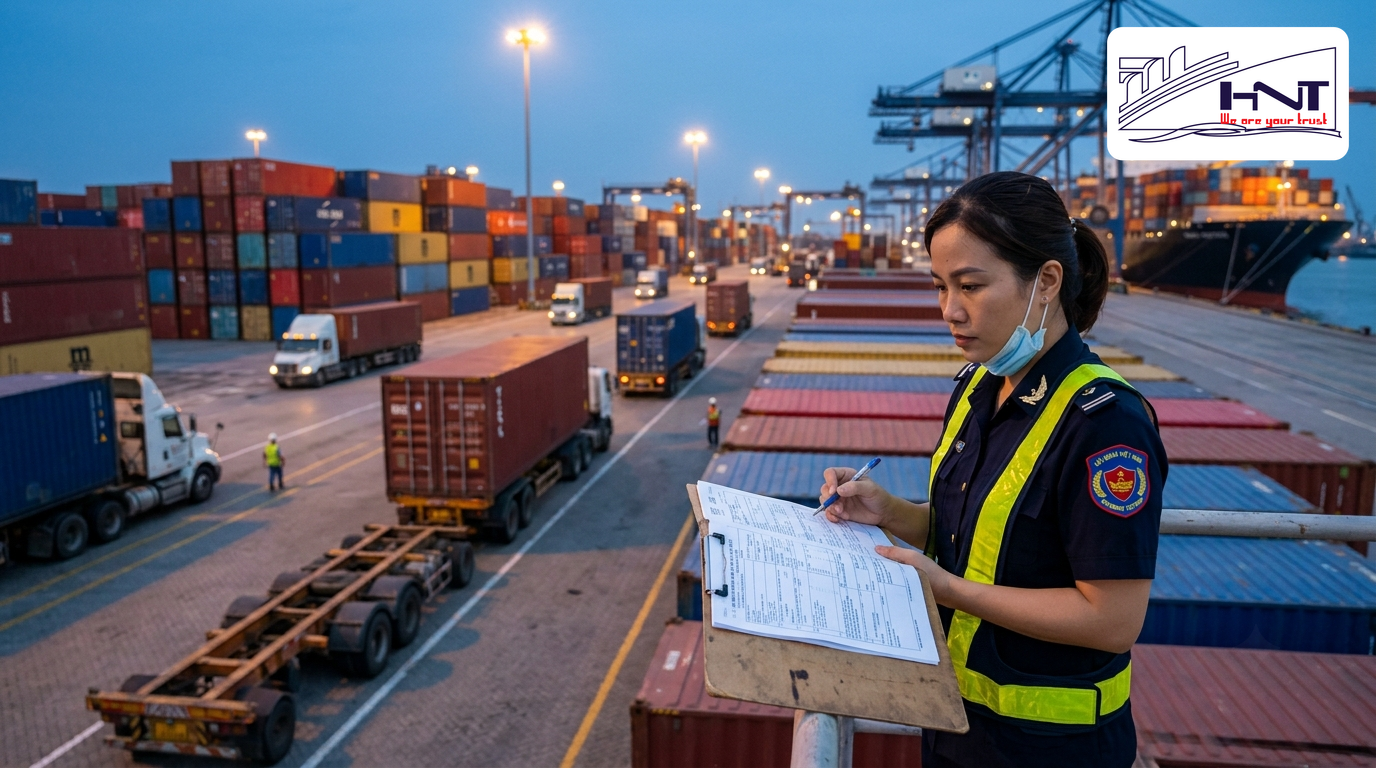
- The declaration correctly identifies the party legally responsible before the customs authority.
- The declaration enables the system to calculate import duty, value-added tax, and specialized taxes.
- The declaration links bill of lading data, the port of discharge, and the customs supervision location.
- The declaration is the basis for assigning the green, yellow, or red inspection channel for cargo.
- The declaration supports international payment, tax finalization, and business record retention.
- An incorrect declaration may result in container detention charges, storage fees, and delayed delivery.
| Component | Operational significance | Risks if incorrect | Checking method |
|---|---|---|---|
| Product code | Determine the import purpose | Incorrect tax policy | Verify against the contract |
| HS Code | Neat packaging also helps significantly reduce the cargo volume. | Incorrect tax rate | Check the technical description |
| Declared value | Basis for tax calculation | Subject to customs valuation consultation | Match the invoice |
| Bill of lading | Link the shipment | Goods rejected | Verify the bill of lading number |
| Certificate of origin | Apply tax incentives | Loss of incentives | Check the origin criteria |
How is an import customs declaration different from commercial documents?
A commercial invoice proves the sales transaction. A packing list describes the packing specifications. A Bill of Lading proves the right to receive the goods. An import customs declaration, on the other hand, is the legal data used by the customs authority to make decisions on shipment management.
For example, Minh Phat Company in Binh Duong imports packaging machines from Shanghai to Cat Lai Port. The invoice lists one product code, but the technical catalogue shows a different capacity. By correcting the description before submitting the customs declaration, the business avoids an additional day of inspection.
When must a business open a customs declaration?
Businesses usually open a customs declaration once they have a sufficiently complete document set and the goods are about to arrive at the port. The declaration should not be submitted too early if the bill of lading is still being amended. It should also not be submitted too late, as the container free time may be consumed quickly.
Based on HNT LOGISTICS's experience, importers should lock the declaration data set at least one working day before the vessel arrives. For refrigerated goods, this time helps further check temperature, container numbers and quarantine requirements before port costs arise.
Practical tip: do not view the declaration as a form. View it as a risk map of the shipment.
how to make an import customs declaration: prepare data before transmission
Making an import customs declaration starts with data standardization, not software. The declarant needs to read the contract, invoice, packing list, bill of lading, certificate of origin, specialized permits and commodity policies before entering the information.
Appendix I of Circular 39/2018/TT-BTC specifies the information criteria system for electronic customs declarations. Therefore, businesses need to turn scattered documents into a consistent data set. Small discrepancies between product names and HS Code can result in lost tax incentives.
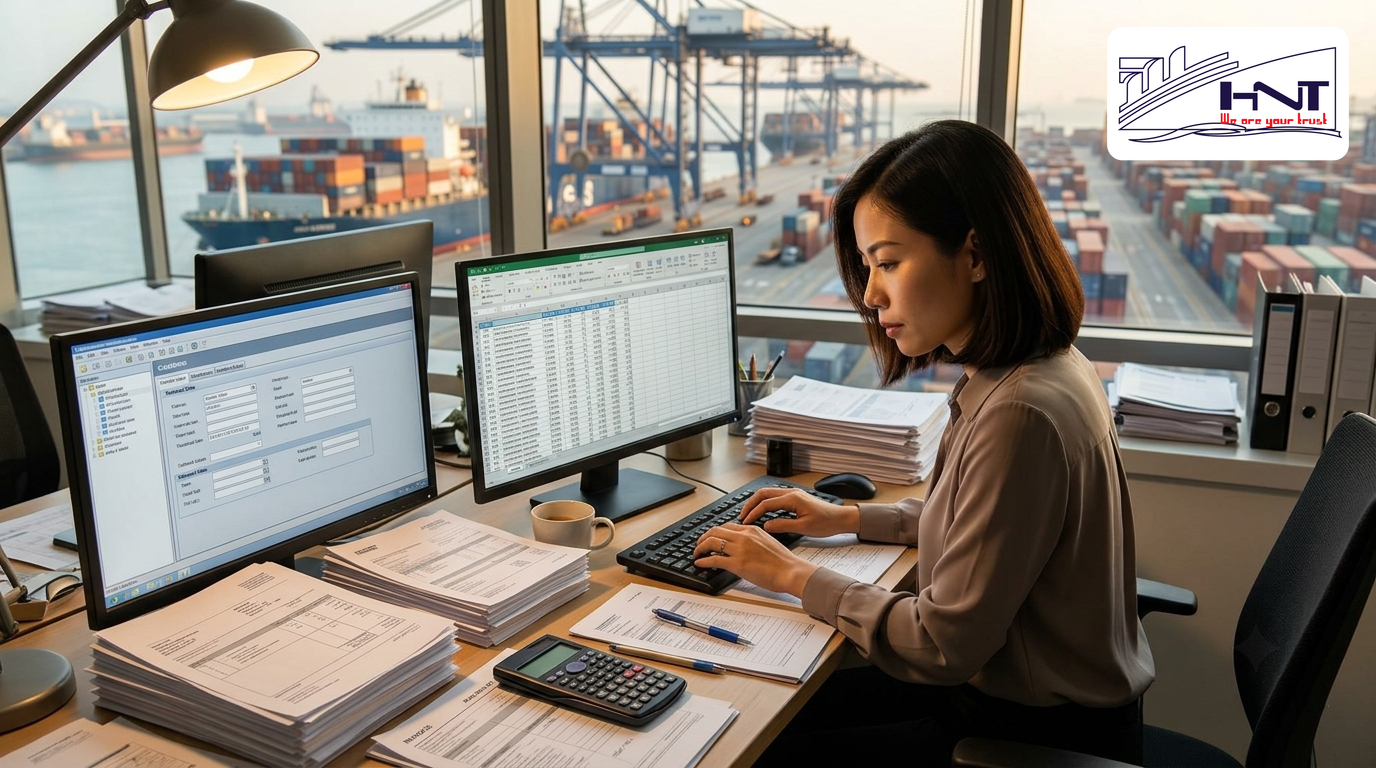
- Receive draft documents from the supplier and request corrections before issuing the final version.
- Check the product name, model, material, usage and technical specifications of each product line.
- Determine the import type code based on the purpose of use and business method.
- Look up the HS Code based on the nature of the goods, not old habits.
- Compare delivery terms such as FOB, CIF or DDP with the declared value.
- Check specialized management policies, quarantine, conformity certification or permits.
- Finalize the bill of lading number, container number, discharge port and vessel arrival date before transmitting data.
| Documentation | Data to collect | Control point | Common errors |
|---|---|---|---|
| Contract | Delivery terms | Match invoice | Confuse FOB and CIF |
| Invoice | Value, currency | Match payment | Wrong unit price |
| Packing | Number of packages, weight | Match bill of lading | Weight discrepancy |
| Bill of lading | Bill of lading number, port | Match delivery order | Wrong port of discharge |
| Care of | Origin, criteria | Match HS Code | Wrong preferential form |
| License | License number | Still valid | Submit insufficient documents |
what is a customs declaration when checking the import type code?
What is a customs declaration, the declaration type code is the answer to the question of what the imported goods are for. Business import, export production, processing or investment to create fixed assets have different tax consequences. If selected incorrectly, the customs declaration may need to be canceled or additionally declared.
The HS Code must be based on technical characteristics. For example, An Nam Food Company in Tien Giang imports food packaging film from Busan to Cat Lai. When the material and thickness are clearly described, the company reduces document inspection time from eight hours to three hours.
Check declared value, delivery conditions and taxes
The declared value must accurately reflect the delivery terms. If the invoice is under FOB, the declarant needs to check which freight and insurance costs must be added. If the invoice is under CIF, duplicate additions must be avoided. This is a very common financial error in import customs declarations.
HNT LOGISTICS recommends that businesses prepare a value comparison table before transmitting the declaration. This table should include the invoice, transportation fees, insurance fees, royalty fees if any, and estimated taxes. This method helps accountants prepare the tax payment cash flow on time.
Practical tip: verify the value before verifying the tax rate. Correct tax on an incorrect value is still a risk.
what is a customs declaration in the declaration and channeling process?
In the import process, what is a customs declaration if not the point that activates channeling. After the data is transmitted, the system receives it, assigns a declaration number and returns the processing channel. Each channel creates a different operating rhythm at the port, warehouse and accounting department.
The green channel usually allows fast customs clearance if tax obligations have been completed. The yellow channel requires document inspection. The red channel requires physical inspection of goods. Importers need to prepare handling plans for all three scenarios instead of only hoping for the green channel.

- Log in to the electronic declaration system using the enterprise account or authorized agent account.
- Enter general information including importer, exporter, unloading port and transportation method.
- Enter each item line with HS Code, description, quantity, value and tax rate.
- Attach or prepare electronic documents according to the requirements of each product group.
- Transmit the declaration, receive the declaration number and check the system response.
- Pay taxes through the Electronic Payment Portal and complete 24/7 customs clearance when tax obligations arise.
- Present documents or goods if the declaration is assigned to the yellow or red channel.
- Store records after customs clearance to serve inspection, tax refund or settlement.
| Channel | Task | Risk timing | Risk reduction measures |
|---|---|---|---|
| Green | Pay taxes and collect goods | Tax debt or incorrect barcode | Payment inspection |
| Yellow | Submit inspection documents | Missing documents | Prepare electronic copy |
| Red | Physical inspection of goods | Goods mismatch and declaration | Arrange physical inspection |
| Additional declaration | Correct permitted criteria | Tax impact | Save correction reason |
| Cancel declaration | Start over | Delayed cargo receipt | Pre-transmission check |
what is a customs declaration in the electronic transmission step?
When entering data, the declarant should go from the general section to each item line. Do not copy an old declaration if the goods, supplier, or delivery conditions have changed. Mechanical copying is a hidden cause of system errors.
For example, Viet Tin Components Company in Dong Nai imports components from Kaohsiung to Cat Lai Port. The employee used an old declaration and kept the original loading port. After checking before transmission, they discovered the wrong port and avoided having to cancel the declaration.
Handling green, yellow, and red channels after receiving results
For the yellow channel, customs clearance speed depends on the quality of the documents. For the red channel, speed also depends on inspection schedules, container location, and the ability to safely open the goods. Cold goods or easily damaged goods need to prioritize early inspection schedules.
For imported fresh fruit shipments or goods requiring quarantine, businesses should prepare the refrigerated container pickup schedule in advance. Temperature needs to be monitored continuously. This reduces the risk of incurring container storage fees and preserves goods quality during inspection.
Practical tip: after receiving the channel result, coordinate documents, taxes, and on-site operations at the same time.
what is a customs declaration when checking common errors?
Looking directly, what is a customs declaration when errors occur: most risks do not come from difficult laws. They come from undisciplined data. A weight figure, a character in the bill of lading number, or an unclear goods description can all create real costs.
The transportation market in 2026 is becoming more sensitive to congestion and freight increases. The Drewry World Container Index on 02/07/2026 reached 4,530 USD for a 40-foot container. When freight and surcharges are high, declaration errors become even more expensive.
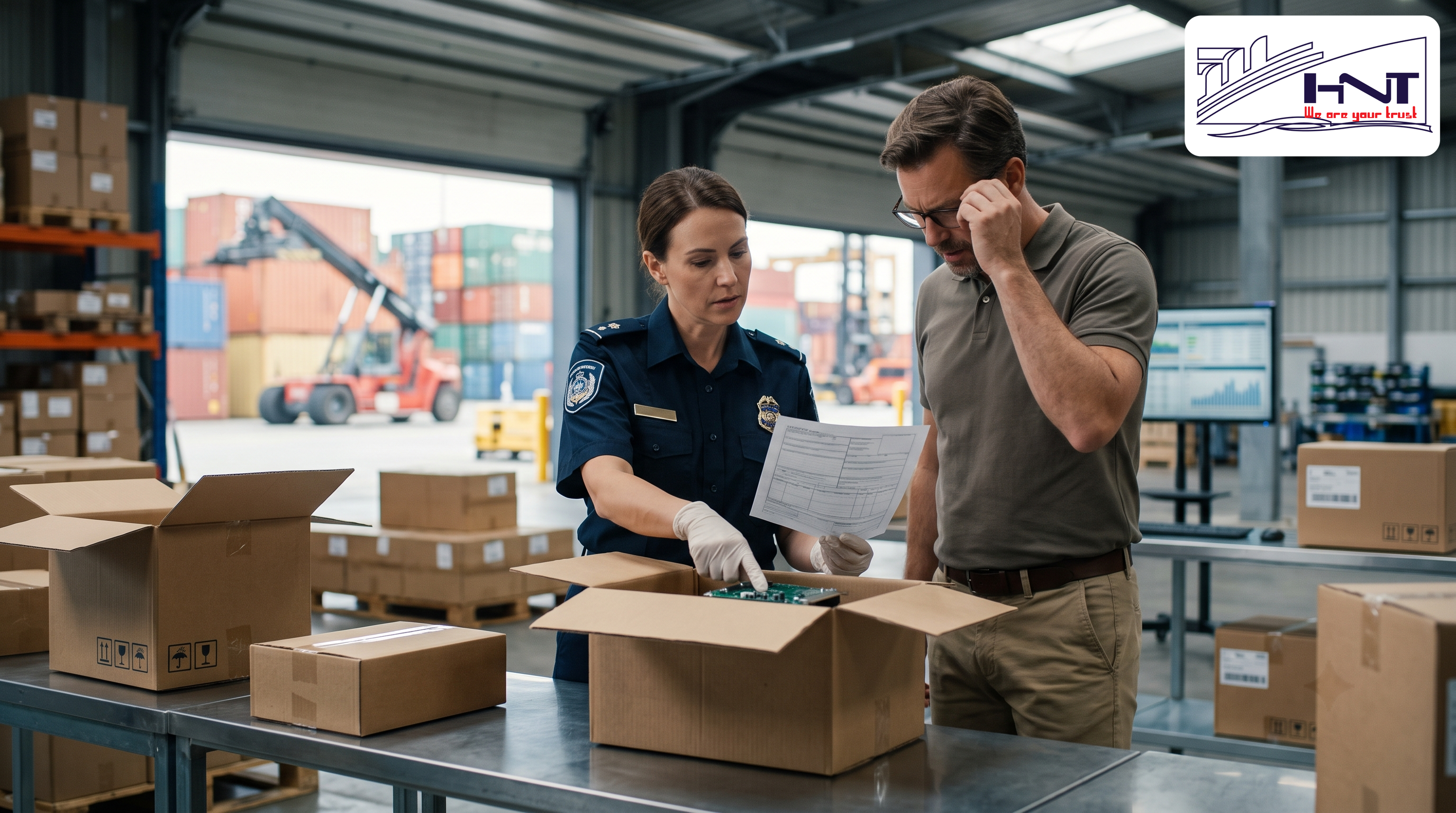
- Wrong HS Code because it is based only on the trade name and not the technical specifications.
- Wrong declaration type because of failure to distinguish commercial import, processing, and export production.
- Wrong value due to missing freight, double-counting insurance, or confusing currencies.
- Wrong bill of lading number, container number, or discharge port when the shipping line revises documents late.
- Missing specialized permits, quarantine, or mandatory conformity certificates.
- Goods description is too general, making it difficult for officials to determine the nature of imported goods.
- Failure to retain explanation records, weakening the position during post-clearance inspection.
| Error | Recognition signs | Potential costs | How to avoid |
|---|---|---|---|
| Wrong HS Code | Unusual tax | Additional tax assessment | Request classification advice |
| Incorrect customs value | Invoice discrepancy | Value consultation | Create addition and subtraction table |
| Missing permit | Not passing specialized inspection | Storage fees | Check policy |
| Wrong bill of lading | Delivery order mismatch | Delayed cargo pickup | Confirm with shipping line |
| Ambiguous description | Asked for additional information | Extended inspection | Clearly state the intended use |
What is a customs declaration when data is mismatched?
Businesses often check invoices but overlook packing lists. This is a mistake. The weight on the packing list can affect customs inspection, handling, and bill of lading reconciliation. If the three documents do not match, the customs declaration can easily be questioned again.
For example, Mekong Fresh Company in Can Tho imported cold packaging from Yokohama. The packing list recorded 1,280 packages, while the bill of lading recorded 1,208 packages. By correcting it before declaration, the company avoided prolonged document checks and saved one day of storage time.
Product policy and quarantine errors
Food products, agricultural products, seafood, used machinery, and chemicals often have their own policies. The declarant must check licenses, quarantine requirements, food safety, or conformity certifications. You cannot wait until the goods arrive at the port to ask about procedures.
For example, a seafood processing factory in Ca Mau imported preservatives from Thailand. The declaration team discovered that food safety documents were required before opening the declaration. Thanks to early preparation, the shipment did not interrupt the production line.
Practical tip: the cheapest error is the one discovered before pressing the submit declaration button.
What is a customs declaration in cost control and post-clearance records?
What is a customs declaration after clearance: it does not end when the goods leave the port. It continues with the business in accounting, post-clearance inspection, bank payments, tax refunds, and raw material settlement. Therefore, managers need to design record-keeping procedures from the beginning.
Businesses exporting and importing agricultural products, seafood, and fresh fruits need even stricter document discipline. The cold chain includes temperature, power connection time, quarantine, and cargo pickup schedules. A weak document set can make logistics costs far exceed the initial freight costs.

- Store declarations, tax notices, tax payment documents, and clearance notices for each shipment.
- Store invoices, packing lists, bills of lading, certificates of origin, and specialized licenses with the same record code.
- Record the time of declaration opening, channel assignment, clearance, and delivery for each container.
- Reconcile container storage, yard storage, handling, and domestic transportation costs after each shipment.
- Review declarations with tax incentives to ensure certificates of origin are stored on time.
- Set up alerts when there are additional declarations, valuation consultations, or post-clearance inspections.
| Storage category | Purpose | Person in charge | Review cycle |
|---|---|---|---|
| Customs declaration | Customs clearance proof | Documentation | By shipment |
| Tax documents | Accounting reconciliation | Accounting | Monthly |
| Care of | Protect tax incentives | Import export | Quarterly |
| Inspection report | Risk explanation | Operations team | By shipment |
| Port costs | Control additional expenses | Procurement | Monthly |
| Temperature data | Protect cold cargo | Warehouse and logistics | Per trip |
Linking the declaration with accounting, warehouse and domestic transportation
A good declaration must help accounting know the tax amount, the warehouse know the time of receiving goods, and transportation know the container pickup schedule. If the three departments use three different data sources, the business will pay the price through delayed deliveries, cost disputes and loss of inventory control.
In the internal system, businesses should link the declaration code with purchase orders, bill of lading numbers and warehouse batch codes. When retrieval is needed, the documentation department does not have to search manually. This method is especially effective for customs declaration services for businesses with many shipments.
Conclusion: turning the declaration into a risk management tool
At this point, the question of what a customs declaration is should not stop at a definition. It is an import risk management tool. A correct declaration helps businesses move faster, pay taxes more accurately, keep goods safer and have stronger records when inspected.
- Understand what customs declaration means correctly before handing over the entire process to a third party.
- Standardize documents before transmitting the declaration, especially invoices and bills of lading.
- Check the type code, HS Code and value according to the nature of the goods.
- Prepare plans for all green channel, yellow channel and red channel cases.
- Do not underestimate specialized licenses, quarantine and food safety requirements.
- Store post-clearance records to protect the business when inspections occur.
- Measure additional costs to improve the import process for the next shipment.
HNT LOGISTICS recommends that businesses build separate checklists for each imported goods group. As a reputable freight forwarding and logistics partner for Vietnamese exporters, this team can support document review, port coordination and process consulting before costs arise.