



When a durian container misses its loading schedule, agricultural produce shipping costs do not only increase because of trucking fees. They also lead to temperature loss, waiting charges, quarantine risks, and missed delivery schedules for buyers.
In 2026, Vietnam's fruit and vegetable exports reached approximately USD 8.5 billion, a record high for the industry. In the first 11 months alone, this product group reached about USD 7.75 billion, up 17.3% compared to the same period. Drewry reported the World Container Index on 16/07/2026 at USD 4,547 for a 40-foot container.
Bài viết giúp chủ hàng bóc tách đúng cấu phần giá, chọn phương án bảo quản và kiểm soát chứng từ. Mục tiêu không phải tìm giá rẻ nhất. Mục tiêu là giảm tổng chi phí giao hàng mà vẫn giữ chất lượng nông sản.
What costs are included in agricultural produce shipping?
Agricultural produce shipping costs are often misunderstood as a single figure. Therefore, agricultural produce shipping costs should be viewed layer by layer; a quotation includes the main freight, surcharges, domestic transport, port fees, documentation fees, insurance, and incidental costs. For fresh fruit, incidental costs are the most dangerous part.
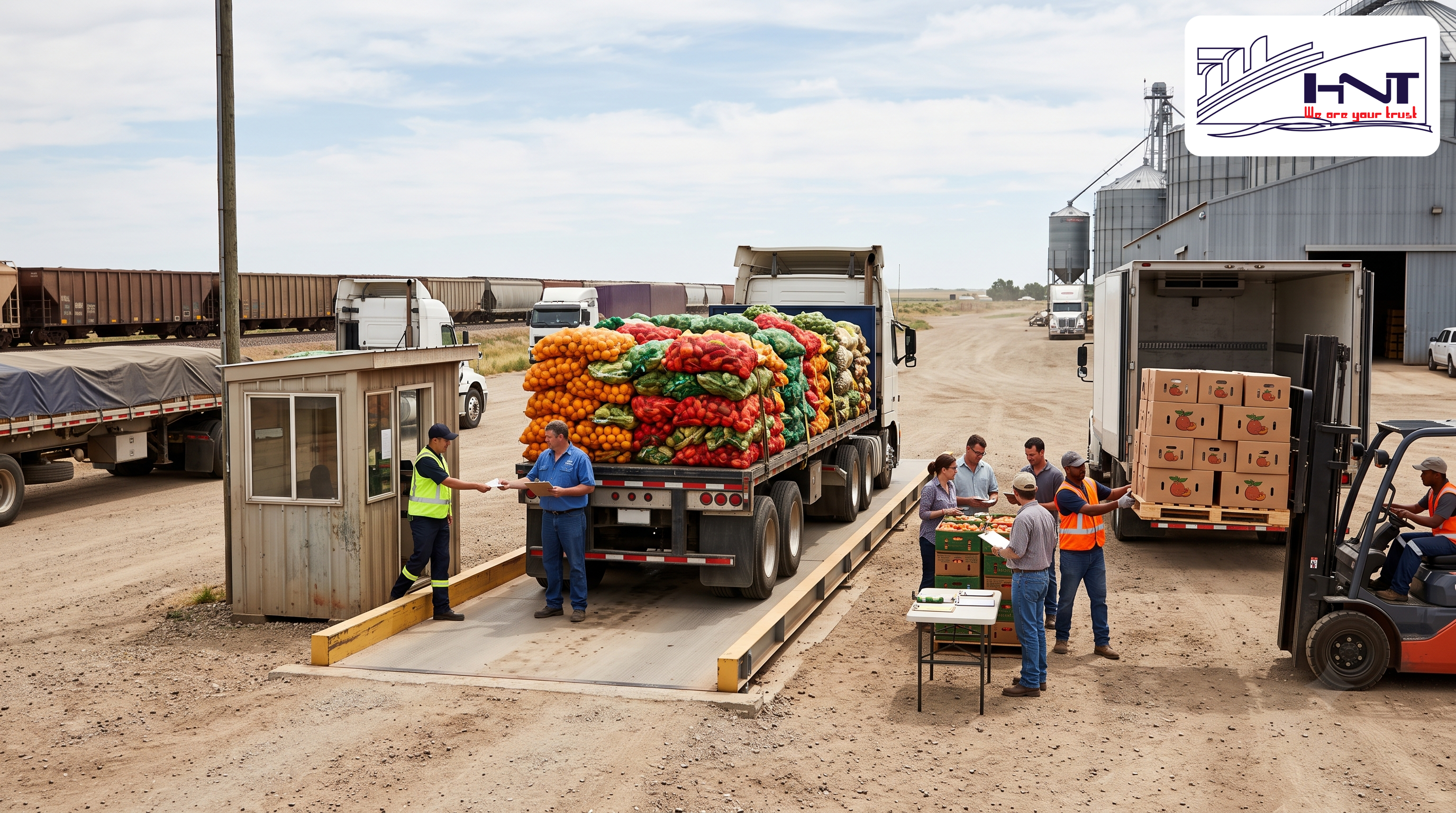
How to break down agricultural produce transportation costs by each stage
Agricultural produce transportation costs should be separated by the stages of farm, processing warehouse, departure port, destination port, and final delivery. This method clearly reveals bottlenecks in agricultural produce shipping costs. If businesses only compare total prices, they can easily choose the wrong carrier.
- Check the distance from the growing area to the cold storage warehouse, as empty return trips increase the unit price.
- Separate lifting, loading, and refrigerated container cleaning fees before the port cut-off date.
- Compare the main freight with peak-season surcharges, fuel surcharges, and security fees.
- Set aside a budget for storage charges if the phytosanitary certificate arrives later than planned.
- Request that the free container detention period and port storage charges be clearly stated.
- Include cargo insurance in the total cost instead of treating it as an optional expense.
| Cost group | Issue | Control method | Risks if ignored |
|---|---|---|---|
| Main freight | Sea or road route | Confirm quotation validity | Price increases close to the departure date |
| Domestic charges | Warehouse, port, yard | Separate each cost item | Extra charges added outside the contract |
| Refrigeration charges | Refrigerated container, cold storage | Check the set temperature | Goods lose quality |
| Documentation fee | Customs, quarantine, C/O | Standardize documentation | Customs clearance delay |
| Incurred fees | Demurrage and detention | Monitor the port cut-off schedule | Sharp price increase |
For example, Mekong Fresh Company in Tien Giang exported 22 tons of mangoes to Shanghai. After separating refrigerated truck fees and quarantine fees, the company found that 11% of the cost was in waiting time for certificates. After changing the loading schedule, the total cost decreased by 7.8%.
Another example: Blue Sea Cooperative in Ca Mau shipped frozen shrimp to Hai Phong Port for onward export. Booking the truck three days in advance helped eliminate one tractor swap. Port waiting time was reduced by 9 hours.
Implementation tip: Request a quotation with a cost breakdown. A low agricultural transportation rate that excludes surcharges is not a good price.
Agricultural transportation rates are affected by harvest seasons and transport routes
Agricultural produce shipping costs fluctuate significantly depending on harvest seasons, refrigerated container capacity, and route conditions. When demand from China, the United States, or Southeast Asia increases, vessel space and containers are often constrained. Businesses need to book earlier to keep agricultural transportation rates stable.
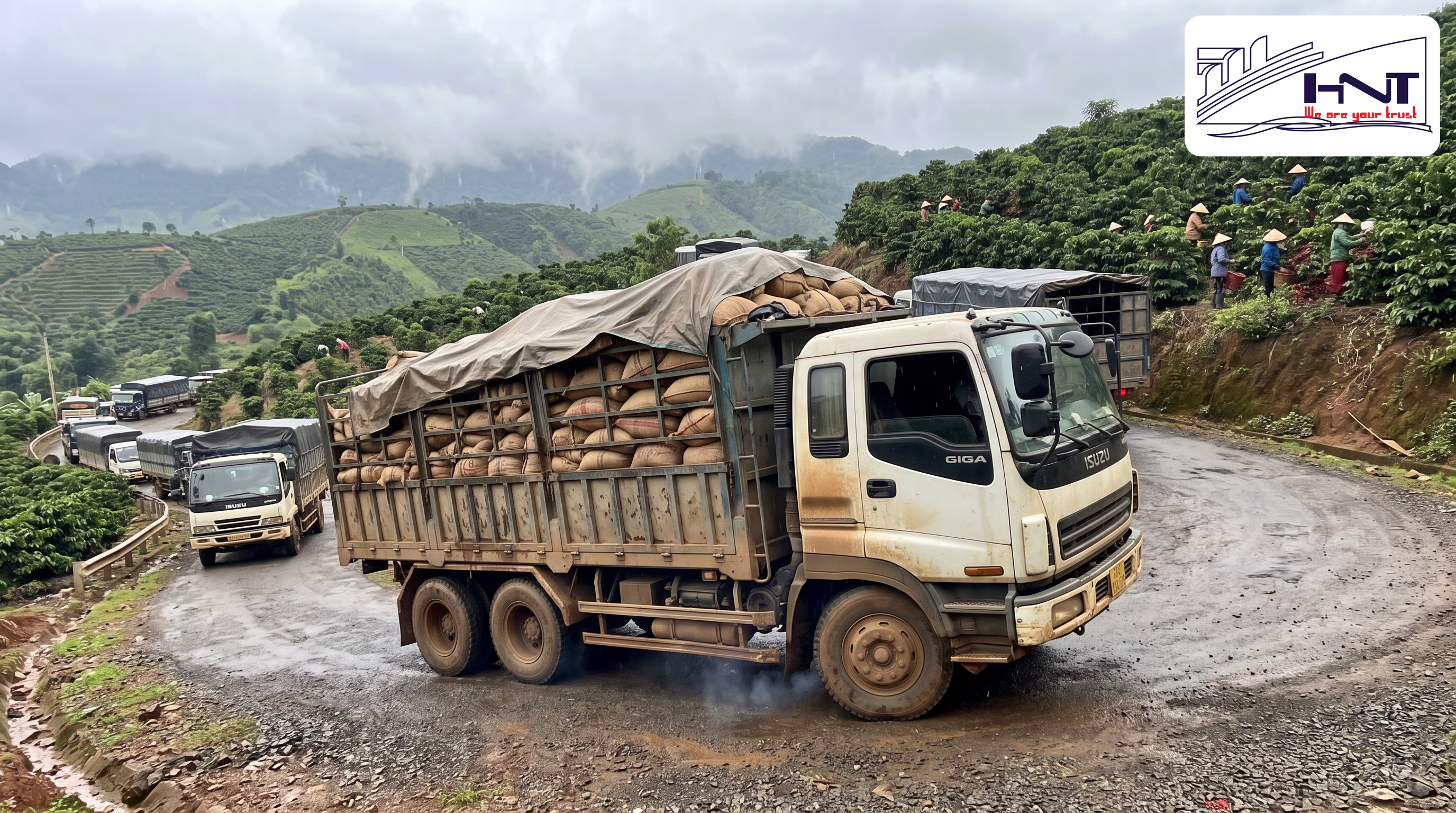
Why do agricultural transportation rates change weekly?
Agricultural transportation rates change weekly because shipping lines adjust capacity, cancel sailings, and revise fuel surcharges. Drewry recorded 39 canceled sailings during the five weeks from 20/07 to 23/08/2026 on the major East-West trade routes.
- Monitor vessel schedules at least two weeks before the official loading date.
- Avoid concentrating shipments at the end of the week if the cargo requires plant quarantine.
- Book refrigerated containers early during the durian, mango, banana, and dragon fruit seasons.
- Compare direct routes with transshipment routes for cargo with a short shelf life.
- Clearly define the delivery terms to determine which party is responsible for additional surcharges.
- Use historical order data to forecast weeks with a high risk of price increases.
| Reference route | Suitable types of goods | Points to check | Cost recommendations |
|---|---|---|---|
| Cat Lai Port – Shanghai | Durian, bananas | Refrigerated container and cargo cutoff schedule | Book 7 days in advance |
| Hai Phong Port – Long Beach | Processed fruit | Transshipment and transit time | Compare two shipping lines |
| Tien Giang – Hanoi | Mangoes, longans, rambutan | Refrigerated truck stop | Consolidate shipments with control |
| Can Tho – Ho Chi Minh City | Cold storage consolidated cargo | Port entry time | Avoid peak hours |
| Binh Duong – Da Nang | Packaged agricultural products | Refrigerated truck | Fixed schedule |
For example, An Phu Orchard Company in Ben Tre chose the Cat Lai Port to Shanghai route for 18 tons of pomelos. By switching from a weekend-end schedule to a midweek schedule, the shipment avoided one yard waiting period. Additional costs decreased by 6.4%.
Another example, Huong Dat packing house in Dak Lak sold bananas to Japan. Due to a shortage of refrigerated containers during the peak week, the business had to pay 13% more. They then switched to a rolling monthly booking schedule.
Implementation tip: weekly pricing must go together with the actual schedule. Do not evaluate agricultural produce transportation rates without the cargo loading date.
Optimize agricultural produce transportation rates with the cold chain
The cold chain does not only preserve goods. It determines agricultural produce shipping costs and profit margin because it affects the type of truck, type of container, waiting time, and claim rate. Based on HNT LOGISTICS' experience, fresh goods should be priced according to total expected losses, not just freight charges.
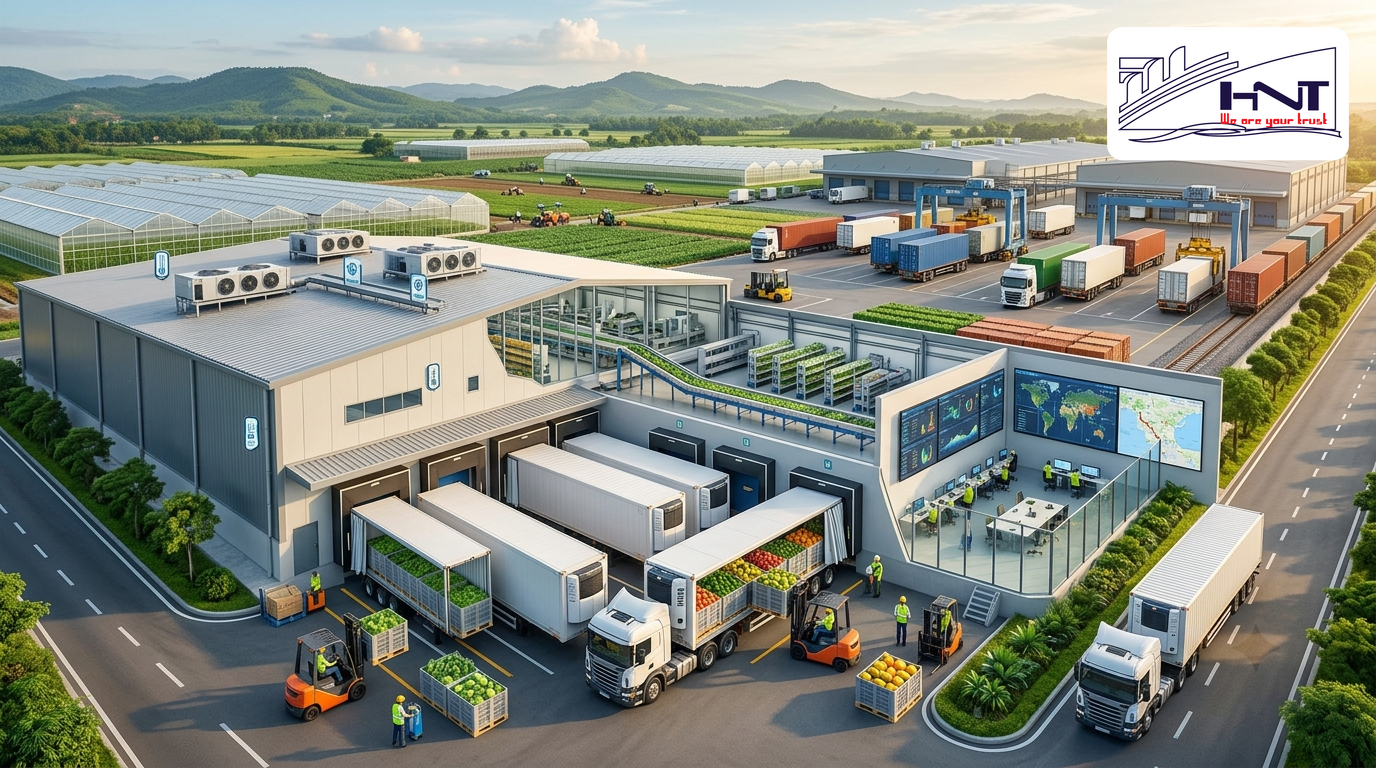
Choose refrigerated containers and temperatures for each product group
Refrigerated containers must match the respiration rate of each type of fruit. Temperatures that are too low cause chilling injury. Temperatures that are too high accelerate ripening. For export shipments, temperature data must be stored to protect agricultural produce transportation rates from disputes for dispute resolution after delivery.
- Frozen durian requires deep temperature control and avoiding opening the container door for too long during loading.
- Fresh mangoes require pre-cooling before loading. Do not let the container cool itself.
- Dragon fruit requires stable humidity because moisture loss reduces its commercial value.
- Frozen seafood requires continuous temperature recording from the warehouse to the destination port.
- Leafy vegetables require short transit times and minimizing vehicle changes during the journey.
- Fast-ripening fruit should prioritize routes with fewer transshipments over cheaper routes.
| Group of goods | Reference temperature | Recommended equipment | Control point |
|---|---|---|---|
| Frozen durian | -18°C to -25°C | Refrigerated container | Continuous temperature logger |
| Fresh mangoes | 10°C to 13°C | Refrigerated truck and cool storage | Pre-cooling |
| Dragon Fruit | 5°C to 8°C | Refrigerated container | Stable humidity |
| Banana | 13°C to 14°C | Refrigerated container | Ripening gas control |
| Frozen seafood | -18°C or lower | Cold storage and refrigerated container | Maintain an unbroken cold chain |
For example, Cao Nguyen Xanh Company in Lam Dong sent 14 tons of leafy vegetables to Ho Chi Minh City. After adding a pre-cooling step, the pull-down time decreased by 5 hours. The spoilage rate dropped from 4.2% to 1.6%.
Another example, Hau Giang Fruit exporter selected a refrigerated container for fresh-cut pineapple shipped to Singapore. They installed an independent temperature logger. When a dispute arose, the data proved that the cold chain remained intact throughout the journey.
Implementation tip: do not save money by skipping pre-cooling. This small cost is usually cheaper than the increased agricultural produce transportation charges caused by claims.
Agricultural produce transportation rates and customs clearance documents
Incorrect documentation increases agricultural produce shipping costs and storage yard costs quietly accumulate. Trucks have to wait, containers incur storage charges, shipping schedules are missed, and buyers must adjust their receiving plans. For fresh goods, a one-day delay can eliminate the freight advantage for agricultural products.
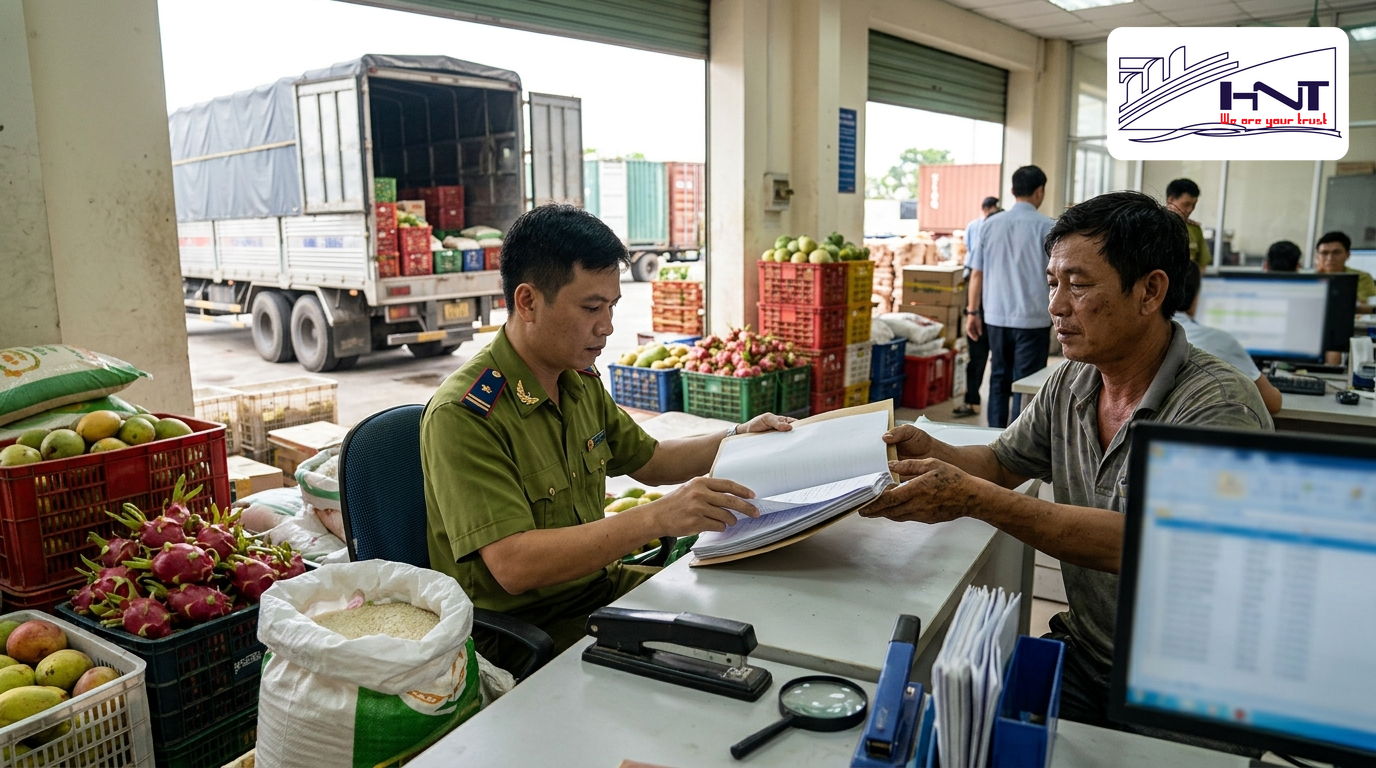
Documents to prepare before shipping durian from the South to the North
With the demand to ship durian from the South to the North, domestic documentation also needs to be thorough to avoid invisibly increasing agricultural freight costs. If the shipment continues for export, businesses should prepare the invoice, packing list, growing area code, packing facility code, and phytosanitary certificate if required by the destination market.
- Match the contract with the commercial invoice before submitting the electronic customs declaration.
- Check the growing area code and packing facility code according to each market's requirements.
- Prepare the Bill of Lading with the correct product name, number of packages, and delivery terms.
- Apply for a Certificate of Origin (C/O) if the buyer needs tariff preferences.
- Track the phytosanitary certificate before the shipping line's cargo cutoff time.
- Review Demurrage/Detention charges in the service contract.
| Documentation | Used for | Time to check | Common errors |
|---|---|---|---|
| Commercial invoice | Value declaration | Pre-declaration | Wrong delivery terms |
| Packing | Package reconciliation | Before container loading | Incorrect number of packages |
| Inspection certificate | Plant products | Before cargo cutoff | Missing growing area code |
| Care of | Tax incentives | Before submitting documents | Incorrect origin criteria |
| Bill of lading | Receive goods at the destination port | Post-shipment | Incorrect consignee |
According to current regulations, Circular 38/2015/TT-BTC as amended by Circular 39/2018/TT-BTC remains an important foundation for customs procedures and tax management of import and export goods.
Decree 69/2018/ND-CP stipulates details of several articles of the Law on Foreign Trade Management, including principles for managing exported and imported goods. Agricultural businesses should check the specialized management list before accepting orders.
For example, Minh Tam Agri Company in Long An exports seedless lemons to China. An incorrect packing facility code caused the truck to wait for 14 hours. After implementing a pre-loading checklist, customs clearance time was reduced to within the same day.
Another example is Nam Song Hau Company in Can Tho exporting mangoes to the United States. They used the agricultural customs brokerage service to review the C/O and Bill of Lading. The shipment avoided document amendment fees after the vessel departed.
Implementation tip: documents must go ahead of the container. Do not let a refrigerated truck become a warehouse waiting for documents and cause agricultural freight costs to balloon.
How to choose a fruit delivery service to reduce risk
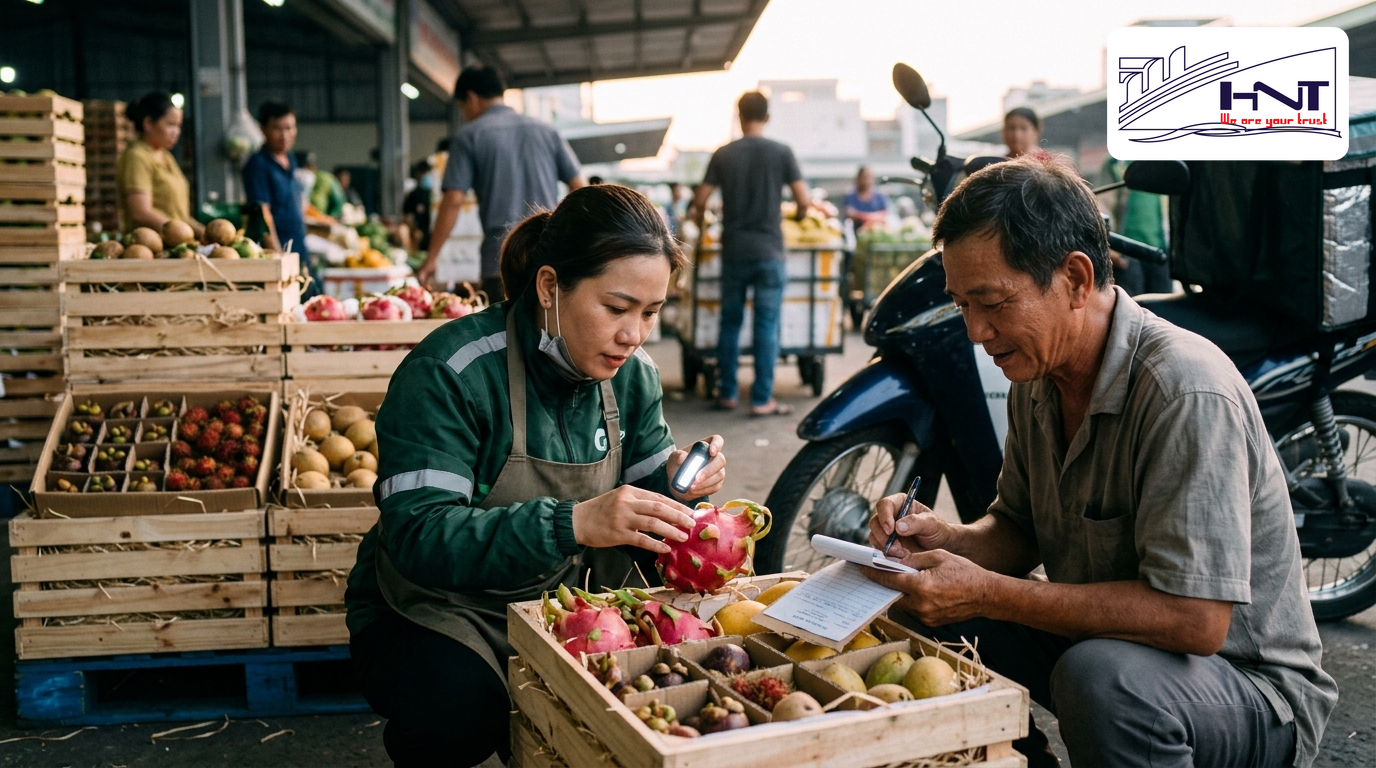
A fruit delivery service A good provider helps keep agricultural produce transportation costs stable, not just by having refrigerated trucks. That provider must understand harvest seasons, temperature requirements, routes, transfer points, and responsibility when shipments are delayed. HNT LOGISTICS recommends that businesses evaluate providers based on operational performance metrics, not just quotations.
Criteria for evaluating carriers for fresh produce
The most important criterion is the ability to prove cargo control. If the carrier cannot provide schedules, pickup and delivery points, temperature records, and incident handling mechanisms, a low price is only an unverified promise in agricultural produce transportation costs.
- Request temperature logs for every refrigerated truck trip or refrigerated container shipment.
- Check the ability to handle cargo at night, on weekends, and during peak days.
- Prioritize providers with experience on sea freight routes to the United States.
- Evaluate the process for handling shipments delayed by vessel schedule changes or port congestion.
- Check liability insurance and compensation provisions in the contract.
- Request a single coordination contact to avoid information loss.
| Criteria | Verification questions | Good signs | Risk indicator |
|---|---|---|---|
| Temperature | Is there a log? | Downloadable data available | Verbal commitment only |
| Schedule | Is there a backup plan? | Alternative route available | No backup plan |
| Documentation | Who performs the inspection? | Inspection checklist available | Wait for the customer to handle it |
| Compensation | Under what conditions? | Specified in the contract | Vague terms |
| Coordinate | Who is responsible? | One primary contact | Multiple disconnected teams |
For example, Song Tien Fruit Company in Vinh Long switched from regular trucks to refrigerated trucks with temperature recording for the Hanoi route. Costs increased by 5%, but the complaint rate decreased by 70% over three months.
Another example, Dong Phu Food Company in Binh Duong used the package refrigerated container standards for dragon fruit shipments to Busan. When the shipping line changed the schedule, the carrier maintained a stable temperature. The shipment still met the buyer's requirements.
Implementation tip: buy agricultural produce transportation cost control capability, not promises of low prices.
Conclusion: optimizing agricultural produce transportation costs must start with planning
Agricultural produce shipping costs will not be stable if businesses only ask for prices close to the shipping date. The right approach to agricultural produce transportation costs is to manage the entire chain: harvest season, routes, refrigerated containers, documentation, and each party's responsibilities. According to experts at HNT LOGISTICS, a good plan should begin at least one to two weeks before the cargo loading date.
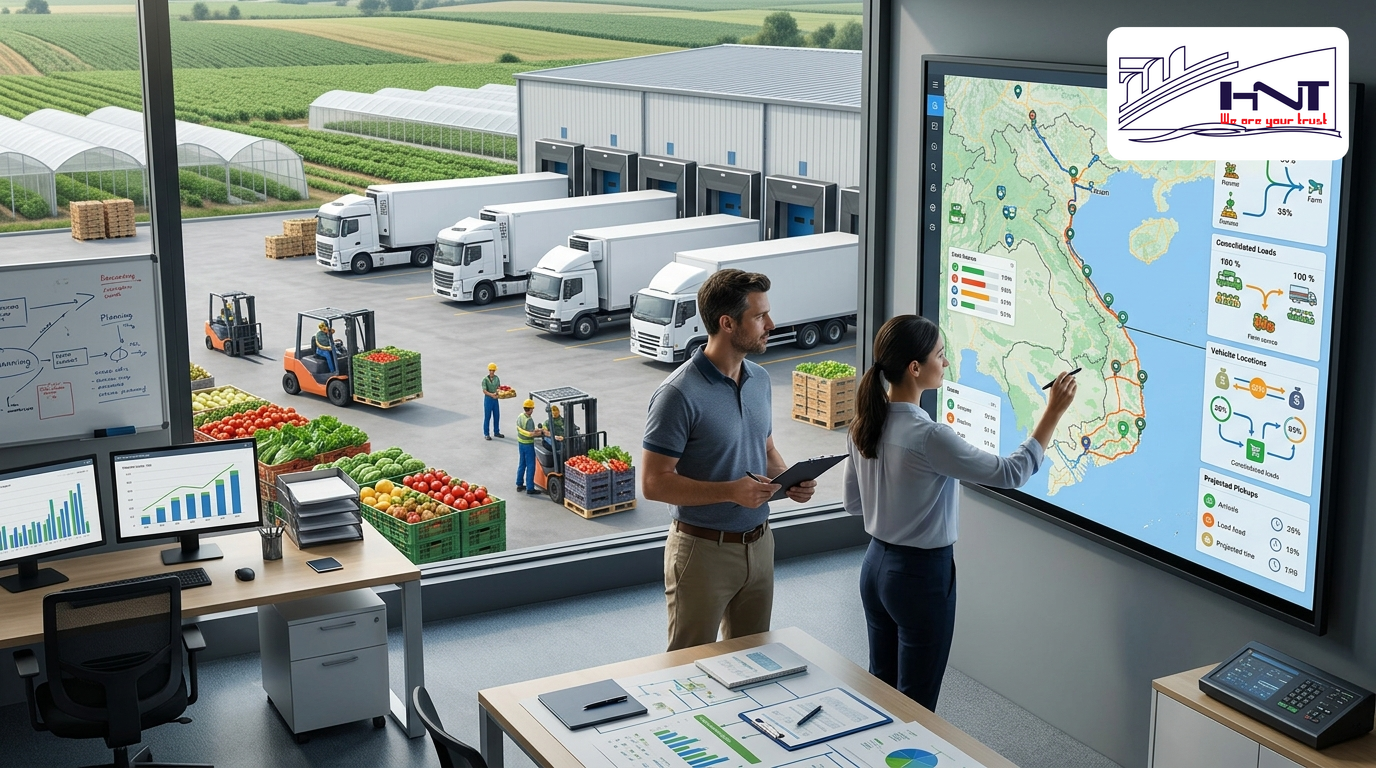
- Separate the main freight, surcharges, and additional fees to accurately see the total shipping cost.
- Book refrigerated containers early during the peak season for durian, mangoes, and bananas.
- Choose routes with lower transshipment risk if the cargo has a short commercial shelf life.
- Standardize documentation before the refrigerated truck leaves the warehouse or growing area.
- Use temperature data to protect quality and resolve disputes.
- Evaluate carriers based on operational capability, not just price.
- Review delivery terms to clearly define responsibility for additional costs.
| Task | Timing | Person in charge | Expected results |
|---|---|---|---|
| Production forecast | Before the harvest season | Sales department | Book space proactively |
| Finalize the route | 10 days before loading | Logistics | Reduce schedule changes |
| Check documentation | 3 days before loading | Import export | Avoid storage at the terminal |
| Control temperature | In transit | Transport coordinator | Maintain quality |
| Post-delivery evaluation | After receipt | Supply chain management | Improve next time |
If your business needs to control costs from the farm to the port, HNT LOGISTICS can serve as a trusted freight forwarding and logistics partner for Vietnamese exporters. To optimize agricultural goods transportation costs, the approach should be clear: assess risks first, finalize the route next, and only then negotiate prices. As a professional transportation provider, HNT LOGISTICS is committed to delivering comprehensive supply chain solutions, helping Vietnamese businesses confidently conquer global markets. Contact us today at 8A Hoang Minh Giam, Ho Chi Minh City or via the marketing email at hntshipping.com for quotation support!