


What is packaging when a shipment of mangoes going to Cat Lai Port has dented cartons, temperature deviation and must undergo re-inspection before the cut-off time? The answer is not in the box itself, but in how packaging protects goods, documents and shipping schedules.
This pressure is becoming clearer during the 2026-2026 period. VASEP recorded that seafood exports in the first 4 months of 2026 reached approximately 3.7 billion USD, increasing 14-15% compared with the same period. The 2026 conference promoting agricultural, forestry and fishery exports also set a goal for the entire sector of over 74.2 billion USD. Meanwhile, international container freight rates are fluctuating strongly due to conflicts, vessel shortages and localized congestion.
This article helps shippers understand what packaging is, choose product packaging according to each cargo group, and build a packaging process strong enough for warehouses, ports, vessels, aircraft and import border gates. The focus is on reducing damage, avoiding repackaging and limiting additional costs.
What is packaging and why does it determine logistics risks?
Packaging is a layer of material designed to contain, protect, identify and support the transportation of products. For export goods, packaging is also part of the compliance documentation. It is directly related to quarantine, traceability, sealing, handling and liability when losses occur.
Frankly, many businesses still consider packaging a secondary cost. That is an expensive mistake. A weak carton can damage an entire pallet. An incorrect quarantine mark can cause a shipment to be held. An improper temperature-controlled packaging structure can collapse the entire delivery plan.
According to Decree 59/2018/ND-CP, customs procedures, inspection, supervision and customs control were amended based on Decree 08/2015/ND-CP. Therefore, export packaging must support accurate declarations, specialized inspections and shipment traceability when needed.
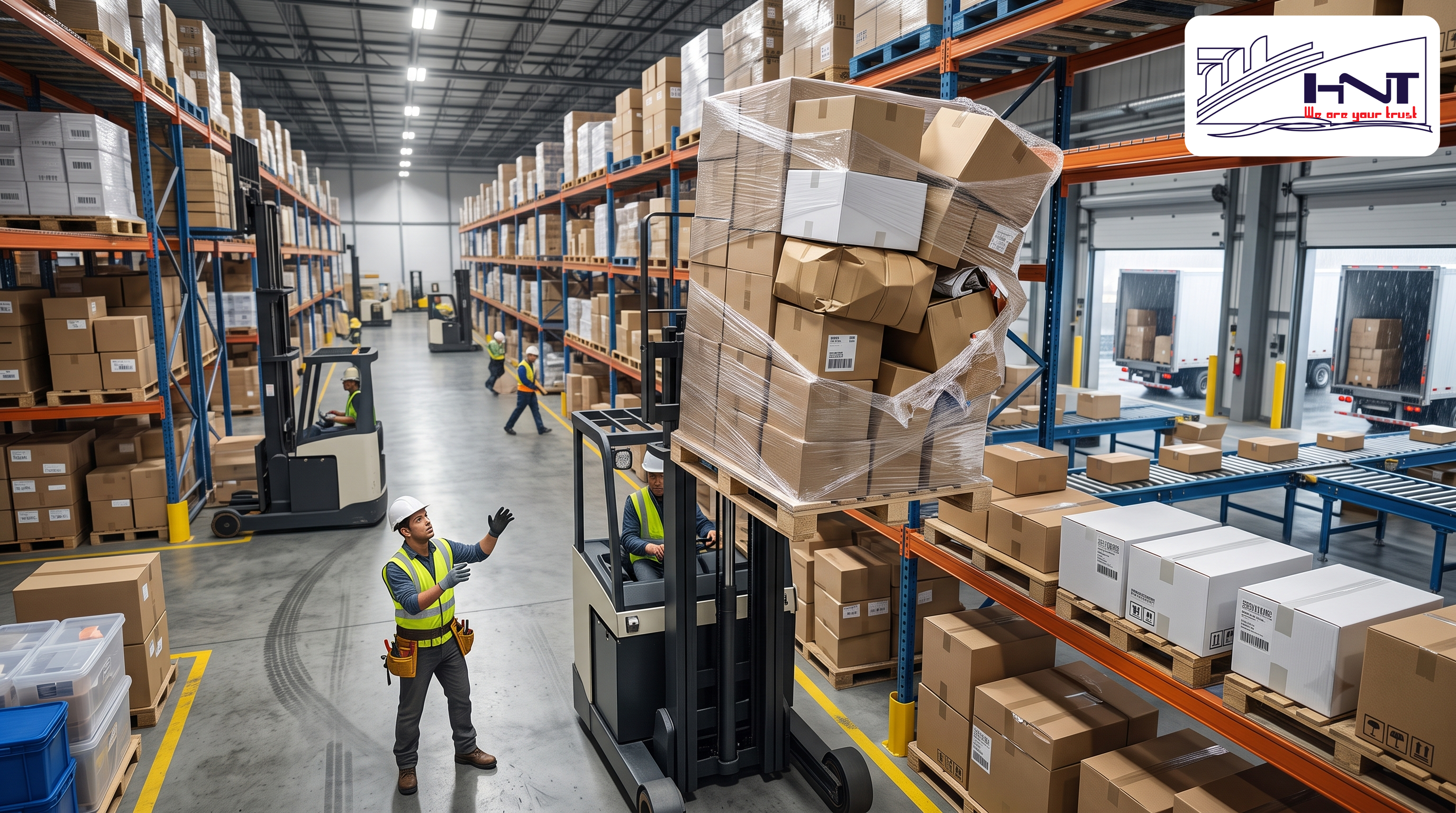
| Function | Logistics meaning | Risk if done incorrectly | Application example |
|---|---|---|---|
| Containment | Keep products by sales unit or transport unit | Leakage, breakage, loss | Vacuum bags for seafood |
| Protection | Prevent impact, moisture, temperature and stacking pressure | Dented cartons, cracked shells, deformation | 5-layer carton boxes for fruit |
| Identification | Attach batch codes, product labels and shipping marks | Mixed batches, delayed inspection | Traceability codes on each package |
| Compliance | Meet quarantine, food safety and import standards | Goods held or reprocessed | Wooden pallets according to ISPM 15 standards |
| Handling optimization | Increase stability during lifting and container loading | Pallet collapse, uneven load | Stretch wrapping and corner straps for pallets |
- Identify primary, secondary and tertiary packaging before quoting transportation costs.
- Check the compression strength of the box according to the actual stacking height.
- Design labels that are readable when goods are stored in cold storage or dark containers.
- Separate product protection requirements from commercial display requirements.
- Do not use export wooden pallets without checking valid treatment marks.
- Keep packaging photo samples to handle transportation and insurance claims.
For example, a Hòa Phát Miền Tây fruit exporter in Tiền Giang once used thin boxes for the Cát Lái Port to Shanghai route. After switching to moisture-resistant cartons, molded trays, and film-wrapped pallets, the crushed box rate decreased from 6,5% to 1,2%.
A plastic equipment workshop An Tín in Bình Dương encountered another issue. The goods were not damaged, but package codes did not match the packing list. After switching to double-sided labels and a standardized package list, warehouse counting time was reduced by 5 hours for each 40-foot container.
Practical conclusion: before asking for packaging service prices, ask what points the packaging must withstand in terms of force, temperature, humidity, and inspection.
What is packaging in the classification method by each group of goods?
To choose the right packaging, you must start with product characteristics. Dry goods need compression and moisture resistance. Cold goods need temperature control and ventilation. Fragile goods need force absorption. Goods with leakage risks need a secondary containment layer. Each group has its own logic.
HNT LOGISTICS recommends that businesses create a risk matrix based on products, routes, and transportation methods. The same carton may work well in domestic storage but fail when transported by sea for 18 days, through transshipment, and exposed to continuous humidity fluctuations.
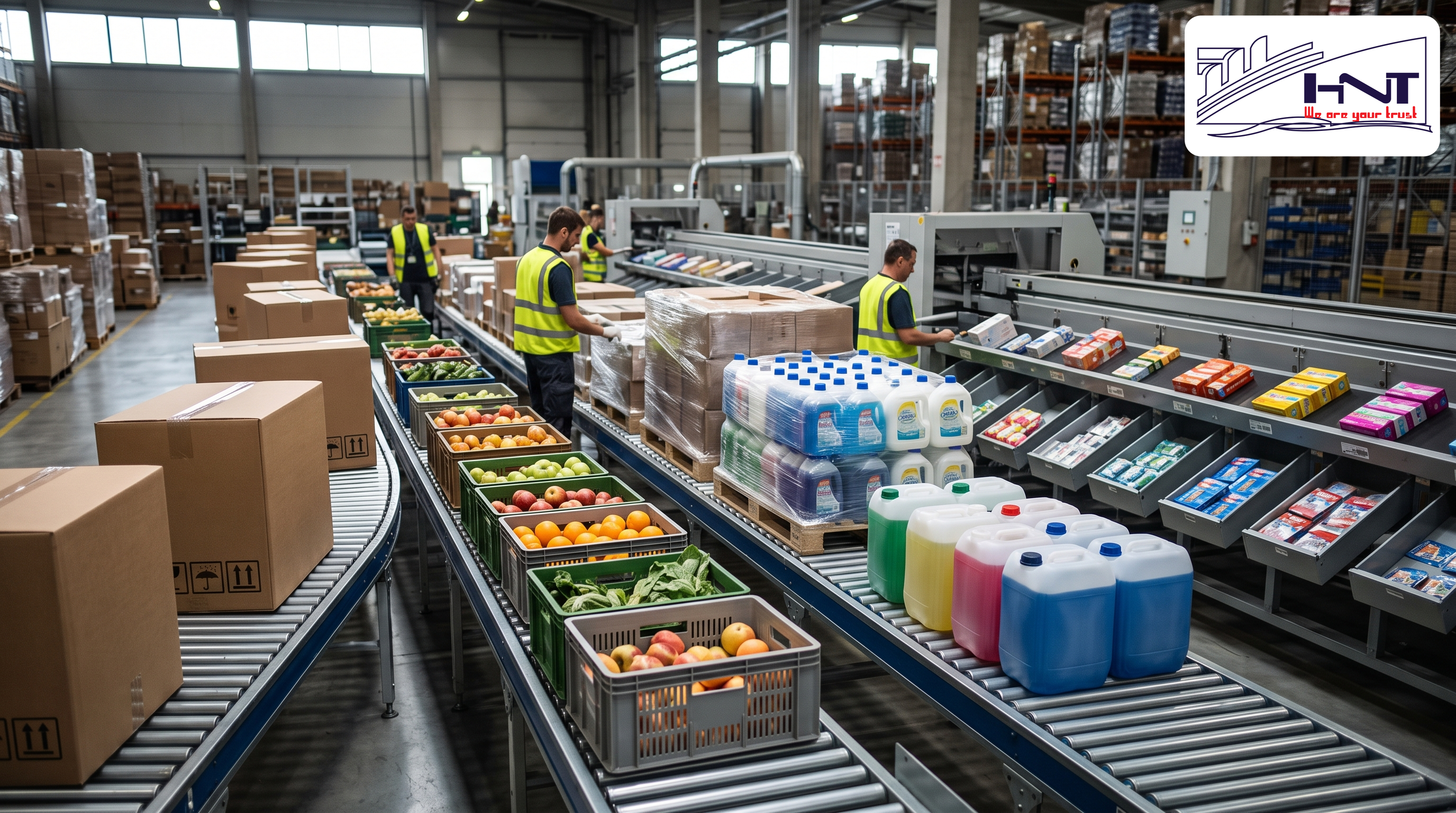
What is packaging for agricultural products, fresh fruits, and cold chain goods?
For fresh fruits, packaging must balance three factors: ventilation, moisture resistance, and shape protection. Packaging that is too sealed causes heat buildup. Weak packaging crushes goods. Incorrect sizes create empty spaces, causing fruits to collide during handling.
What is packaging for seafood, frozen food, and goods prone to leakage?
For frozen seafood, packaging must maintain hygiene and limit heat loss. Inner bags, outer boxes, and pallets must go together as one configuration. If ice melts, leaking water weakens boxes, causes pallet sliding, and raises concerns during import port inspections.
| Group of goods | Priority packaging | Control point | Common errors |
|---|---|---|---|
| Fresh fruit | Moisture-resistant cartons, perforated trays, breathable bags | Ventilation, ripeness, temperature | Air-tight boxes and crushed corners |
| Frozen seafood | Food bags, moisture-resistant coated cartons | Temperature, water leakage, hygiene | Overloading each box |
| Ceramics | Molded foam, double boxes, wooden crates | Shock resistance, vibration resistance | Empty space inside the box |
| Small machinery | Moisture-proof bags, foam, wooden boxes | Rust prevention, securing components | Do not lock moving parts |
| Garments | Plastic bags, cartons, desiccant packs | Mold, compression, color codes | Do not separate colors and sizes |
- Fresh goods groups need temperature control before packaging, not only inside the container.
- Frozen goods groups need moisture-resistant packaging from both the inside and outside.
- Fragile goods groups need drop tests, vibration tests, and carton void inspection.
- Machinery groups need movement points locked before moisture-proof wrapping.
- Textile groups need moisture protection, dust protection, and clear product code separation.
- High-value goods groups need condition photos before, during, and after packaging.
Example: Song Hau Fruit Company in Can Tho exported 12 tons of passion fruit to Guangzhou. When switching from closed cartons to perforated cartons positioned correctly with the airflow direction, the core product temperature became more stable. The shipment reduced losses by 3.1 percentage points.
Meanwhile, Minh Vinh Seafood factory in Ca Mau exported frozen squid to Yokohama using refrigerated containers. After adding inner bags and moisture-resistant outer cartons, pallets no longer slipped during unloading. The importer reduced requests for additional inspections.
Practical conclusion: classify goods first, then choose materials; reversing this order often creates beautiful but weak packaging.
What is packaging when choosing materials for each transport route?
The transport route determines the endurance level of packaging. Sea routes need to withstand humidity, long-term vibration, and stacking. Air routes need to be lightweight, compact, and able to withstand quick handling. Cross-border road routes need dust resistance, shock resistance, and easy inspection at border checkpoints.
Based on HNT LOGISTICS experience, cargo owners should choose materials according to the biggest weakness of the route, not based on packaging purchasing habits. The Hai Phong to Long Beach route needs to prioritize container durability. The Cat Lai to Shanghai route needs to control vessel schedules and temperature.
For wooden packaging, the ISPM 15 standard requires phytosanitary measures to reduce the risk of spreading harmful organisms through wood materials in international trade. This is especially important when using pallets, wooden crates, or wood bracing.
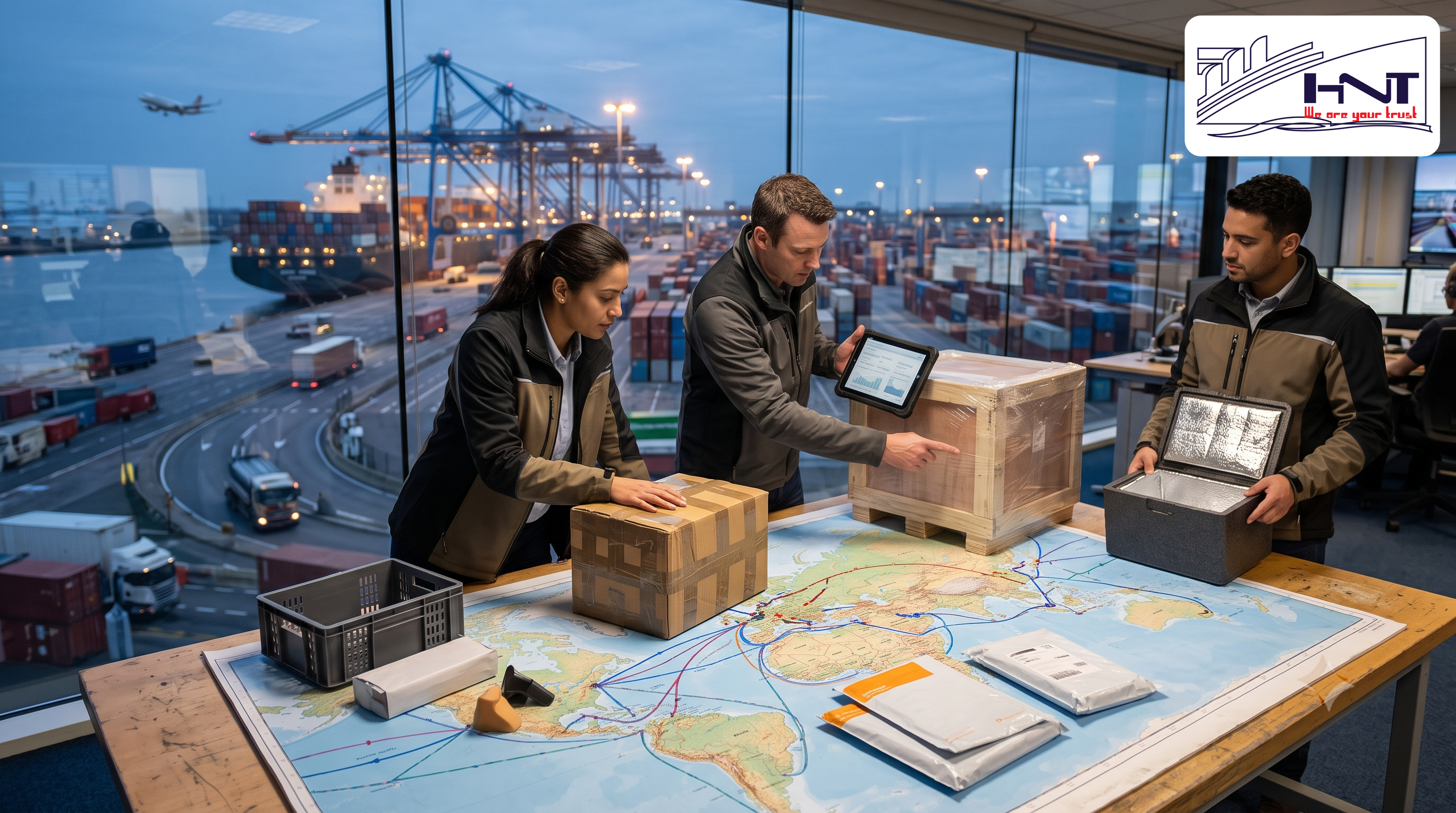
| Method | Suitable material | Technical priority | Inspection suggestions |
|---|---|---|---|
| Sea | Moisture-resistant carton, pallet, stretch film | Moisture resistance and compression strength | Perform a minimum 24-hour stacking test |
| Air | Light carton, foam, desiccant bag | Reduce chargeable weight | Measure dimensions after packaging |
| Road | Strong crate, plastic straps, corner protectors | Vibration resistance and easy inspection | Check package locking before shipping |
| Refrigerated container | Ventilated carton, slotted pallet | Maintain cold airflow | Do not cover container load lines |
| Less-than-truckload cargo | Double cartons, clear labels, small pallets | Withstand multiple consolidation and separation processes | Attach labels on two sides of the package |
- Sea routes need moisture-resistant materials because containers often experience day-night temperature differences.
- Air freight requires volumetric weight calculation before finalizing carton dimensions.
- Refrigerated containers require packaging that does not block return air and supply air flows.
- LCL cargo requires cartons that can withstand multiple handling operations at consolidation warehouses.
- Wooden pallets need clear treatment marks, not faded or covered by wrapping film.
- Exports to the United States or the European Union require early review of wood materials.
Example: Nam Phuc Mechanical Company in Dong Nai exported components to Long Beach. Initially, the business used simple cartons and suffered edge dents after transshipment. After switching to wooden crates with moisture-proof bags, the rate of appearance complaints decreased by 80%.
A fresh flower business in Da Lat exported by air to Singapore and faced increased costs because the cartons were too bulky. After optimizing carton height and stem-holding trays, chargeable weight decreased by 12%. The goods still maintained their shape after 36 hours of transportation.
Practical conclusion: good materials are not enough; materials must match the route, time, and handling method.
How to package product packaging according to a standard process
How to package product packaging must be a control process, not an end-of-shift task. The correct process starts with checking goods, selecting materials, packing the inner layer, packing the outer layer, labeling, creating a packing slip, and taking acceptance photos.
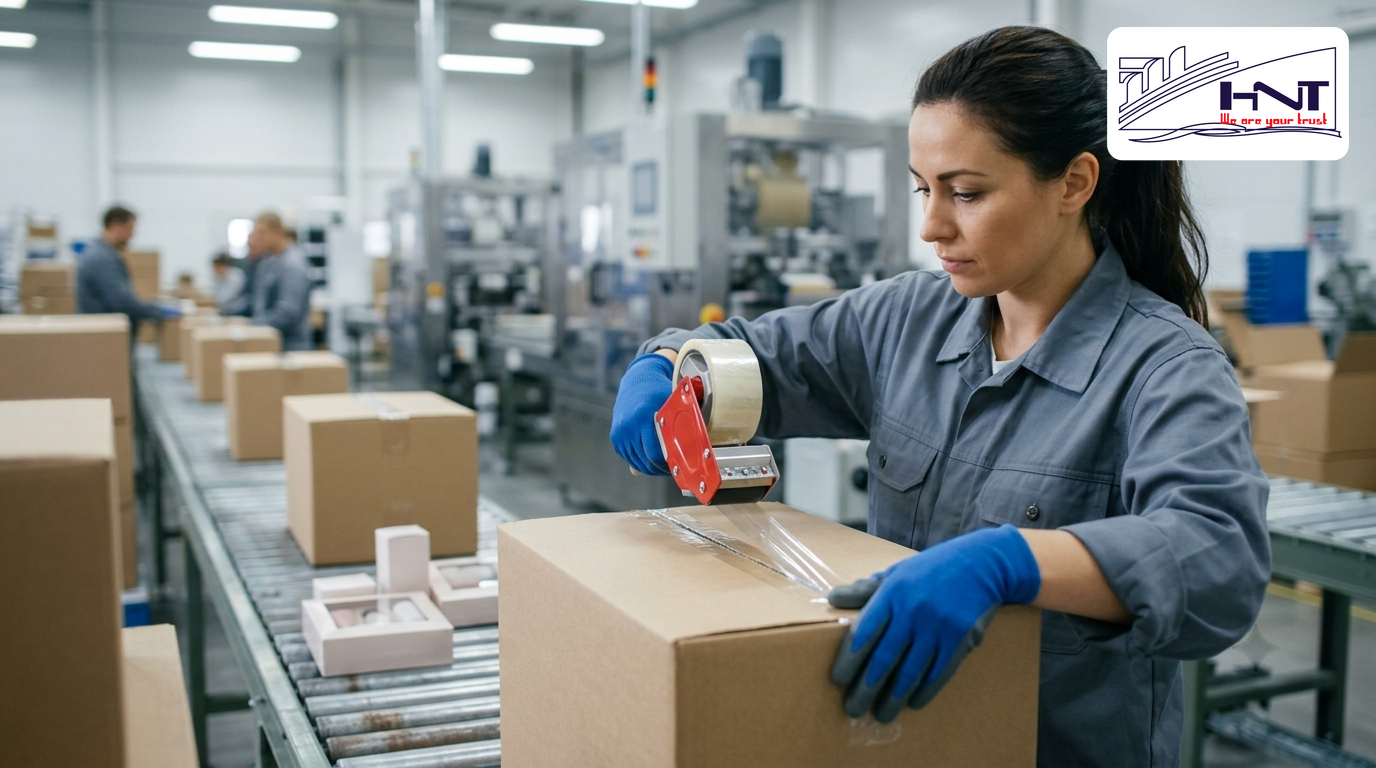
How to package product packaging before bringing goods to the port
Before going to the port, goods must meet three conditions. First, the package is stable. Second, the label is readable. Third, the number of packages matches the documents. If one condition is missing, goods may be held at the warehouse, incur storage charges, or miss the cut-off time.
| Step | Task | Inspector | Stored evidence |
|---|---|---|---|
| 1 | Check goods condition and moisture level | Finished goods warehouse | Photos before packaging |
| 2 | Select cartons, bags, pallets and cushioning materials | Warehouse manager | Material request form |
| 3 | Pack the inner layer and secure the product | Packaging team | Photos of each step |
| 4 | Pack the outer layer, strap the package and wrap with film | Quality control | Acceptance record |
| 5 | Apply labels and compare with the packing slip | Export documents | Package list |
| 6 | Hand over to vehicle and seal | Transport coordinator | Seal and vehicle photos |
- Measure actual product dimensions, do not use design dimensions or old data.
- Choose materials based on the main risks: shock, moisture, heat, compression, leakage, or dust.
- Pack the inner layer to secure the goods and prevent collisions between product units.
- Pack the outer layer to withstand lifting, stacking, and warehouse consolidation or separation.
- Place labels on two visible sides, avoiding positions covered when wrapping with film.
- Compare the number of packages with the packing list, invoice, and Bill of Lading.
- Take acceptance photos before the vehicle leaves the warehouse to protect claim rights.
According to experts at HNT LOGISTICS, businesses should integrate the packaging process with customs declaration services, because discrepancies in the number of packages often lead to amendments to customs declarations, bills of lading, and packing lists. This small error can delay the export schedule.
For example, Ánh Dương Garment Company in Nam Định exported jackets to Hamburg. When standardizing carton codes by color, size, and order number, the receiving warehouse in Germany reduced sorting time by 40%. The shipment also did not generate requests to open packages for recounting.
A Bình Minh Furniture facility in Bình Dương exported tables and chairs to Melbourne. After adding corner protectors, moisture-proof bags, and acceptance photos for each package, the company handled edge scratch complaints faster. Insurance accepted the claim documents within 9 days.
Practical conclusion: a good packaging process must leave evidence; without evidence, it is very difficult to protect the cargo owner's interests.
What is packaging in quarantine, documentation, and export customs clearance?
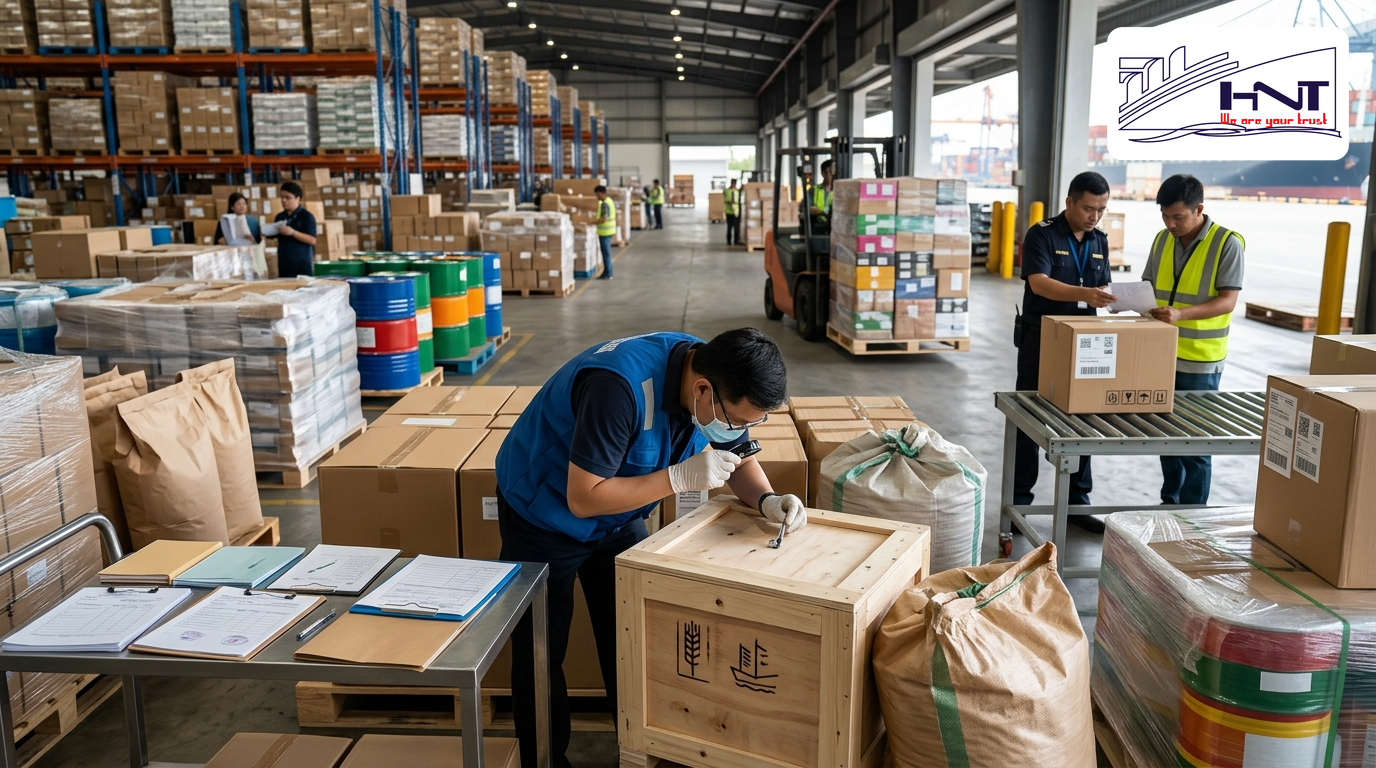
What is packaging from a customs clearance perspective? It is the surface displaying batch codes, origin, stacking instructions, storage warnings, and sometimes quarantine conditions. For agricultural products, seafood, and fresh fruits, packaging cannot be separated from export documents.
Plant products often require phytosanitary certificates, especially when exported to China, the United States, or the European Union. Wooden dunnage or wooden pallets must comply with ISPM 15. Food products require labels and packaging that meet food safety requirements.
| Category | Role of packaging | Related documents | Inspection points |
|---|---|---|---|
| Batch code | Connect goods with production records | Packing list, invoice | Match each package |
| Origin | Support traceability verification | C/O, raw material records | No label inconsistencies |
| Quarantine | Show treatment conditions or packaging facility | Inspection certificate | Correct facility code |
| Wooden pallet | Prove that wood materials have been treated | Pallet records | Clear ISPM 15 mark |
| Temperature | Handling and storage instructions during loading and unloading | Container installation record | Match required temperature |
- Check package labels before transmitting the declaration, avoiding document corrections close to vessel departure.
- Cross-check the packaging facility code with specific import market requirements.
- Do not let wrapping film conceal treatment markings on exported wooden pallets.
- Clearly record stacking directions and temperature conditions for temperature-sensitive goods.
- Save photos of labels on each pallet side for explanation in case of disputes.
- Review the packing list against the Bill of Lading before issuing the draft.
Example: An Phú Durian Company in Đắk Lắk shipped goods to Nanning. Once, 18 packages had missing growing area codes on the carton labels. After adding a barcode scanning step before palletizing, subsequent shipments cleared customs faster and did not require relabeling at the warehouse.
A seafood enterprise in Bạc Liêu exported fillet fish to the United States and faced traceability requirements. Thanks to packaging clearly showing lot codes and freezing dates, the company matched records within 2 hours. If labels are unclear, the risk of cargo being held will be much higher.
Practical conclusion: export packaging must be inspected like documents; visual checking alone is not enough.
What is packaging when professional goods packaging services are needed?
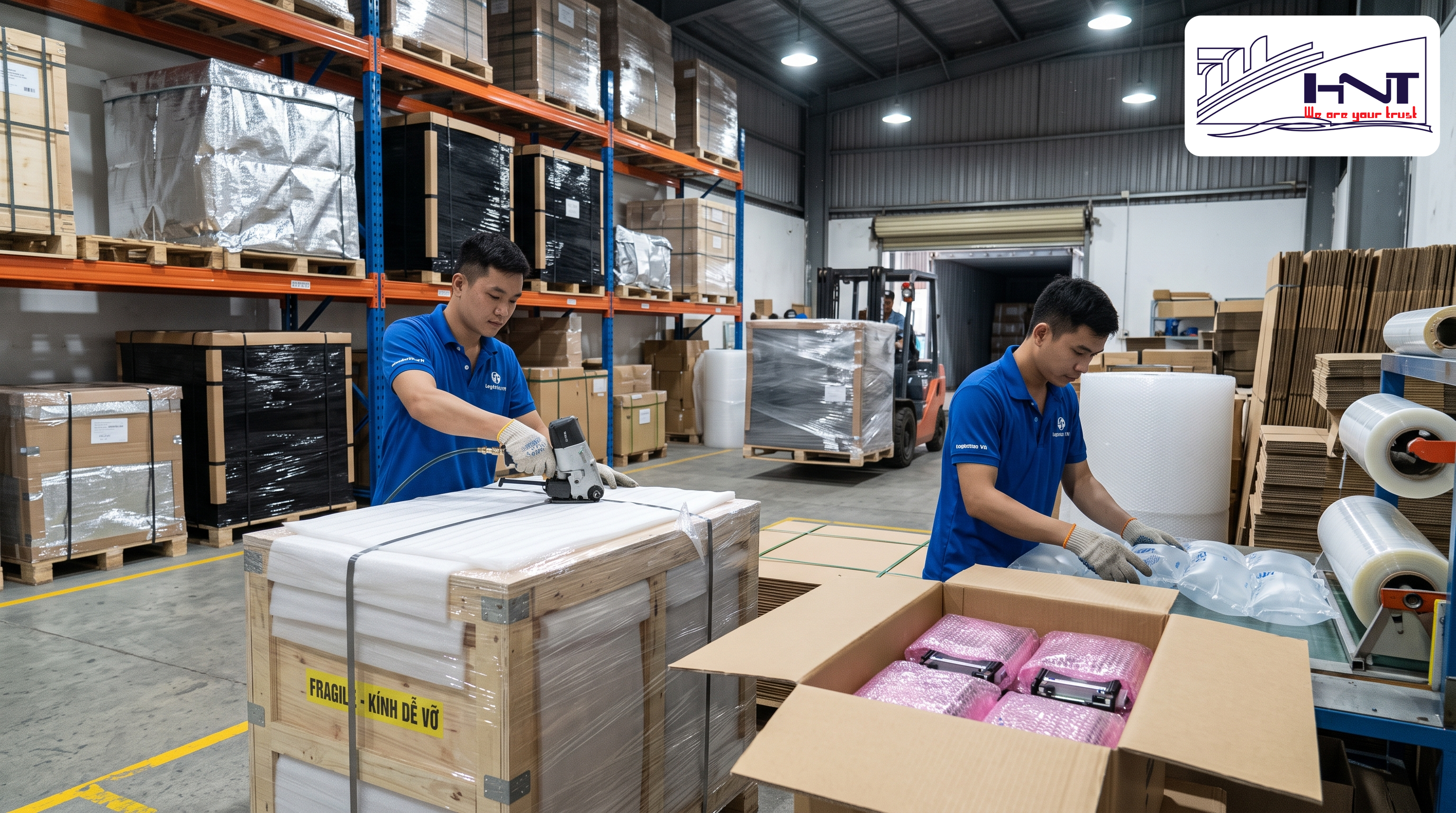
Goods packaging services are suitable when cargo has high value, is fragile, requires a cold chain, needs wooden crates, or the company lacks personnel to control documents. However, outsourcing does not mean handing everything over. The cargo owner still needs to provide clear inspection standards.
A good packaging service must understand the goods, route, container, documents, and delivery terms. For full container load/less than container load (FCL/LCL), package configurations differ. With FOB, CIF, or DDP terms, packaging responsibilities and evidence also differ.
| Service selection criteria | Question to ask | Good signs | Risk indicator |
|---|---|---|---|
| Experience with product groups | Have they handled similar goods before? | Have photos and sample procedures | Only quote by carton |
| Understanding of shipping routes | Which port does the cargo go to, and how long does it take? | Route-based recommendations | Use one template for every route |
| Document control | Is the packing list cross-checked? | Has acceptance documentation | No evidence retained |
| Materials | Are pallets or wooden crates certified? | Traceable materials | Unclear material sources |
| Error handling commitment | When a package is damaged, who is responsible? | Clear terms | Vague answers |
- Choose a provider experienced with the right product category, not just one with packing labor.
- Request an acceptance process using photos, records, and a complete package list.
- Ask clearly whether the materials are suitable for sea routes, air freight, or refrigerated containers.
- Check the capability to make wooden crates, pallets, and fragile goods packaging if the products are high value.
- Include label standards, package codes, and packing lists in the quotation from the beginning.
- Do not choose a low price if the supplier avoids responsibility when losses occur.
For example, Viet Tam Medical Equipment Company in Ho Chi Minh City exported sample analysis machines to Dubai. When hiring wooden crate packing with moisture-proof bags and tilt sensors, they avoided disputes when the crate was tilted in the transit warehouse.
A dragon fruit exporter in Binh Thuan used warehouse packing services near Cat Lai Port. Thanks to standardized pallets, temperature settings, and container seal photos, the company reduced truck waiting time by 7 hours. The shipment made it onto the vessel despite the port being crowded at the weekend.
Practical conclusion: professional packaging services must reduce systemic risks, not just make boxes look better.
Conclusion: What is packaging in terms of sustainable export capacity?
What is packaging? For export businesses, it is a layer protecting assets, operational evidence, and a compliance tool. Good packaging helps goods withstand real transportation, not just look attractive in sales images. Incorrect packaging increases damage, document corrections, storage fees, and disputes.
- Identify the product category before choosing materials, because each category has different transportation risks.
- Design packaging according to the route, transportation time, and actual handling methods.
- Check labels, batch codes, packing lists, and documents before goods leave the warehouse.
- For wooden pallets, check the treatment mark according to ISPM 15 standards.
- For cold goods, packaging must support airflow, not just maintain the box shape.
- For fragile goods, shock testing, fixed cushioning, and acceptance photos are required.
- For packaging services, buy risk control capability, not cheap labor.
In the context of fluctuating freight rates and increasingly strict import requirements, packaging is the first line of defense of the supply chain. HNT LOGISTICS can accompany Vietnamese exporters as a reputable freight forwarding and logistics partner, from packaging consultation, refrigerated containers, and documentation to inter-port transportation planning.