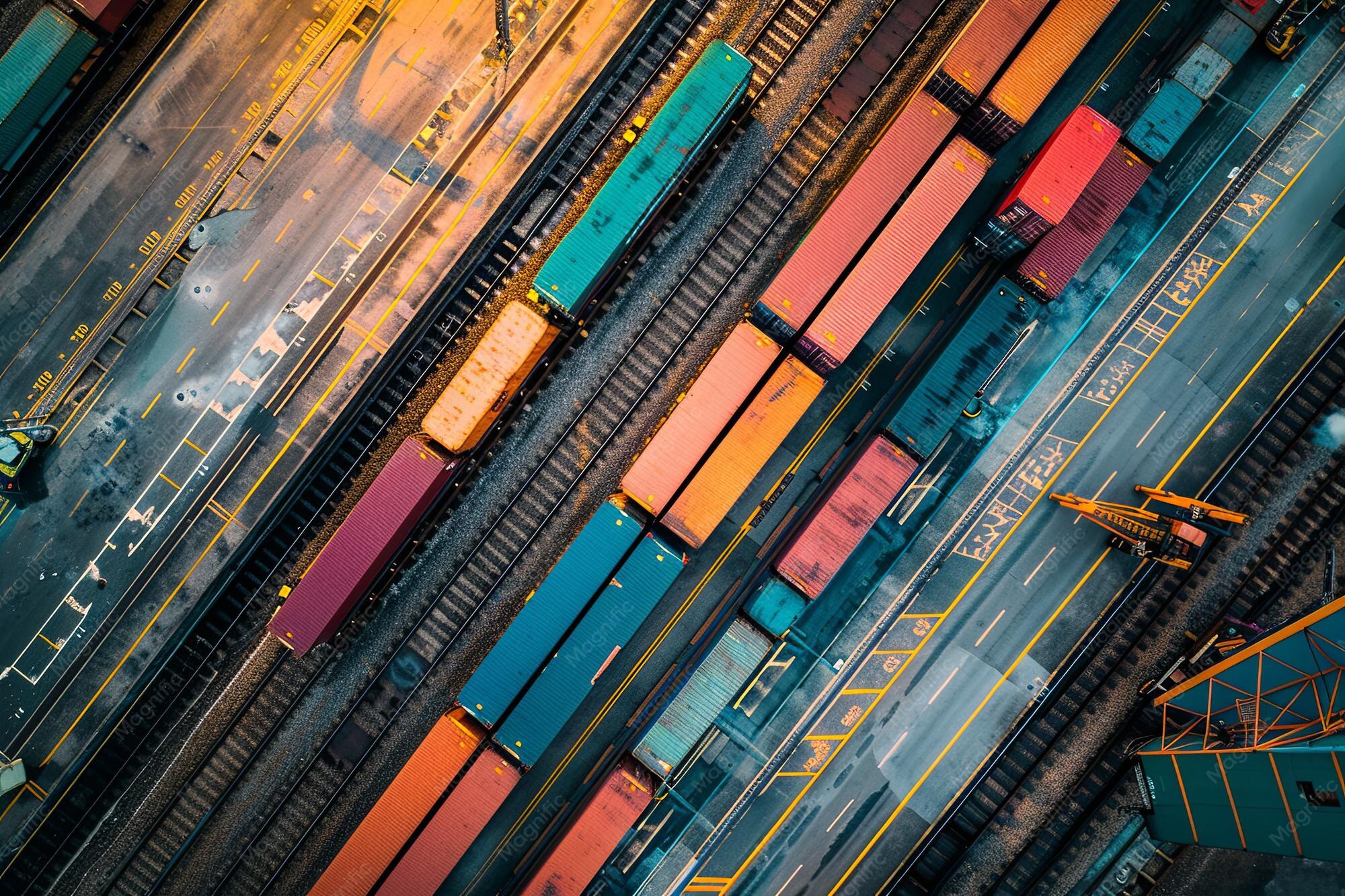
When trucks get stuck in scheduling bottlenecks at the gateways to Ho Chi Minh City, the pros and cons of rail freight become a real question rather than just a theory.
In the first half of 2026, Vietnam's agricultural, forestry and seafood exports reached approximately USD 35.88 billion, while fruit and vegetable exports reached USD 3.65 billion. Seafood exports also reached USD 5.8 billion in the first six months of 2026, according to VASEP. These figures make North-South transportation decisions more practical, especially for export goods that need to connect with seaports, cold storage facilities or factories.
This article analyzes the pros and cons of rail freight for different types of goods. The focus is not on praising trains. It is about choosing the right transportation method when shipments require stability, reliable schedules, risk control and profit margin protection.
The Pros and Cons of Rail Freight in Today's North-South Transportation Landscape
Rail freight is suitable when businesses need stable transportation capacity over long distances. However, it does not solve every logistical challenge effectively. Shippers must account for pickup, cargo consolidation, final delivery and waiting times at stations. A sound decision requires looking at the entire supply chain, not just the main freight rate.

- Suitable for heavy cargo, regular shipments and goods with delivery plans scheduled three to seven days in advance.
- Reduces dependence on long-distance truck drivers when the trucking market fluctuates due to seasonal demand or weather conditions.
- More stable than road transportation over long distances, but less flexible at pickup and delivery locations.
- Packaging, loading and unloading, and sealing must be carefully controlled because goods pass through multiple handling points.
- Not suitable for extremely urgent orders, small shipments distributed across multiple locations or cargo with constantly changing schedules.
- Most effective when short-haul trucks are combined with rail wagons or railway containers.
| Criteria | Rail | Road | Domestic sea freight |
|---|---|---|---|
| Schedule stability | High when planned in advance | Dependent on traffic conditions | Dependent on train schedules |
| Long-distance transportation costs | Good for heavy cargo | High when trucks are scarce | Good for non-urgent cargo |
| Door-to-door delivery | Requires transfer vehicles | Strongest | Requires trucks and ports |
| Refrigerated | Equipment requires thorough inspection | More flexible | Strong for refrigerated containers |
| Urgent orders | Not optimal | Better | Usually slower |
For example, Golden Lotus Rice Company in Long An ships 120 tons of bagged rice to Hanoi every week. By shifting 60% of its volume from trucks to trains, the company reduces the pressure of securing trucks during peak seasons. In contrast, an electronics retailer in Binh Duong continues using trucks for individual orders requiring delivery within 24 hours.
Conclusion: The pros and cons of rail freight only become meaningful when compared against specific pain points. If the problem is a shortage of long-distance trucks, rail freight is worth considering. If the challenge is urgent delivery to multiple locations, road transportation usually wins.
Advantages of Rail Freight for Different Cargo Categories
The advantages of rail freight are most evident for goods with large volumes, moderate values and regular delivery schedules. These shipments prioritize predictable costs over absolute speed. For export businesses, rail freight also connects production areas with Hai Phong Port, Cat Lai Port or cargo consolidation warehouses.

Advantages of Rail Freight for Dry Goods and Industrial Cargo
Dry goods that are not sensitive to temperature are generally well suited to rail transportation. Packaging must withstand vibration and stacking. Full container load and less than container load shipments (FCL/LCL) should be grouped according to delivery schedules. According to experts at HNT LOGISTICS, businesses should secure train schedules at least one week before peak season when shipment volumes exceed 80 tons per trip.
- Rice, coffee, cashews and animal feed benefit from rail transportation because of their large volumes and relatively stable schedules.
- Crated machinery is suitable if properly secured with blocking bars, straps and photographs documenting its condition before dispatch.
- Boxed consumer goods should be shipped in regular batches and should not be consolidated with strongly scented cargo.
- Construction materials require careful consideration of weight limits, loading and unloading equipment, and receiving locations near railway stations.
- Export cargo requiring port connections should have its ocean shipping schedule checked before rail transportation is confirmed.
| Group of goods | Reasons for suitability | Operational notes | Alternative option |
|---|---|---|---|
| Bagged rice | Regular shipments, large loads | Moisture protection and floor lining | Domestic sea freight |
| Green coffee beans | No urgent delivery requirement | Avoid odors and moisture | Enclosed-body truck |
| Wooden-crated machinery | Easy to seal | Prevent shifting and movement | Low-bed trailer |
| Consumer goods | Efficient cargo consolidation | Classification by product code | Trucks for individual deliveries |
For example, Green Mountain Coffee Company in Dak Lak consolidates cargo in Song Than before shipping it to Hai Phong Port. The 96-ton shipment of green coffee beans follows a fixed schedule of three shipments per month. The company reduces the number of long-distance truck dispatches and gains better control over export documentation.
Another example is Minh Phat Mechanical Factory in Dong Nai, which ships four machine crates to Bac Ninh. Rail freight is suitable because the shipment is not urgent. However, the company still hires a dedicated truck for the final leg because the industrial park receives cargo outside railway station operating hours.
Practical tip: prepare a dedicated page refrigerated container packing standards internally for each cargo category. This phrase is also suitable for an internal link to HNT LOGISTICS' technical guides.
Disadvantages of Rail Freight to Consider Before Finalizing a Transportation Plan
The main disadvantage of rail freight lies in connectivity. A railway station is neither a factory nor a customer's warehouse. Therefore, shippers must pay additional costs for transfers, loading and unloading, and yard waiting time. A common mistake is comparing only station-to-station freight rates while overlooking door-to-door transportation costs.

The Pros and Cons of Rail Freight for Refrigerated and Perishable Goods
For fresh fruit, frozen seafood or processed food, temperature is the biggest risk. Rail freight can use refrigerated containers if the equipment, power supply and transfer schedules are strictly inspected. However, shipments requiring extremely fast delivery should still prioritize refrigerated trucks or air freight.
- Transfer costs at both ends can eliminate the cost advantage if the origin or destination is more than 80 km from a railway station.
- Fixed train schedules make shipments vulnerable to missed departures when loading or quarantine inspections are delayed.
- Refrigerated cargo requires continuous temperature monitoring, especially while waiting for loading and unloading at railway stations.
- Fragile goods require stronger crating because they undergo more handling operations than road freight.
- E-commerce orders may be unsuitable if deliveries need to be distributed across many small locations.
- Risks can arise when documents, HS Codes or bills of lading (Bill of Lading) contain inconsistent information.
| Risk | Warning signs | Risk mitigation | When to switch transportation methods |
|---|---|---|---|
| Missed sailing | Delayed inspections | Confirm schedules one day in advance | Orders requiring urgent delivery |
| Cold-chain break | Excessive waiting at stations | Use temperature data loggers | Goods with a shelf life of less than three days |
| Increase costs | Both ends are far from railway stations | Calculate door-to-door costs | Multiple small delivery locations |
| Damaged | Weak packaging | Reinforce pallets | High-value fragile goods |
For example, Kim Hoa Fruit Farm in Tien Giang once considered shipping durian to Lang Son by train. After calculating the refrigerated truck journey to the station and the waiting time, the company chose direct refrigerated trucking instead. This decision maintained more consistent ripeness and reduced the risk of returned shipments.
In contrast, Bien Sach Seafood Company in Ca Mau ships frozen goods to a warehouse in Hanoi. The goods are deeply frozen, and the receiving schedule is not urgent. Combining rail freight with short-haul refrigerated trucks helps maintain stable temperatures and reduces the pressure of arranging long-distance trucks.
Conclusion: For refrigerated cargo, do not ask how much cheaper rail freight is. Ask who is responsible when the temperature deviates from the required standard. Based on HNT LOGISTICS' experience, refrigerated shipments should have temperature records taken at loading, station handover and final receipt.
North-South Freight Transportation by Train: When to Choose It and When to Avoid It
North-South freight transportation by train is worth choosing when the objective is to stabilize overall costs. It is also suitable when goods do not require immediate delivery. However, the decision must be based on cargo type, distance from railway stations, delivery schedules and customer late-delivery penalties.

- Choose rail freight when cargo is heavy, routes are long, schedules are regular and receiving locations are near the departure and destination stations.
- Choose trucks when same-day delivery, multiple delivery locations or frequent schedule changes are required.
- Choose domestic sea freight when cargo volumes are very large, delivery is not urgent and suitable ports are available.
- Choose air freight when goods are high-value, have short life cycles or are subject to substantial contractual late-delivery penalties.
- Combine multiple transportation modes when you need to reduce costs while maintaining export schedules.
| Situation | Recommended choice | Reason | Checkpoint |
|---|---|---|---|
| Dry goods from Ho Chi Minh City to Hanoi | Rail | Long routes, consistent cargo volumes | Distance from the warehouse to the station |
| Fresh fruit delivered to the border | Refrigerated truck | Flexible delivery times required | Ripeness and quarantine inspections |
| Machinery shipped to Hai Phong | Rail freight combined with trucks | Non-urgent, easy-to-seal cargo | Loading and unloading at stations |
| Export goods shipped to the United States | Rail freight connecting to ports | Maintain ocean vessel loading schedules | ETA, ETD and documentation |
| High-value sample shipments | Air freight | Speed required | Costs and insurance |
For example, An Phuc Homeware Company in Binh Duong ships goods to Hanoi under monthly contracts. When volumes exceed 70 tons per week, the company uses trains for inventory shipments. Additional orders continue to travel by truck to avoid delays in retail distribution channels.
Another example is Cuu Long Fruit and Vegetable Cooperative in Can Tho, which needs to deliver mangoes to Mong Cai. Because harvesting, hot water vapor treatment and quarantine inspections take place within a tight timeframe, the shipment uses direct refrigerated trucking. Rail freight is only suitable if the export schedule is fixed several days in advance.
Decision-making tip: Create a four-quadrant matrix covering costs, speed, cargo risks and flexibility. If the first two factors are more important, rail freight offers advantages. If the latter two matter more, favor trucking or air freight.
The Pros and Cons of Rail Freight When Connecting with Seaports, Customs and Exports
For export businesses, rail freight is not a standalone transportation method. It is a link connecting factories, railway stations, seaports and shipping lines. Against the backdrop of Drewry reporting the World Container Index at USD 4,547 per 40-foot container on July 16, 2026, maintaining domestic transportation schedules is becoming increasingly important.
The World Bank published its CPPI 2026 Report in June 2026, emphasizing that port efficiency is measured by the time container ships spend at ports. This demonstrates that shippers cannot separate railway schedules from port schedules and ocean vessel timetables.

- Compare the train's arrival date at the station with the container cut-off date at the export seaport.
- Check the railway bill of lading, weighing slips, invoices and certificate of origin (C/O).
- Prepare export customs clearance if the goods will continue by international sea freight.
- Calculate container storage charges (Demurrage/Detention) if cargo arrives at the port too early or too late.
- Check HS Codes, product regulations and quarantine requirements before consolidating cargo.
- Prepare a backup trucking option if railway routes are delayed due to weather or scheduling issues.
| Connection point | Documents that must match | Main risks | Control measure |
|---|---|---|---|
| Factory to railway station | Warehouse release note | Late cargo loading | Secure tractor-truck time slots |
| Railway station to port | Delivery note | Missed container cut-off time | One-day scheduling buffer |
| Port to ocean vessel | Bill of lading and C/O | Incorrect goods information | Cross-check before declaration |
| Customs exporter | Customs declaration and HS Code | Inspection channel assignment | Prepare documents early |
For example, Phuoc Son Cashew Company in Binh Phuoc ships goods to Hai Phong Port for export to Hamburg. By transporting the cargo by train one day before the container cut-off date, the company avoids long-distance truck waiting charges. The C/O documentation is prepared before the goods arrive at the final railway station.
Another example is Song Hong Southern Garment Company, which delivers containers to Cat Lai Port for export to Long Beach. When ocean freight rates increase, the company cannot change its international shipping route. It optimizes the domestic transportation leg by shifting non-urgent shipments to rail freight connected to the port.
Conclusion: The role of rail freight in exports lies in its ability to maintain schedule consistency. HNT LOGISTICS recommends that shippers work backward from the ocean vessel departure date before choosing trains or trucks.
Making the Final Decision Based on the Pros and Cons of Rail Freight
Good decisions do not come from intuition. They come from shipment data. Businesses need to measure cargo volume, goods value, profit margins, late-delivery penalties and risk tolerance. When the data is sufficiently clear, the pros and cons of rail freight will point to the right answer.

- Identify cargo type, temperature requirements, fragility and quarantine requirements before requesting a quote.
- Calculate total door-to-door costs, including transfers, loading and unloading, yard charges and insurance.
- Compare delivery schedules with train timetables, port schedules and contractual deadlines.
- Compare delay risks with freight savings instead of comparing only the main transportation rates.
- Check packaging, sealing, temperature recording and incident-handling capabilities.
- Choose the primary transportation method and always maintain a backup plan for important shipments.
| Question | If yes | If no | Action |
|---|---|---|---|
| More than 50 tons per shipment? | Consider rail freight | Compare with trucking | Calculate cargo consolidation |
| Is the origin near a railway station? | Greater advantages | Higher costs | Calculate transfer costs |
| Does the cargo require urgent delivery? | Avoid rail freight | Can be considered | Check train schedules |
| Is the refrigerated cargo temperature-sensitive? | Temperature monitoring required | Lower risk | Choose suitable equipment |
| Does it connect to an export port? | A reverse schedule is required | Simpler process | Finalize documentation |
For example, Tan Thuan Packaging Company in Ho Chi Minh City ships paper rolls to Hung Yen. The cargo is heavy, non-urgent and securely packaged. As a result, the rail freight option helps stabilize schedules and reduce dependence on long-distance trucks during the rainy season.
A second example is Da Lat Fresh Flowers Company, which needs to deliver cut flowers to Hanoi within a short timeframe. Despite the higher freight costs, the company chooses refrigerated trucks and partially uses air freight. Rail freight is unsuitable because freshness is more important than cost.
Conclusion: The pros and cons of rail freight must be evaluated in each specific situation. Remember these seven points before finalizing a transportation plan:
- Rail freight is ideal for heavy cargo, regular shipments, goods that do not require immediate delivery and origins located near railway stations.
- Road transportation remains more suitable when orders are urgent, deliveries involve multiple locations or schedules change frequently.
- Refrigerated cargo should only be transported by train when equipment, temperature and transfer schedules are properly controlled.
- Export cargo requires railway station, port, customs and shipping line schedules to be integrated into a single plan.
- Do not compare station-to-station rates; compare total door-to-door costs and risk-related expenses.
- Documents such as bills of lading, C/O, HS Codes and quarantine certificates must be consistent before goods leave the warehouse.
- The best solution is usually multimodal transportation rather than relying exclusively on a single channel.
If your business is considering North-South routes for agricultural products, seafood or industrial goods, start with actual shipment data. HNT LOGISTICS can work alongside you as a freight forwarding and logistics partner for Vietnamese exporters, providing route consultation, documentation support and cold chain solutions. As a professional transportation provider, HNT LOGISTICS is committed to delivering comprehensive supply chain solutions, helping Vietnamese businesses confidently conquer global markets. Contact us today at 8A Hoang Minh Giam, Ho Chi Minh City or via the marketing email at hntshipping.com for quotation support!