
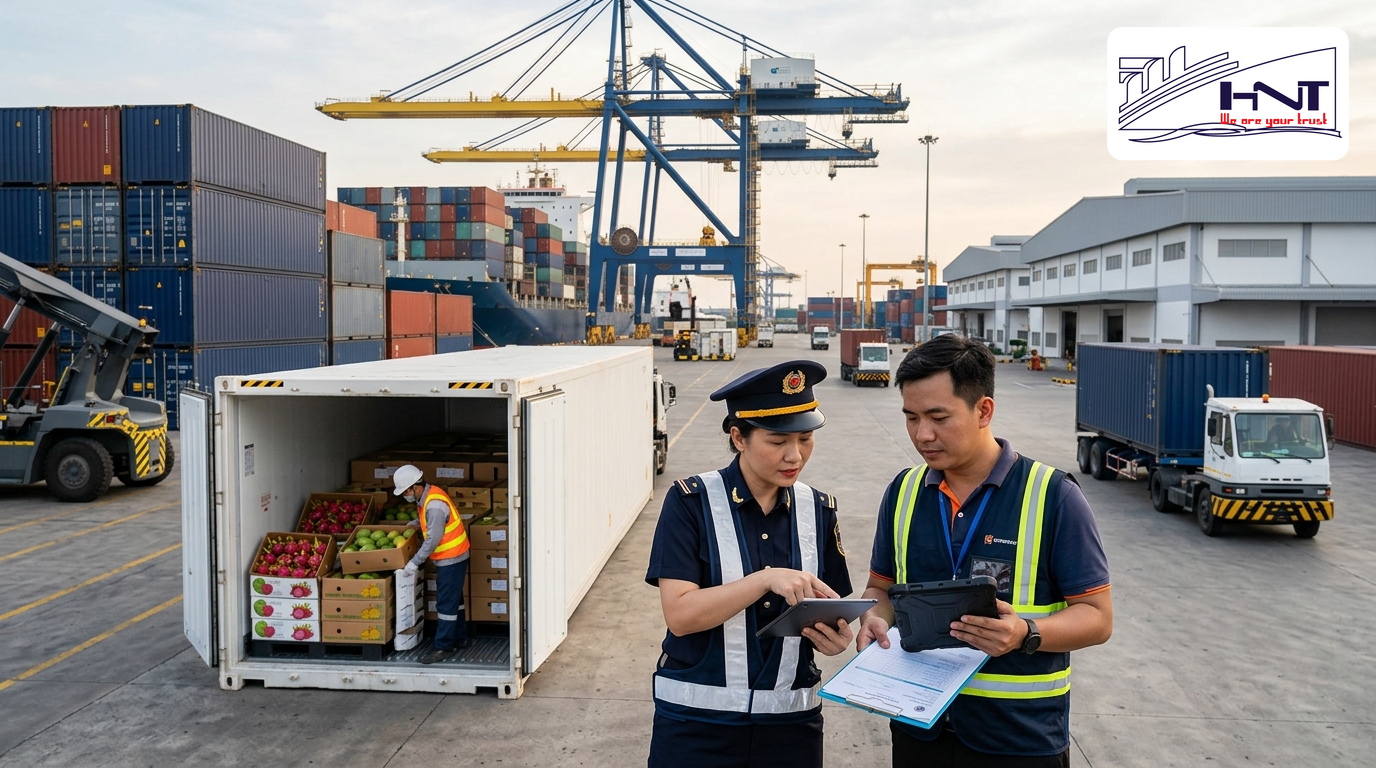
Carrying out customs clearance procedures is becoming a major pressure for many businesses as international delivery times become increasingly urgent and customs compliance requirements become stricter.
According to import-export reports for the 2026-2026 period, Vietnam's export turnover continues to grow strongly. In particular, the seafood industry has surpassed the milestone of 11.34 billion USD in 2026. Markets such as the United States, EU, China and Japan are simultaneously tightening requirements for traceability, quarantine and customs documents. This makes accurate declaration from the beginning a vital factor.
The article below provides detailed guidance on the process of opening declarations, preparing documents and carrying out on-the-spot import-export procedures according to the latest regulations so that businesses can minimize risks and increase customs clearance speed.
Key principles to know before carrying out customs clearance procedures
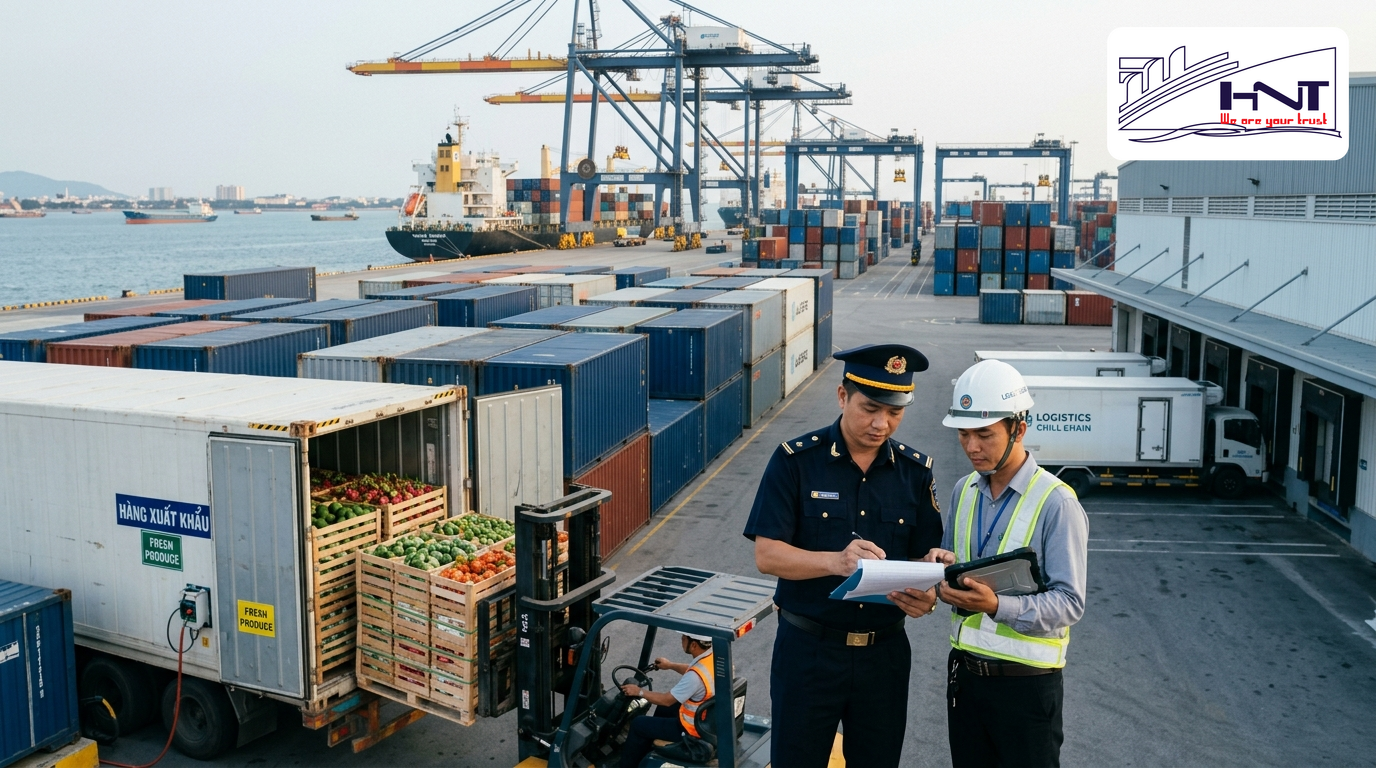
The concept of customs clearance and opening on-the-spot import-export declarations under the new regulations
Customs clearance is the process by which customs authorities approve goods for export or import after completing inspection and declaration obligations. For on-the-spot import-export activities, goods are delivered and received within Vietnam's territory as designated by foreign traders but must still fully complete customs procedures.
According to the amended provisions of Customs Law 2026, on-the-spot import-export goods continue to be subject to customs supervision and must have separate declarations opened for each transaction.
Cases requiring on-the-spot import-export declaration procedures
- Export processing enterprises sell goods to domestic enterprises as designated by foreign partners.
- Goods processing transactions between Vietnamese enterprises and foreign traders.
- Leasing or borrowing machinery and equipment under international contracts.
- Purchasing raw materials for export production.
- Transferring finished products under three-party contracts.
- Delivery and receipt of goods in non-tariff zones as designated by foreign parties.
Documents businesses need to prepare before declaration
Businesses need to prepare commercial contracts, commercial invoices, packing lists, bills of lading if available, certificates of origin and related specialized permits. The more complete the documents are, the higher the possibility of green channel classification.
| Documentation | Mandatory | Purpose | Time of submission |
|---|---|---|---|
| Contract | Yes | Transaction proof | Declaration |
| Invoice | Yes | Valuation | Declaration |
| Packing List | Yes | Goods details | Declaration |
| Care of | Depending on the case | Tax incentives | Customs clearance |
| Specialized permits | If any | Condition check | Before customs clearance |
For example, Mekong Fruit Company in Tien Giang exporting mangoes to Shanghai reduced 18 hours of document processing thanks to standardizing electronic documents before declaration. Meanwhile, Minh Hai Seafood Company in Ca Mau avoided storage costs of 22 million VND by completing quarantine certificates before the vessel departure date.
Based on the experience of HNT LOGISTICS, businesses should check the consistency between Invoice, Packing List and HS codes before transmitting declarations to limit the risk of being transferred to yellow or red channels.
Step-by-step process for customs clearance of imported and exported goods
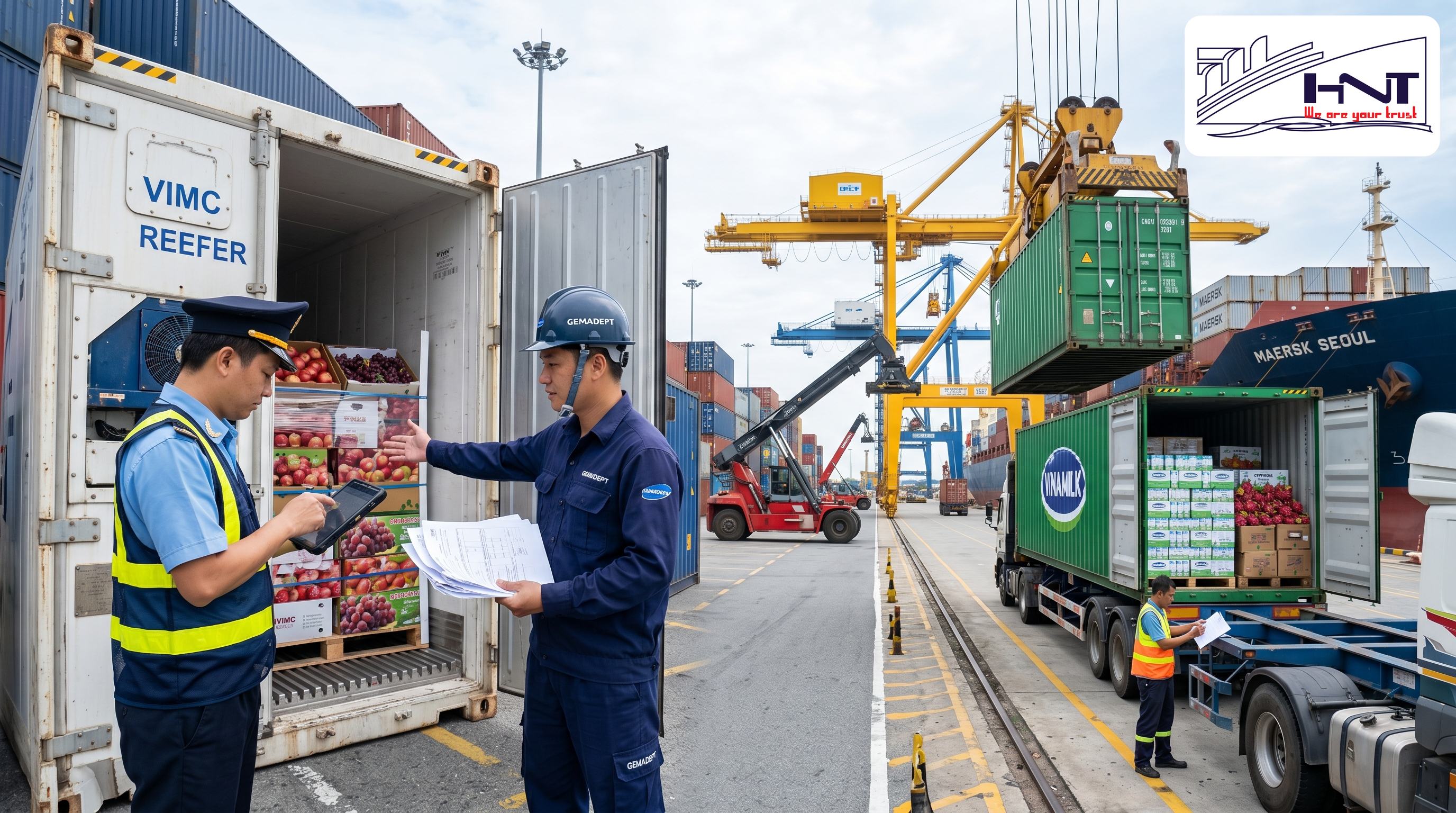
Step 1: Determine the appropriate HS code and type code
The HS code determines tax rates, management policies and specialized inspection obligations. Incorrect HS codes may result in additional tax collection or administrative penalties.
Step 2: Prepare customs declaration documents
The document set needs to be carefully checked for product names, quantities, values and Incoterms conditions. Businesses should digitize documents for convenient storage.
Step 3: Register and submit the customs declaration on the VNACCS system
After the declaration is submitted, the system will automatically assign a clearance channel. Green channel shipments are cleared quickly. Yellow channel shipments require document inspection. Red channel shipments require physical cargo inspection.
Step 4: Cargo inspection, channel assignment, and complete customs clearance
- Register the dossier on the VNACCS system.
- Receive channeling results.
- Submit additional documents as required.
- Carry out physical inspection if required.
- Pay taxes and fees.
- Receive the customs clearance decision.
| Channel | Inspection level | Average time | Risk |
|---|---|---|---|
| Green | Automatic | 1-4 hours | Low |
| Yellow | Document inspection | 4-24 hours | Standardized, inspected |
| Red | Physical inspection | 1-3 days | Infrastructure |
| Specialized inspection | Additional inspection | 3-7 days | Infrastructure |
A wood company in Binh Duong exporting goods from Cat Lai to Los Angeles reduced customs clearance time from 48 hours to 12 hours by submitting the declaration before container stuffing. Meanwhile, Dong Nam Electronics Company in Dong Nai avoided more than VND 180 million in additional tax assessments after reviewing the HS code before export.
According to experts at HNT LOGISTICS, verifying the procedure type code from the contract drafting stage helps minimize many errors arising during post-clearance inspection.
Guide to opening an on-site import and export customs declaration from A-Z
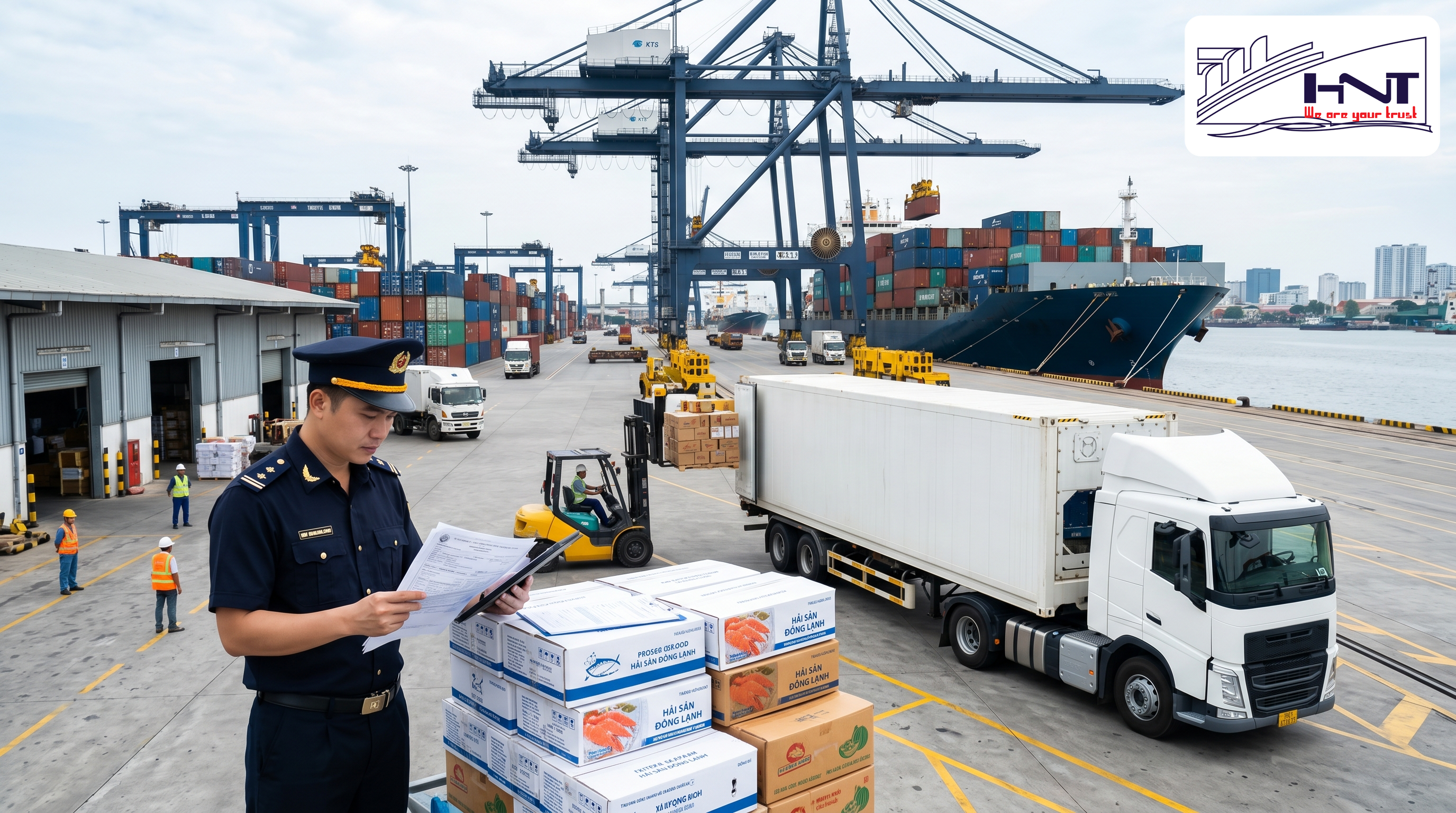
Conditions for applying on-site import and export
This activity only applies when a foreign trader is involved and the goods are delivered and received in Vietnam according to the contract instructions.
Required dossiers and documents
- Contract with the foreign trader.
- Valid commercial invoice.
- Detailed packing list.
- Payment documents according to the contract.
- Goods handover record.
- On-site export declaration and on-site import declaration.
Processing procedure between the seller, buyer, and foreign trader
The on-site exporter submits the declaration first. Then the on-site importer opens the corresponding declaration. Customs authorities compare the data between both parties before approving completion of the transaction.
Common errors that cause customs declarations to be rejected
Common errors include incorrect procedure type codes, under-declared customs value, missing payment documents, or inconsistent information between the two trading parties.
Agro Mekong Company in Long An once had its customs declaration rejected due to incorrect consignee information as instructed by its Singapore partner. After correction, the company completed the procedures within 24 hours.
A mechanical engineering company in Hai Phong incurred three days of warehouse storage due to declaring the wrong E42 procedure type code. Reviewing the dossier from the beginning helped save nearly VND 35 million in additional costs.
Important notes when carrying out export and import procedures
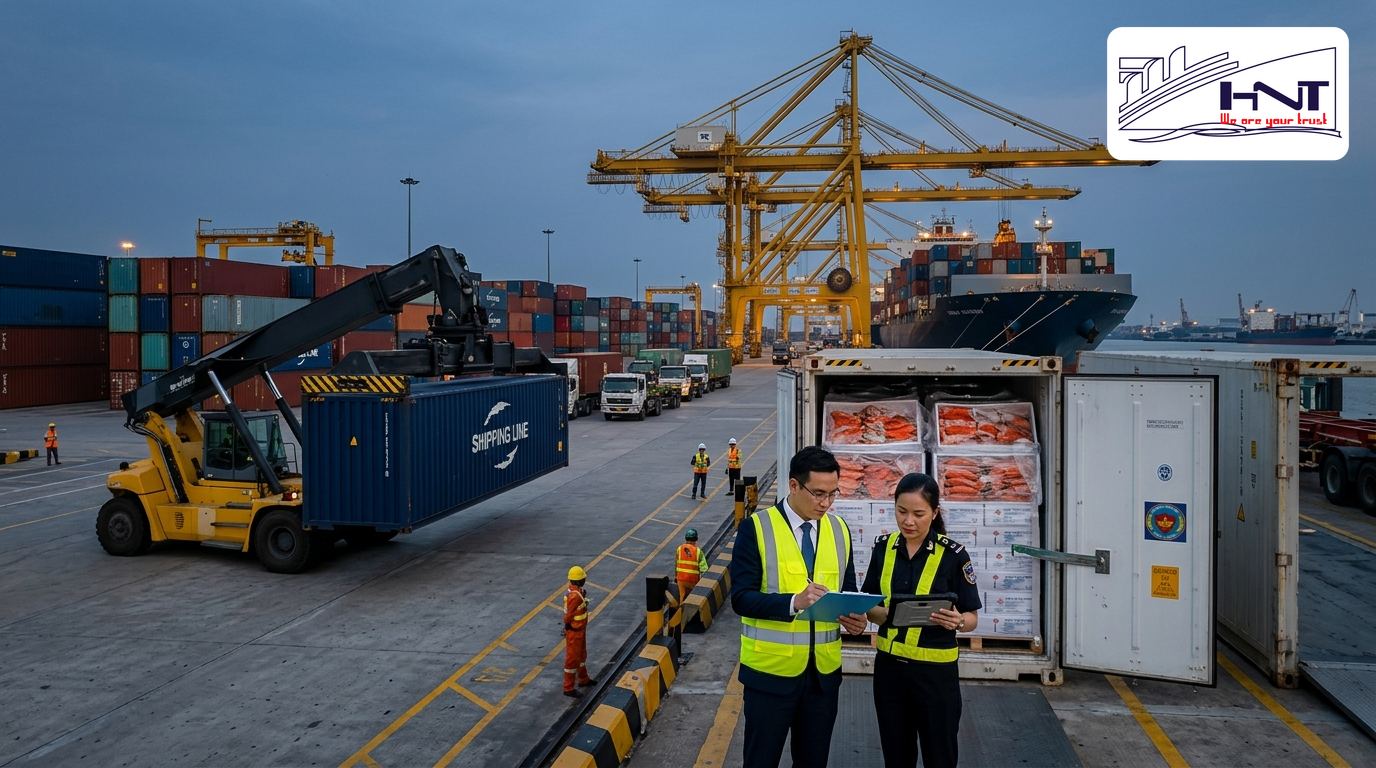
Quarantine and specialized inspection requirements
Major markets are strengthening traceability controls. Seafood exported to the United States and the EU must comply with legal harvesting, quarantine, and quality certification requirements.
Notes on refrigerated containers and vessel bookings
Many shipping lines have reported localized container shortages at Cat Lai and Cai Mep during peak export seasons. This increases container allocation waiting time by 15-20% compared to the planned schedule.
Risks of container detention and storage charges
- Booking too close to the vessel departure date.
- Missing quarantine certificate.
- Incorrect container weight declaration.
- Failure to update the shipping line's new cut-off time.
- Missing specialized permits.
- Unexpected red channel assignment.
| Risk | Cause | Additional costs | Measures |
|---|---|---|---|
| Storage fees | Customs clearance delay | Infrastructure | Declare in advance |
| Demurrage | Late container return | Infrastructure | Manage vessel schedules |
| Detention | Keep containers too long | Standardized, inspected | Return on time |
| Missing ship | Miss the cut-off | Incabable | Book early |
A dragon fruit exporter in Binh Thuan maintained a temperature of 5°C throughout the Cat Lai – Shenzhen route, reducing spoilage to below 2%. Meanwhile, a seafood company in Soc Trang saved more than 12% in logistics costs by booking refrigerated containers before the peak season.
HNT LOGISTICS recommends that agricultural and seafood exporters confirm booking schedules 10-14 days in advance to ensure a stable supply of refrigerated containers during peak seasons.
Solutions to help businesses shorten customs clearance procedures
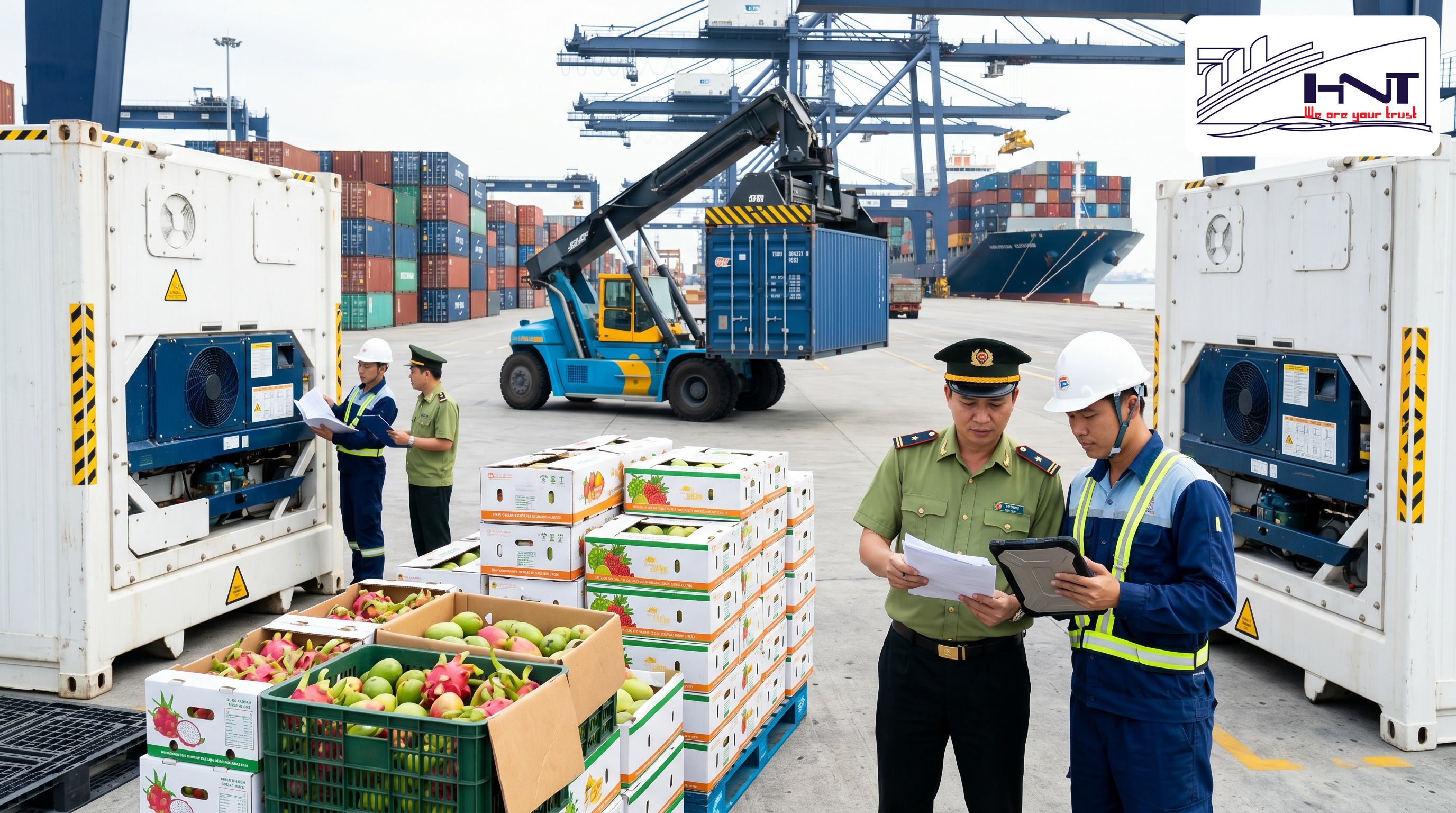
Application service customs declaration professional
An experienced customs brokerage service provider can help businesses minimize documentation errors and reduce the risk of additional inspections.
Optimize documentation and import-export document management
Businesses should establish standardized data processes, store electronic documents, and conduct cross-checks between departments.
Practical experience from Vietnamese exporters
- Standardize the document set before cargo loading.
- Review HS codes periodically.
- Monitor vessel schedules weekly.
- Update import market regulations.
- Check specialized permits before declaration.
- Use centralized document management software.
Electronic customs and logistics trends in 2026
The digitalization of customs is helping shorten document processing time. Businesses with strong data management systems typically achieve higher green channel clearance rates.
A pangasius exporter in An Giang reduced document processing time by 40% by integrating ERP data with customs declaration procedures. A component manufacturer in Bac Ninh also reduced document errors by 30% after implementing a centralized data control system.
Efficient customs clearance procedures not only help release goods quickly but also significantly reduce logistics costs and legal risks in import-export activities.
- Verify HS codes accurately before declaration.
- Prepare a complete customs document set.
- Open the customs declaration using the correct procedure type code.
- Monitor channel assignment and respond promptly.
- Book containers and vessel space early.
- Stay updated with the latest quarantine regulations.
- Use a professional logistics provider when necessary.
As Vietnam's exports continue to grow strongly and international compliance requirements become increasingly stringent, businesses need to proactively standardize customs procedures early. Working with an experienced logistics provider helps control costs, minimize unexpected expenses, and ensure on-time delivery. HNT LOGISTICS is currently a trusted logistics consulting and operations partner for many agricultural, seafood, and industrial exporters nationwide.