
An imported container may have arrived at Hai Phong port but still cannot be transported to the factory because the documents are incomplete, the delivery order is not ready, or the tractor unit is not dispatched at the right time, potentially causing yard storage fees, DEM/DET, truck waiting costs, and the risk of disrupting the production schedule simultaneously. This is why businesses should not choose a Hai Phong logistics company based solely on a low transportation rate.
When researching Hai Phong logistics companies, for import and export cargo passing through Dinh Vu, Tan Vu, and Lach Huyen, logistics efficiency depends on the ability to coordinate multiple links: shipping lines, ports, depots, customs, tractor units, warehouses, factories, and quarantine service providers. A logistics company in Hai Phong with sufficient capabilities must look at the entire operational chain rather than separating individual trips or bookings.
For Hai Phong logistics company solutions, with experience in organizing FCL container transportation, road transportation, refrigerated cargo, customs declaration, and international intermodal transportation, HNT Logistics approaches the problem by controlling total costs and end-to-end schedules. The following article analyzes the factors businesses should consider when choosing logistics companies in Hai Phong and developing suitable transportation plans for each type of cargo.
What Is a Hai Phong Logistics Company? Analyzing Its Role in the Northern Vietnam Import-Export Supply Chain
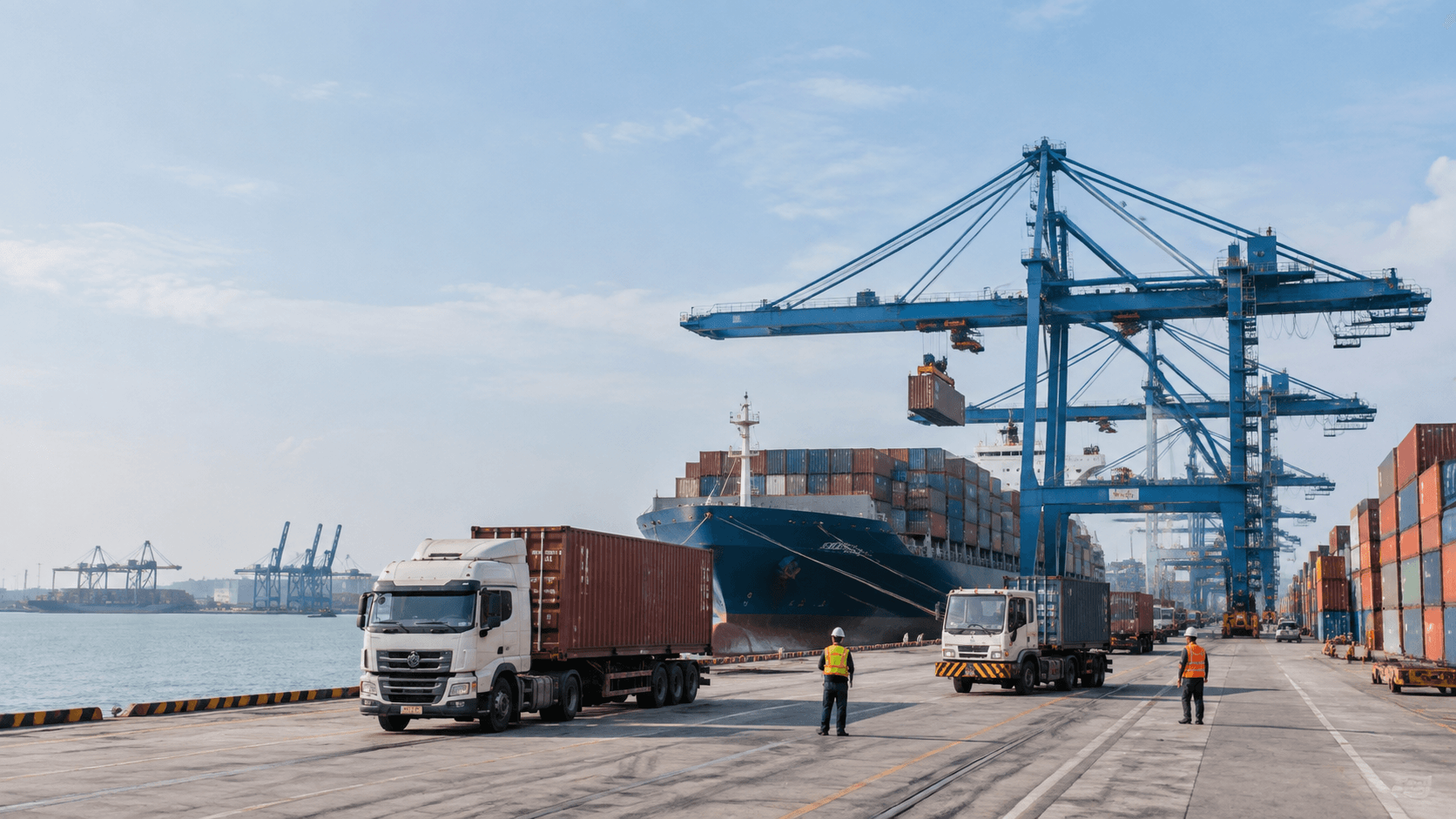
Overview of the operating model of Hai Phong logistics companies in sea freight, road transportation, and international forwarding
A Hai Phong logistics company is an entity that organizes or coordinates transportation, freight forwarding, customs declaration, document management, container drayage, warehousing, and related support services for cargo flows through the Hai Phong port area. Unlike a business that only provides trucks, a logistics provider must be able to connect multiple service providers into an integrated transportation plan.
During transportation and customs clearance, for Hai Phong logistics companies, the import process may begin when the vessel arrives at the port, followed by receiving cargo arrival information, completing customs procedures, obtaining the delivery order, determining the container location, dispatching a truck to the port, collecting the container, and delivering it to the factory. For exports, the process generally runs in reverse: receiving the booking, collecting the empty container, loading the cargo, sealing it, returning the full container to the yard before the cut-off, and completing export documentation.
Therefore, the capabilities of a Hai Phong logistics company are not only reflected in the number of vehicles. More importantly, it is the ability to control the interfaces between sea and road transportation, especially when the container changes from being managed by the shipping line or port to being managed by the carrier and cargo owner.
The Role of Hai Phong Logistics in Connecting Seaports, Industrial Parks, Warehouses, and the China–ASEAN Market
To optimize costs and schedules for Hai Phong logistics companies, Hai Phong plays an important logistics gateway role in northern Vietnam thanks to its seaport system, which directly connects with industrial parks in Hai Phong, Hai Duong, Hung Yen, Bac Ninh, Bac Giang, Hanoi, Thai Nguyen, and many other production centers. Cargo flows from these areas can be consolidated at the port for export or distributed from the port back to factories.
From a supply chain perspective, the port is only one node in the network. An efficient Hai Phong transportation plan must simultaneously account for vessel schedules, container pickup or return schedules, customs clearance time, tractor-unit routes, loading and unloading time at the factory, and buffer time for congestion. If one stage is delayed, the entire subsequent plan may be affected.
For trade with China and ASEAN, Hai Phong also benefits from sea connections with cross-border road transportation networks. Depending on the origin, destination, and cargo characteristics, businesses can use sea freight, road transportation, or combined models to balance time, cost, and supply chain stability.
Core Service Groups Include FCL Container Transportation, Reefer Containers, Customs Declaration, and Multimodal Transportation
For cargo with sufficient volume, FCL transportation allows businesses to use a full container and minimize consolidation or cargo splitting. This method is often suitable for industrial products, raw materials, consumer goods, equipment, agricultural products, or import-export shipments with stable pickup and delivery schedules.
Refrigerated containers require more complex management than dry containers because, in addition to weight and dimensions, temperature, ventilation, humidity, power-off time, and cargo loading methods must be controlled. According to Maersk equipment specifications, some standard reefer units can adjust temperatures within approximately -30°C to +30°C, while other specialized equipment may have a wider range.
The third group is import-export procedures. Correct HS codes, customs value, cargo type, product policies, and complete documentation directly affect customs clearance speed. Vietnam Customs currently maintains administrative procedures and public services for various import-export, transshipment, and cargo transportation operations.
When sea freight, road transportation, customs declaration, and forwarding are organized under one unified plan, the business is using a form of multimodal transportation. HNT Logistics provides multimodal transportation for domestic and international routes, including FCL containers, refrigerated cargo, customs procedures, and Vietnam–Laos–China routes according to the actual requirements of each shipment.
Criteria for Assessing the Operational Capabilities of a Professional Hai Phong Logistics Company
A professional logistics business must first clearly define its scope of responsibility. Who places the booking, who obtains the delivery order, who handles customs declaration, who monitors the cut-off, who is responsible for vehicle dispatch, and who handles situations when a container is held at the port must all be determined from the outset. If responsibilities are scattered among multiple providers without a single coordinating point, operational risks will increase significantly.
The next criterion is cost forecasting capability. A good quotation should not only include the truck freight rate but also clarify potential additional charges such as handling, road tolls, waiting fees, yard storage, DEM/DET, reefer equipment fees, or costs arising from schedule changes. Therefore, businesses should evaluate a transportation company in Hai Phong based on total logistics costs rather than simply comparing truck-trip prices.
It is also necessary to consider document management capabilities, the ability to update container status, incident response time, alternative vehicle arrangements, and experience handling different cargo groups. For refrigerated cargo or exported agricultural products, knowledge of cold-chain management and quarantine requirements can be just as important as transportation capabilities.
What Should a Reputable Hai Phong Logistics Company’s Cargo Transportation Process Look Like?
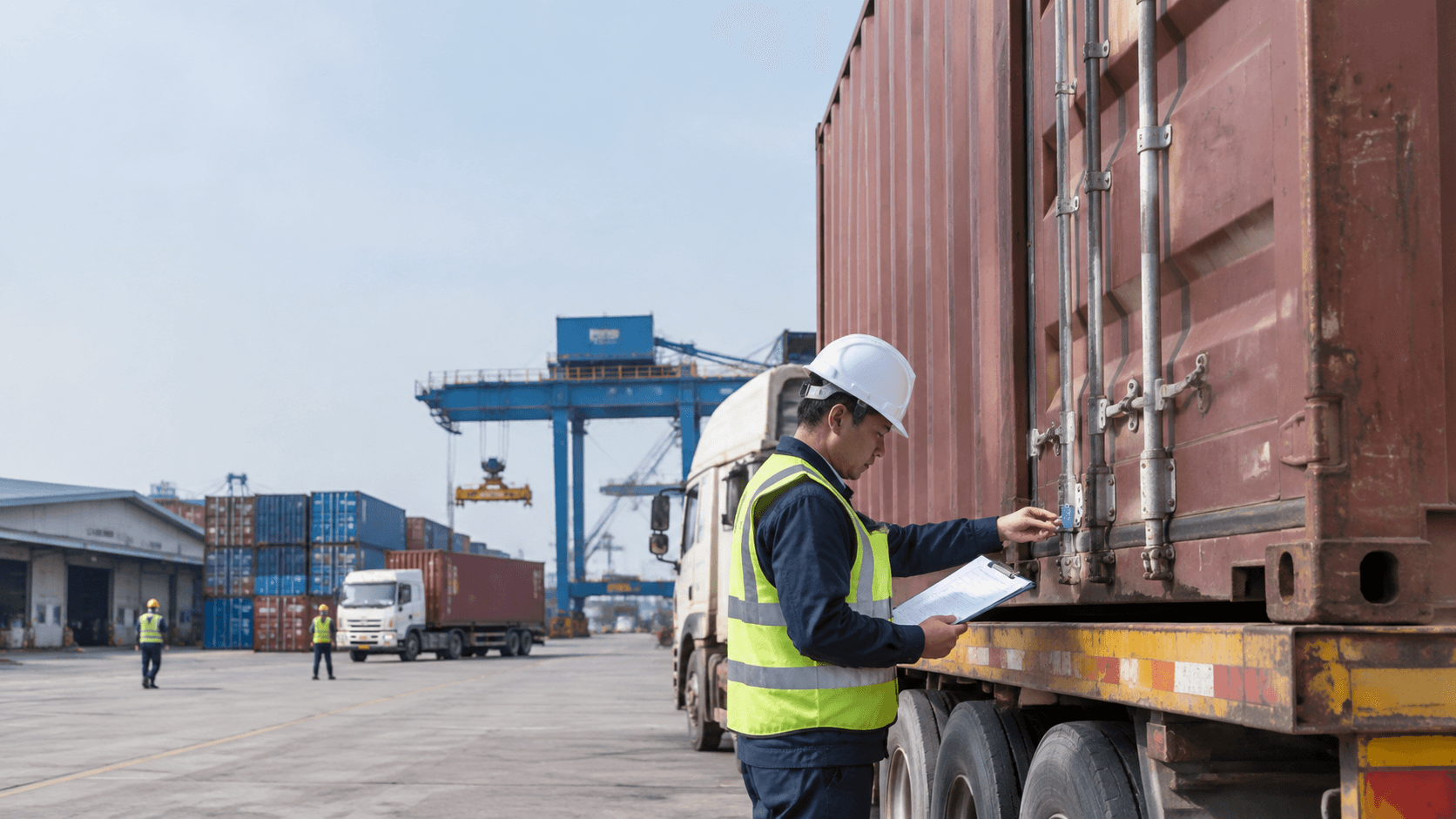
Receiving transportation requests, analyzing cargo characteristics, and developing an appropriate logistics plan
A transportation quotation request should not consist only of the origin and destination. The logistics provider needs to know the cargo name, weight, volume, container type, storage conditions, expected loading date, vessel schedule, port of origin or destination, delivery address, and commercial terms between the buyer and seller.
For heavy cargo, weight is mandatory information because the container limit does not mean that the cargo can be transported at that weight on every route. For refrigerated cargo, the setpoint temperature, ventilation, pre-cooling requirements, loading method, and length of time the container can maintain power connectivity must also be determined.
After collecting the data, a Hai Phong logistics company needs to develop a plan based on three main variables: cost, time, and risk. The fastest route is not always the optimal route, and the lowest-priced option may become more expensive if free time is too short or the transportation schedule causes the container to wait for several days.
Container Coordination Process from Hai Phong Port, Depots, and Warehouses to the Receiving Factory
For imports, the carrier needs to check the actual vessel arrival time, customs clearance status, delivery order, container free time, and pickup conditions at the terminal. Only when these factors are reasonably synchronized should a truck be dispatched to the port, because sending a truck too early may create waiting time without helping the container leave the port faster.
The process container trucking from Hai Phong port usually has to link at least four time points: when the container is ready at the port, when the truck is permitted to enter for pickup, the factory receiving window, and the deadline for returning the empty container. Any discrepancy at one of these points can generate additional costs.
For exports, coordination begins with collecting an empty container from the depot, transporting it to the loading warehouse, completing loading and sealing, and then transporting the full container to the port before the yard cut-off. Scheduling too early increases container utilization time; scheduling too late risks missing the closing time or vessel.
Transportation Document Control Includes Booking, Bill of Lading (B/L), Delivery Order, EIR, and Customs Documentation
The booking confirms that the shipping line has accepted the transportation plan and usually contains important data such as the vessel name, voyage, port of loading, port of discharge, container pickup deadline, and cut-off. Coordinators need to carefully review these milestones rather than only checking the vessel departure date.
The Bill of Lading (B/L) is an important sea transportation document, so the shipper, consignee, notify party, container number, seal, package count, weight, and cargo description should be cross-checked against the commercial documents. Data discrepancies can create additional correction time or affect procedures at the destination.
The EIR records the condition of container equipment during handover at the terminal or depot. In actual operations, this document helps determine the time of container pickup and return and the condition of the equipment. In addition, businesses must control invoices, packing lists, customs declarations, permits, or specialized documents depending on the cargo.
Coordination Among Shipping Lines, Seaports, Tractor Units, and Businesses to Ensure Delivery Schedules
Container logistics is the process of synchronizing schedules among multiple independent parties. Shipping lines have vessel schedules and equipment regulations; ports have their own operating capacity; tractor units are affected by traffic; factories have receiving windows; customs and specialized inspection authorities have their own procedures. A logistics company must turn these different schedules into a feasible operating plan.
An important principle is not to wait until a problem occurs before coordinating. Before the delivery date, the vessel status, container, customs declaration, delivery order, truck schedule, and warehouse receiving capacity should be checked. For information about cargo flows and maritime operations, businesses should also cross-check official notices from Vietnam Maritime Administration and the relevant port operator.
How Does a Hai Phong Logistics Company Optimize Container Transportation Costs?
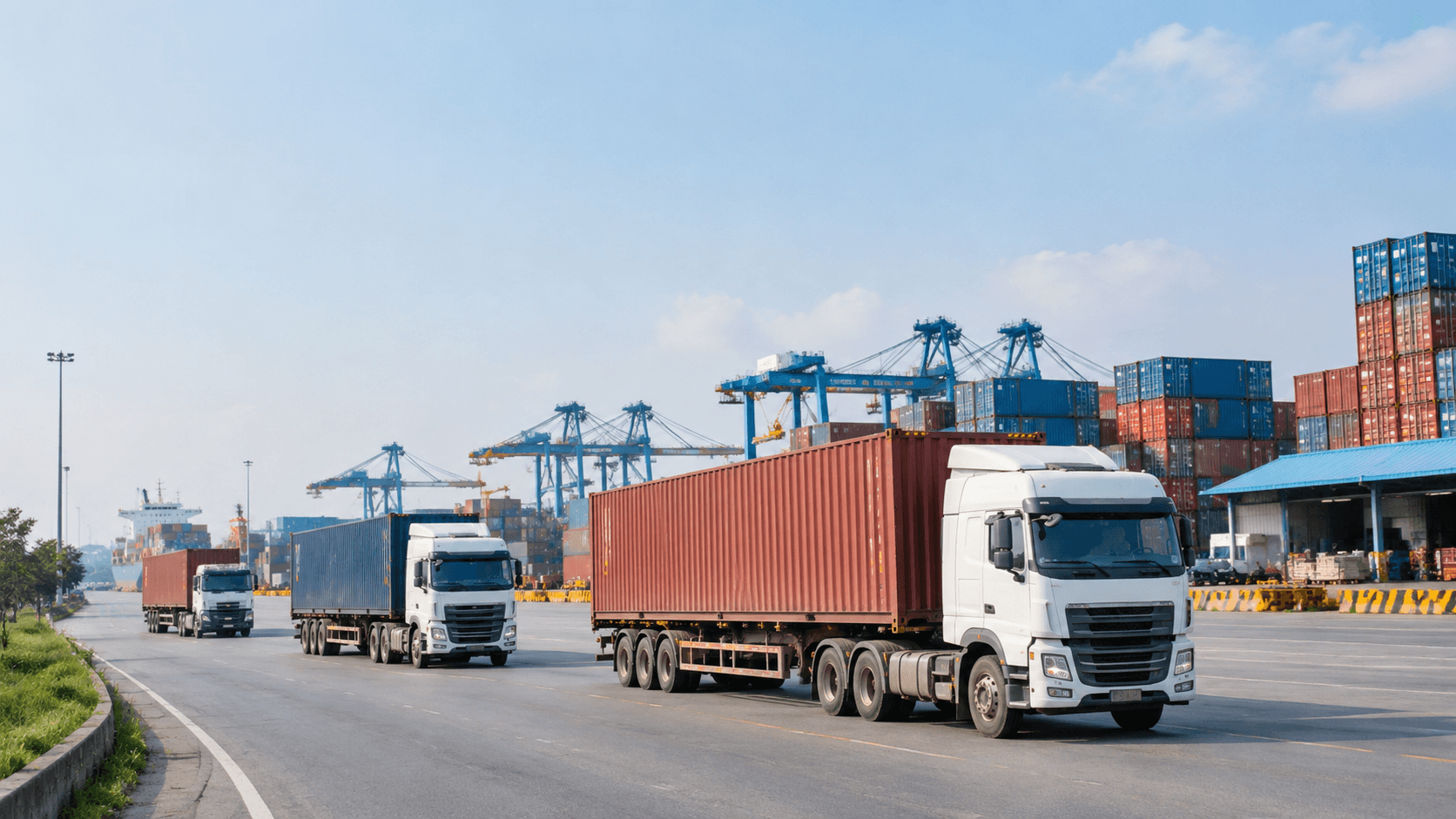
Analyzing factors affecting transportation costs, including container type, distance, waiting time, and additional surcharges
Container transportation costs consist of multiple layers. The most visible component is the main transportation rate, but actual costs are also affected by container type, weight, distance, road fees, handling, waiting time, container pickup and return conditions, and special cargo requirements.
Refrigerated containers generally cost more than dry containers because they involve cooling equipment, power supply, technical inspections, and temperature management. For cargo requiring overnight transportation, deliveries into areas with time restrictions, or factories requiring delivery within fixed slots, the carrier must also incorporate these conditions into the vehicle plan.
A commonly overlooked factor is the cost of delays. A truck waiting several hours at a warehouse, a container being unable to return to the correct depot on time, or delayed document completion can create costs greater than the difference between two initial transportation quotations.
Combining Sea and Road Transportation to Reduce Logistics Costs for Import-Export Businesses
For long-distance routes, businesses do not necessarily need to use tractor units for the entire journey. One option is to combine sea transportation between major ports with tractor units for the first and last legs. This structure is particularly suitable when the cargo is a full container, delivery schedules can be planned in advance, and speed equivalent to end-to-end road transportation is not required.
HNT Logistics organizes multimodal transportation to connect the port leg with the road leg and related procedures. The objective is not to combine as many transportation modes as possible, but to select the right transfer point between sea and road so that the total cost of the entire journey is more reasonable.
For an accurate comparison, businesses need to bring all options to the same calculation basis, including door-to-door cost, transit time, number of handovers, free time, delay risk, and safety-stock requirements. Comparing only sea freight with road freight does not fully reflect the efficiency of the option.
How to Optimize Container Turnaround and Limit DEM/DET, Yard Storage, and Unnecessary Operating Costs
DEM and DET often become issues when businesses only monitor the vessel date without managing equipment free time. The calculation method and number of free days depend on each shipping line, route, and contract. Shipping-line tariffs show that charges may increase progressively according to the number of days a container exceeds free time, so businesses must check the specific conditions on the booking or shipment contract.
For imports, a good plan is to complete the necessary documents and procedures before the container is ready for pickup, while also scheduling the factory early enough. After unloading the cargo, the empty container should be returned to the designated depot instead of having the truck retain the equipment unnecessarily.
For exports, businesses should avoid collecting empty containers too early when the warehouse is not yet ready to load them. Good turnaround coordination reduces the number of days the business occupies the equipment and limits situations where tractor units have to make additional trips simply to handle container returns.
Applying GPS Journey Management and Vehicle Dispatch Technology to Control the Transportation Budget
GPS does not automatically reduce logistics costs, but journey data helps businesses identify abnormal vehicle stoppage times, port entry and exit times, factory waiting times, and deviations from planned routes. This is important data for distinguishing reasonable costs from costs caused by poor coordination.
When journey data is combined with bookings, vessel schedules, and delivery plans, the logistics department can manage each trip instead of waiting for the end-of-month invoice to conduct analysis. For a container fleet, knowing exactly which vehicles are empty, which are waiting, and which can take the next trip also improves vehicle utilization.
Comparison Table of Hai Phong Logistics Services by Container Type, Transportation Route, and Cargo Requirements
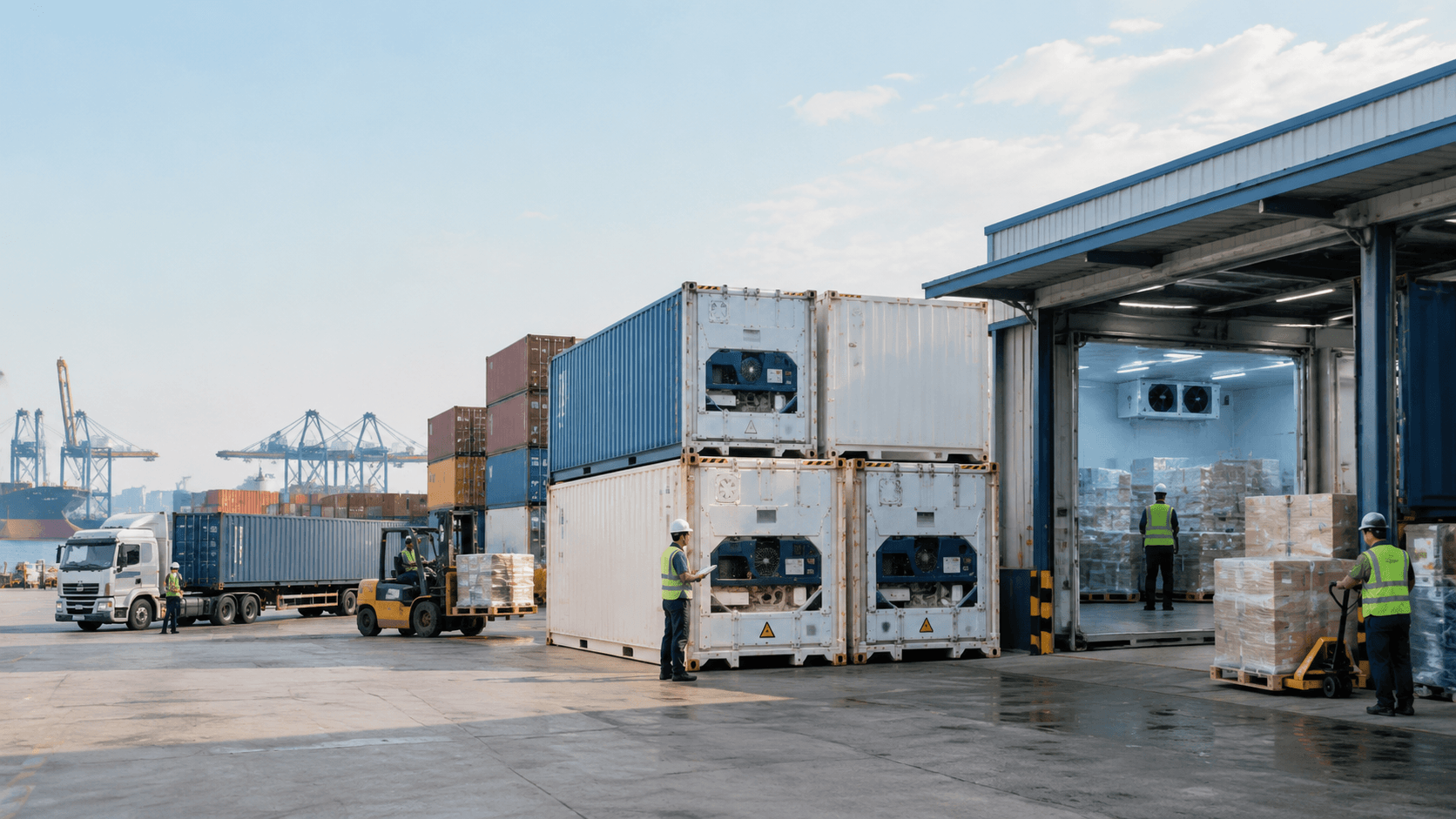
Analysis table of 20-foot dry, 40-foot dry, and refrigerated containers by dimensions, payload, and suitable cargo groups
Container specifications may vary slightly by shipping line and manufacturer, so the figures below should be used for initial planning. When loading actual cargo, businesses should check the specifications of the specific container provided and the road transportation weight limits on the intended route.
| Type of Container | Common external dimensions | Reference volume | Reference maximum payload | Commonly suitable cargo groups |
|---|---|---|---|---|
| 20′ Dry | 20′ x 8′ x 8’6” | Approximately 33 m³ | Approximately 28,200 kg for some Maersk equipment | Machinery, raw materials, heavy cargo, palletized goods |
| 40′ Dry | 40′ x 8′ x 8’6” | Approximately 67 m³ depending on equipment | Approximately 28,800 kg for some equipment | Light cargo, bulky cargo, consumer goods, finished products |
| 40′ High Cube | 40′ x 8′ x 9’6” | Greater than standard 40′ | Depending on container and shipping line | Large-volume cargo, light cargo requiring additional height |
| 20′ Reefer | 20′ x 8′ x 8’6” | Approximately 28.3 m³ for some models | Approximately 27,770 kg for some models | Food, agricultural products, temperature-controlled cargo |
| 40′ HC Reefer | 40′ x 8′ x 9’6” | Approximately 67.5 m³ for some models | Approximately 29,670 kg for some models | Fruit, seafood, large quantities of chilled food |
The 20-foot dry and reefer specifications in the table are referenced from Maersk equipment documentation; the shipping line also notes various container types such as 40 dry, 40 high cube, reefer, open top, and flat rack.
Refrigerated Container Temperature Range Table for Transporting Fresh Agricultural Products Such as Durian, Dragon Fruit, Mango, and Jackfruit
Refrigerated container temperature should not be set simply by looking up the fruit name. Cultivar, maturity, transit time, packaging method, buyer requirements, ventilation, and pre-container handling all affect the setpoint. The following table provides a reference range for initial planning and does not replace the shipper specification or export protocol.
| Item | Reference temperature range | Operational notes |
|---|---|---|
| Whole fresh durian | Approximately 12-15°C | The cultivar, maturity, transportation time, and importer requirements must be determined |
| Dragon Fruit | Approximately 5-10°C depending on cultivar and process | Temperatures that are too low may cause chilling injury; humidity must be controlled |
| Mango | Approximately 10-13°C | The suitable range varies by cultivar and maturity; excessively low temperatures may cause chilling injury |
| Whole jackfruit | Approximately 12-14°C | Appropriate humidity must be maintained and excessively low temperatures avoided |
Postharvest research and literature indicate that mangoes are generally stored at approximately 10-13°C depending on cultivar, while UC Davis records an optimum level for jackfruit of approximately 13 ± 1°C. Research in Vietnam on dragon fruit also shows that storage effectiveness varies significantly according to temperature and cultivar.
For durian, some Vietnamese exporters publish fresh-fruit storage conditions of approximately 12-15°C, but this should not be considered a fixed setpoint for every shipment. Businesses should confirm the temperature with the buyer, packer, and container operator before issuing instructions.
Comparison Table of Sea Transportation Combined with Tractor Units by Delivery Route
| Method | Transportation structure | Advantages | Key points to monitor |
|---|---|---|---|
| Northern factory – Hai Phong port – international destination port | Tractor unit + sea freight | Suitable for FCL exports | Booking, cut-off, empty pickup time, yard return, and customs clearance |
| Hai Phong port – northern factory | International sea freight + tractor unit | Delivery of the full container to the warehouse | Delivery order, free time, container pickup schedule, and empty return |
| Hai Phong – Central/Southern Vietnam | Domestic sea freight + tractor units at both ends | Can reduce long-distance road travel | Vessel schedule, transshipment time, and total lead time |
| Vietnam – Laos – China | Cross-border/transit road transportation combined with border procedures | Expands route options for cross-border cargo | Transit documents, border gates, permits, and regulations of each country |
There is no optimal route for every business. The choice must be based on the pickup point, delivery point, cargo value, committed delivery time, and sensitivity to vessel schedule fluctuations. For container trucking from Hai Phong port, the short leg may account for only a small portion of the total journey but can determine whether the cargo catches the vessel or reaches the factory on schedule.
Checklist of Customs, Phytosanitary Inspection, and Export Documentation Procedures to Prepare
The exact documentation depends on the cargo type, market, export regime, and specialized inspection requirements. Businesses should not use one fixed checklist for every shipment. However, for a typical export shipment, control can begin with the following groups:
- Commercial contract and delivery terms, if applicable.
- Commercial Invoice and Packing List.
- Booking or delivery instructions from the shipping line.
- Customs declaration and HS code, value, and origin data.
- Bill of Lading or Shipping Instruction data for issuing the bill of lading.
- Certificate of Origin (C/O) if the shipment requires preferential treatment or the buyer requests it.
- Licenses and specialized inspection documents if the cargo is subject to management requirements.
- Phytosanitary certificate for cargo subject to quarantine.
- Growing area codes, packing facility codes, and market requirements for agricultural products where applicable.
For exported fruit, quarantine requirements must be checked for each market and each product. Vietnamese specialized authorities regularly update information on quarantine, growing areas, packing facilities, and importing-country regulations; therefore, the document set must be cross-checked at the time of export rather than based on an old shipment.
How Does a Hai Phong Transportation Company Control Cargo Safety During Delivery and Receipt?
Standards for Selecting Tractor Units, Container Chassis, and Transportation Equipment for FCL Cargo
Tractor units serving FCL cargo must be suitable for the container type and actual shipment weight. Before dispatching a vehicle, the carrier should inspect tires, brakes, lights, air systems, fifth wheel, chassis connections, and basic safety components. HNT Logistics also identifies pre-trip inspection of these components as essential to limiting operational disruptions.
Chassis selection is not based solely on whether the container is 20 feet or 40 feet; it also involves total weight, route characteristics, and the loading plan. Cargo with a high center of gravity, machinery, or unevenly distributed loads requires careful checking of securing methods and load distribution to reduce risks during transportation.
Container Condition, Seal, Temperature, and Storage Condition Inspection Before Transportation
Before loading a dry container, the walls, floor, roof, doors, and water-tightness should be checked, while also inspecting for odors, cleanliness, and signs of damage. An unsuitable container can damage cargo even when the transportation process runs on schedule.
For refrigerated containers, inspection is more important because the equipment must maintain both structural integrity and the correct temperature mode. Before loading, PTI status where applicable, setpoint, ventilation, humidity, and pre-cooling requirements should be confirmed. Cargo must also be arranged so that airflow through the T-bar floor and return-air path is not obstructed.
After loading, the seal must be cross-checked and recorded on the relevant documents. If the actual seal number differs from the declared data or bill of lading, the issue must be resolved before the container continues its journey rather than waiting until the destination port to discover it.
Logistics Risk Management Covering Port Congestion, Customs Delays, Document Discrepancies, and Operational Incidents
Port congestion cannot usually be eliminated completely but its impact can be reduced by avoiding sending trucks too early, monitoring terminal conditions, and maintaining buffer time for trips with tight cut-offs. For imports, the top priority is ensuring that documents and procedures are ready before the time the container needs to be collected.
Document discrepancies are a less visible type of risk but can significantly extend processing time. Cargo name, quantity, weight, container number, seal, HS code, and consignee information should be cross-checked among commercial documents, customs declarations, and transportation documents.
For customs procedures, actual processing time also depends on the declaration channel and inspection characteristics. Customs procedure information indicates that document inspection and physical inspection have processing timeframes under regulations, but businesses still need to allow additional time for preparation, cargo presentation, and handling supplementary requests if they arise.
End-to-End Monitoring Solutions to Ensure Cargo Arrives at the Right Time and Place
Each transportation trip should have at least the following status milestones: vehicle receives the instruction, vehicle arrives at the container pickup point, container leaves the port or depot, vehicle arrives at the warehouse, delivery and receipt completed, and empty container returned. For exports, the container yard drop-off milestone and confirmation of vessel-loading eligibility should also be added.
The key point of monitoring is not to send as many notifications as possible. Businesses need to know immediately when actual progress begins to deviate from the plan so there is still time to change the warehouse schedule, dispatch another vehicle, handle documents, or work with the shipping line before significant costs arise.
HNT Logistics – Hai Phong Logistics Company Providing Comprehensive Multimodal Transportation Solutions
Container transportation through Hai Phong port combined with tractor-unit delivery to the final destination
HNT Logistics organizes FCL container transportation by sea and road and also provides tractor units serving major port clusters in Hai Phong. The HNT website records container transportation services connecting Hai Phong with many other areas and north–south transportation routes.
The plan can be designed from the port to the factory for imports or from the factory warehouse to the port for exports. Depending on requirements, businesses can combine booking, container drayage, sea transportation, customs declaration, and final delivery instead of coordinating individual providers themselves.
For shipments requiring container trucking from Hai Phong port, HNT Logistics focuses on synchronizing vehicle schedules with container status, port time, and the business's delivery and receiving windows to reduce waiting time and limit unplanned costs.
Customs Declaration, Cargo Clearance, and Phytosanitary Inspection Solutions for Export Businesses
For import-export cargo, HNT Logistics can coordinate customs declaration, import-export documentation, C/O, and quarantine-related work within the service scope of each shipment. For agricultural exports, information on growing area codes, packing facilities, quarantine, and market requirements must be verified before loading.
Especially for fruit exports to China, quarantine should not be treated as a final paperwork step. Growing-area conditions, packing facilities, cargo condition, and phytosanitary certificates are directly related to customs clearance capability. Vietnamese specialized authorities continue to maintain and update lists and guidance related to plant quarantine and export markets.
Vietnam–Laos–China Transit and Intermodal Transportation Services to Expand the Supply Chain
For supply chains requiring cross-border connections, HNT Logistics provides transit and intermodal transportation solutions between Vietnam, Laos, and China. This model requires the coordinator to understand not only road transportation but also transfer points, border gates, transit documents, and relevant regulations in each country.
HNT service information indicates that for some transit routes from Laos through Vietnam and onward to China, documents may include an independent transport declaration, authorization letter, and cargo manifest depending on the delivery model. The actual documentation package must be confirmed according to the route and regulations in force at the time of transportation.
For refrigerated cargo, fruit, or seafood, the problem is even more complex because every period of waiting at a border gate affects the cold chain. The plan must account for reefer power supply, customs clearance time, tractor-unit changeover if required, and contingency scenarios in case of congestion at the border or along the route.
HNT Logistics Accompanies Businesses in Building Safe, Transparent, and Cost-Optimized Logistics Plans
Khi lựa chọn công ty logistics tại Hải Phòng, doanh nghiệp không nên chỉ quan tâm đến giá cước mà cần xem xét tổng thể phương án vận chuyển, bao gồm tuyến đường, thời gian giao hàng, các khoản phí phát sinh, điều kiện free time và trách nhiệm chứng từ.
For HNT Logistics, các dịch vụ vận chuyển container FCL, vận tải hàng lạnh Bắc – Nam, khai báo hải quan, hỗ trợ C/O, kiểm dịch thực vật và vận tải liên vận Việt Nam – Lào – Trung Quốc được triển khai nhằm giúp doanh nghiệp chủ động theo dõi tiến độ, kiểm soát chi phí và hạn chế rủi ro trong quá trình vận chuyển.
Nếu doanh nghiệp cần xây dựng phương án vận chuyển tại Hải Phòng hoặc rà soát tổng chi phí cho một lô hàng cụ thể, HNT Logistics sẵn sàng tư vấn giải pháp phù hợp.
Một phương án logistics hiệu quả không chỉ đảm bảo hàng hóa đến đúng nơi, đúng kế hoạch mà còn giúp kiểm soát chứng từ, bảo vệ hàng hóa và hạn chế chi phí phát sinh, tạo nền tảng cho hoạt động xuất nhập khẩu ổn định, lâu dài.