


A fruit truck arrives at Huu Nghi Border Gate but missing phytosanitary documents or registering in the wrong lane can result in missing the entire delivery window. This article helps businesses choose a route, prepare procedures, and estimate costs before dispatching a truck.
In the first five months of 2026, Vietnam's total import-export turnover reached USD 445.12 billion. Exports reached USD 215.66 billion, up 19.5% year-on-year. Agriculture, forestry, and fisheries alone reached USD 30.69 billion, up 9.2%. These figures show that pressure to optimize border corridors continues to increase.
In Lang Son, 2,049 vehicles carrying import-export goods passed through the border gates on August 21, 2026. From September 1, 2026, the Tan Thanh – Po Chai customs clearance route is expected to operate from 07:00 to 18:30, including weekends and holidays, until further notice.
How are Huu Nghi and Tan Thanh Border Gates operating?
The first point to understand is that the route terminology has changed operationally. The Tan Thanh – Po Chai area, including dedicated roads and related customs clearance routes, is currently managed within the system of the Huu Nghi Border Gate international border gate. Businesses should not plan on the assumption that the two hubs are completely independent.
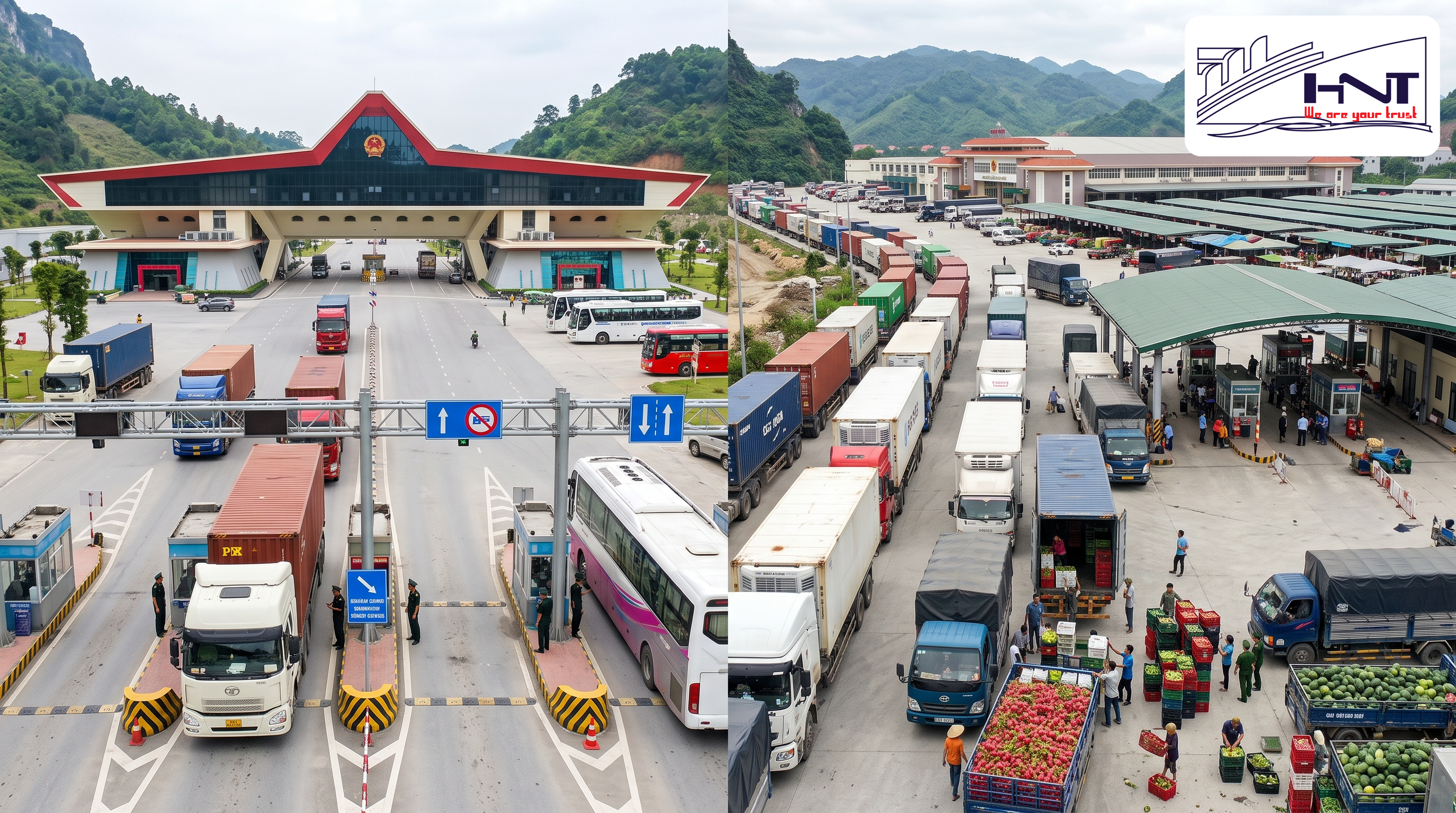
The role of Huu Nghi Border Gate in the Vietnam – China corridor
Huu Nghi Border Gate is suitable for many groups of formal commercial goods, from machinery to agricultural products. The vehicle control infrastructure and border procedures here are large-scale. During peak periods, businesses need to monitor not only theoretical capacity but also the actual number of vehicles waiting.
- Check operating conditions before the truck leaves the warehouse, especially during holidays or adverse weather.
- Confirm in advance that the export border gate matches the transport documents, declaration, and delivery agreement.
- Distinguish routes for ordinary cargo trucks from specialized areas serving specific types of goods.
- Register data on the digital border-gate platform when required by local procedures.
- Allow buffer time for border guard inspections, customs checks, and vehicle coordination in the border-gate area.
- Do not send refrigerated trucks to the border when import-side phytosanitary documents have not yet been confirmed.
| Criteria | Friendship | Tan Thanh – Po Chai | Operational significance |
|---|---|---|---|
| Role | International border gate | Customs clearance area within the Huu Nghi system | The correct customs clearance point must be identified |
| Group of goods | Diverse | Notable for agricultural products and road cargo | Choose based on the characteristics of the shipment |
| Coordinate | High traffic volume | Has a dedicated transport route | Vehicle queues must be monitored |
| Digital data | Digital border-gate platform is applied | Digital border-gate platform is applied | Standardize declarations in advance |
Where is Tan Thanh currently located in the customs clearance system?
In 2026, the Lang Son authorities organized guidance for businesses on using the digital border-gate platform at Huu Nghi Border Gate and the dedicated road at markers 1088/2-1089 in the Tan Thanh area. This is a clear signal of the trend toward digitalizing vehicle and document coordination along this corridor.
Example 1: The hypothetical company Nam Viet Fruit in Tien Giang transports 22 tons of dragon fruit to Lang Son. By confirming the customs clearance point before the truck leaves the warehouse, the company avoids having to resubmit documents at the border and reduces waiting time by about six hours.
Example 2: The hypothetical manufacturer Minh Khang Mechanical in Binh Duong transports components to Guangxi. Since the goods do not depend on the cold chain, the company prioritizes the lane at Huu Nghi Border Gate that matches the commercial documents rather than following the familiar agricultural-product route.
Conclusion: Finalize the actual customs clearance point before booking the truck. The route name in the transport contract must be consistent with the declaration, border-gate data, and delivery plan on the Chinese side.
What is the procedure for transporting goods to China through Huu Nghi Border Gate?
An effective plan for transporting goods to China must begin at the shipment's entry point, not in Lang Son. For goods transiting through Vietnam, businesses must also manage the route under customs supervision from the entry border gate to Huu Nghi Border Gate or the approved exit point.
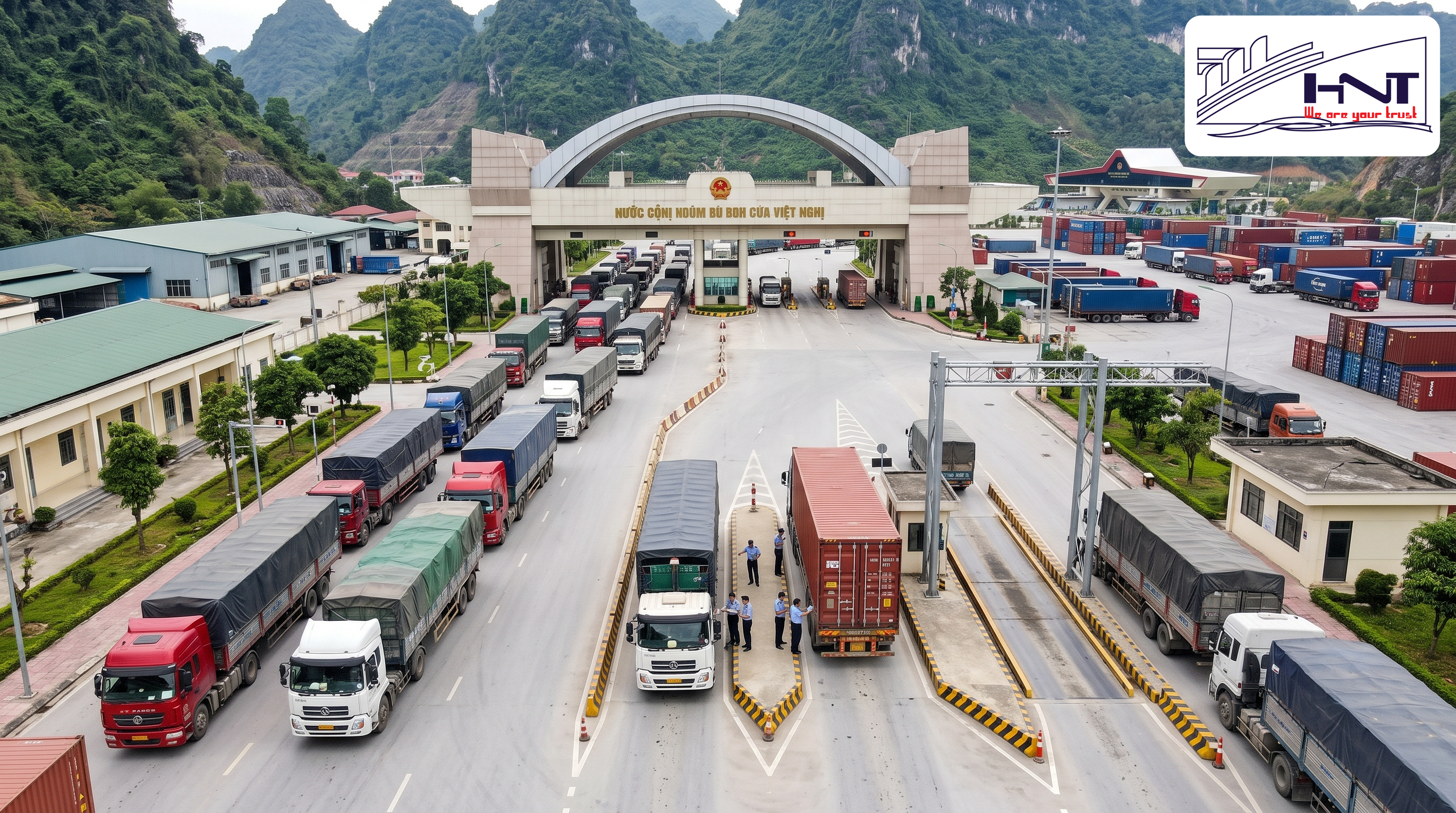
Route model and control points
The actual route depends on where the goods enter Vietnam. Goods from Cambodia may enter through a southern border gate and then be transported to Lang Son. Goods arriving at a seaport may be transported from the port to the border using an appropriate transport declaration. The supervised route must not be changed arbitrarily before the necessary procedures are completed.
- Check the goods' status and determine whether a transit permit is required.
- Identify the Vietnamese entry border gate, domestic transport route, and export border gate to China.
- Prepare vehicles that meet sealing, supervision, and safety requirements for each type of goods.
- Declare transport information to customs before the goods begin their supervised journey.
- Monitor the seal and vehicle condition throughout the entire journey through Vietnamese territory.
- Complete confirmation that the goods have exited Vietnam at the export border gate in accordance with customs regulations.
| Leg | Main tasks | Risk | Measures |
|---|---|---|---|
| Vietnam entry point | Receipt and transport declaration | Incorrect goods information | Cross-check original documents |
| Domestic shipping | Maintain supervision | Broken seal | Pre-departure inspection |
| Lang Son | Vehicle coordination | Vehicle congestion | Monitor daily traffic volume |
| Export border gate | Confirm goods exit | Inconsistent documents | Pre-check documents |
Timeline from pickup point to China
Delivery times should not be committed based solely on driving hours. The actual schedule includes pickup time, customs declaration, inspection stops, border-gate coordination, and handover on the Chinese side. For agricultural products, a one-day delay can directly affect firmness, color, and loss rate.
Example 1: The hypothetical company Mekong Transit receives raw materials from Cambodia through Tay Ninh and then travels to Lang Son. The truck is planned for 48 hours of travel plus a 12-hour contingency window at the border, avoiding an overly tight delivery commitment.
Example 2: The hypothetical company Dong Duong Electrical Appliances receives a container at Cat Lai Port and then transports it to Huu Nghi Border Gate. By standardizing declaration information before collecting the container, the operations team reduces one round of document corrections and avoids additional storage days.
Conclusion: Build the transport schedule around each control milestone. Do not use pure driving time as the commitment for cross-border delivery.
Transit procedures for goods to China at Huu Nghi Border Gate
Transit procedures for goods to China depend on the nature of the goods. Under Article 35 of Decree 69/2018/ND-CP, ordinary goods not belonging to special groups undergo transit procedures at the customs authority. Certain prohibited goods or goods subject to temporary suspension of import or export require an appropriate permit.
The current customs procedure framework should be read together with Decree No. 167/2026/ND-CP, issued on June 30, 2026 and effective from August 15, 2026, amending Decree 08/2015/ND-CP. Businesses should not rely on outdated guidance.
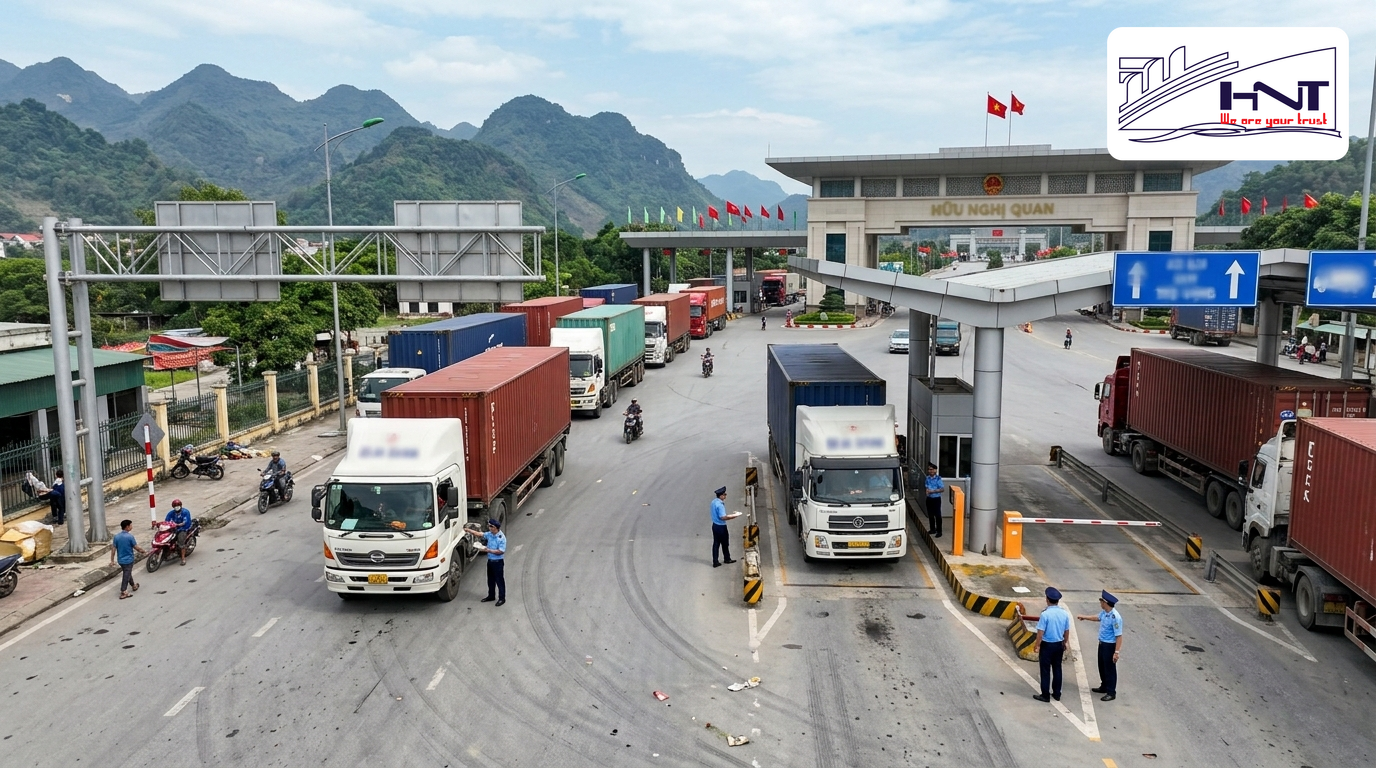
Required document set
The documents must reflect the same transaction and the same journey. The goods name, number of packages, weight, consignor, consignee, and vehicle must be cross-checked. For goods subject to specialized management, additional permits or certificates should be checked before departure.
- Transport documents showing the pickup point, delivery point, vehicle number, or container number related to the shipment.
- Commercial invoice and packing list consistent with the declared goods name, quantity, and weight.
- Transport declaration or corresponding customs documents for the type of transport under supervision.
- Transit permit if the goods belong to a category for which the law requires authorization from a competent authority.
- Phytosanitary or food safety documents if the goods are subject to relevant specialized management.
- Sufficient consignee information on the Chinese side to cross-check against import documents at the opposite border gate.
| Documentation | Purpose | Common errors | Checking method |
|---|---|---|---|
| Transport document | Define route | Incorrect license plate | Cross-check actual vehicle |
| Invoice | Transaction identification | Goods name differs from declaration | Standardize description |
| Packing list | Confirm packages and weight | Quantity discrepancy | Count and check before loading |
| License | Meet specialized management requirements | Expired | Check issuance date |
| Quarantine | Meet biological requirements | Incorrect shipment information | Cross-check growing area |
Customs declaration and supervision sequence
The customs authority's published process for goods transiting Vietnamese territory includes filing an independent transport declaration, receiving and approving it at the customs office where the goods depart, then carrying out supervision and sealing when applicable.
HNT LOGISTICS recommends Pre-check service customs declaration before the truck picks up the goods, especially when the vehicle or border gate changes. A small error in the license plate, seal number, or weight can cause the entire shipment to wait for adjustment.
Example 1: The hypothetical company An Phu Trading in Ho Chi Minh City transports transit raw materials to Nanning. The documents are cross-checked in three layers before declaration. As a result, the vehicle does not have to return to supplement information when it reaches Huu Nghi Border Gate.
Example 2: The hypothetical company Dai Son Machinery in Dong Nai changes the tractor unit during the journey but fails to update the data promptly. The shipment is held for verification. After the incident, the company applies a procedure to lock vehicle information six hours before departure.
Conclusion: For transit goods, the goal is not only to declare correctly. Businesses must also maintain continuity of documents, vehicles, and seals until the export border gate.
Transport quotation via Huu Nghi and Tan Thanh Border Gates
There is no fixed price for every shipment through Huu Nghi Border Gate. Quotations depend on the pickup point, vehicle type, payload, goods, waiting time, transloading requirements, and temperature-control requirements. Therefore, the table below is a budgeting framework, not a finalized commercial quotation.
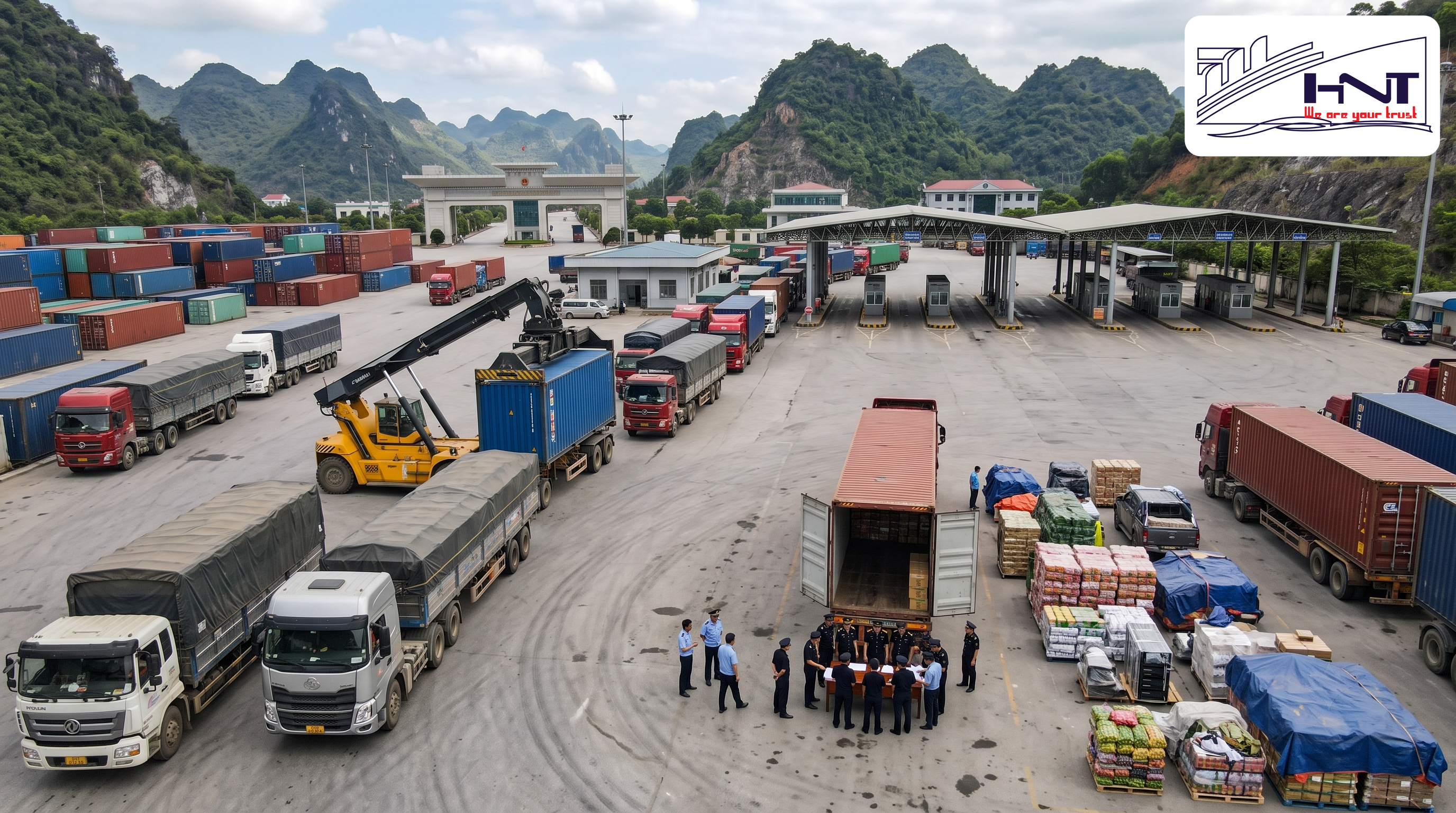
Cost components
- Domestic trucking rates are calculated based on the pickup point, journey length, vehicle type, and possibility of return-load pickup.
- Vehicle waiting fees arise when customs, phytosanitary inspection, or border coordination takes longer than the free waiting period.
- Transloading costs depend on the requirement to transfer goods between Vietnamese vehicles and vehicles on the Chinese side.
- Refrigerated trucks incur additional fuel, refrigeration equipment, and operating costs while waiting at the border gate.
- Document fees depend on the declaration type, number of documents, and level of specialized management applicable to the goods.
- Contingency costs should reflect seasonality, storms, holiday peaks, and fluctuations in traffic volume in Lang Son.
| Item | Calculation basis | Impact level | Optimization method |
|---|---|---|---|
| Road freight | Km and vehicle type | Infrastructure | Consolidate pickup schedules |
| Border gate waiting | Hours or days | Medium to high | Book a delivery window |
| Transshipment | Vehicle or ton | Standardized, inspected | Finalize the plan in advance |
| Cold chain | Equipment operating hours | High for fresh goods | Reduce waiting time |
| Customs | Number of document sets | Low to medium | Standardize Documents |
How to read and compare quotations
A low quotation does not necessarily mean a low total cost. Businesses should clearly ask whether the price includes waiting time, transloading fees, phytosanitary inspection, loading and unloading, and document processing. For refrigerated trucks, determine who bears refrigeration fuel costs if the goods are held for an additional day.
The global container transport market remains volatile. On August 20, 2026, Drewry's World Container Index increased 4% to USD 4,526 for a 40-foot container. The Intra-Asia index on the same day increased 6% to USD 1,091. This data is not the trucking price through Lang Son, but it shows that the freight environment remains volatile.
Example 1: The hypothetical company Hoa Phat Agricultural Products in Long An receives two quotations. Option A is three million VND cheaper but excludes refrigerated-truck waiting time. After factoring in an 18-hour contingency, Option B has a total budget about 6% lower.
Example 2: The hypothetical Vina Bac Son factory in Bac Ninh delivers components to Bangxiang. Because the schedule is stable every week, the company combines the return trip with the carrier and reduces road freight costs by about 8% compared with booking each urgent shipment separately.
Conclusion: Compare quotations based on total cost to the handover point, not just the trucking rate. All waiting, transloading, and cold-chain costs need clear calculation principles.
Huu Nghi Border Gate for agricultural products, seafood, and fresh fruit
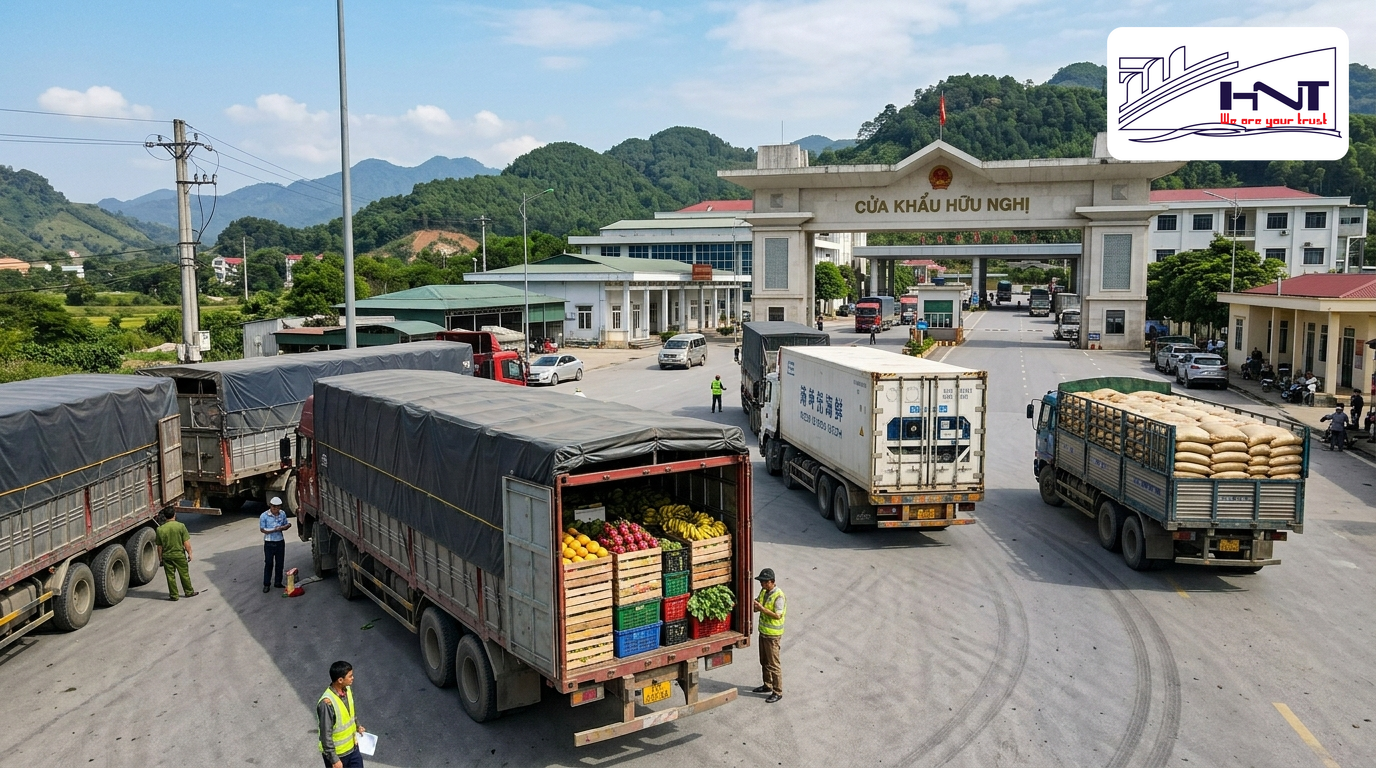
For fresh goods, Huu Nghi Border Gate it is a quality-management problem alongside a customs problem. Correct temperature does not prevent quality loss if waiting time is too long. Conversely, fast customs clearance cannot compensate for errors in growing-area codes, packaging, or phytosanitary inspection.
Phytosanitary inspection and Chinese requirements
Businesses must check regulations for each type of fruit or food. Lists of growing areas, packing facilities, and phytosanitary protocols may be updated for each commodity. Vietnamese specialized authorities continue to publish phytosanitary lists and approved facilities in 2026.
Notably, the new Chinese customs regulation on registration of overseas food production enterprises took effect on June 1, 2026 and replaced the regulation issued under Order 248 in 2026. Food businesses should cross-check current regulations instead of using old sample documents.
- Confirm that the growing-area code and packing facility remain valid for the specific exported fruit.
- Cross-check information on the phytosanitary certificate with the invoice, packing list, and shipment labels.
- Check in advance the facility registration requirements for food groups subject to Chinese regulations.
- Place an independent temperature recorder in the refrigerated truck to provide data in the event of a quality dispute.
- Do not load goods directly against the air outlet because this can create uneven temperature zones inside the refrigerated container.
- Prepare reserve fuel and power supply capability when the refrigerated truck has to wait longer than planned at the border.
| Group of goods | Control point | Main risks | Measures |
|---|---|---|---|
| Fresh fruit | Growing area and packing | Code mismatch | Cross-check before loading |
| Vegetables | Plant quarantine | Pests | Shipment hygiene |
| Frozen seafood | Temperature and food safety | Cold-chain break | Continuous temperature logger |
| Processed food | Facility registration | Missing registration | Check before sale |
Cold-chain control on the road route
Based on the experience of HNT LOGISTICS, refrigerated trucks should be pre-cooled before loading and have temperature alert thresholds set. Businesses should also designate the person responsible for handling the situation if the truck stops for too long at Huu Nghi Border Gate. This process reduces disputes when quality deteriorates.
Example 1: The hypothetical company Song Tien Fresh in Tien Giang exports jackfruit to Guangxi. The operations team installs two temperature recorders and maintains ventilation space. After 46 hours, the data shows no temperature increase beyond the agreed threshold.
Example 2: The hypothetical Bien Nam Ca Mau factory transports frozen seafood. The plan includes reserve fuel for the refrigeration unit for 24 hours. When the handover time is extended by nine hours, the goods' temperature remains within the established operating range.
Conclusion: For refrigerated goods, manage permits, time, and temperature simultaneously. Optimizing only one factor will not protect the shipment's commercial value.
Comparison of Huu Nghi, Tan Thanh, and Kim Thanh Border Gates
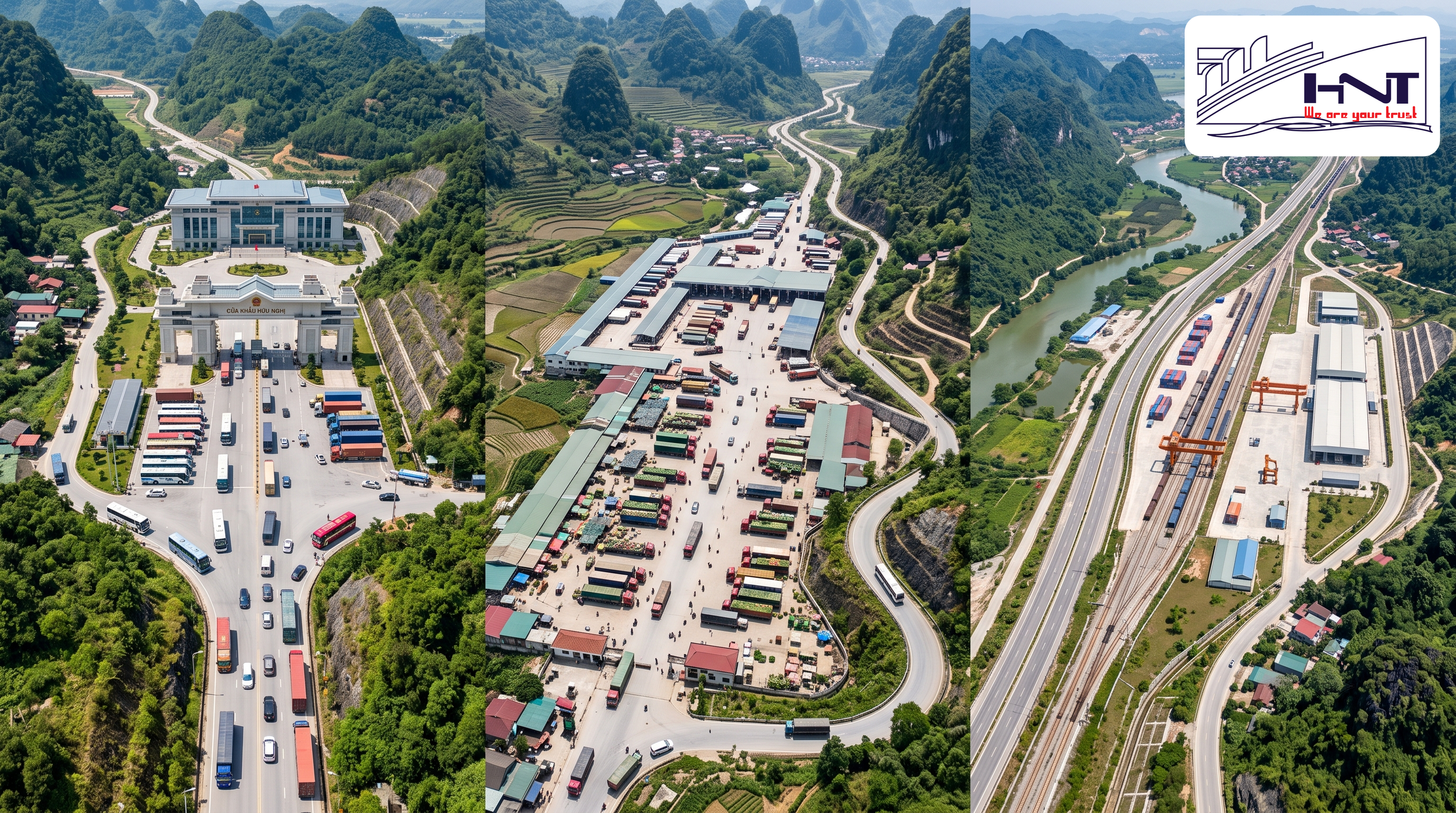
No corridor is best for every shipment. Huu Nghi Border Gate and the Tan Thanh area have a clear advantage when goods are headed to Guangxi. Meanwhile, Kim Thanh Border Gate in Lao Cai may be more suitable for routes toward Yunnan or delivery points in southwestern China.
When to choose each corridor
The choice should be based on the final destination, type of goods, border-gate status, and the buyer's receiving capacity. In 2026, Lao Cai continues to develop the digital border-gate model at Kim Thanh, showing that this corridor is also being developed toward modern logistics.
- Prioritize Huu Nghi Border Gate when the receiving point is concentrated in Guangxi or the transport network connects through Bangxiang.
- Consider Tan Thanh – Po Chai for road cargo flows compatible with the current capacity of the specialized area.
- Consider Kim Thanh when the customer is in Yunnan and the distance after the border is significantly shorter.
- Check the number of waiting vehicles before finalizing the route, especially during large-scale fruit harvest seasons.
- Compare total time from the warehouse to the consignee rather than only the distance from the warehouse to the border.
- Keep an alternative option, but change the border gate only after rechecking all relevant documents.
| Criteria | Friendship | Tan Thanh – Po Chai | Kim Thanh |
|---|---|---|---|
| Market direction | Guangxi and corridors deeper into China | Guangxi | Yunnan |
| Cargo type | Diverse | Notable road agricultural products | Agricultural and commercial goods |
| Strengths | International border-gate capacity | Specialized area | Connecting Southwest China |
| Route decision | By destination and traffic volume | By type of goods and coordination | By receiving point in Yunnan |
How to decide before dispatching the truck
Businesses should score each route based on five variables: time, cost, legal requirements, cargo quality, and incident-handling capability. If the goods are perishable, time and the cold chain should carry greater weight. If the goods are machinery with lower sensitivity, the business can prioritize total cost.
Example 1: The hypothetical Tay Nguyen Fruit company in Dak Lak has a customer in Nanning. The comparison shows that going through Lang Son significantly reduces the transport distance in China. The company chooses Huu Nghi Border Gate even though the Vietnamese trucking rate is somewhat higher.
Example 2: The hypothetical Hong Ha Trading company in Hai Phong delivers goods to Kunming. After adding the logistics leg in China, the Kim Thanh route provides a more reasonable total distance. The company changes the route before opening the declaration, not during the journey.
Conclusion: Choose the border gate based on the total journey to the consignee. Do not assume the familiar route is always the optimal route for every Chinese customer.
For stable transportation through Huu Nghi Border Gate businesses need to lock in five factors simultaneously: suitable route, consistent documents, border-gate status, price structure, and quality requirements. Especially for agricultural products, dispatching a truck at the wrong time can erase the profit saved from freight costs.
- Identify the correct customs clearance point within the Huu Nghi – Tan Thanh system before the truck leaves the warehouse.
- Check whether the goods require a transit permit or specialized management.
- Cross-check the declaration, vehicle, seal number, and commercial documents before starting the journey.
- Compare quotations based on total cost, including waiting time, transloading, and refrigerated-truck operation.
- Monitor border-gate traffic volume and the latest operating hours immediately before the truck arrives in Lang Son.
- For fresh goods, maintain temperature data and check growing-area codes and packing facilities.
- Only switch to Kim Thanh or another route after reassessing the destination and customs documents.
According to experts at HNT LOGISTICS, businesses should pre-check the route and documents at least before dispatching the truck, rather than handling issues after the goods have reached the border. HNT LOGISTICS is a freight forwarding and logistics partner for exporters of agricultural products, seafood, and fresh fruit from Vietnam, supporting the development of suitable transport plans for each shipment. As a professional transport provider, HNT LOGISTICS is committed to delivering comprehensive supply chain solutions, helping Vietnamese businesses confidently conquer global markets. Contact us today at 8A Hoang Minh Giam, Ho Chi Minh City or via the marketing email at hntshipping.com for quotation support!