


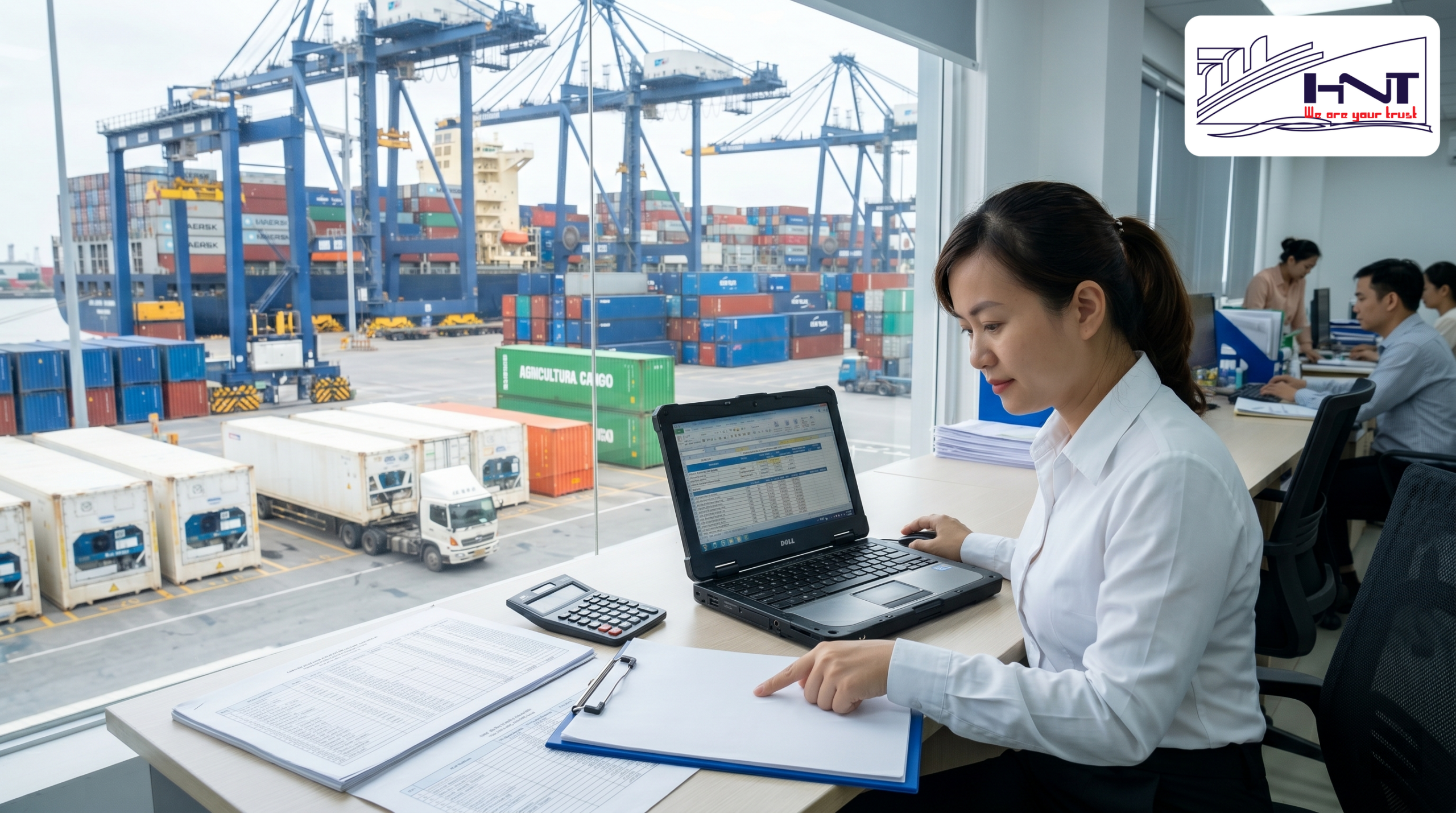
Sea freight rates in 2026 are constantly fluctuating, making it difficult for many export businesses to plan logistics budgets and check Local Charge surcharges at ports.
According to data from the Ministry of Industry and Trade and VASEP in 2026, Vietnam's seafood exports reached more than 5.11 billion USD in the first 6 months of the year. At the same time, the index World Container Index by Drewry dropped sharply after a hot growth period on the Trans-Pacific route. This causes booking prices to change weekly and puts great pressure on agricultural and seafood export businesses.
In 2026, the Customs Department also issued Official Letter 6491/CHQ-GSQL to prioritize fast customs clearance for exported agricultural, forestry, and aquatic products. This is a positive signal for businesses needing to speed up cold delivery and limit container storage charges at ports.
Sea freight rate fluctuations in 2026 by route
Sea freight rates in 2026 are greatly affected by local shortages of refrigerated containers, changes in vessel schedules, and IMO emission control pressures. Routes to the US and Europe are still more volatile than intra-Asia routes.
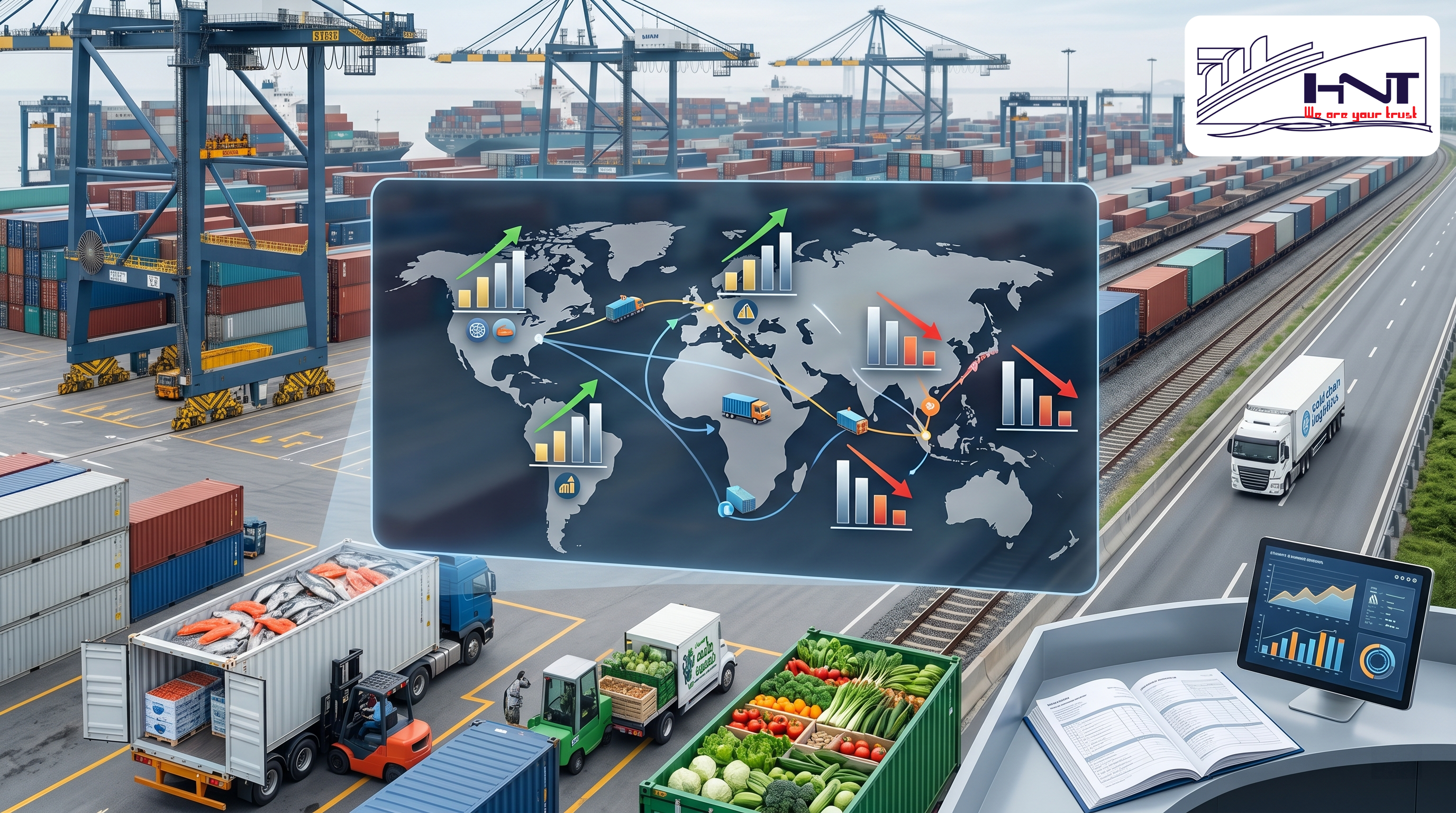
Sea freight rate trends on US and EU routes
The Cat Lai to Long Beach route recorded an increase in peak season surcharges in Q1/2026. Meanwhile, the Rotterdam route was more stable thanks to abundant 40HC container availability at Cai Mep.
| Online shipping | Refrigerated Container | Reference price | Transit time |
|---|---|---|---|
| Cat Lai – Long Beach | 40HC | 2,650 USD | 21 days |
| Cai Mep – Rotterdam | 40HC | 2,980 USD | 28 days |
| Hai Phong – Shanghai | 20DC | 420 USD | 5 days |
| Cat Lai – Singapore | 20DC | 250 USD | 3 days |
Mekong Fresh Fruit Company in Tien Giang once exported 18 containers of durian to Shanghai in February 2026. Due to booking close to the vessel schedule, the company had to pay an additional 320 USD/container for CIC and PSS surcharges.
A seafood business in Ca Mau reduced logistics costs by 1% when switching from the Singapore transshipment route to the direct service route to Los Angeles. Transit time was reduced by three days and the risk of temperature loss in refrigerated containers was minimized.
- US route prices usually increase sharply from May to September.
- European routes are greatly affected by ETS surcharges.
- Refrigerated containers have higher fluctuations than dry containers.
- Booking close to the date easily causes rollover fees.
- Crowded transshipment ports increase the risk of container storage.
Factors affecting sea freight rates
In addition to oil prices and vessel schedules, businesses need to monitor congestion at Cat Lai and Cai Mep ports. Changes in carrier rotation can also cause unexpected increases in Local Charges.
Based on HNT LOGISTICS' experience, frozen fruit exporters should secure bookings at least 10 days in advance during peak season to maintain stable freight rates and reduce the risk of reefer container shortages.
How to calculate sea freight charges and check Local Charges
Many businesses only look at Ocean Freight and overlook Local Charges. In practice, port surcharges can account for 20% to 35% of total logistics costs.
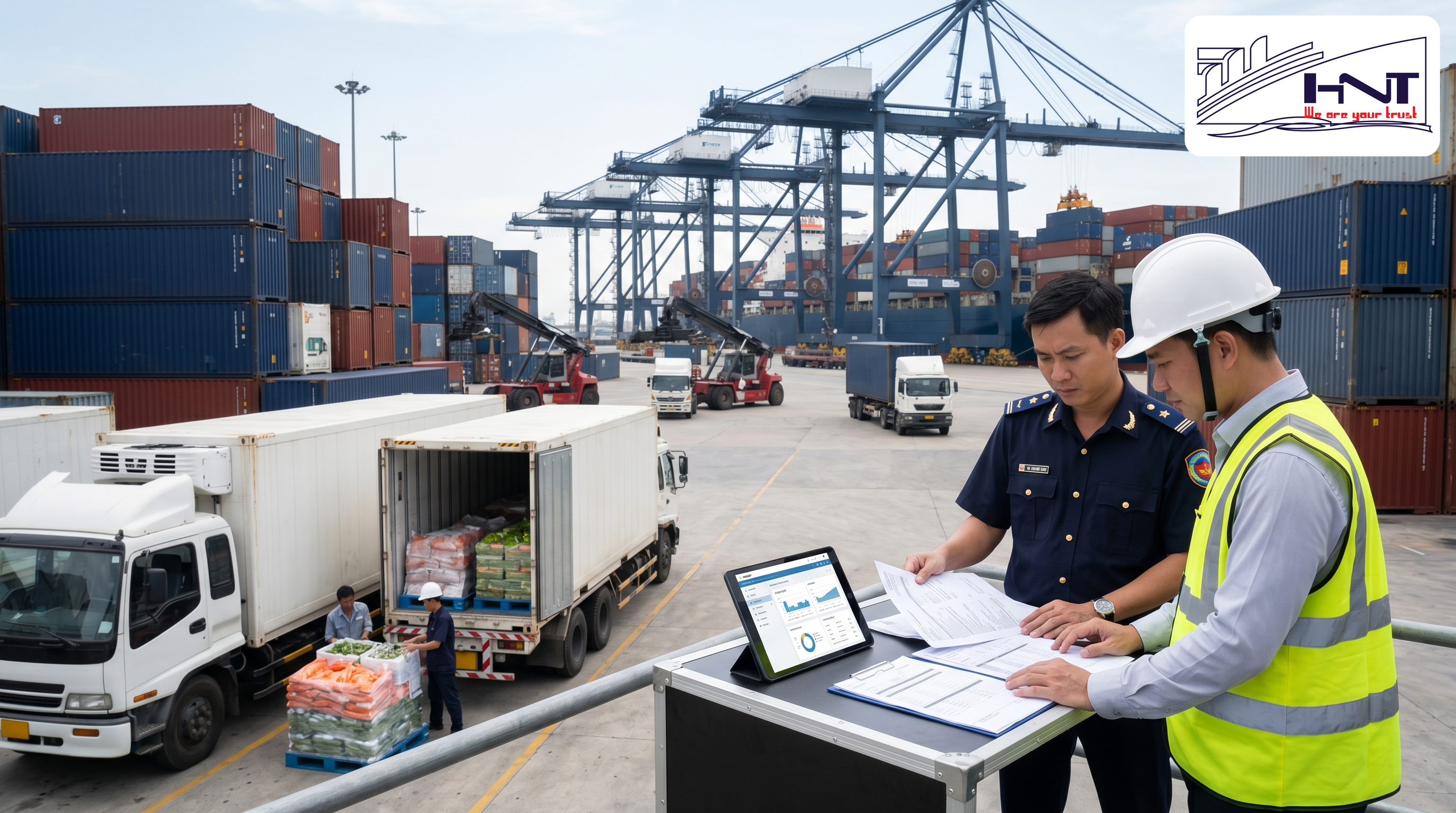
Distinguishing Ocean Freight from Local Charges
Ocean Freight is the main transport charge between the port of loading and the port of discharge. Meanwhile, Local Charges include fees collected at the export port or import port.
| Fee type | Meaning | Reference rate | Unit of calculation |
|---|---|---|---|
| THC | Terminal handling charge | 120 USD | Refrigerated Container |
| CIC | Container imbalance charge | 80 USD | Refrigerated Container |
| D/O | Delivery order | 45 USD | Bill |
| Seal | Container seal | 12 USD | Refrigerated Container |
| AMS | US manifest filing | 35 USD | Bill |
Businesses often confuse THC with handling fees. This leads to incorrect calculation of total sea freight costs when comparing multiple forwarders.
How to check a quotation from a forwarder
When receiving a quotation, businesses should request Ocean Freight and Local Charges to be separated. This helps identify duplicate fees or unannounced additional charges.
A furniture company in Binh Duong once incurred USD 1,200 in detention charges because it did not check the container free time terms at Hamburg port. After reviewing its logistics contract, the company switched to a 14-day free time term.
A dragon fruit export company in Long An also reduced costs by 9% by consolidating three LCL shipments into one FCL container. This helped reduce handling fees and CFS charges at the port.
- Check container free time conditions.
- Compare THC among different carriers.
- Request clear disclosure of AMS and ENS surcharges.
- Confirm peak season surcharges before booking.
- Check surcharge terms in writing.
- Compare exchange rates for calculating local charges.
Based on HNT LOGISTICS' experience, seafood exporters to the US should prioritize all-in quotations to avoid surcharge volatility during peak seasons.
Sea freight goods and suitable container selection
Sea freight cargo has very different requirements regarding temperature, transit time, and quarantine. Choosing the wrong container can increase costs or cause the shipment to be rejected for import.
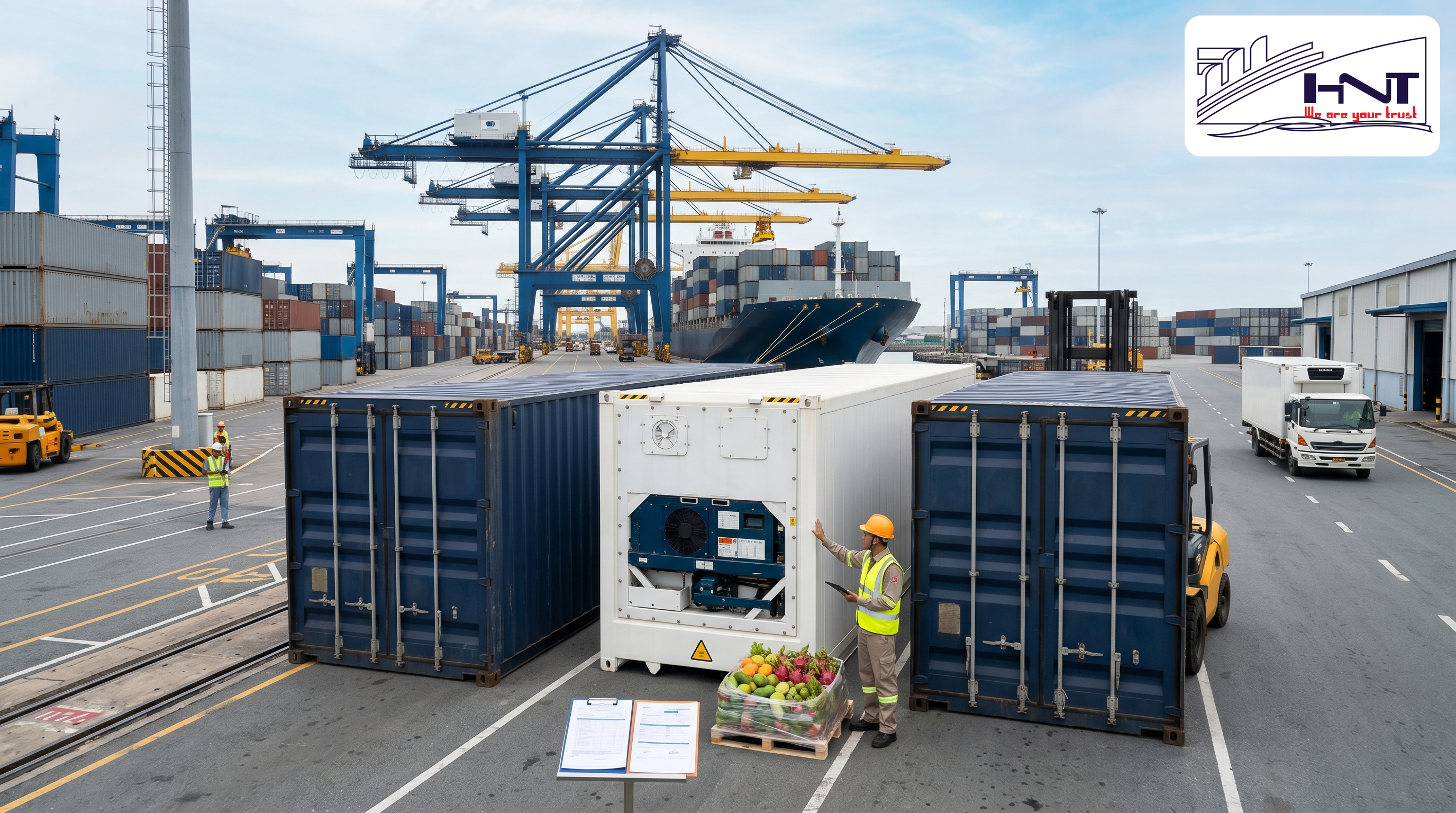
When should you use refrigerated containers
Reefer containers are suitable for frozen seafood, fresh fruits, and goods requiring stable temperature. However, reefer rental costs are typically 25% to 40% higher than dry containers.
| Cargo type | Suitable container | Temperature | Optimal transit |
|---|---|---|---|
| Frozen shrimp | 40RF | -18°C | Under 25 days |
| Durian | 40RF | 13°C | Under 7 days |
| Export rice | 20DC | Standard | 15-20 days |
| Cashew nuts | 40HC | Standard | 20-30 days |
China currently strictly requires inspection of cadmium and Yellow O substance for imported durian. This increases quarantine time and requires stricter temperature control.
A company in Dak Lak once had a shipment rejected due to container temperature fluctuating beyond allowed limits during transshipment in Hong Kong. Afterwards, the company switched to a direct service route and significantly reduced risks.
- Refrigerated containers must have temperature set before loading.
- Seafood products need to monitor container humidity.
- Long transit increases the risk of heat loss.
- Fruit cargo needs ethylene gas monitoring.
- Old containers are prone to refrigeration system failures.
Impact of transit time on costs
The longer the transit time, the higher refrigeration electricity and detention costs become. This is an important factor when calculating total sea freight costs.
According to HNT LOGISTICS' recommendations, seafood exporters should prioritize direct service routes from Cai Mep to reduce transit time and minimize cold chain disruption risks.
Solutions to optimize sea freight costs for businesses
Businesses can significantly reduce total logistics costs by optimizing booking timing and selecting the right export port.
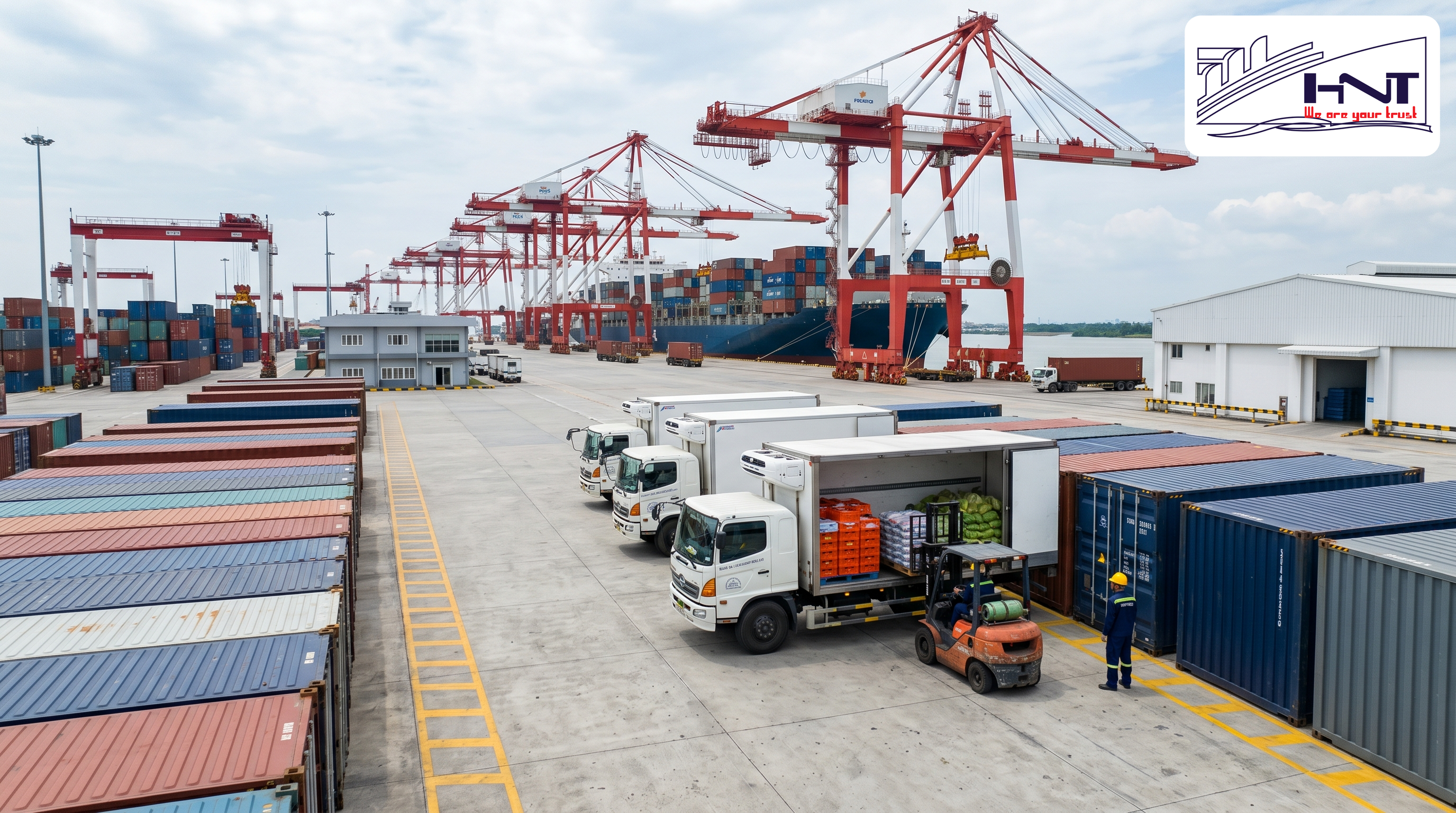
Cost and surcharge optimization strategy
Early booking from 10 to 14 days helps stabilize prices and increases chances of securing reefer containers. Additionally, businesses should compare quotations from at least three forwarders.
A catfish processing company in Dong Thap reduced total costs by 14% when switching from spot shipments to a six-month volume contract with a shipping line. Stable volume helped significantly reduce peak season surcharges.
A textile company in Dong Nai optimized 900 USD per container by shifting export ports from Cat Lai to Cai Mep during the peak period at the end of 2026.
- Prioritize direct service routes for refrigerated cargo.
- Check surcharges before confirming booking.
- Choose a port close to the warehouse to reduce inland trucking.
- Negotiate longer container free time.
- Consolidate FCL cargo to reduce CFS fees.
- Track cut-off schedules and SI deadlines.
Businesses need to closely monitor shipping schedules and import market quarantine policies. This is especially important for perishable agricultural and seafood products.
Sea freight rates in 2026 will continue to fluctuate seasonally and according to global trade policies. Businesses need flexible logistics planning to minimize unexpected costs.
- Carefully check Local Charge before booking.
- Compare quotations under all-in terms.
- Prioritize direct service for refrigerated cargo.
- Book early to secure container rates.
- Monitor new quarantine regulations in import markets.
- Negotiate free time to reduce detention.
HNT LOGISTICS currently supports agricultural, seafood, and refrigerated exporters from Vietnam with international booking solutions, Local Charge consulting, and specialized sea freight route optimization for each market.