When a shipment of components is held at a border gate due to an incorrect HS code, customs services in Bac Ninh become an essential operational support for factories in industrial parks.
In 2026, Vietnam's total import and export turnover is estimated to reach USD 920 billion, an increase of 16,9%, according to the Customs Department. Fruit and vegetable exports reached approximately USD 2.98 billion in the first five months of 2026. The Drewry WCI index rose to USD 3,549 per 40-foot container on June 11, 2026. These figures make accurate and timely customs clearance, along with transparent cost estimates, increasingly important.
This article helps businesses understand how to select services, prepare documentation, process customs declarations, and control quotations. The focus is on Bac Ninh, VSIP Bac Ninh Industrial Park, Que Vo, Yen Phong, Tien Son, and connecting routes to Hai Phong, Noi Bai, and Cat Lai Port.
Which Businesses Are Suitable for Customs Services in Bac Ninh?
Customs clearance services in Bac Ninh are particularly suitable for businesses with regular import and export activities, multiple product codes, numerous suppliers, or strict delivery contracts. These businesses typically need to check product management policies, HS codes, tax rates, permits, and specialized inspection requirements in advance.
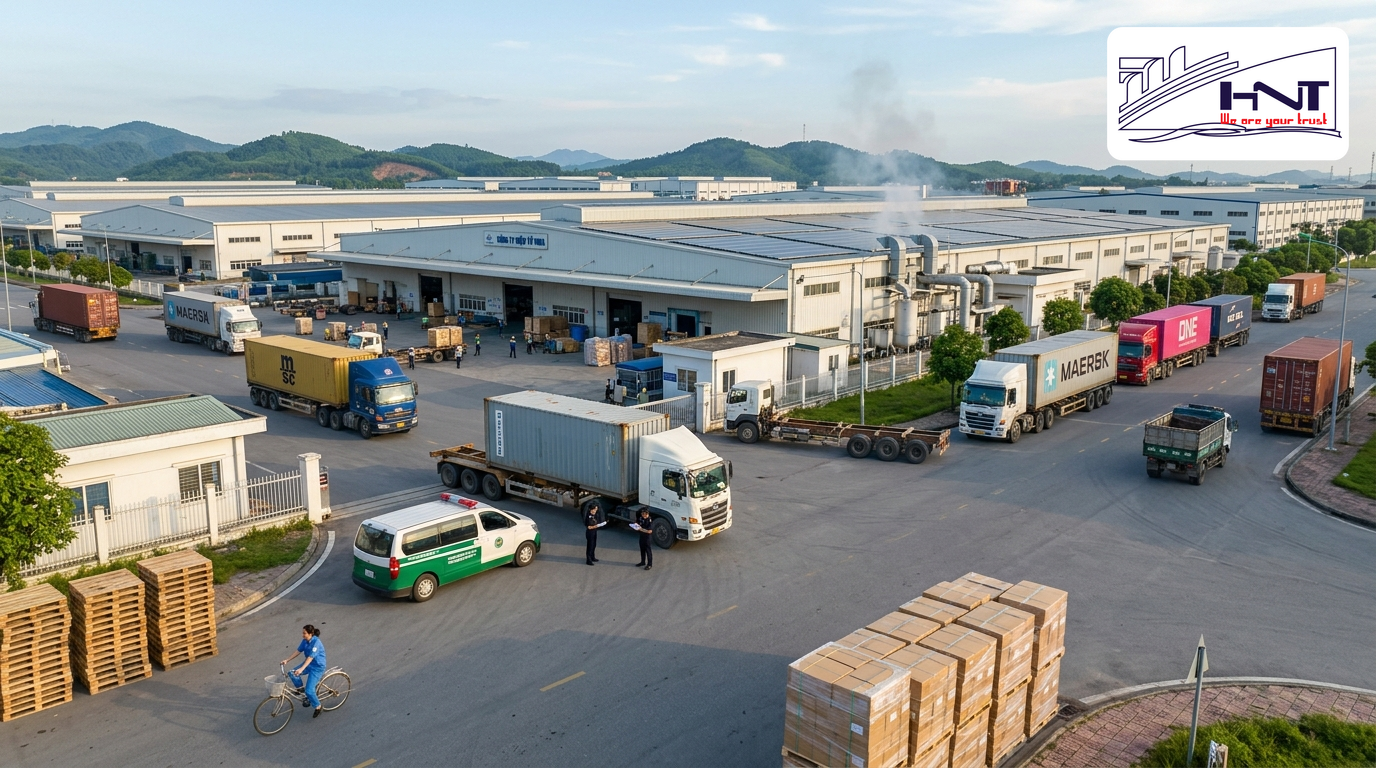
- Electronics manufacturers need rapid customs declarations for components, machinery, molds, and replacement materials within the same day.
- Export-processing enterprises need to reconcile consumption norms, customs regimes, and raw material inventory reports.
- Agricultural exporters need phytosanitary documentation, certificates of origin, and reliable refrigerated trucking schedules.
- Trading companies need to control customs values, delivery terms, and payment documents.
- New businesses need guidance on registering digital signatures, accounts, and warehouse location codes.
- Businesses handling high-risk goods need to review permits, product labels, and quality inspection requirements in advance.
| Business Segment | Primary Needs | Risks of Handling Procedures Independently | Recommended Solution |
|---|---|---|---|
| Yen Phong Electronics Manufacturer | Regular component imports | Incorrect HS codes, production line delays | Review codes before the goods arrive |
| VSIP Export-Processing Enterprise | Customs regime management | Discrepancies in customs inventory | Reconcile consumption norms by shipment |
| Agricultural Exporter | Phytosanitary inspection and origin certification | Missing certificate | Prepare documentation before cargo loading |
| Trading Company | Imports from multiple sources | Incorrect customs valuation | Review contracts and invoices |
Key Industrial Parks Where Document Control Should Be Prioritised
Bac Ninh is home to numerous large manufacturing industrial parks. Consequently, even minor documentation errors can delay production lines. For VSIP Bac Ninh, Yen Phong, Que Vo, and Tien Son Industrial Parks, businesses should establish standardized documentation packages for each product category. These documents should be reviewed before goods are loaded onto ships or aircraft.
For example, Anh Duong Components Company in Yen Phong imported 6 tons of circuit boards from Shanghai through Hai Phong Port. By reviewing the HS codes and invoices in advance, the company reduced customs declaration correction waiting time by 18 hours. A banana exporter in Hung Yen consolidating cargo through Bac Ninh for shipment to Nanning also avoided missing phytosanitary documentation.
When Should You Use a Customs Clearance Agent in Bac Ninh?
Businesses should use a Bac Ninh customs clearance agent when shipments involve high-value goods, urgent delivery schedules, or multiple specialized inspection requirements. HNT LOGISTICS recommends that businesses schedule document inspections at least 24 hours before ETA, meaning the expected cargo arrival time, to reduce the risk of additional container storage charges.
Practical tip: Create a standardized folder containing contracts, invoices, packing lists, bills of lading, C/O documents, and technical documentation before submitting customs declarations.
The Customs Service Process in Bac Ninh: From Document Checks to Customs Clearance
The customs clearance process in Bac Ninh should begin before goods leave the export port. This approach helps businesses control HS codes, regulatory policies, permits, customs valuation, and delivery terms. Waiting until goods arrive before conducting these checks can easily increase storage costs.
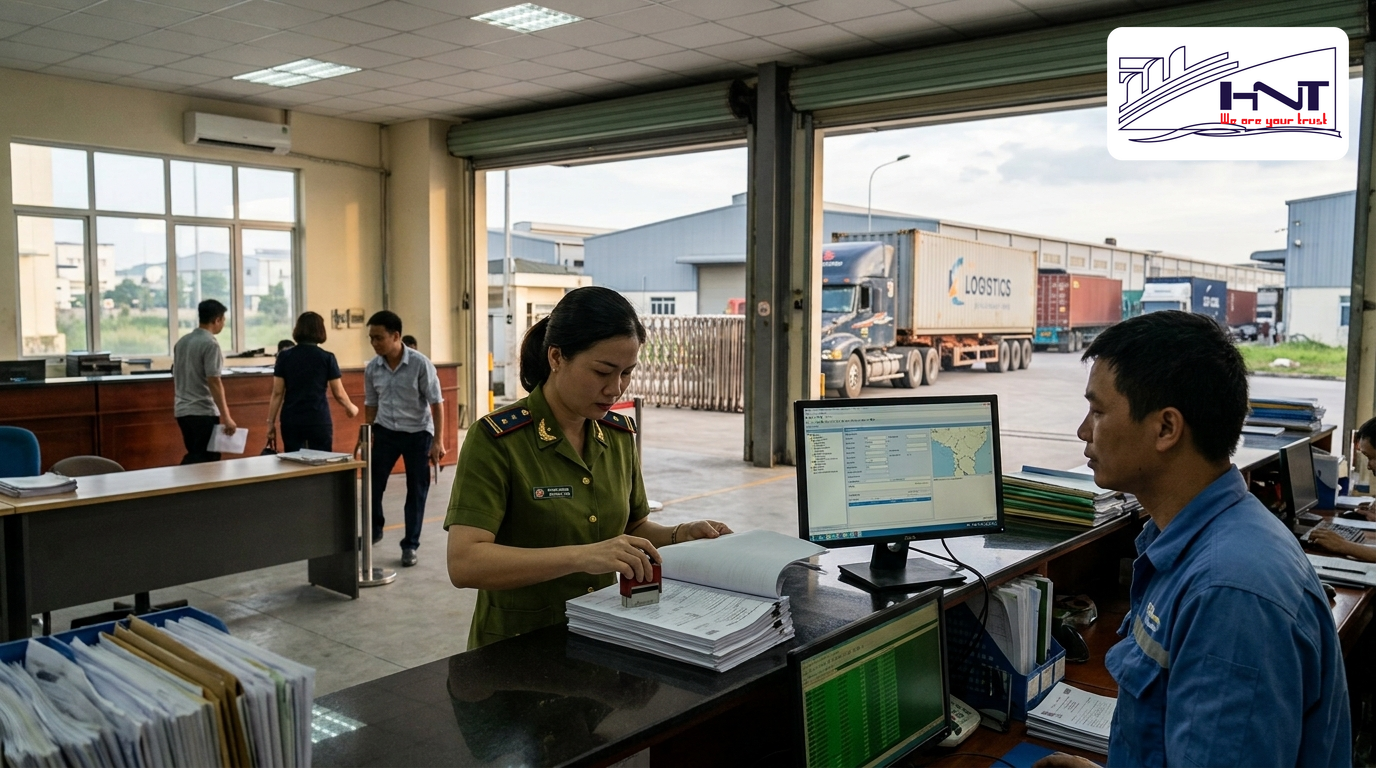
- Collect contracts, invoices, packing lists, bills of lading, and technical documentation for the goods.
- Determine HS codes, tax rates, regulatory policies, and specialized inspection requirements.
- Check delivery terms, declared customs value, additions and deductions, and payment methods.
- Submit electronic customs declarations, receive channel assignments, and prepare documentation according to each channel.
- Pay taxes, handle physical inspections if required, and obtain customs clearance through the customs system.
- Arrange transportation, collect goods at the port or airport, and deliver them to warehouses in Bac Ninh.
| Step | Task | Person in charge | Best Timing |
|---|---|---|---|
| 1 | Check documentation | Import export | 2 days before ETD |
| 2 | Determine HS codes | Customs broker | Before booking the vessel |
| 3 | Transmit declaration | Customs broker | Once all documents are available |
| 4 | Handle customs channel assignments | Agent and business | Immediately after receiving the system response |
| 5 | Deliver goods to the warehouse | Transportation team | After customs clearance |
Preparing HS Codes, Customs Values and Goods Policies
HS codes determine tax rates, permit requirements, and inspection rates. Businesses need to describe goods based on their structure, functions, materials, and operating principles. For machinery, technical documentation must match the invoice. For food products, labels, product declarations, and phytosanitary requirements should be reviewed early.
For example, Bac Song Cau Company imported temperature sensors for a food production line from Japan. Initially, the goods were declared under a general measuring equipment category. After reviewing the technical documentation, the customs declaration was adjusted to the correct product category, reducing valuation disputes and saving one day in customs clearance time.
Submitting Customs Declarations, Channel Assignment and Physical Inspection Procedures
Green-channel shipments are generally cleared quickly, but this does not mean documentation can be disregarded. Yellow-channel shipments require document presentation. Red-channel shipments may undergo physical cargo inspections. Based on HNT LOGISTICS' experience, businesses should prepare cargo photographs, labels, serial numbers, and technical documentation to facilitate faster physical inspections.
Practical tip: Agree in advance on who signs the documents, who pays the taxes, and who receives the delivery order to avoid interruptions on the customs clearance day.
Customs Procedures at VSIP Bac Ninh Industrial Park and Common Bottlenecks
Customs procedures at VSIP Bac Ninh Industrial Park typically involve electronics, components, machinery, production materials, and export goods subject to strict delivery schedules. The biggest bottleneck is not submitting customs declarations but ensuring consistency between contracts, invoices, bills of lading, HS codes, and the actual goods.
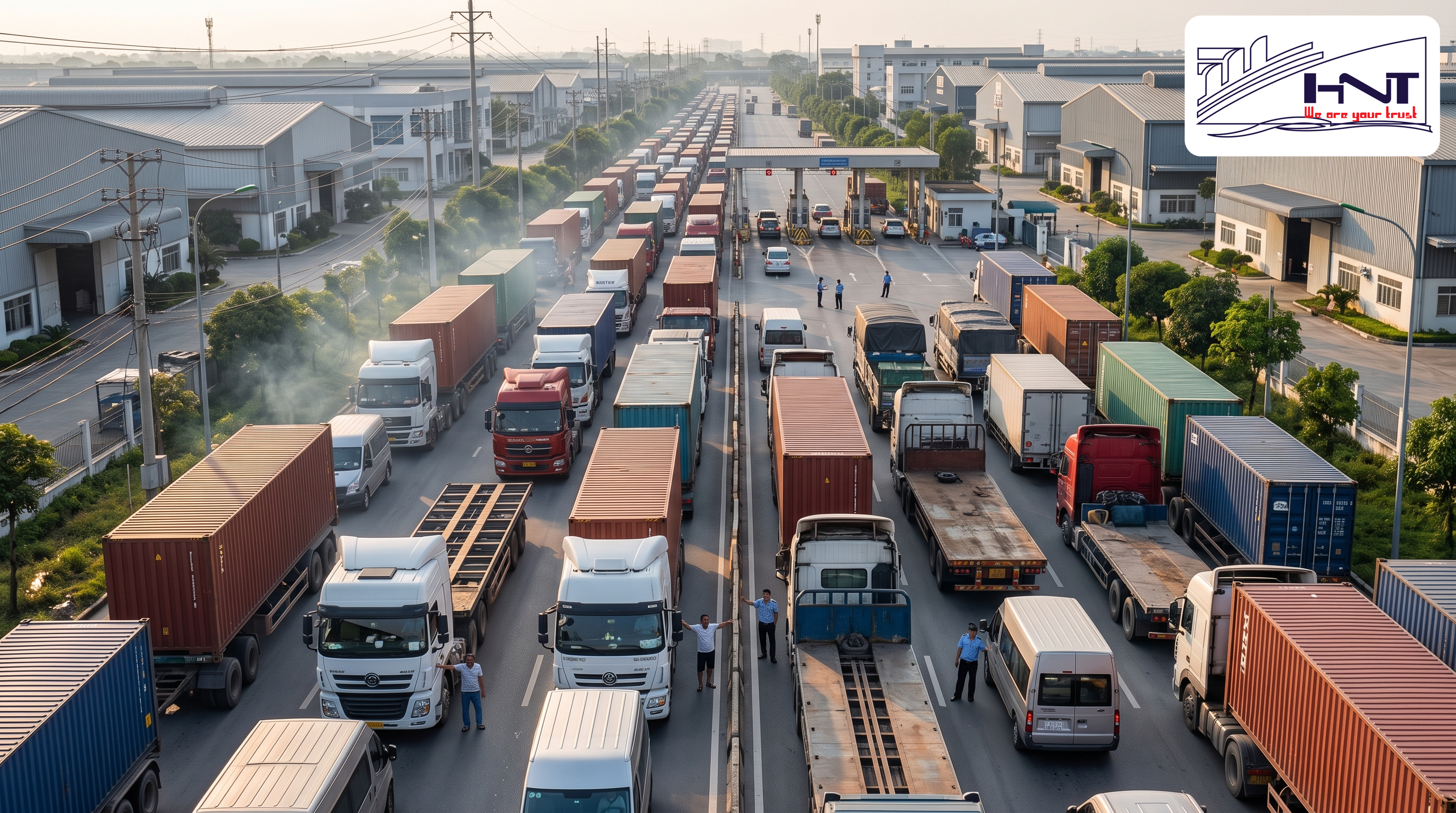
- Check the customs declaration type before filing, especially for imported goods used in export manufacturing.
- Compare product descriptions on invoices with technical documentation and packing lists.
- Confirm warehouse locations, inspection locations, and transportation routes from the port to the industrial park.
- Check permits, quality inspections, or phytosanitary requirements before the cargo arrival date.
- Prepare a Certificate of Origin (C/O) if preferential tariff treatment is required.
- Control Demurrage/Detention charges through early cargo collection planning.
| Cargo type | Documents requiring attention | Common risks | Handling Method |
|---|---|---|---|
| Electronic components | Technical Documentation | Incorrect HS code | Classify goods before ordering |
| Used machinery | Equipment age documentation | Failure to meet import requirements | Check regulatory policies before signing the contract |
| Production materials | Consumption norms and customs regime | Inventory management discrepancies | Reconcile using internal product codes |
| Refrigerated | Phytosanitary inspection and temperature | Cold chain disruption | Arrange refrigerated trucks and inspection schedules |
Import Documentation for Machinery, Components and Raw Materials
Import documentation should include contracts, invoices, packing lists, bills of lading, technical documentation, and certificates of origin where applicable. For export-processing enterprises, the declared customs regime must match the intended use of the goods. If machinery is imported to create fixed assets, accounting documentation should also be prepared simultaneously.
For example, Thien Phuc Precision Company at VSIP Bac Ninh imported an injection molding machine from South Korea through Noi Bai Airport. By preparing the machinery documentation before the flight, the company completed yellow-channel clearance in the morning. An auxiliary manufacturing plant in Tien Son also reduced warehouse storage costs by VND 12 million by collecting its goods immediately after customs clearance.
Export Documentation for Electronics, Agricultural Products, and Refrigerated Goods
Export documentation must take into account the requirements of the destination market. For fruit and vegetables, Ministry of Industry and Trade figures show that exports reached approximately USD 2.98 billion in the first five months of 2026. When editing internal links, this sentence should be linked to the phrase “fruit and vegetable exports reached”.
For refrigerated goods, temperature, loading time, and phytosanitary certificates must be carefully managed. For example, Moc Chau Fresh Company exported frozen mangoes through Hai Phong Port to Shanghai. By booking a 40-foot refrigerated container and checking the temperature before loading, the shipment maintained a stable temperature of minus 18 degrees Celsius.
Practical tip: Before each refrigerated shipment, save photographs of temperature gauges, loading records, and refrigerated container specifications as evidence of cold chain integrity.
Customs Clearance Service Pricing in Bac Ninh and Cost Control Methods
Customs clearance service pricing in Bac Ninh involves more than customs declaration fees. A proper quotation must clearly separate service fees, specialized inspection fees, lifting and handling charges, domestic transportation, storage, documentation fees, and expenses arising from customs channel assignments. This allows businesses to compare total costs more easily.
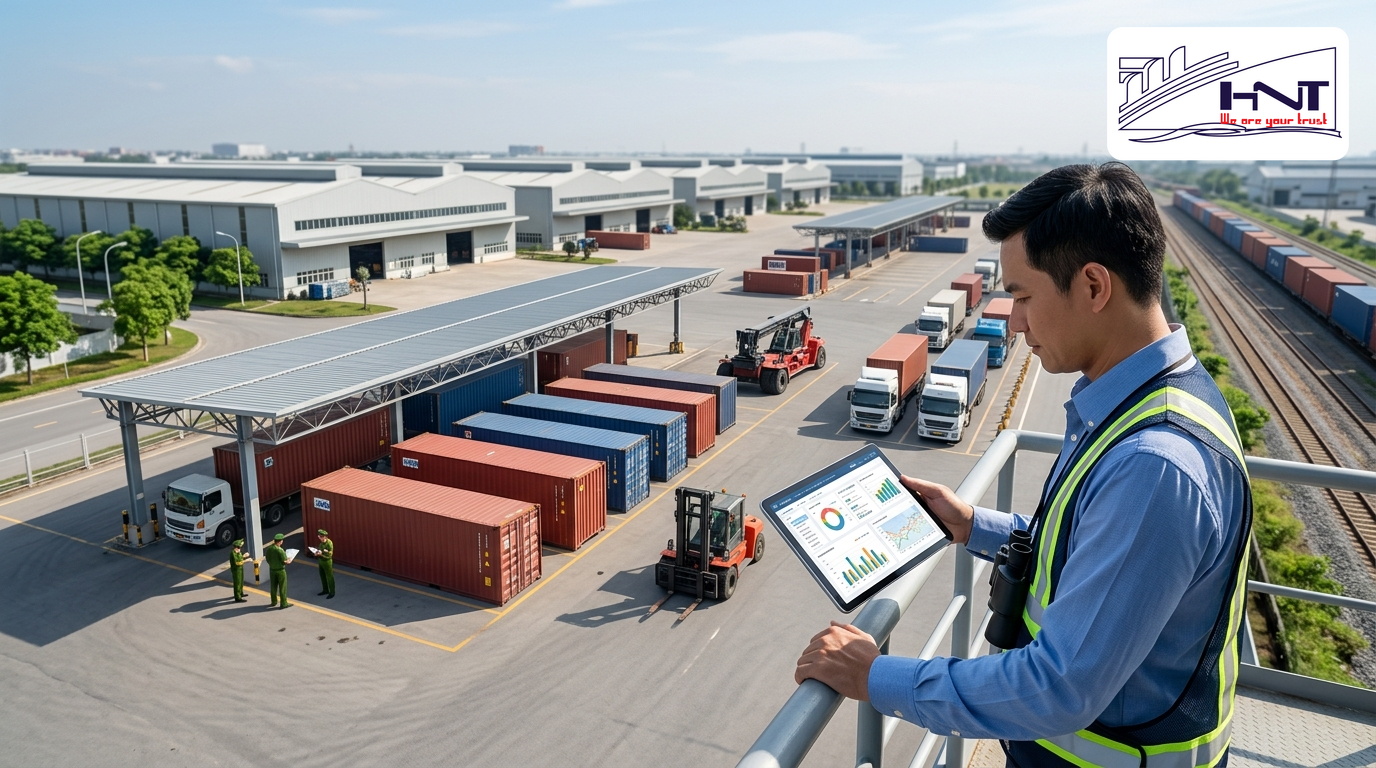
- Customs declaration fees depend on the number of product lines, customs regime, and complexity of the documentation.
- Physical inspection fees apply when declarations are assigned to the red channel or goods must be moved to an inspection area.
- Domestic transportation fees vary depending on the port, vehicle type, delivery time, and cargo weight.
- Storage charges increase rapidly when businesses delay receiving delivery orders or paying taxes.
- Documentation fees arise when C/O certificates, phytosanitary inspections, quality inspections, or product declarations are required.
- Peak-season surcharges should be clarified in advance, especially for shipments to the United States and Europe.
| Category | Estimated Fee Range | When it occurs | Control method |
|---|---|---|---|
| Basic Customs Declaration | VND 800,000 – 1,500,000 | Shipment with Few Product Lines | Submit documents early |
| Shipment with Multiple Product Lines | VND 1,500,000 – 3,500,000 | Multiple HS codes | Standardize the product code list |
| Red-channel Processing | Based on actual requirements | Physical inspection required | Prepare photographs and labels |
| Hai Phong – Bac Ninh Transportation | Depending on vehicle type | After customs clearance | Book vehicles before ETA |
| Phytosanitary Inspection, C/O | Depending on documentation | Specialised Goods | Check before signing the contract |
Common Charges in a Shipment
Businesses should request quotations based on the total cost delivered to the warehouse, not just the customs declaration. According to experts at HNT LOGISTICS, a good quotation should clearly state its assumptions: destination port, container type, number of product lines, expected customs channel, free storage period, and each party's responsibility for providing documentation.
For example, Dai Phat Food Company in Bac Giang imported food additives through Hai Phong Port. By requesting quotations for green, yellow, and red channel scenarios, the company set aside an additional VND 7 million in advance. A wood company in Bac Ninh also avoided storage charges by booking a truck one day ahead.
How to Compare Reliable Customs Clearance Services
A reliable customs clearance service does not promise clearance at any cost. It must explain risks, identify missing documents, warn about product-specific regulations, and record costs in writing. Businesses should prioritize providers with capabilities in customs declarations, transportation, warehousing, and import-export documentation consulting.
Practical tip: Ask the service provider about three challenging cases they have handled recently, including incorrect HS codes, physical inspections, and missing certificates of origin.
Connecting Customs Clearance Services in Bac Ninh with Ports, Airports, and Customs Clearance Services in Ho Chi Minh City
Customs clearance services in Bac Ninh are most effective when connected to suitable ports, airports, and transportation routes. Urgent cargo should go through Noi Bai. Container shipments should go through Hai Phong. Cargo consolidated from the South or exported through Cat Lai Port may require coordination with customs clearance services in Ho Chi Minh City.
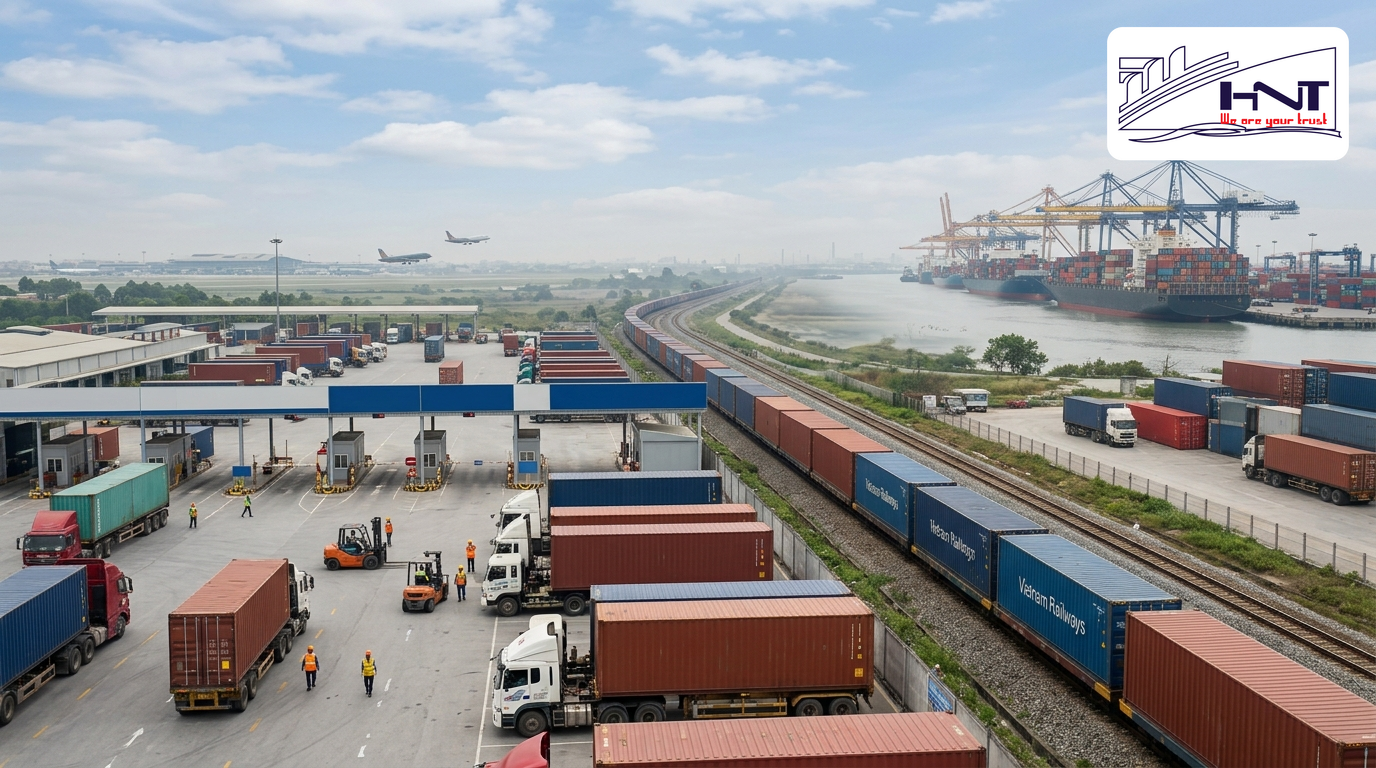
- Choose Noi Bai for urgent components, samples, high-value goods, and orders requiring same-day delivery.
- Choose Hai Phong Port for full container loads and less-than-container loads (FCL/LCL) from Bac Ninh to international destinations.
- Choose Cat Lai Port when cargo is consolidated in the South or a more convenient sea route is available.
- Prepare sea freight routes to the United States if delivery schedules need to remain consistent on a weekly basis.
- Check refrigerated container size specifications before loading fruit or seafood.
- Monitor freight rate indices to decide whether to book space early or wait for price adjustments.
| Connecting Routes | Slower (72h) | Advantages | Key points to monitor |
|---|---|---|---|
| Bac Ninh – Noi Bai | Air Cargo | Fast and flexible | Airline cut-off time |
| Bac Ninh – Hai Phong Port | Container Goods | Cost-effective | Delivery orders and trucking |
| Bac Ninh – Cat Lai Port | Cargo consolidated from the South | Multiple sea routes | Domestic trucking time |
| Bac Ninh – Shanghai | Components and agricultural products | High frequency | Freight rates fluctuate weekly |
| Hai Phong – Long Beach | Goods to the United States | Suitable for large orders | Risk of peak-season surcharges |
When to Choose Hai Phong, Noi Bai, or Cat Lai Port
Hai Phong is suitable for regular container shipments. Noi Bai is suitable for urgent components. Cat Lai Port is suitable when the supply chain is based in the South. According to Drewry, the WCI index rose 3% to USD 3,549 per 40-foot container on June 11, 2026, making flexible booking plans essential.
For example, Sao Viet Electronics Company in Bac Ninh shipped 300 kg of circuit boards through Noi Bai to Singapore. This shortened transit time by 36 hours compared with sea freight. In contrast, Luc Nam Fruit Company chose the Hai Phong–Long Beach route for two refrigerated containers because of its stable vessel schedule and lower cost compared with air freight.
Conclusion and Action Checklist
Customs clearance services in Bac Ninh help businesses reduce documentation risks, control costs, and protect delivery schedules. However, these benefits can only be achieved when documentation, HS codes, customs channel assignments, transportation, and port planning are prepared as one integrated process.
- Check HS codes, product regulations, and tax rates before signing import contracts.
- Standardize documentation packages for each product category, covering both imports and exports.
- Schedule document inspections before ETA to avoid container storage and port storage charges.
- Clearly separate declaration fees, physical inspection fees, transportation, documentation, and additional expenses.
- Choose Hai Phong, Noi Bai, or Cat Lai routes according to delivery schedules.
- Prioritize providers who explain risks rather than simply offering low quotations.
- Keep temperature records, phytosanitary documentation, and C/O certificates for agricultural products, seafood, and fresh fruit.
If your business needs a single partner with expertise in customs clearance, transportation coordination, and cold chain logistics, HNT LOGISTICS is a reliable freight forwarding and logistics partner for Vietnamese exporters nationwide. Start by reviewing your upcoming shipment, then establish standardized procedures for subsequent shipments. As a professional transportation provider, HNT LOGISTICS is committed to delivering comprehensive supply chain solutions, helping Vietnamese businesses confidently conquer global markets. Contact us today at 8A Hoang Minh Giam, Ho Chi Minh City or via the marketing email at hntshipping.com for quotation support!