When a fruit truck travelling from Tien Giang arrives at the border crossing one day late, cross-border road transport can determine whether the shipment retains its value or loses the order.
In the first seven months of 2026, Vietnam's total import and export turnover exceeded USD 659.58 billion. Fruit and vegetable exports reached approximately USD 4.83 billion, while seafood exports amounted to around USD 6.86 billion. International container freight rates remain highly volatile, prompting many businesses to choose the Vietnam–Laos–China road route to shorten transit times and reduce their dependence on shipping schedules.
This article helps cargo owners understand the routes, permits, costs and risks before booking a truck. It focuses on practical decisions: which border gate to use, which type of vehicle to choose, how to prepare the documentation, and when to combine road transport with sea or air freight.
What Is Cross-Border Road Transport and When Should You Use It?
Cross-border road transport is a system in which commercial vehicles travel across national borders under valid permits. Vehicles can carry goods from Vietnam to Laos or China, or transit through international transport corridors. Its key advantages include flexible departure schedules, less dependence on shipping services, and suitability for time-sensitive deliveries.
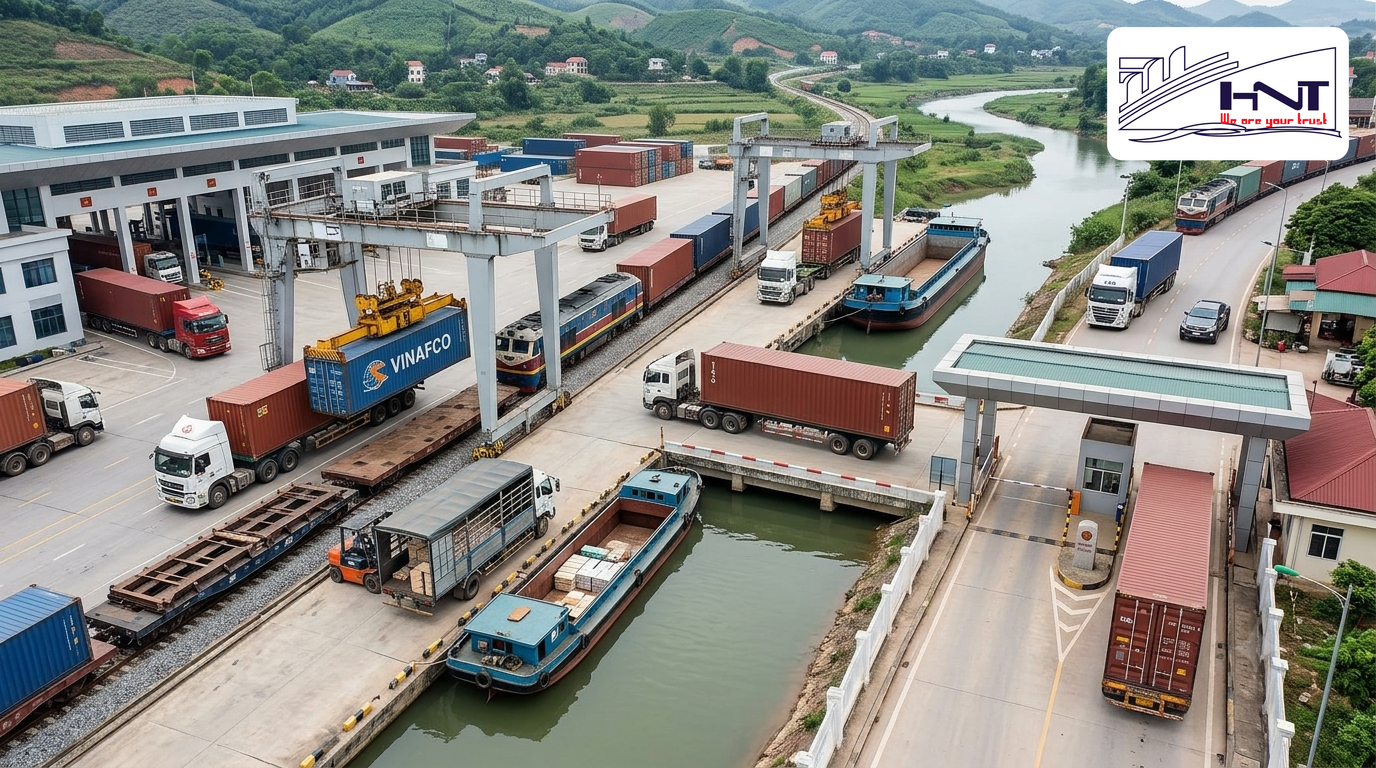
- Fresh agricultural produce needs shorter waiting times at ports and consistent delivery schedules to wholesale markets.
- Chilled and frozen seafood requires continuous temperature control from the warehouse to the delivery destination.
- Industrial goods need to be delivered according to assembly schedules, without waiting for a full sea freight consignment.
- E-commerce consignments need to be split into smaller shipments, delivered regularly and aligned with seasonal demand.
- Cargo owners want to avoid fluctuations in sea freight rates during peak container shipping periods.
| Criteria | Cross-border Road Transport | Sea | Air |
|---|---|---|---|
| Speed | Faster on Short Routes | More Consistent but Longer | Fastest |
| Cost | Medium to high | Low for heavy cargo | Highest |
| Flexible | High, depending on vehicle schedules | Dependent on shipping schedules | Dependent on flight schedules |
| Suitable cargo | Fresh, refrigerated, urgent | Large volumes | Samples, high-value goods |
First example: Minh Vuon Fruit and Vegetable Company in Tien Giang exported 18 tons of dragon fruit to Nanning. By switching from consolidated sea containers to refrigerated trucks via the Huu Nghi border gate, delivery time dropped from 5 days to 36 hours. Fruit skin loss decreased by approximately 1.8%.
Second example: Son An Mechanical Factory in Binh Duong ships components to Vientiane every week. By using cross-border road transport, the company consolidated shipments into two fixed weekly departures. Inventory planning at the receiving factory was reduced from 10 days to 6 days.
Practical takeaway: Choose cross-border road transport when the value of time saved exceeds the difference in freight costs.
Popular Vietnam–Laos–China Cross-Border Road Transport Routes
The structure of cross-border road transport routes determines most of the costs and risks. The Vietnam–Laos route is suitable for goods destined for Vientiane and Savannakhet, or for transit through northeastern Thailand. The Vietnam–China route is suitable for agricultural produce, refrigerated seafood, and industrial goods destined for Guangxi, Yunnan, and Guangdong.
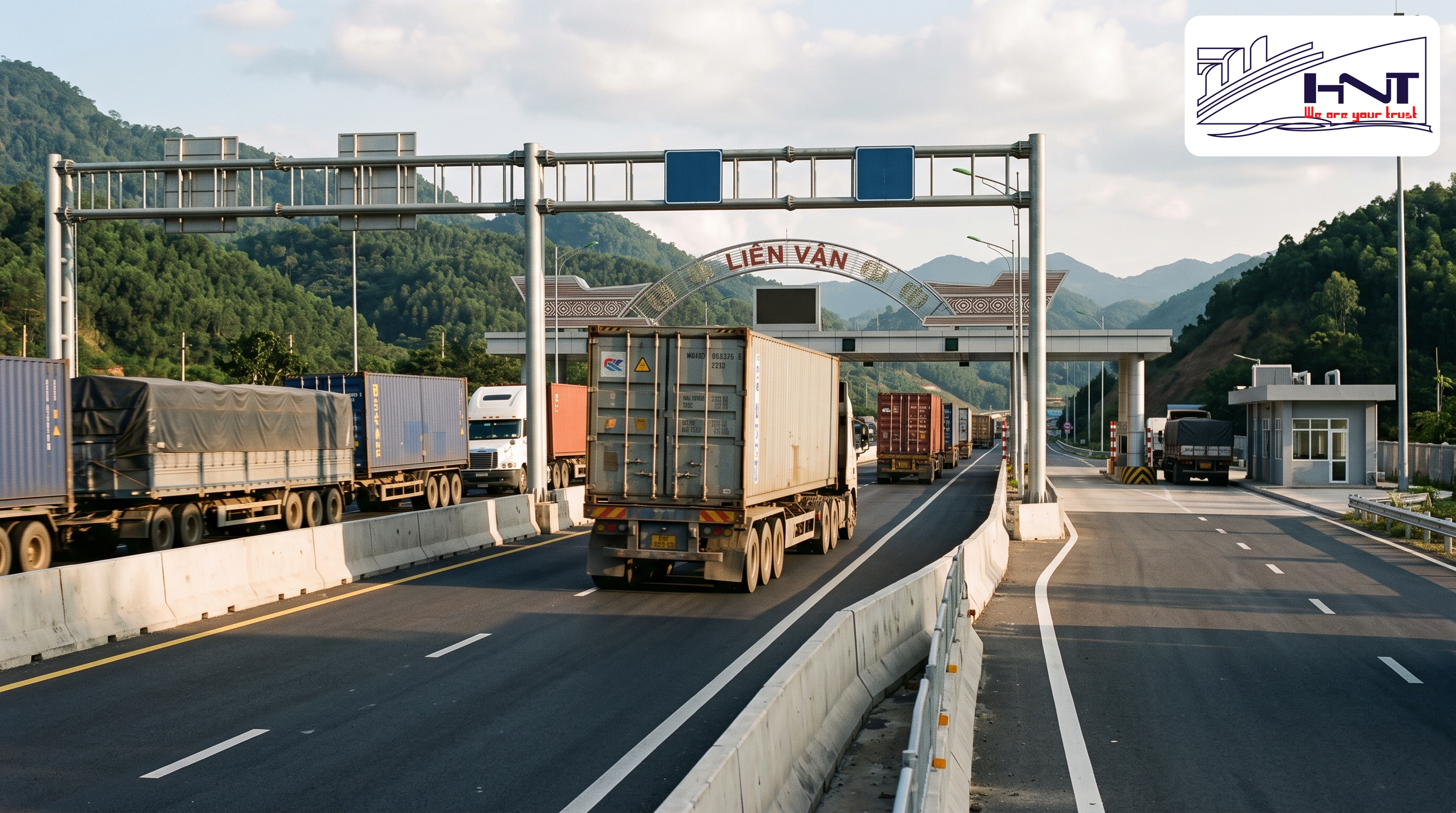
- The Ho Chi Minh City – Lao Bao – Vientiane route is suitable for dry goods and project cargo transported by cross-border road freight.
- The Da Nang – Lao Bao – Savannakhet route is convenient for shipments originating in Central Vietnam.
- The Hai Phong – Huu Nghi – Nanning route is suitable for refrigerated goods and components.
- The Lao Cai – Hekou – Kunming route is suitable for fruit and agricultural products from Northern Vietnam.
- The Cau Treo – Vientiane route helps optimize shipments originating in the North Central region.
| Suggested Route | Suitable cargo | Indicative transit time | Operational notes |
|---|---|---|---|
| Ho Chi Minh City – Lao Bao | Dry goods, machinery | 3 to 4 days | Check axle load limits |
| Da Nang – Savannakhet | Distribution goods | 1 to 2 days | Book border crossing slots in advance |
| Hai Phong – Nanning | Refrigerated goods, components | 1 to 2 days | Prepare HS codes |
| Lao Cai – Kunming | Fresh fruit | 1 to 3 days | Monitor phytosanitary inspections |
Based on HNT LOGISTICS' experience, routes to China should be finalized according to customs declaration schedules and receiving warehouse appointments. Looking only at distance can cause shippers to overlook vehicle weighing, scanning, cargo transshipment, and phytosanitary inspection times at border gates.
First example: Bien Xanh Seafood Company in Ca Mau shipped 22 tons of frozen fish to Nanning. The route via Cat Lai Port and then Huu Nghi maintained a continuous temperature of minus 18 degrees Celsius. The company avoided 14 hours of waiting compared with the alternative of changing trucks at a later stage.
Second example: An Phu Furniture Wood Company in Dong Nai shipped goods to Vientiane via Lao Bao. After switching to a fixed Tuesday and Friday truck schedule, the company reduced warehouse storage fees by 11%. On-time delivery performance increased from 88% to 96%.
Practical takeaway: The best route is not necessarily the shortest one, but the one with the fewest bottlenecks.
Vietnam–Laos Cross-Border Transport Permits for Cross-Border Road Transport
The Vietnam–Laos cross-border transport permit is an essential requirement for commercial vehicles crossing the border. According to the National Public Service Portal, the processing time for a valid application is generally 2 working days. Commercial permits are typically valid for 1 year, with each journey lasting no more than 30 days under current regulations.
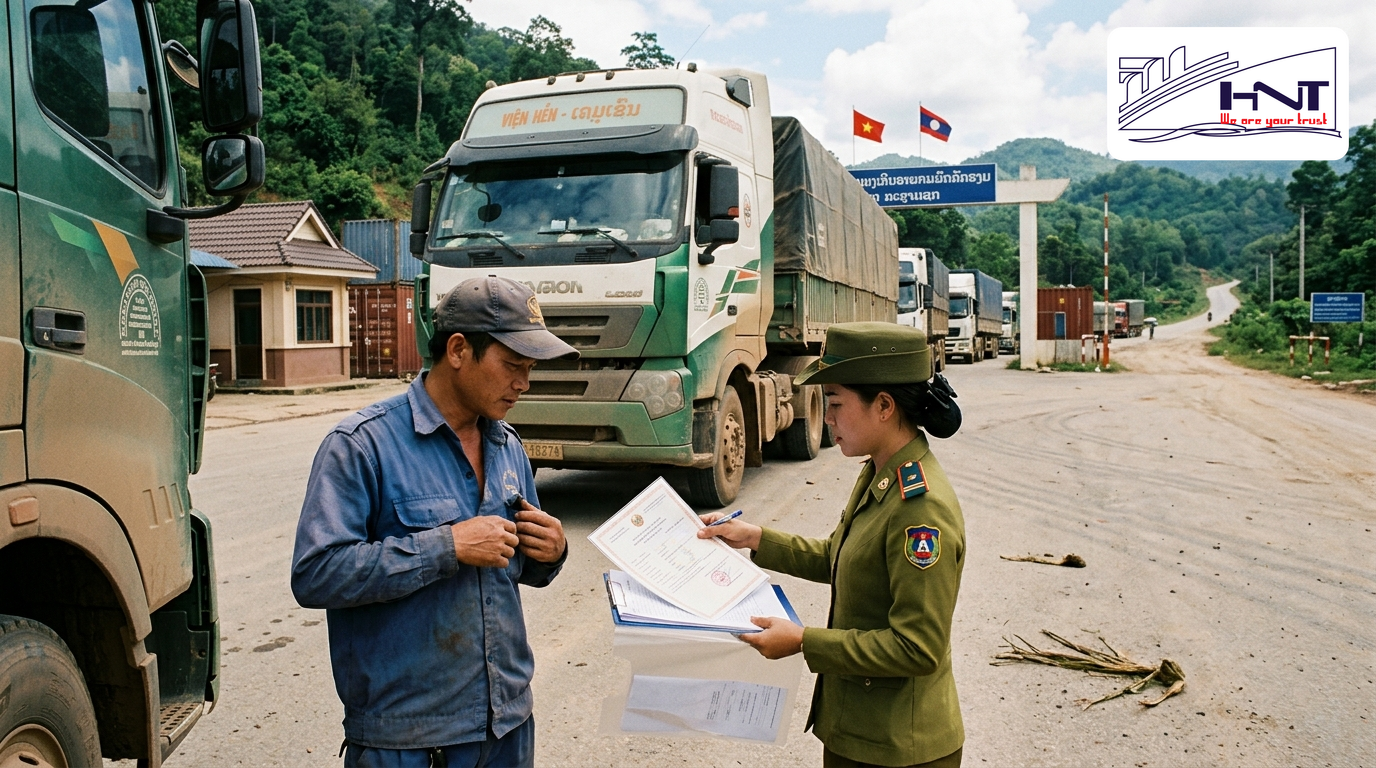
- Vehicle registration documents and proof of the right to use the vehicle must match the application records.
- The international road transport license must remain valid when applying for the cross-border transport permit.
- The transportation contract should clearly specify delivery responsibilities, additional charges, and deadlines.
- Cargo documentation must include invoices, packing lists, bills of lading, and HS codes.
- Goods subject to quarantine inspections must have the appropriate certificates prepared before the truck arrives at the border gate.
- Shippers should keep electronic copies of documents to respond quickly when requested by the authorities.
| Document category | Main documents | Person Responsible for Preparation | Risks if missing |
|---|---|---|---|
| Vehicle | Vehicle registration and cross-border transport permits | Transport provider | Cannot pass through the border gate |
| Cargo | Invoices, packing lists, contracts | Shipper | Delayed declaration |
| Customs | Customs declarations, HS codes | Customs broker | Incorrect duties, red-channel inspection |
| Quarantine | Inspection certificate | Exporter | Refrigerated cargo held at the border |
When making customs declarations, shippers need to monitor updates such as Circular No. 85/2026/TT-BTC on goods classification. For imports and exports passing through land border gates, incorrectly describing product codes may result in physical inspections. The resulting risks often cost more than preparing accurate documentation from the outset.
First example: Phuoc Thanh Cashew Company in Binh Phuoc exported goods to Vientiane. The initial documentation lacked proof of the right to use the tractor unit. After submitting the missing documents before departure, the truck avoided a one-day delay and incurred no additional yard storage fees.
Second example: Moc Chau Agricultural Products Company shipped dried mangoes to Kunming. By verifying the HS codes and Certificate of Origin (C/O) before packing, the customs declaration was cleared within the morning. Additional costs decreased by approximately VND 7 million.
For shipments involving multiple parties, the second internal reference should be placed in the customs brokerage section so the content team can link to the appropriate service page. This helps readers proceed to detailed instructions without making the article excessively link-heavy.
Practical takeaway: Preparing cross-border road transport documents before dispatching the vehicle is always cheaper than correcting paperwork at the border gate.
Cross-Border Container Tractor Units in Cross-Border Road Transport
Cross-border container tractor-trailers must meet the appropriate load capacity, licensing, and vehicle configuration requirements for the cargo. For fruit, seafood, and processed food, refrigerated containers must maintain stable temperatures. Temperature recording devices used in cross-border road transport should be activated before cargo loading, not after the truck leaves the warehouse.
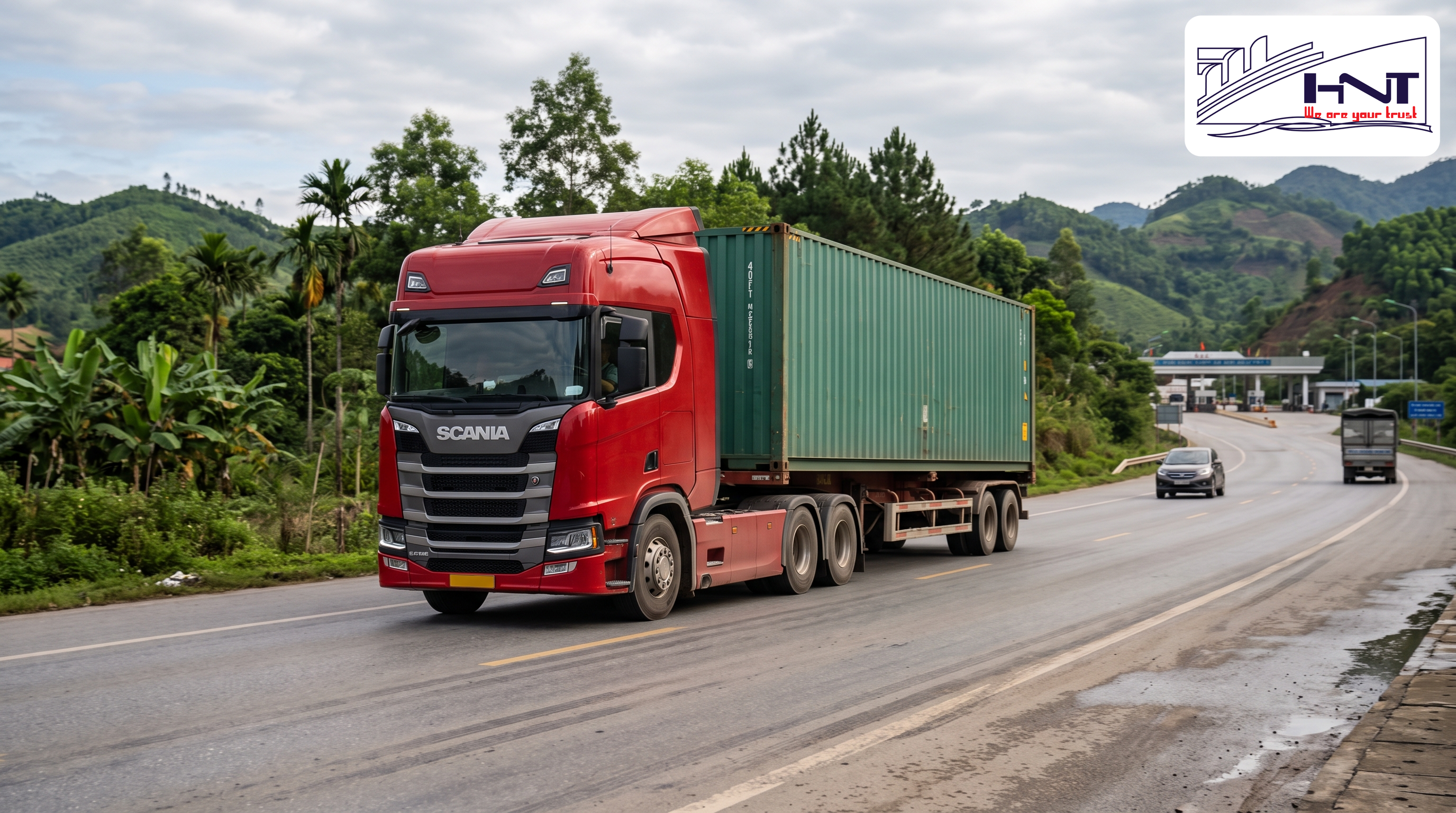
- A 20-foot refrigerated container is suitable for small cross-border road freight shipments requiring fast delivery and strict temperature control.
- A 40-foot refrigerated container is suitable for large cross-border road freight shipments, but axle load and vehicle weight limits at border gates must be considered.
- Enclosed box trucks are suitable for dry goods, packaged cargo, and regional distribution shipments transported by road.
- Flatbed trucks are suitable for machinery, project equipment, and oversized cargo transported by road.
- Backup generators should be inspected for fuel, electrical connections, and temperature warning systems.
- Tracking devices help monitor stops, driving speeds, and waiting times at border crossings.
| Cargo type | Vehicle Configuration | Suggested Temperature | Control point |
|---|---|---|---|
| Dragon Fruit | 40-foot reefer container | 5 to 8°C | Ventilation level |
| Frozen Fish | 40-foot reefer container | Negative 18 degrees Celsius | Sealing and Temperature |
| Components | 40-foot Dry Container | Normal temperature | Moisture protection |
| Machinery | Flatbed Truck or Lowboy Trailer | Normal temperature | Lashing |
HNT LOGISTICS recommends that shippers specify the temperature range, ventilation settings, and sensor positions directly in the loading instructions. In cross-border road transport, a minor configuration error can compromise product quality before the shipment reaches the inspection point.
First example: Song Tien Fruit Company in Can Tho exported 20 tons of frozen durian to Guangzhou. The shipment used a 40-foot refrigerated container set to minus 18 degrees Celsius, with two independent sensors. The temperature log remained within the specified limits throughout the 41-hour journey.
Second example: An Khang Medicinal Materials Company in Da Nang shipped raw materials to Vientiane. By using enclosed trucks equipped with moisture absorbers and pallet liners, packaging moisture content decreased from 4% to below 1%. The recipient did not request any additional sorting.
The second internal reference should direct readers to refrigerated container size specifications so they can check load capacity, volume, and pallet arrangement. Calculating volume in advance helps prevent insufficient space or overloading when the truck arrives at the warehouse.
Practical takeaway: Control temperature using data, not verbal assurances.
Cross-Border Road Freight Rates for Cross-Border Road Transport
Cross-border road freight charges are not limited to the truck transportation fee. An accurate cross-border road freight quotation should itemize domestic transportation charges, border fees, loading and unloading fees, waiting costs, any transshipment fees, and peak-season surcharges. When the international container market experiences significant price increases, cross-border road transport can become an alternative for maintaining delivery schedules.
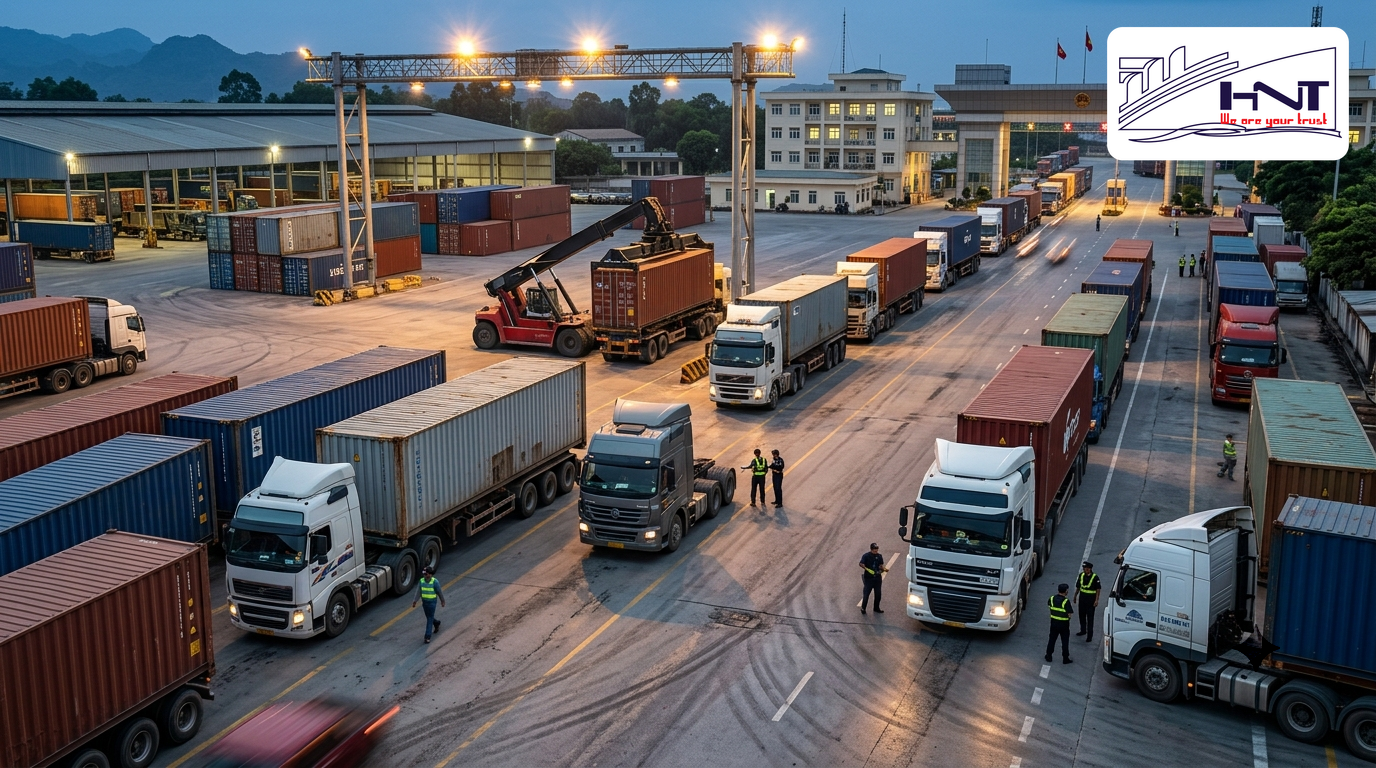
- Transportation distance determines the basic freight rate but does not fully reflect waiting times.
- Vehicle type affects fuel costs, driver expenses, depreciation, and licensing requirements.
- Refrigerated cargo requires additional generators, refrigeration fuel, and temperature sensor inspections.
- Delivery terms determine which party is responsible for customs clearance, loading and unloading, and storage fees.
- Agricultural harvest seasons increase demand for refrigerated trucks at major border crossings.
- Customs inspection risks can generate waiting fees if documentation is inconsistent.
| Item | Common calculation methods | Who Pays According to the Agreement | Cost Control Tips |
|---|---|---|---|
| Truck Freight | By route and vehicle type | Buyer or Seller | Finalize the Schedule in Advance |
| Border Fees | Per Trip or Actual Costs | According to contract | Request an Invoice |
| Waiting fee | Hourly or Daily | Party Responsible for the Delay | Document Coordination |
| Refrigeration charges | Based on Fuel Consumption and Time | Refrigerated Cargo Shipper | Monitor Temperature Logs |
Shippers should evaluate quotations based on the total cost of delivery to the destination, not just the truck freight rate. A low quotation that excludes waiting fees may become more expensive when border gates are congested. When comparing quotations, request the same delivery terms and validity period.
First example: Hoa Phat Garment Company in Dong Nai shipped materials to Laos. The initial quotation was 6% lower but excluded border waiting fees. After recalculating the total costs, the all-inclusive option saved VND 9 million per shipment.
Second example: Cao Nguyen Fruit and Vegetable Company in Lam Dong exported avocados to Nanning. By booking refrigerated trucks 5 days in advance, the company avoided peak-season surcharges of approximately 12%. Warehouse receiving schedules remained stable for three consecutive weeks.
The third internal reference can point to the Vietnam–Laos transportation price list, allowing readers to request route-specific estimates. The fourth internal reference should relate to freight routes to China for businesses comparing multiple border crossings.
Practical takeaway: Compare quotations based on total costs, delivery time, and responsibility for additional charges.
Safe Intermodal Road Transport Booking Process
An effective cross-border road transport process must begin with the cargo, not the vehicle. Shippers need to determine the HS codes, delivery terms, pickup point, delivery destination, delivery deadlines, and quarantine requirements. Only then should they select the vehicle, permits, and appropriate border crossing for cross-border road transport.
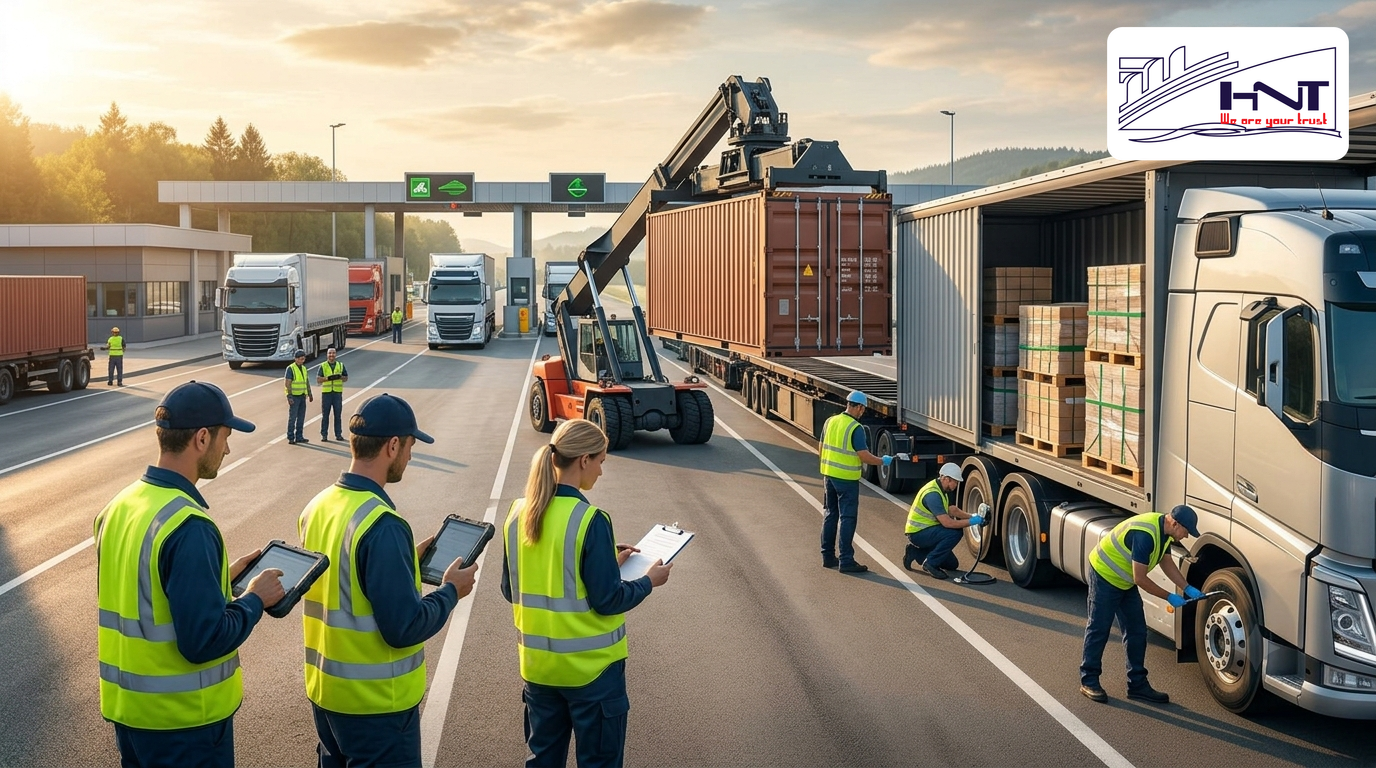
- Confirm cargo characteristics, weight, volume, temperature requirements, and loading and unloading restrictions.
- Select a border crossing for cross-border road transport based on the delivery destination, customs clearance schedules, and seasonal conditions.
- Check vehicle permits, driver qualifications, insurance, and proof of the right to use the vehicle.
- Prepare customs declarations, invoices, packing lists, bills of lading, and certificates.
- Confirm cross-border road freight quotations in writing, including waiting fees, refrigeration charges, and responsibility for additional costs.
- Track vehicles using GPS, temperature logs, and shift-based border crossing updates.
| Step | Task | Person in charge | Desired outcome |
|---|---|---|---|
| 1 | Inspect the Cargo | Shipper | Choose the Right Vehicle |
| 2 | Check Documentation | Customs broker | Reduce the Risk of Customs Inspection |
| 3 | Arrange trucking | Transport provider | Follow the Loading Schedule |
| 4 | Monitor Pickup and Delivery | Coordinate | On-time delivery |
According to experts at HNT LOGISTICS, shippers should create a separate checklist for each cross-border road transport route. This checklist should be updated with border crossing requirements, contact persons, vehicle permits, and contingency plans for physical customs inspections.
First example: Nam Viet Electronics Company in Bac Ninh shipped components to Guangxi. By confirming the delivery schedule with the receiving warehouse 48 hours in advance, the truck avoided waiting for the night shift. Total cross-border road transport delivery time decreased by 9 hours compared with the previous shipment.
Second example: Ben Tre Green Coconut Cooperative exported canned coconut water to Vientiane. By checking the Certificate of Origin (C/O) before the truck arrived at the warehouse, the shipment avoided document amendments after customs clearance. The sales department received payment 2 days earlier.
For goods subject to specialized inspections, shippers should review new customs regulations, such as Decree No. 153/2026/ND-CP on customs operational areas. This helps businesses select the correct location for completing procedures and avoid unnecessary backtracking.
Practical takeaway: The clearer the process is before the loading date, the lower the additional costs will be.
Conclusion on Vietnam–Laos–China Cross-Border Road Transport
Cross-border road transport is suitable for businesses requiring speed, flexible departure schedules, and control over border crossings. However, its benefits become clear only when shippers effectively manage three areas: routes, permits, and additional costs. For fresh and refrigerated goods, temperature control must be treated as a commercial requirement.
- Choose routes based on border crossing bottlenecks, not just the number of kilometers on the map.
- Check cross-border transport permits before the loading date to avoid unexpected vehicle stoppages.
- Clearly separate truck freight, border fees, waiting charges, and refrigeration fees in quotations.
- Use temperature logs for seafood, fresh fruit, and processed food.
- Standardize HS codes, invoices, packing lists, and Certificates of Origin.
- Confirm responsibility for additional costs in writing before the truck leaves the warehouse.
- Compare cross-border road transport with sea freight when cross-border road freight volumes increase significantly.
| Target | Priority Action | Expected Result |
|---|---|---|
| Reduce Delays | Secure Border Crossing Schedules | On-time delivery |
| Reduce Costs | Compare Total Freight Costs | Avoid Hidden Surcharges |
| Cargo protection | Monitor Temperature and Seals | Maintain quality |
| Compliance | Standardize documentation | Stable customs clearance |
HNT LOGISTICS is a trusted freight forwarding and logistics partner for Vietnamese exporters nationwide. Businesses can get started by providing their proposed route, cargo type, delivery terms, and required delivery deadline. The consulting team will then help review cross-border road transport routes, vehicle configurations, and suitable freight options. As a professional transportation provider, HNT LOGISTICS is committed to delivering comprehensive supply chain solutions, helping Vietnamese businesses confidently conquer global markets. Contact us today at 8A Hoang Minh Giam, Ho Chi Minh City or via the marketing email at hntshipping.com for quotation support!