


An imported container has arrived Cat Lai Port but cannot be hauled to the factory as planned, which can create multiple layers of costs at the same time: truck waiting time, storage, DEM/DET, production schedule changes, and even raw material disruptions. For exports, the risk occurs in the opposite direction when the container enters the port late, documents are incomplete, or the shipping line cut-off cannot be met.
Therefore, container hauling is not simply about arranging a tractor unit from the port to the warehouse. A good operating plan must coordinate booking, D/O, customs clearance status, container free time, vessel schedule, warehouse receiving time slots, route weight limits, and the ability to handle issues arising at the port. HNT Logistics approaches the operation as an integrated chain to help businesses control both schedule and total logistics costs.
What Is Ho Chi Minh City Cat Lai Port? Analyzing the Role of the Largest Container Gateway in the Southern Logistics Chain
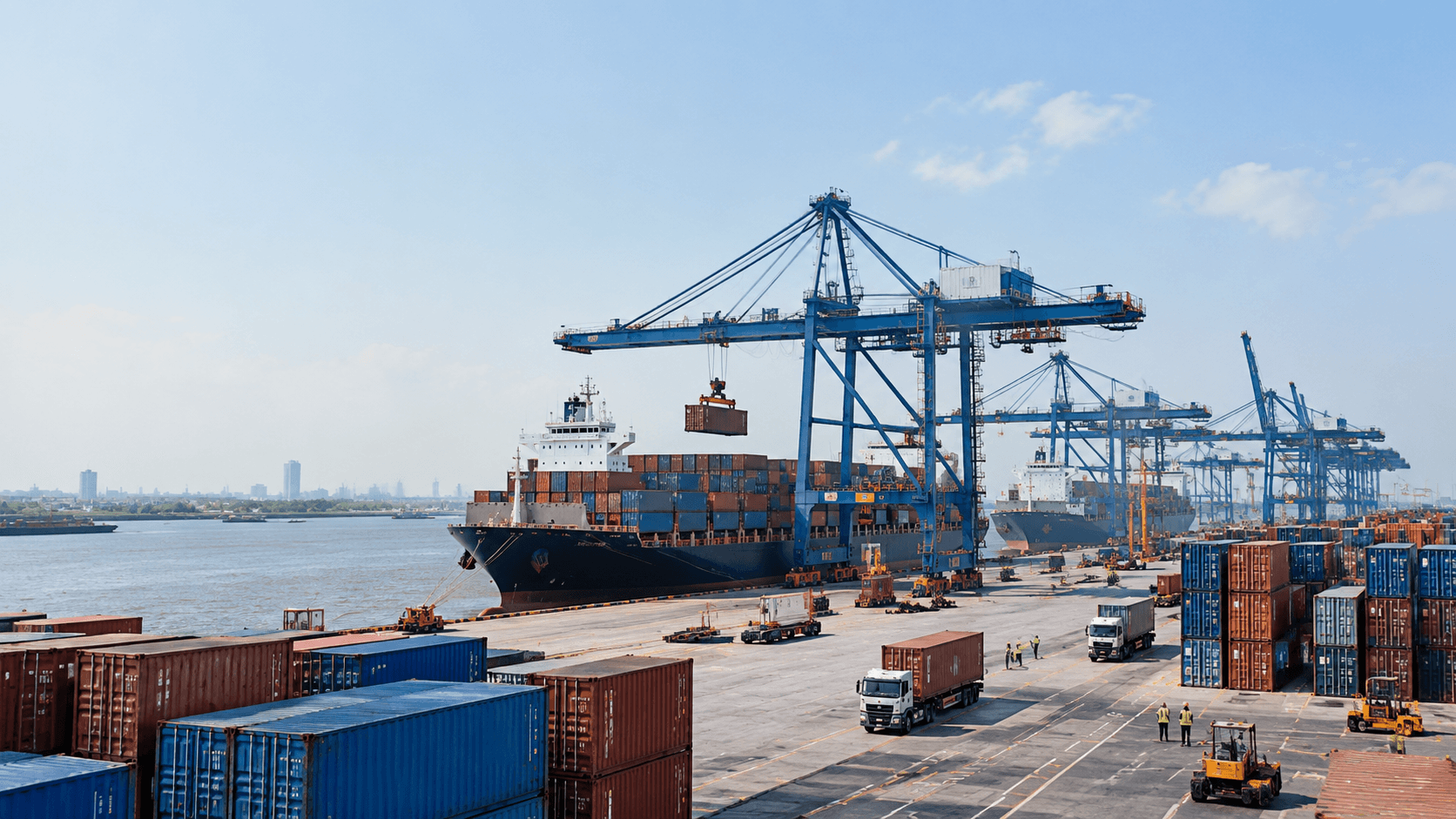
Overview of Cat Lai Port, Tan Cang Cat Lai Port, and its strategic position in the Southern regional import-export network
Tan Cang Cat Lai Port is an international container port operated by Saigon Newport Corporation in Ho Chi Minh City. According to information published by the operator, the port complex has a total area of approximately 160 hectares and around 2,040 m of berth length, including multiple operating areas and dedicated areas for refrigerated containers. This scale enables the port to handle large container flows connecting Ho Chi Minh City with manufacturing centers in the South.
Về đường bộ, cảng Cát Lái TPHCM có khả năng kết nối tới Đồng Nai, Bình Dương, Long An, Bà Rịa – Vũng Tàu và khu vực Đồng bằng sông Cửu Long thông qua mạng lưới vành đai, cao tốc và các trục giao thông liên vùng. Đây là lý do kế hoạch kéo container tại cảng thường phải được xây dựng cùng kế hoạch giao hàng đến khu công nghiệp thay vì tách riêng hai công đoạn.
Characteristics of FCL containers, refrigerated containers and agricultural export cargo through Ho Chi Minh City Cat Lai Port
For FCL cargo, the container is managed as an intact transport unit from the loading point to the port or from the port to the consignee's warehouse. Common types include 20DC, 40DC, 40HC and refrigerated RF containers. Typical external dimensions are approximately 6,058 x 2,438 x 2,591 m for 20DC; 12,192 x 2,438 x 2,591 m for 40DC; while 40HC is approximately 2,896 m high. Actual payload must be checked against the CSC plate of each container and the vehicle and route weight limits.
| Type of Container | Reference external dimensions | Typical use | Transport notes |
|---|---|---|---|
| 20DC | 6,058 x 2,438 x 2,591 m | Dry cargo, high-density cargo | Check payload and axle weight |
| 40DC | 12,192 x 2,438 x 2,591 m | Dry cargo, high-volume cargo | Check warehouse receiving capacity |
| 40HC | 12,192 x 2,438 x 2,896 m | Lightweight but high-volume cargo | Pay attention to the overall vehicle combination height |
| 20RF/40RF | Depending on the manufacturer's design | Fruit, food, seafood, temperature-controlled cargo | Check set-point, power supply, PTI and temperature data |
For refrigerated containers, a single temperature setting should not be applied to every type of agricultural product. Depending on the commodity, variety, ripeness, transport time and market requirements, the set-point may range from deep sub-zero temperatures for frozen foods to around 0-15°C for many groups of fresh produce. In addition to temperature, ventilation, humidity and power outage duration can also directly affect cargo quality.
The link between Cat Lai Port, Cat Lai depot, warehouses and road transport routes to industrial parks
Ports, depots and factory warehouses form a continuous operating chain. Imported containers are picked up from the port and delivered to the warehouse; after unloading, empty containers must be returned to the location designated by the shipping line. For exports, businesses may collect empty containers at Cat Lai depot or a depot assigned by the shipping line, haul them to the packing warehouse, then bring the loaded container into the port before the cut-off.
A common source of additional costs is a change in the empty-container pickup or return location compared with the initial plan. Dispatchers therefore need to check the designated depot, container return deadline and receiving status before dispatching the truck. This is also a typical case where a solution multimodal transportation may be considered if the business needs to combine sea transport, road transport, ICD or inland waterway transport.
Operational pressures at Cat Lai Port affecting delivery time and business logistics costs
Port pressure comes not only from the number of containers but also from the concentration of vehicles by time slot, yard changes, gate procedures and traffic conditions on connecting routes. In September 2026, Saigon Newport's ePort system continued updating lane-allocation arrangements at the gates of Tan Cang – Cat Lai, showing that transport businesses need to closely follow operational notices rather than use a fixed procedure over a long period.
Another factor is prolonged cargo storage. Saigon Newport previously announced that the volume of cargo stored at the port for more than 90 days at the end of May 2026 was approximately 10,000 TEU, occupying a significant amount of yard space. For ordinary cargo owners, the operational lesson is to release containers early, manage free time and avoid document issues extending into the period when charges arise.
Cat Lai Port Ho Chi Minh City Container Hauling Service: Coordination Process from Port to Factory Warehouse
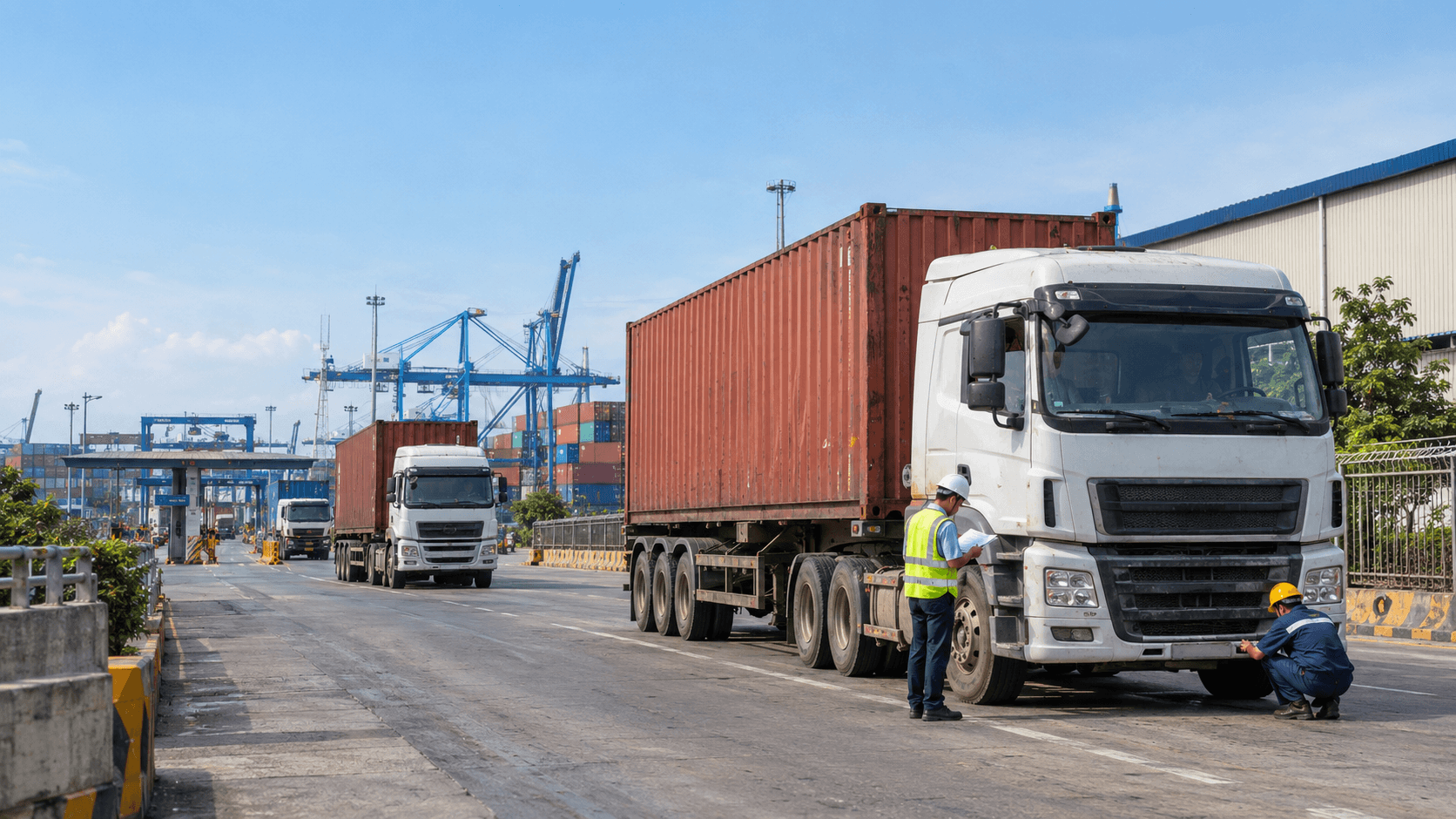
Receive the container transport plan and check the booking, delivery order D/O and cargo information
Coordination starts with data, not with the truck. For imports, HNT Logistics needs to receive the B/L, D/O or electronic delivery-order information, container number, seal, shipping line, vessel arrival date, declaration status, container free-storage period and delivery address. For exports, key data shifts to the booking, empty-container pickup location, CY cut-off, SI/VGM cut-off where applicable and the factory loading schedule.
At this stage, a single incorrect character in the container number or confusing a 40DC with a 40HC can make the vehicle plan unsuitable. The dispatcher also needs to know the cargo type, gross weight, temperature requirements, dangerous goods if any, and warehouse access conditions to select the tractor unit, chassis and delivery time.
Process for dispatching tractor units to pick up containers at Tan Cang Cat Lai Port and deliver them to the receiving location
After confirming that the container is eligible for delivery, the dispatch department assigns the vehicle and driver, confirms port operating information, directs the vehicle to the correct gate and operating area. The container is loaded onto the chassis, and the driver checks the container identification and seal before exiting the gate. The truck then follows the planned route to the warehouse, factory or industrial park and delivers according to the appointment.
For imports, the plan does not end when the truck arrives at the warehouse. The carrier must also account for unloading wait time, the possibility of dropping the container at the warehouse if applicable, empty-container hauling time and the empty return depot. If this stage is overlooked, a trip that appears complete from a delivery perspective may still incur detention because the empty container was returned late.
Control container condition, seal, delivery records and transport documents before leaving the port
Before the truck leaves the port, the driver should cross-check the container number, seal number and exterior condition. Signs such as major dents, holes, abnormal doors, mismatched seals or refrigeration-unit alarms must be recorded and reported immediately to the dispatcher. Taking time-stamped and location-stamped photos and retaining delivery records provides important evidence if a dispute later arises concerning equipment or cargo condition.
For refrigerated containers, the inspection must be more thorough than for dry containers. The dispatcher needs to confirm the set-point according to the shipping instruction or cargo-owner requirements, refrigeration-unit condition and power-supply requirements. When using a genset on the road, fuel and generator operating status must be included in the trip checklist and must not be treated as an ancillary part of container hauling.
Coordinate Cat Lai Port, shipping lines, Cat Lai depot and businesses to minimize truck waiting time
Waiting time often occurs at the intersection of multiple parties: the port is ready but the D/O is not valid; customs clearance is complete but the container is not yet in a deliverable status; the truck has arrived at the warehouse but the warehouse has not arranged labor; or the empty container reaches the depot while the depot has temporarily stopped receiving. Therefore, effective coordination requires confirming the status of every link before the truck departs.
HNT Logistics applies a pre-trip inspection principle covering documents, container status, warehouse schedule and depot. This approach is especially important for businesses handling many containers each day, because optimizing an individual trip does not necessarily optimize the entire fleet; the practical goals must be to reduce empty time, reduce waiting and increase vehicle utilization.
Container Transport Through Cat Lai Port with Cargo Safety and Schedule Control Solutions
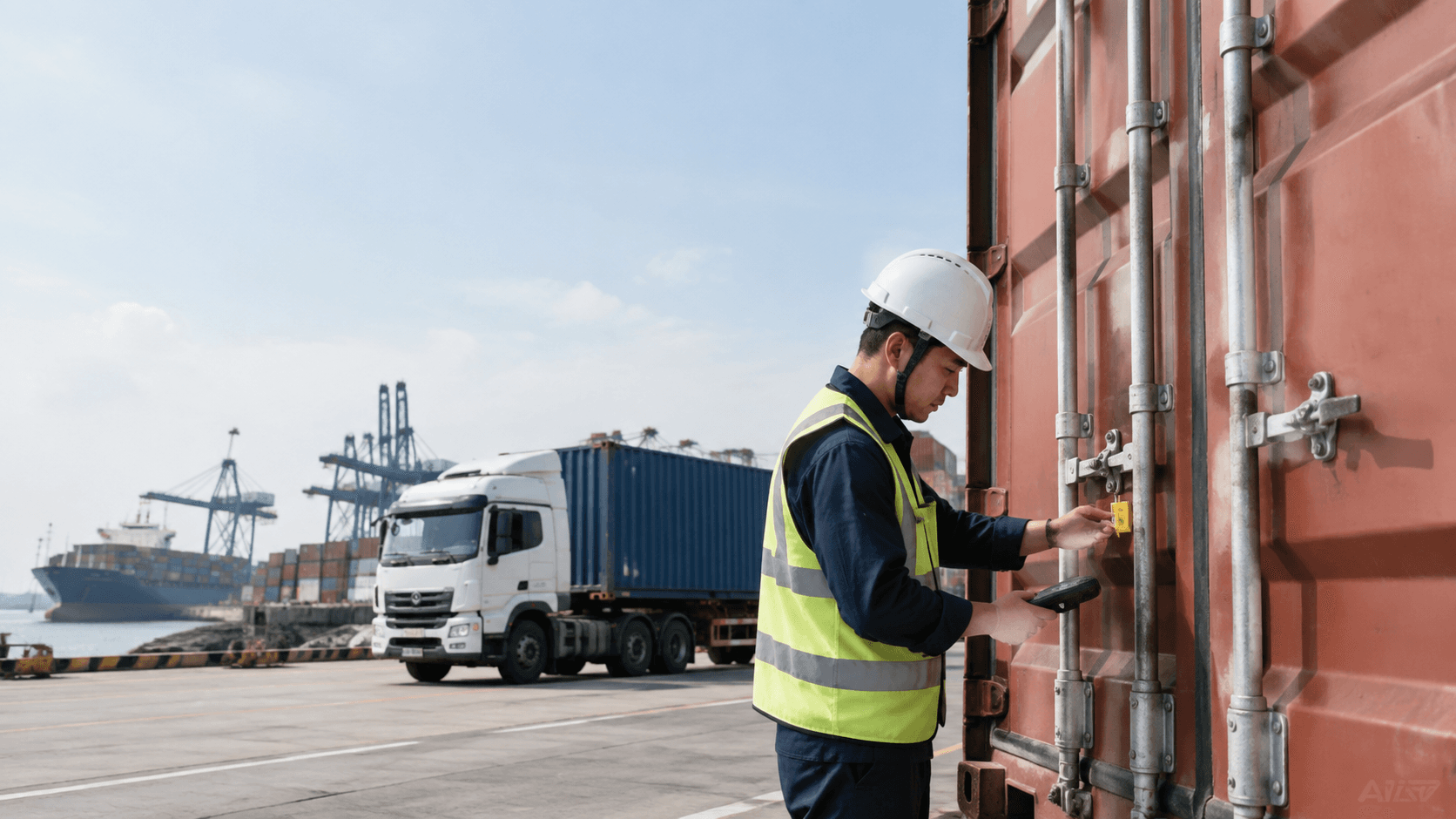
Standards for selecting tractor units, container chassis and transport plans suitable for each cargo type
The tractor unit must be suitable for the total weight of the combination, the chassis must match the container type, and the vehicle must meet technical, inspection and current weight-limit requirements. Heavy cargo requires special checks of axle loads and route accessibility. For 40HC containers, businesses must also assess the overall height when the route has clearance restrictions.
Vehicles should not be selected solely based on whether they can carry the container. Maintenance schedules, tire condition, braking systems, chassis twist locks and driver experience all directly relate to safety. If the warehouse is in an area with restricted container-truck hours, the plan must also calculate departure time to avoid the vehicle reaching an access point during a restricted or highly congested period.
Refrigerated container management at Cat Lai Port: maintaining temperature, power supply and cargo storage conditions
Tan Cang Cat Lai Port has a dedicated operating area for refrigerated containers. In the cold chain, the objective is not merely to keep the refrigeration unit running but to maintain conditions appropriate for each type of cargo. Set-point, ventilation, humidity if supported by the equipment, and gas-treatment requirements must be taken from the technical instructions of the cargo owner, shipping line or product-storage procedure.
For example, frozen goods commonly operate in sub-zero temperature ranges, often around -18°C or lower depending on the product; many fresh fruits require low or moderate above-zero ranges. These are only reference ranges, not universal specifications. Setting the wrong temperature by several degrees, incorrectly adjusting ventilation or interrupting power for an extended period can all cause quality losses even when the container arrives on schedule.
Risk control during container hauling includes port congestion, delayed pickup and additional storage charges
Operational risks should be controlled according to time milestones. Before ETA, documents should be checked; after ETA, cargo and customs status should be checked; before dispatching the truck, the delivery order, container location and warehouse schedule should be checked; after delivery, empty return should be controlled. Milestone-based management helps identify risks before they become actual costs.
DEM and DET must be managed carefully according to the conditions of each shipping line and booking. The calculation of free time, the point at which charges begin, and policies for combining or separating DEM/DET may differ. Businesses should not apply one shipping line's tariff to another shipment but must directly check the conditions granted for the specific shipment.
Applying GPS, journey tracking and vehicle dispatching to ensure continuous container status
GPS creates value when the data is used for dispatching rather than merely viewing vehicle locations. Operations teams can monitor departure time from the yard, ETA to the warehouse, abnormal stop duration and turnaround schedules. When combined with the container plan, this data helps predict which vehicles can take the next trip and which are at risk of schedule delays.
For customers with large volumes, reports should be standardized by container number, vehicle license plate, port entry/exit time, warehouse delivery time, empty-return status and exceptions. When the data is sufficiently clean, businesses can analyze dwell time and waiting causes to optimize costs rather than simply negotiate lower transport rates.
Cat Lai Port Ho Chi Minh City Container Hauling Cost Table and Factors Affecting the Logistics Budget
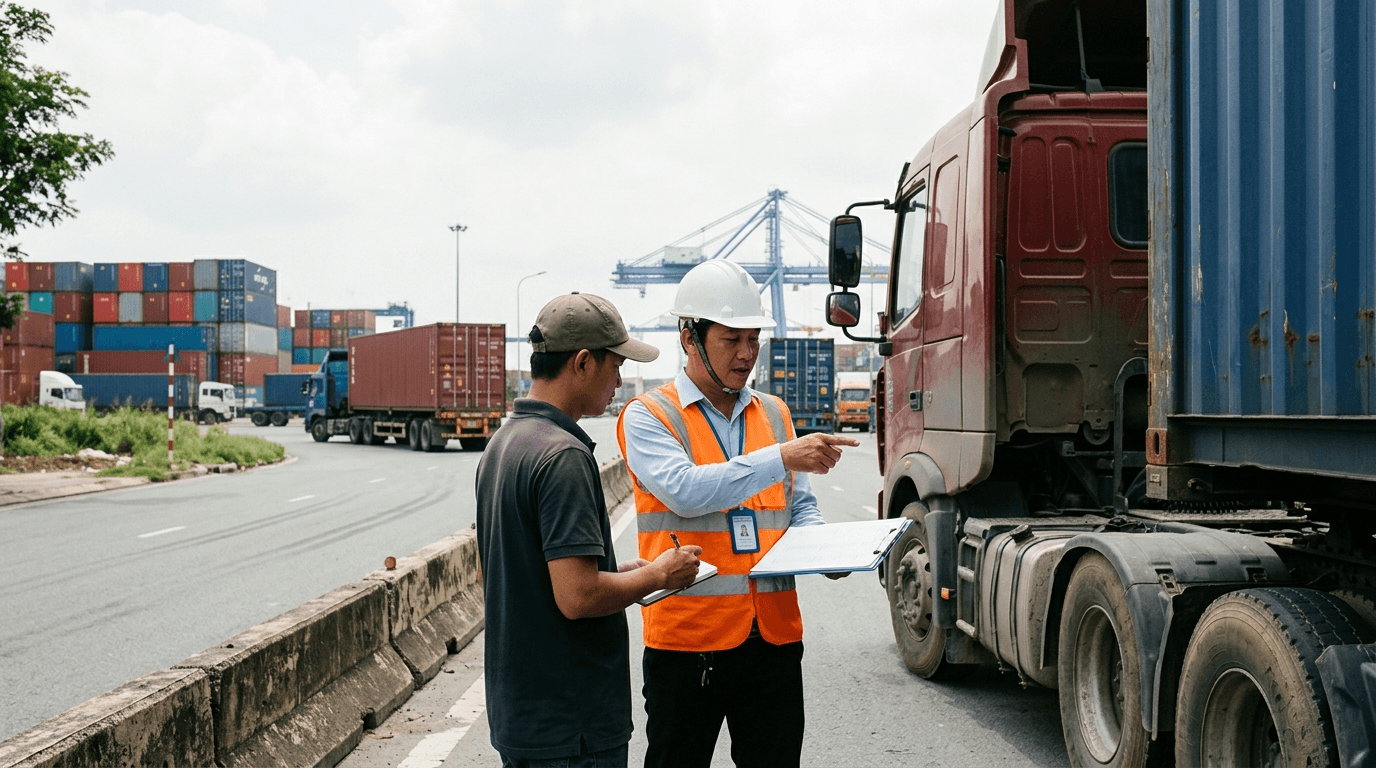
Cost analysis table for hauling 20-foot, 40-foot and refrigerated containers from Cat Lai Port to the factory warehouse
Container hauling rates do not have a single fixed level applicable to every business. Rates depend on the delivery location, container type, cargo weight, waiting time, warehouse access conditions, lifting requirements and transport timing. Therefore, the table below is used to build a budget structure; businesses need to provide actual shipment information to receive a quotation.
| Method | Basic transport cost | Main adjustment factors | Budgeting recommendation |
|---|---|---|---|
| 20DC Cat Lai – inner city/warehouse near the port | Route-based quotation | Distance, weight, delivery hours | Confirm address and gross weight |
| 40DC/40HC Cat Lai – industrial park | Route-based quotation | Distance, tolls, waiting time | Finalize warehouse schedule before dispatching |
| 20RF/40RF | Haulage rate + reefer components | Genset, fuel, power-supply time | Confirm set-point and journey duration |
| Heavy cargo container | Quotation based on weight profile | Gross weight, axle load, permitted route | Check load before assigning vehicle |
HNT Logistics recommends not comparing carriers based only on the tractor-unit freight line. A low quotation that excludes truck waiting, lifting, road charges, after-hours charges or empty return costs may result in a higher total cost than an option with a clearly stated initial rate. Hotline 096 309 78 19 receives route information to prepare quotations for each shipment.
Table of related charges including container lifting, storage, DEM/DET, cleaning and additional surcharges
| Cost item | Charging/incurring party | Common causes | Control method |
|---|---|---|---|
| Container lifting/loading and unloading | Port/depot/operator | Delivery, transfer to another yard or equipment operations | Check the currently effective tariff |
| Storage fees | Port or depot | Container remains in the yard beyond the free period | Complete customs clearance and pick up cargo early |
| DEM | Shipping line according to shipment conditions | Loaded container remains at the terminal beyond free time | Monitor ETA and free time |
| DET | Shipping line according to shipment conditions | Equipment kept outside the terminal beyond the permitted period | Schedule cargo unloading and empty return |
| Cleaning/repair | Shipping line/depot according to condition | Dirty container or damage incurred | Record photos when receiving/returning |
| Operational surcharges | Depending on the provider | Long waiting, after-hours, delivery-point changes, fuel | Specify quotation conditions before the trip |
Các khoản trên không nên được hiểu là biểu phí cố định của cảng Cát Lái. Tân Cảng Sài Gòn có thể điều chỉnh chính sách dịch vụ và phụ phí theo từng thời kỳ; hãng tàu cũng có biểu DEM/DET riêng. Trước khi lập ngân sách, doanh nghiệp nên kiểm tra biểu giá cảng và tariff hãng tàu đang áp dụng cho chính lô hàng.
Comparison table of container transport options by distance, cargo type, delivery time and preservation requirements
| Condition | Priority plan | Risk to control | Dispatching focus |
|---|---|---|---|
| Short distance, dry cargo | Direct tractor unit from port to warehouse | Congestion, warehouse waiting | Delivery time window |
| Medium distance to industrial park | Tractor unit according to appointment | Restricted hours, tolls, vehicle turnaround | Route and ETA planning |
| Refrigerated | Tractor unit + genset when required | Power outage, incorrect set-point | Cold-chain monitoring |
| Large volume | Batch-based fleet dispatching | Vehicles concentrated at the same time | Warehouse delivery slots and turnaround |
| Multi-modal chain | Combined transport suitable for the cargo flow | Transfers between parties | Synchronize documents and schedules |
Criteria businesses should check before selecting a container transport provider at Cat Lai Port
A carrier's capability should be assessed through its actual coordination capacity at the port, vehicle resources, container inspection procedures, driver management, GPS and ability to respond when vessel schedules or depots change. For refrigerated cargo, also check genset availability and temperature-incident handling procedures. For heavy cargo, weight-control experience is more important than simply having high-powered vehicles.
Contracts or quotations must also clearly define conditions for calculating waiting time, after-hours costs, delivery-point changes, lifting, empty returns and responsibility for damage. This provides a basis for businesses to compare total landed logistics cost rather than only the container-hauling rate for each trip.
Cargo Delivery Procedures at Cat Lai Port: Optimizing Documents and Customs Procedures
Prepare the import-export document set including B/L, invoice, packing list and customs declaration documents
The commercial document set generally begins with the contract, commercial invoice, packing list, B/L and relevant specialized documents for the commodity. The actual documentation must be determined according to the type of import-export transaction and regulations in force; businesses should not assume that every shipment requires the same set of documents. Vietnam's customs regulations have also been amended through multiple legal documents, so businesses need to check the legal version currently in force when opening the declaration.
- The Commercial Invoice and Packing List must match in description, quantity, weight and trade terms.
- The B/L or transport document must be checked against the shipper, consignee, container number and seal.
- The customs declaration must correctly state the HS code, customs value, origin and transaction type.
- C/O, permits and specialized inspection documents are prepared when required by the commodity or trade policy.
- Booking, D/O and port documents must be synchronized with the container delivery plan.
Process for coordinating customs clearance, physical inspection, specialized inspection and container pickup at Cat Lai Port
After the declaration is transmitted, the shipment is processed according to the channeling result and requirements of the customs authority. If physical inspection is required, the business must coordinate container opening, arrange inspection and complete the requirements before the cargo is eligible to pass through the supervision area. Cargo subject to specialized inspection must complete the corresponding process under the applicable commodity policy.
From a legal perspective, an old guide should not be used as the sole source. Circular 38/2015/TT-BTC was amended by Circular 39/2018/TT-BTC and continues to have provisions amended in 2026. Therefore, when developing an internal SOP, businesses need to cross-check customs regulations that is currently in force and the commodity-specific policies applicable at the time of implementation.
Solutions for handling agricultural export cargo through Cat Lai Port with strict plant quarantine and preservation requirements
For exported fruit, especially for markets with bilateral protocols such as China, operations do not stop at the phytosanitary certificate. Businesses need to check requirements for each fruit type, growing-area codes, packing facilities, regulated pests, post-harvest treatment and traceability requirements under the corresponding protocol. Plant Production and Protection Department is an official source that should be monitored when updating quarantine requirements.
The cold chain should be planned backward from the vessel schedule. Harvesting, processing, packing, pre-cooling, container loading, quarantine inspection, hauling to the port and cut-off must form one integrated timeline. If the container has already been cooled but must wait for hours because quarantine documents are incomplete, the business incurs additional costs while also reducing the product's remaining shelf life.
The role of the logistics provider in combining customs declaration, container transport and cargo delivery through a single point of contact
When a business uses separate customs brokers, trucking companies and forwarding providers, information can easily become fragmented. The declaration may have cleared customs but the trucking company does not receive the notification; the truck arrives at the port but the D/O is incomplete; or the empty-return depot changes without the warehouse knowing. A single-point-of-contact model reduces information handoffs and clearly identifies the party responsible for tracking the shipment.
HNT Logistics combines customs declaration, FCL transport and forwarding to build an end-to-end process from documents to vehicles. The customs declaration service is particularly useful for businesses that need to synchronize customs clearance timing with container pickup schedules, avoiding situations where trucks are booked too early while the cargo documents are not yet eligible for delivery.
Optimizing the Logistics Chain Through Cat Lai Port with Comprehensive Sea–Road Transport Solutions
Combining international sea freight with container tractor units to shorten cargo transit time
Actual logistics time should be measured from when the cargo is ready at the origin point until it is delivered to the destination warehouse, not only by ocean transit time. A cheaper sea route with less frequent sailings, long transshipment or unsuitable free time can result in higher total costs. Businesses should evaluate ocean freight and trucking as one integrated solution.
This is also the value of multimodal transportation: each mode is selected according to the cargo-flow structure rather than habit. For some journeys, combining port, ICD, barge and road transport can reduce pressure on long-distance trucking; for urgent routes, direct trucking may still be a more suitable option.
Developing an operating plan among Cat Lai Port, Cat Lai depot and the transit warehouse network
The depot plan should be included from the moment the booking or D/O is received. For exports, the empty-container release location affects the number of kilometers the truck travels before the container reaches the factory. For imports, the empty-return location affects turnaround after delivery. If there are many shipments, grouping the plan by depot can significantly reduce empty running distance.
A transit warehouse should only be added to the chain when it creates clear benefits in inventory, production scheduling or distribution. Adding an intermediate point also means additional handling, cargo management and delay risks. Therefore, network design must be based on total cost and service level rather than warehouse rental price alone.
Long-term logistics cost-control solutions through vessel, vehicle and document schedule management
Long-term costs are best controlled through data. Businesses should monitor rates by route, truck-waiting ratios, container time at the port, DEM/DET, booking-change rates and the number of unfavorable empty-return trips. When these data points are linked with vessel schedules and volumes, logistics teams can accurately identify the causes of rising costs.
For Tan Cang Port and the port system in general, businesses also need to monitor operational notices and guidance from specialized authorities. Information from Vietnam Maritime and Inland Waterway Administration together with the port operator is an important reference when updating regulations, operating conditions and transport plans related to the port system.
HNT Logistics accompanies businesses by providing safe, transparent and efficient Cat Lai Port container hauling services for import-export companies
HNT Logistics provides FCL sea and road container transport, container hauling at the Cat Lai port complex, refrigerated cargo transport, customs declarations, C/O, phytosanitary inspection and combined transport solutions. The operational objective is to control the shipment from documents and vehicles to delivery timing and potentially incurred costs.
For each container-hauling request at Cat Lai Port, businesses should provide the quantity and type of containers, cargo weight, pickup/delivery address, expected date, temperature requirements if any and warehouse conditions. HNT Logistics will use this data to develop an appropriate vehicle plan and quotation instead of applying one standard rate to every shipment.
The effectiveness of a container trip is not measured by how quickly the truck leaves the port, but by its ability to deliver according to plan, preserve the cargo, return equipment on time and control total costs from port to warehouse.
Businesses needing advice on container hauling, cargo delivery at Ho Chi Minh City Cat Lai Port or an end-to-end logistics plan can contact HNT Logistics để được tư vấn và báo giá nhanh.