When researching dry cargo transportation in Ho Chi Minh City, situations such as containers being cleared at the port but trucks not being scheduled at the right time, warehouses lacking sufficient receiving space, or vehicles being unsuitable for the actual cargo weight can cause businesses to incur unexpected costs. For imports through Cat Lai Port, transportation efficiency depends not only on haulage rates but also on coordination between container pickup schedules, traffic conditions, unloading capacity, and empty container return deadlines.
Logistics dry cargo transportation in Ho Chi Minh City HNT Logistics aims to organize the transportation of intact containers from ports to warehouses, factories, or distribution centers based on actual operating conditions. Transportation plans must be established using shipment information, delivery and receipt documents, vehicle load capacity, and container usage periods. This helps cargo owners control schedules, minimize waiting times, and proactively manage logistics budgets.
Dry Cargo Transportation in Ho Chi Minh City: Determining Container Haulage Plans from Port to Warehouse Based on Operating Conditions
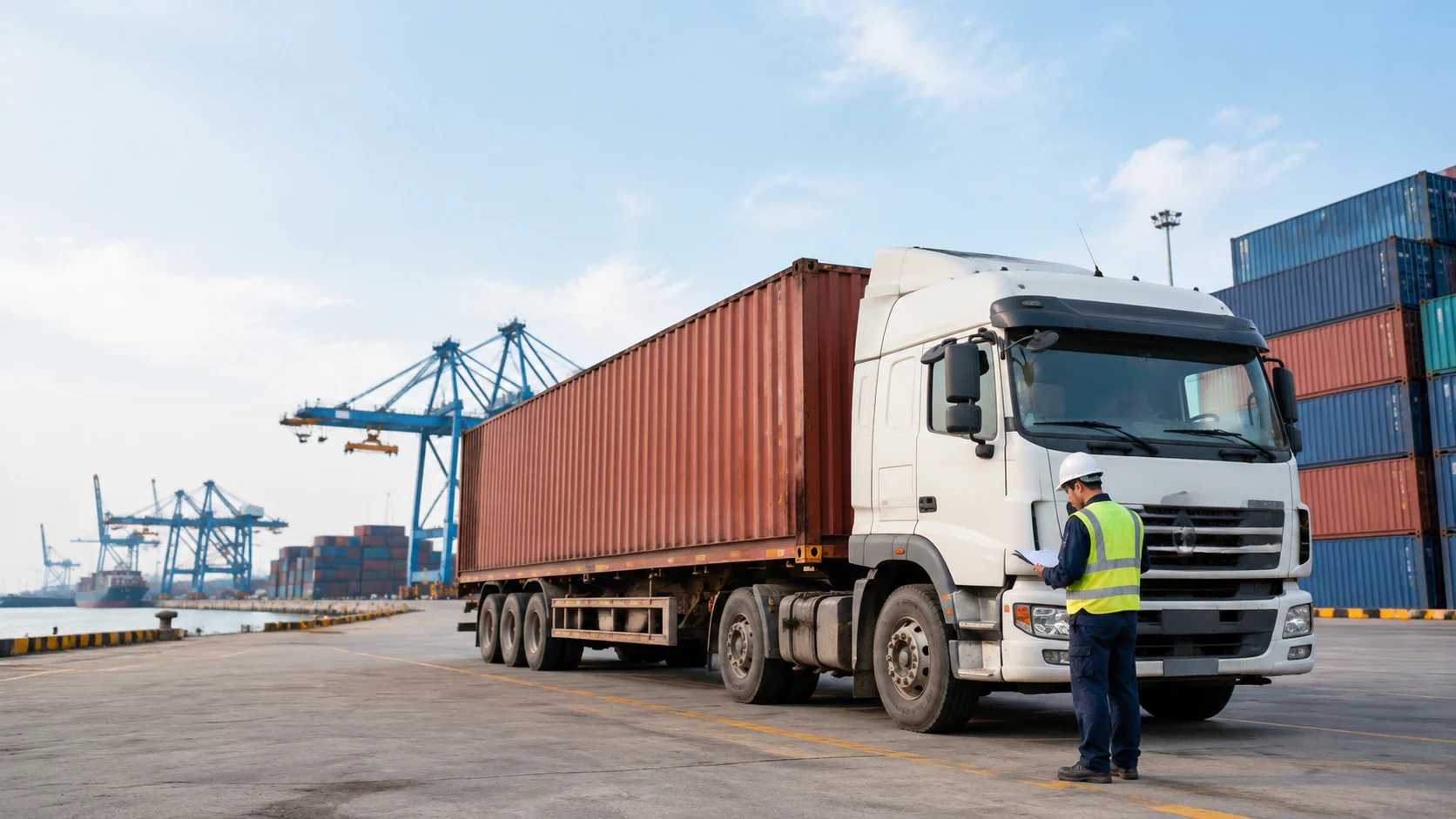
Classifying dry cargo transportation requirements by full container load (FCL) imports, container transfers between warehouses, and direct deliveries from ports to factories or distribution centers
For dry cargo transportation solutions in Ho Chi Minh City, the transportation model must be identified before providing a quotation. This includes FCL transportation, container transfers between locations, or direct delivery from the port to the final destination. For full container load (FCL) imports, a tractor unit collects the container after it has been cleared for release at the port and transports it to the designated address. For domestic container transfers, it is necessary to clarify whether the container is operated by the shipping line, leased by a rental company, or owned by the cargo owner, as usage and empty return conditions may differ. For direct deliveries to factories, receiving schedules must be coordinated with the unloading capacity at the destination.
Identifying suitable tractor units, semi-trailers, and container configurations based on cargo weight, package dimensions, warehouse accessibility, and inner-city road conditions in Ho Chi Minh City
During the transportation and customs clearance process for dry cargo in Ho Chi Minh City, vehicle selection must be based on the total loaded container weight, legally permitted road load limits, and semi-trailer configuration. 20-foot containers are generally suitable for heavy cargo, bagged goods, or shipments with moderate volume, while 40-foot containers are suitable for lightweight, bulky cargo or shipments containing multiple pallets. However, greater volume does not necessarily mean a higher cargo weight capacity. For warehouses located in alleys, side streets, or residential areas, turning radius and maneuvering space must be surveyed before dispatching vehicles.
Analyzing factors affecting vehicle accessibility at delivery locations, including turning radius, gate height, road load limits, container placement space, and lifting equipment capacity
To optimize costs and delivery schedules for dry cargo transportation in Ho Chi Minh City, vehicle accessibility must be assessed during the initial site survey because it directly determines the delivery method. Tractor units and semi-trailers require sufficient space to approach, turn around, and reverse into unloading positions. Gate height, electrical cables, canopies, and internal road structures must be checked against the actual dimensions of the vehicle combination. If the warehouse lacks a waiting area or lifting equipment, vehicles may face extended waiting times or require additional transshipment arrangements. For delivery locations with weak ground surfaces, businesses must assess ground load-bearing capacity and stabilizer placement before unloading containers.
Establishing vehicle dispatch plans based on container pickup time slots at Cat Lai Port, warehouse receiving schedules, and empty container return deadlines specified by shipping lines or operating companies
Based on HNT Logistics' practical operating experience in dry cargo transportation in Ho Chi Minh City, vehicle dispatch schedules should be developed around a sequence of key time points, including completion of cargo release procedures, container pickup time slots, travel time, warehouse receiving hours, and empty container return deadlines. At Cat Lai Port, waiting times may vary depending on vehicle traffic, yard operating conditions, and gate inspection requirements. Therefore, map-based travel time alone should not be used as the basis for dispatch planning. Operations staff must verify appointment schedules, free-time deadlines, and the designated empty container return location before confirming a trip.
Dry Cargo Transportation in Ho Chi Minh City: Controlling the Container Handover Process from the Port Gate to the Unloading Location
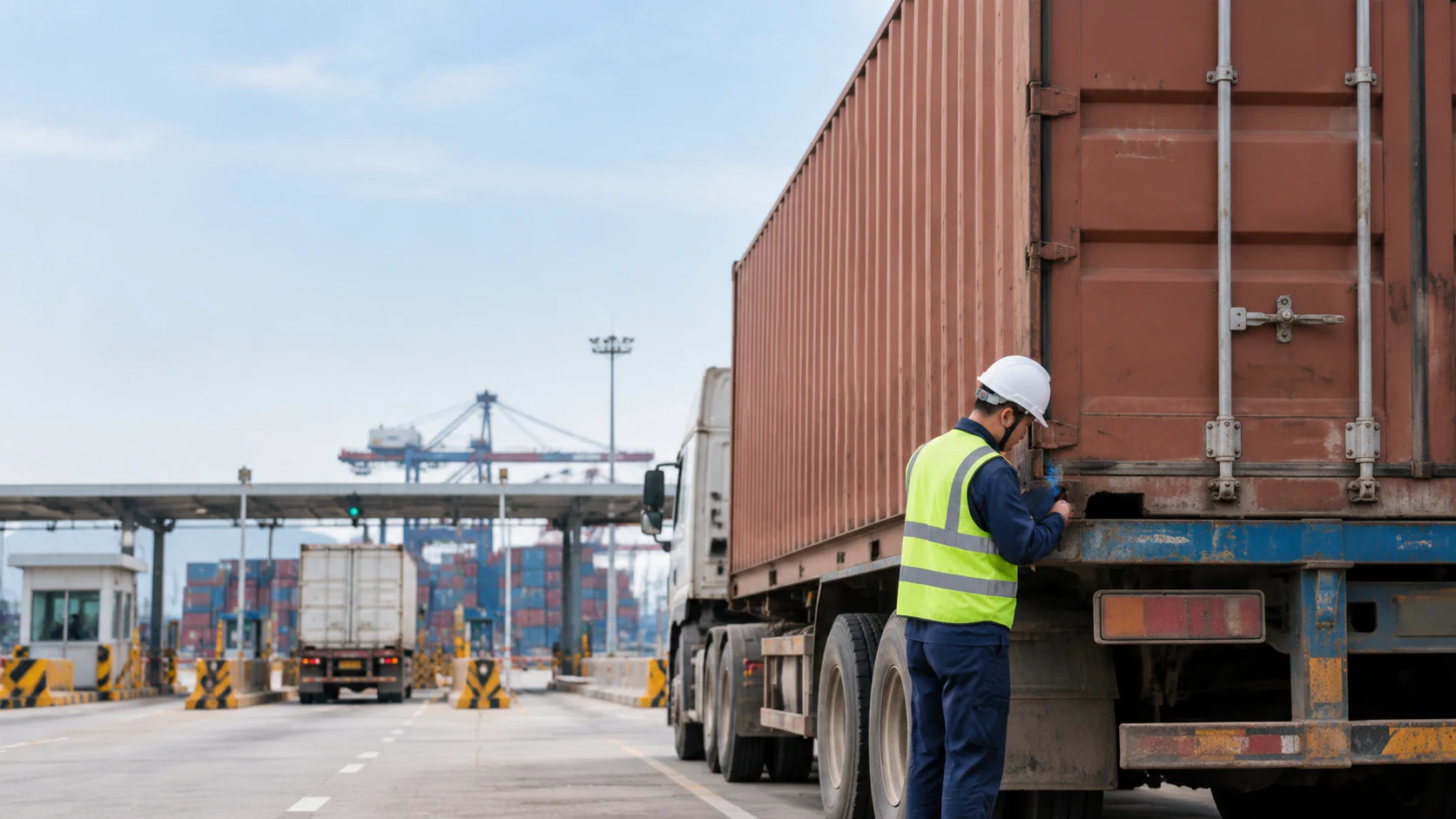
Establishing procedures for receiving delivery orders, verifying container information, checking cargo clearance status, and confirming container release conditions before dispatching tractor units
When researching dry cargo transportation in Ho Chi Minh City, the delivery and receipt process should begin with collecting shipment information and checking the delivery order or electronic container release order in accordance with the procedures of the shipping line, agent, and port. Operations staff must cross-check the bill of lading number, container number, recorded seal number if available, cargo pickup location, and order validity period. They must also verify customs clearance status, tax payment obligations, and specialized inspection requirements if applicable to the shipment. Tractor units should only be dispatched when the container is genuinely eligible for release and all related charges have been settled according to the operating company's requirements.
Establishing inspection checkpoints at port gates, container yards, weighbridges, and receiving warehouses to verify container numbers, seal numbers, container condition, and weight records
For dry cargo transportation solutions in Ho Chi Minh City, each transfer point must have corresponding inspection records to prevent container mix-ups or disputes regarding cargo conditions. At the port, drivers must compare container numbers and exterior conditions against the issued documents. At weighbridges, the type of scale, recorded weight, and intended use of the data must be clearly identified. Upon arrival at the warehouse, the receiver must inspect the container number, seal, dents, wall punctures, and door damage before opening it. If the seal number does not match or there are signs of tampering, the container opening process must be stopped and the relevant parties notified to prepare verification records.
Analyzing options for delivering intact containers, unloading cargo at warehouses, or dropping off containers for later unloading based on available space, unloading time, and the recipient's equipment capacity
During the transportation and customs clearance process for dry cargo in Ho Chi Minh City, intact container delivery is suitable when the warehouse can unload cargo directly and return the container within the specified deadline. If the warehouse has a designated container storage area and suitable lifting equipment, businesses may consider dropping off the container and allowing the tractor unit to perform another trip before arranging empty container collection. This option requires assessment of lifting costs, container storage time outside the port, and storage responsibilities. If the warehouse lacks sufficient space or cannot provide suitable equipment, unloading cargo at a transshipment location may be considered, but additional transportation and cargo handling stages must be included in the calculation.
Standardizing delivery and receipt records, condition photographs, and vehicle arrival and departure confirmations to provide a basis for reconciling schedules, costs, and responsibilities when unexpected issues arise
Delivery and receipt records should document vehicle arrival times, the start and completion of unloading, container numbers, seal numbers, exterior conditions, and any discrepancies discovered. Photographs should clearly show container doors, exterior walls, the roof if it can be inspected safely, dented corners, and any abnormal areas. Time records must be confirmed by the person in charge at the delivery location to provide a basis for reconciling waiting charges. If damage or shortages occur, businesses must preserve documents, photographs, and incident records immediately upon discovery rather than relying solely on verbal discussions after the vehicle has left the warehouse.
Container Haulage in Ho Chi Minh City: Controlling Load Capacity, Safety, and Warehouse Accessibility
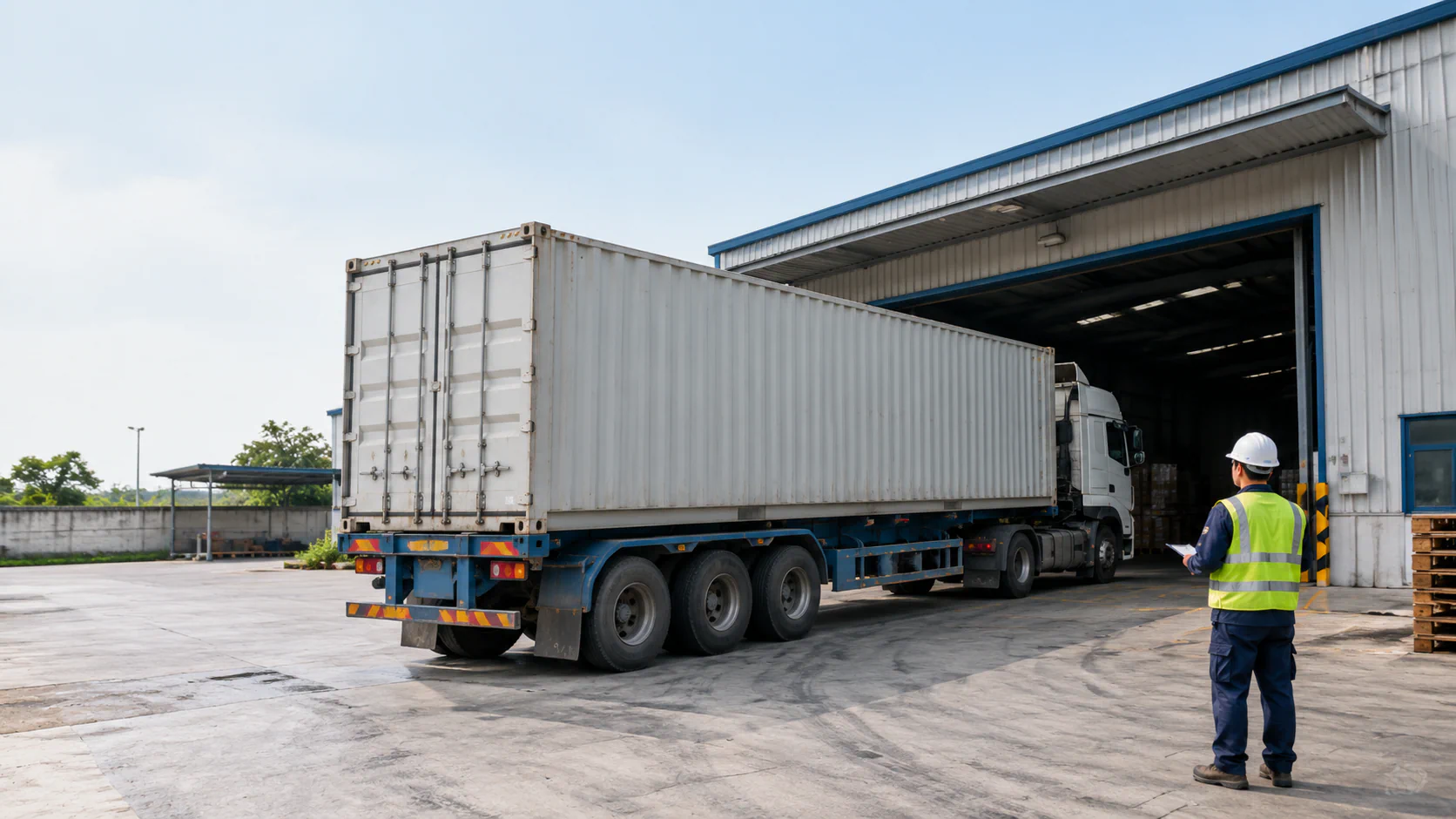
Cross-checking total cargo weight, container tare weight, vehicle load capacity, and axle load limits under applicable regulations before assigning transportation vehicles
The cargo weight recorded in shipping documents is not the only basis for determining which vehicle combination can haul a container. Dispatch teams must cross-check cargo weight, container tare weight, gross weight, and load distribution across individual axles or axle groups. Actual figures must be verified against the CSC plate, container markings, vehicle documentation, and restrictions along the intended route. Under Circular 12/2026/TT-BXD and Consolidated Document 26/VBHN-BXD issued on June 2, 2026, applicable weight limits and road clearance dimensions must comply with current regulations relevant to the vehicle and route.
Developing inspection procedures for twist locks, container locking pins, tires, braking systems, signal lights, and safety equipment before tractor units leave the port
Before leaving the port, drivers must confirm that the container is correctly positioned on the semi-trailer, all twist locks are fully engaged, and locking pins show no signs of damage. Tires, recommended tire pressure, braking systems, signal lights, brake lights, and warning equipment must be inspected according to vehicle safety procedures. Container doors and locking mechanisms should also be checked for abnormalities, while delivery documents and route information must be verified. If twist locks are not properly engaged, brakes show abnormal behavior, or tires are damaged, the vehicle must not continue operating until the issues have been resolved.
Analyzing route selection based on weight restrictions, bridge and road clearance heights, operating time restrictions, and accessibility to industrial parks, warehouses, factories, and urban delivery locations
Container haulage routes must be selected according to the legal road access conditions for the vehicle combination, not simply the shortest distance. Weight restriction signs, vertical clearance, bridges, roads, construction sites, time-based vehicle restrictions, and destination accessibility must be checked. For warehouses in residential areas or inner-city streets, dispatch teams should confirm vehicle access arrangements, waiting locations, and turning points in advance. Traffic regulations may change depending on location and time, so information applicable to the actual transportation date must be checked rather than using one fixed route for every trip.
Establishing response procedures for dented containers, seal discrepancies, suspected cargo shifting, vehicle breakdowns, or warehouses being unable to receive deliveries as scheduled
When container damage, seal discrepancies, or signs of cargo shifting are discovered, drivers must stop at a safe location, document the condition, and immediately notify dispatch and the responsible parties. They must not cut seals, open doors, or continue delivery without appropriate instructions. If a vehicle breakdown occurs, its impact on safety must be assessed, a replacement vehicle arranged, and an updated ETA communicated to the warehouse. If the warehouse cannot receive the delivery as scheduled, an alternative waiting location or container storage arrangement must be agreed upon, with any additional costs and responsibilities confirmed in writing before implementation.
Dry Cargo Transportation in Ho Chi Minh City: Comparison Tables for Containers, Delivery Methods, and Trucking Cost Structures
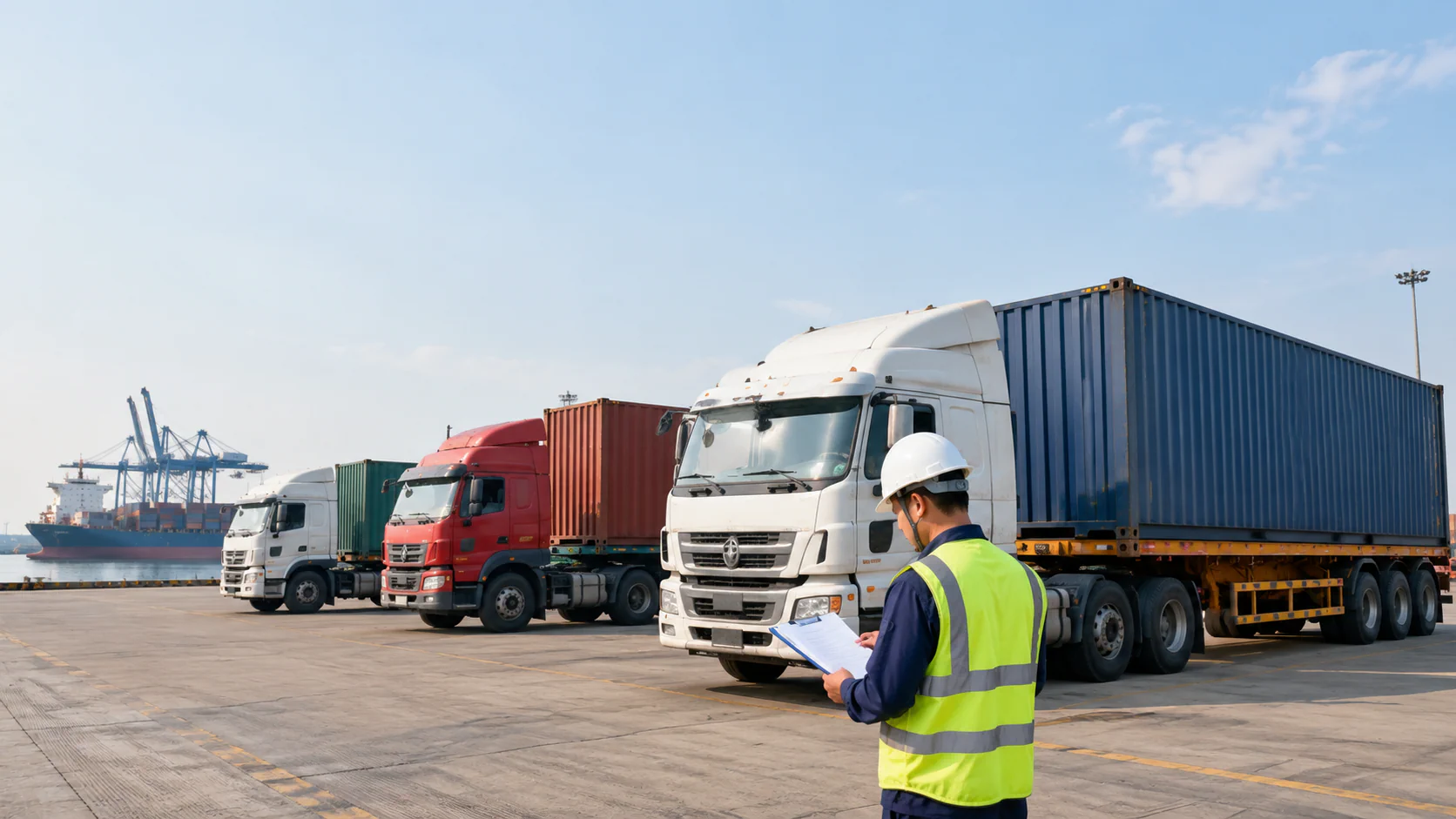
A comparison of 20-foot and 40-foot dry containers based on reference dimensions, usable volume, permitted load capacity, and suitability for different types of packaged goods, pallets, and bagged cargo
Standard dry containers are used for cargo that does not require an active temperature control system. The specifications below are commonly encountered reference values. Internal dimensions, door dimensions, tare weight, and maximum payload may vary depending on the manufacturer, container age, and information displayed on the container. Businesses should select suitable configurations based on package dimensions, pallet loading arrangements, load distribution capacity, and vehicle combination restrictions.
| Parameters | 20-foot GP Container | 40-foot GP Container | Operational significance |
|---|---|---|---|
| Internal length | Approximately 5.90 m | Approximately 12.03 m | Determines the number of packages or pallets that can be loaded lengthwise |
| Internal width | Approximately 2.35 m | Approximately 2.35 m | Clearance gaps and door dimensions must also be considered |
| Internal height | Approximately 2.39 m | Approximately 2.39 m | Not the same as the door's internal clearance height |
| Reference volume | Approximately 33 m³ | Approximately 67 m³ | Suitable for estimating packaged goods, bagged cargo, or palletized shipments |
| Maximum cargo weight | May be approximately 28 tons | Usually approximately 26–28 tons | Actual specifications must be checked on the container |
| Suitable cargo groups | Heavy cargo, bagged goods, medium-sized shipments | Lightweight, bulky cargo, multiple pallets | Selection must consider both volume and weight |
The load capacity figures above are not default legal limits applicable to every vehicle trip. Permitted cargo weight must be determined by considering container payload capacity, vehicle load capacity, axle load distribution, and road restrictions simultaneously. For bagged goods or concentrated heavy cargo, loading positions must be calculated to prevent excessive weight from accumulating at one end of the container. For palletized cargo, pallet dimensions and door clearance may reduce the actual quantity compared with theoretical volume calculations.
A comparison of direct container delivery, container drop-off at warehouses, and container transfers to unloading locations based on operating time, space requirements, and equipment costs
There is no single delivery method that is optimal for every business. Direct delivery reduces the number of transshipment operations but requires the warehouse to unload quickly and have sufficient personnel. Dropping off containers at warehouses is suitable for locations with storage yards and lifting equipment, while transferring containers to unloading locations is appropriate when the main warehouse cannot meet receiving requirements. Comparisons must include tractor unit occupancy time, lifting costs, additional travel distances, and empty container return deadlines.
| Criteria | Direct container delivery | Container drop-off at warehouse | Transfer to unloading location |
|---|---|---|---|
| Site space requirements | Sufficient space for vehicles and unloading operations | Container storage area and suitable ground surface available | A transshipment location with sufficient operating capacity is required |
| Tractor unit utilization time | Depends on unloading speed | May be shorter if the container is unloaded quickly | An additional transportation leg is required |
| Required equipment | Forklifts, loading docks, or suitable unloading personnel | Container lifting equipment or an equivalent solution | Cargo unloading equipment and transfer vehicles |
| Costs to be calculated | Haulage charges and waiting fees | Haulage, lifting and handling, and container storage time charges | Haulage, transshipment, cargo unloading, and additional transportation costs |
| Main risks | Delayed unloading increases waiting time | Space for placing containers and storage costs | Increased handling frequency and risk of cargo damage |
For goods requiring special storage conditions, the transportation configuration must be reassessed before finalizing the plan. Dry containers do not actively maintain temperature and therefore cannot replace refrigerated containers for goods requiring temperature control. The appropriate temperature range must be based on the product's characteristics, storage instructions, and the cargo owner's requirements; a single temperature range should not be applied to all goods. If a shipment has specialized storage requirements, HNT Logistics must be provided with this information from the outset to assess a suitable solution.
Analysis table of cost components in TPHCM container truck rental quotations, including container haulage, container pickup and return fees, road tolls, lifting and handling, waiting time, and surcharges based on actual conditions
TPHCM container truck rental quotations should clearly distinguish the basic freight charge from items that may incur additional costs. Haulage charges typically depend on the route, container type, tractor unit type, outbound and return trips, operating time, and delivery and collection conditions. Road tolls, lifting and handling, or truck waiting fees should only be included in the estimate according to the actual scope of services. Businesses should also distinguish trucking costs from port fees, shipping line charges, and container detention or storage fees to avoid assuming that the truck haulage quotation covers all logistics costs.
| Category | How to determine | Required confirmation content |
|---|---|---|
| Container haulage charges | Based on the route, container type, and vehicle dispatch plan | Pickup point, delivery point, vehicle type, and scope of services |
| Container pickup and return fees | Based on port, depot, and shipping line operating conditions | Included in the freight charge or billed separately |
| Road toll fees | Based on the route traveled and vehicle type | Which items are included in the quotation |
| Lifting fee | Based on the number of lifting and handling operations and equipment used | Which party is responsible for payment |
| Vehicle waiting fee | Based on the agreed free time and rates | When waiting time starts accruing and how it is confirmed |
| Fee incurred | Based on the actual conditions agreed upon | Applicable conditions, supporting documents, and approving party |
A total cost calculation table for one trip based on distance, number of pickup and delivery points, vehicle usage time, empty running distance, and applicable free periods for container, depot, or truck storage
To prepare an estimate that can be reconciled against actual charges, businesses need to separate direct trip costs from fees arising when standard time limits are exceeded or operating conditions change. Loaded travel distance and empty running distance must be calculated separately; the number of pickup and delivery points, waiting time, and number of lifting and handling operations also affect the total cost. The table below provides a calculation framework for use with actual quotations, not a fixed market rate schedule. Each rate must be confirmed before dispatching the vehicle.
| Cost variables | Required input data | Calculation or reconciliation method |
|---|---|---|
| Basic haulage charge | Route-based quotation | Apply according to the confirmed freight scope |
| Loaded distance | Number of kilometers from the port to the delivery location | Cross-check against the actual route and quotation conditions |
| Empty running distance | Number of kilometers from the empty container return point or vehicle dispatch location to the pickup point | Include in the base rate or an additional charge as agreed |
| Number of pickup and delivery locations | Number of pickup, delivery, or transshipment points | Add charges for each point if not included in the basic freight rate |
| Waiting time | Actual time minus free time | Multiply chargeable hours by the agreed hourly rate |
| Lifting and road toll charges | Number of operations performed and relevant supporting documents | Add charges that are the cargo owner's responsibility |
| Container detention and storage charges | Number of days exceeding the free-time period | Apply the fee schedule of the charging party and the shipment conditions |
| Estimated total cost | Total of all confirmed charges | Base freight + valid surcharges + approved additional charges |
Storage charges, container detention charges, and vehicle waiting charges must be distinguished because they are different types of fees. Storage charges generally relate to the time a container remains at a port or yard. Container detention charges relate to using the container beyond the free-time period. Vehicle waiting charges arise when transportation vehicles must wait beyond the agreed time. Specific terminology and calculation methods may vary depending on the shipping line, port, contract, and service provider. Businesses should verify free-time periods, applicable fee schedules, empty container return locations, and charge commencement times before confirming delivery orders.
Dry Cargo Trucking Services in Ho Chi Minh City: Optimizing Costs Through Vehicle Dispatch and Improved Operational Efficiency
Analyzing total trip costs based on tractor unit turnaround cycles, waiting times at ports and warehouses, loaded distances, empty running distances, and opportunities to combine transportation trips
Trucking costs should be evaluated across the entire tractor unit operating cycle, from the time the vehicle is ready to receive an assignment until delivery is completed and the vehicle is returned to its next operating location. Even a short-distance trip can be inefficient if the vehicle waits too long at the port or warehouse, while a longer trip may be more cost-effective if a return cargo load can be arranged. Dispatch teams should monitor loaded operating time, empty running time, and vehicle downtime to identify the actual causes of increased costs.
Determining container truck rental options in Ho Chi Minh City on a per-trip, scheduled, or monthly-volume basis according to import and export frequency and the stability of delivery plans
Per-trip vehicle rental is suitable for businesses with irregular volumes or containers generated only by individual orders. Scheduled vehicle bookings are appropriate for stable import schedules, allowing both parties to proactively arrange vehicle availability and delivery time slots. For high monthly volumes, businesses can negotiate volume-based pricing or periodic service contracts, but committed volumes, advance notice periods, trip cancellation conditions, and surcharges must be clearly defined. The most suitable option is the one offering a reasonable total service cost, not necessarily the lowest per-trip rate.
Establishing procedures for container pickup bookings, confirming cargo loading and unloading times, and arranging empty container returns to minimize storage charges, container detention, and vehicle downtime
To minimize unexpected charges, businesses should establish a single point of contact for confirming delivery orders, container pickup schedules, and warehouse readiness. Whenever customs clearance, cargo loading or unloading times, or unloading capacity changes, the information must be immediately updated with the transportation provider so dispatch arrangements can be adjusted. Empty container return schedules must be based on free-time deadlines and locations designated by the shipping line, with additional time allocated for traffic and yard conditions. This coordination is particularly important when transporting multiple consecutive containers or arranging several trips within the same day.
Developing trucking performance indicators, including on-time delivery rates, tractor unit turnaround time, empty running ratios, average cost per trip, and the rate of unexpected surcharges
Businesses should evaluate transportation performance using actual operational data rather than simply comparing initial quoted rates. On-time delivery rates reflect planning reliability; tractor unit turnaround time indicates vehicle utilization; empty running ratios reflect the ability to combine trips; and average cost per trip demonstrates budget efficiency. In addition, the rate of unexpected surcharges helps assess quotation quality and the ability to control delivery conditions. Measurement methods, reporting cycles, and data sources should be standardized to enable comparisons between service providers.
For routes involving both road and sea transportation, businesses may consider multimodal transportation to connect transportation legs according to actual requirements. However, combining transportation modes only creates efficiency when total delivery time, transshipment costs, cargo tracking capabilities, and responsibilities between parties are evaluated together. For shipments requiring delivery from ports to warehouses in Ho Chi Minh City, the priority remains organizing container haulage with the correct load capacity, schedule, and empty container return location.
HNT Logistics Supports Dry Cargo Transportation in HCMC with Container Haulage and Direct Warehouse Delivery Solutions
Collect information on the cargo type, dimensions and weight of the shipment, container type, cargo collection port, receiving warehouse address, and required timing to develop a suitable transportation plan.
To develop a suitable dry cargo transportation plan in HCMC, HNT Logistics needs information about the cargo type, number of containers, cargo dimensions and weight, container type, pickup port, delivery address, and expected schedule. Cargo owners should also provide information about customs clearance status, port appointments, warehouse receiving capacity, unloading equipment, and the empty container return location. For cargo requiring special storage or handling, advance notification is necessary to determine transportation conditions and avoid using unsuitable vehicle configurations.
Coordinate the deployment of tractor units and semi-trailers, arrange container pickup at Cat Lai Port, and manage deliveries to warehouses according to actual operating conditions.
Based on the shipment data, HNT Logistics coordinates the selection of suitable tractor units and semi-trailers, confirms container collection requirements, and develops a transportation schedule based on the warehouse's receiving capacity. The dispatch plan must account for operating conditions at Cat Lai Port, permitted travel hours, access to the delivery location, and the time required to return empty containers. For shipments involving multiple containers or delivery locations, arranging the pickup and delivery sequence helps reduce waiting time, minimize empty running distances, and improve vehicle utilization.
Provide a quotation breakdown by individual service items, clarifying the transportation scope, waiting time, empty container return conditions, and any applicable additional charges.
A manageable quotation should clearly specify the transportation route, container type, freight scope, included charges, and excluded items. HNT Logistics aims to clarify applicable waiting time, how charges are calculated when the allotted time is exceeded, empty container return conditions, and circumstances that may incur additional costs due to schedule or delivery location changes. Agreeing on the service scope from the outset gives a company's procurement, logistics, and accounting teams a basis for budget approval, document verification, and invoice reconciliation after the trip is completed.
HNT Logistics supports businesses with dry cargo transportation in HCMC through transparent delivery procedures, container safety controls, and optimized container haulage costs from ports to warehouses based on actual requirements.
Effective dry cargo transportation is not just about securing a low freight rate; it also depends on meeting schedules, ensuring container safety, and controlling charges throughout the delivery process. When selecting a service provider, businesses should prioritize dispatch capabilities, quotation transparency, and procedures for handling unexpected situations. HNT Logistics can coordinate container transportation, connect different transport legs, and develop plans tailored to each shipment. When combined services are required, multimodal transportation, the service scope and responsibilities of each party must be clearly confirmed before implementation.
For imported cargo, trucking operations must be coordinated with the customs clearance status and delivery conditions of each shipment. Businesses should review the guidance issued by The general administration of Customs and applicable current regulations concerning customs procedures, specialized inspections, taxes, and cargo release conditions, where relevant. Matters involving sea freight, documentation, and port operations should be checked against guidance from the competent regulatory authorities, including Vietnam Maritime Administration. Completing customs procedures and arranging haulage vehicles are two related processes, but neither replaces the other.
Businesses requiring container transportation in HCMC, container haulage from Cat Lai, or delivery arrangements to warehouses can provide shipment details and the expected schedule for HNT Logistics to assess operating requirements. Based on this information, both parties can determine the vehicle type, route, pickup and delivery schedule, empty container return plan, and suitable cost structure. Contact HNT Logistics through the website hntshipping.com.vn to discuss transportation needs, receive a dispatch plan, and agree on the quotation scope before implementation. Each shipment should be organized according to actual data, transparent delivery procedures, and cost-control principles established from the outset.