When the forklift finishes palletising the mangoes at 10 pm, the reefer container rental price determines whether the cargo can reach Cat Lai Port the following morning. This article helps shippers calculate costs, choose containers and manage the risks of FCL road haulage.
Demand for refrigerated containers is increasing alongside food orders. In 2026, Vietnam's total import and export turnover was recorded at USD 930.05 billion, setting a new record. Seafood exports reached approximately USD 11.3 billion, while fruit and vegetable exports exceeded USD 8.56 billion. These figures have put additional pressure on refrigerated trucking schedules during peak harvest seasons.
In this context, service buyers need a practical perspective. Businesses should not simply ask for refrigerated container rental rates; they must also check temperature settings, empty container release times, lifting and handling fees, depot electricity charges, and container return conditions. A small mistake at any stage can result in a missed vessel schedule, additional storage charges, or compromised cargo quality.
What Costs Are Included in Reefer Container Rental?
Refrigerated container rental rates are not a single standalone figure. In practice, the total cost includes container rental, tractor-trailer transportation, fuel, road tolls, lifting and handling, refrigeration electricity, and waiting time. Therefore, even on the same Ho Chi Minh City–Tien Giang route, two shipments may have significantly different costs if their loading times differ.
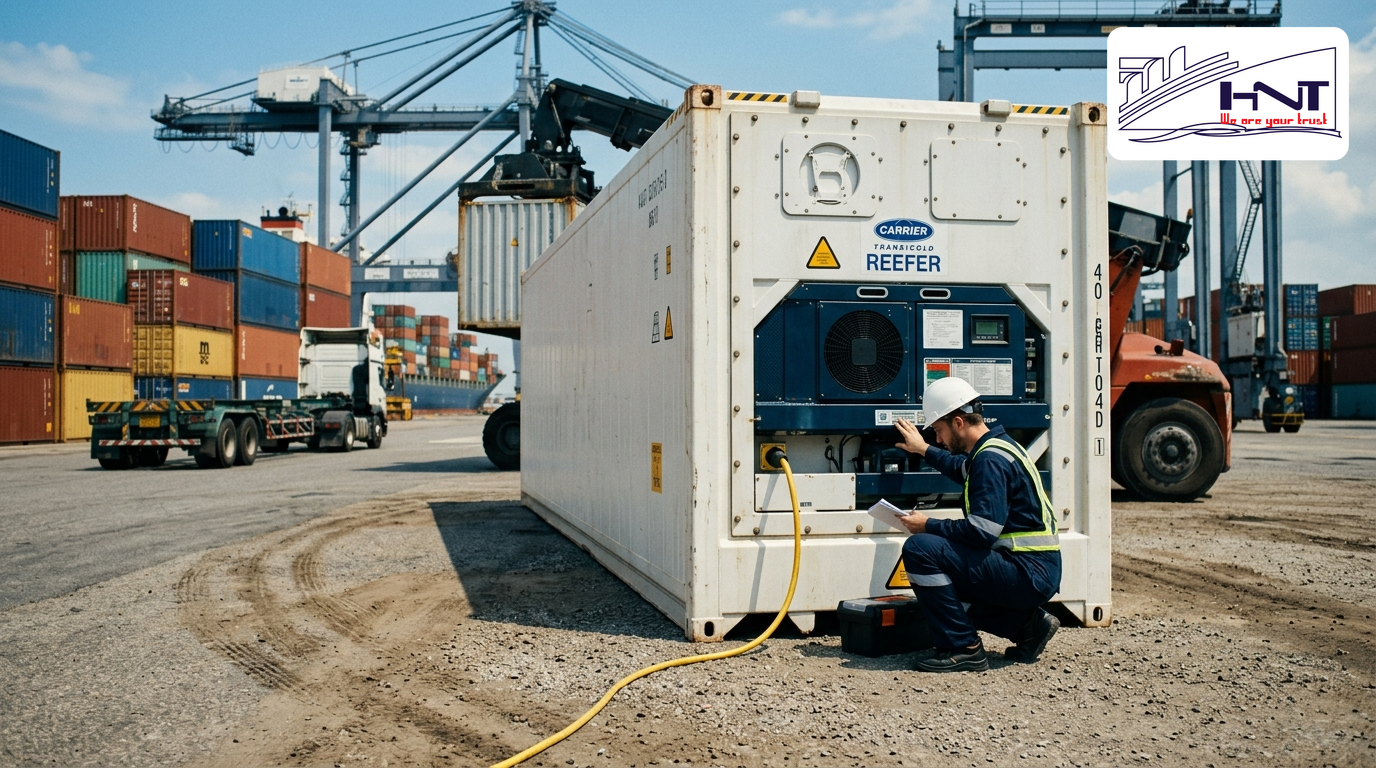
- Container rental costs depend on whether the container is 20-foot, 40-foot, or 40-foot high-cube, as well as its condition and rental period.
- FCL road container haulage fees vary according to the empty container pickup point, loading location, distance, and factory access conditions.
- Refrigeration electricity charges at depots or ports apply when containers need to be plugged in before vessel loading.
- Waiting fees can increase rapidly if the warehouse is not ready, documents are incomplete, or quarantine inspections take longer than expected.
- Peak-season surcharges arise when refrigerated containers are in short supply or shipping lines tighten container release schedules.
| Cost item | When it occurs | Control method | Impact |
|---|---|---|---|
| Refrigerated container rental | From the time of container pickup | Confirm the actual usage period | Directly affects refrigerated container rental rates |
| FCL haulage | Empty pickup, cargo loading, port delivery | Optimize one-way scheduling | Determines domestic transportation costs |
| Depot electricity | Refrigerated container plugging at the port | Deliver close to the vessel cutoff time | Protect cargo temperature |
| Handling | Depots, ports, warehouses | Check the tariff schedule in advance | Easily overlooked in quotations |
| Vehicle waiting | Warehouse or port congestion | Prepare cargo and documentation | Can generate significant additional costs |
For example, Mekong Xanh Fruit Company in Tien Giang rented a 40-foot high-cube refrigerated container to load 23 tons of dragon fruit for shipment to Shanghai. By moving the loading schedule from the afternoon to the morning, the company reduced truck waiting time by eight hours and saved approximately 7% in domestic transportation costs.
In another case, Minh Hai Seafood Factory in Ca Mau used a 40-foot refrigerated container to transport frozen shrimp to Hai Phong Port before exporting it to Long Beach. By arranging depot electricity in advance and maintaining temperature records, the shipment remained consistently at -18°C. A practical tip is to compare refrigerated container rental rates and request an itemized cost breakdown before approving the trucking order.
Factors That Increase or Decrease Reefer Container Rental Prices
Refrigerated container rental rates increase significantly when loading takes longer, routes include multiple toll stations, or trucks must wait for quarantine inspections. Conversely, costs can be reduced when shippers confirm cargo volumes early, provide clear warehouse addresses, and avoid last-minute changes to port delivery schedules.
How Should You Read a Reefer Container Quotation?
A good refrigerated container quotation must clearly specify service conditions, not just the unit price. Buyers should ask whether the quoted rental rate includes the tractor-trailer, fuel, road tolls, lifting and handling, electricity, and complimentary waiting time. HNT LOGISTICS recommends comparing quotations under an identical set of conditions to avoid choosing an option that is only cheaper on paper.

- Confirm the container type, required temperature, rental duration, and empty container pickup location before requesting a quotation.
- Request separate charges for container rental, transportation, port services, refrigeration electricity, and seasonal surcharges.
- Check the complimentary waiting period at the warehouse, as fruit shipments often require weighing and quality inspections.
- Verify the vessel loading cutoff, documentation cutoff, and quarantine inspection schedule before delivering the container to the port.
- Clearly specify liability in cases of refrigeration unit failure, depot power outages, or temperature deviations.
| Item to check | Verification questions | Risks if ignored | Recommended action |
|---|---|---|---|
| Unit Price | Which fees are included? | Artificially low quotation | Request an itemized cost breakdown |
| Duration | How long is the complimentary waiting period? | Unexpected warehouse charges | Obtain written commitments |
| Temperature | Which cargo is the temperature setting designed for? | Cargo damage or complaints | Record it on the transport order |
| Documentation | Who handles declarations and submits the documents? | Customs clearance delay | Use customs brokerage services |
| Liability | How are incidents handled? | Cost dispute | Specify compensation thresholds |
For example, An Phu Fruit and Vegetable Company in Lam Dong once received three quotations for the same route to Cat Lai Port. The lowest refrigerated container rental quotation excluded depot electricity and waiting fees. After standardizing the service conditions, the mid-priced option turned out to be 5,2% cheaper.
A second example is Song Hau Cold Storage Company in Can Tho. Since the company needed six hours to load pangasius, it requested a clearly defined complimentary waiting period and a refrigeration unit inspection before the container entered the warehouse. As a result, refrigerated container rental costs did not increase due to waiting fees, even though the quarantine sampling process took longer than expected.
Essential Items to Include in a Refrigerated Container Quotation
The most important item is the operating conditions. Refrigerated containers must be inspected before departure, their refrigeration units must be test-run, the temperature must be configured, and the container must be sealed after loading. If these items are missing from the quotation, buyers should request clarification before confirming the order.
Refrigerated Container Rental Rates for Refrigerated Container Rental Services by Cargo Type
Refrigerated container rental services must begin with an assessment of the cargo's characteristics. Fresh fruit requires ventilation and stable humidity. Frozen seafood requires low temperatures. Pharmaceuticals and processed foods require strict monitoring records. Therefore, refrigerated container rental rates must be linked to technical specifications, not just container capacity.
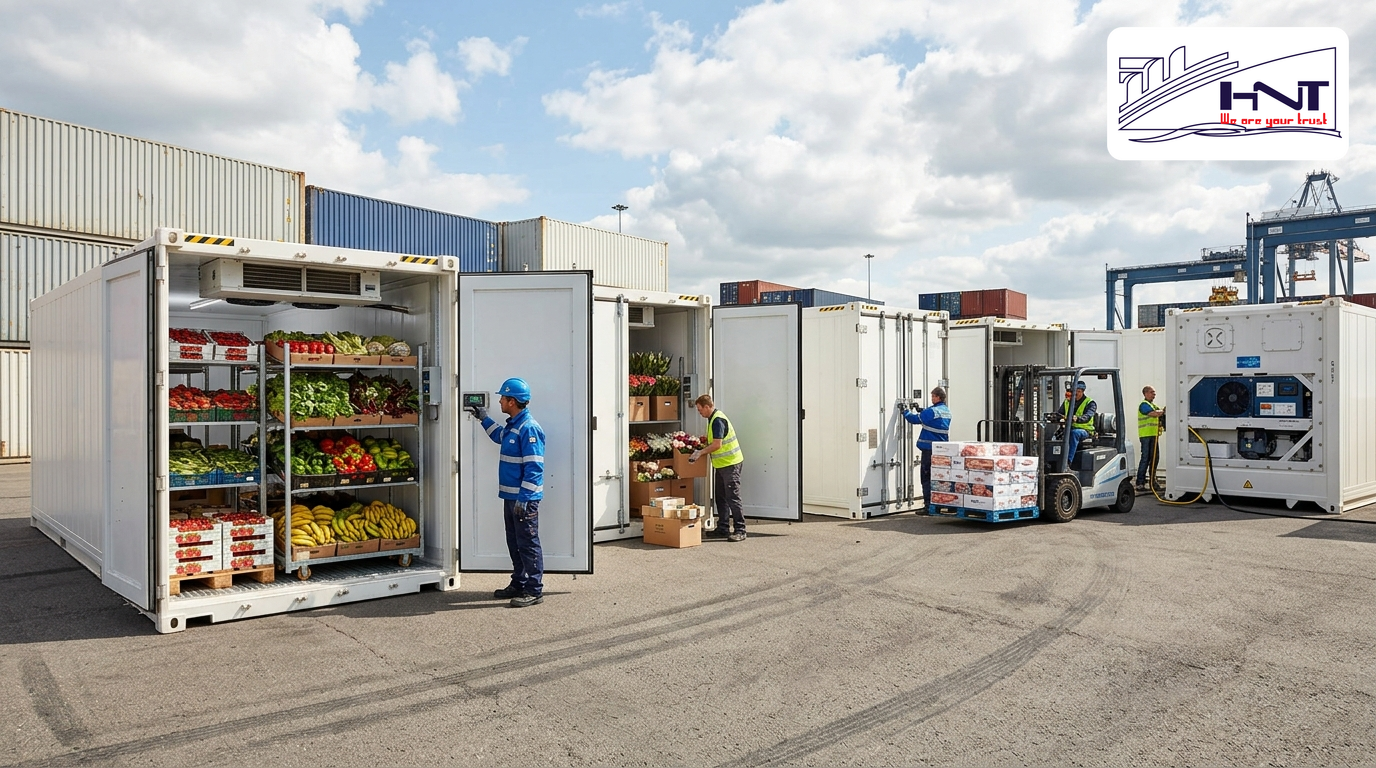
- Fresh fruit requires temperature settings based on the variety, ripeness, and expected transportation time.
- Frozen seafood generally requires temperatures of -18°C or lower to maintain commercial quality.
- Chilled cargo requires protection against temperature fluctuations, especially when trucks are waiting at warehouses or port depots.
- Cargo requiring ventilation needs its air vents checked, as incorrect settings can cause condensation.
- High-value cargo should be equipped with independent temperature data loggers to support complaint resolution.
| Group of goods | Reference temperature | Technical considerations | Main risks |
|---|---|---|---|
| Fresh durian | 13 to 15 degrees C | Ventilation control | Rapid ripening, strong odors |
| Dragon Fruit | 5 to 8°C | Prevent cold shock | Skin discoloration, moisture loss |
| Frozen shrimp | Negative 18 degrees Celsius | Load only fully frozen cargo | Refreezing reduces product value |
| Pangasius fillet | Minus 20°C | Check core temperature | Liquid leakage, complaints |
| Processed food | 0 to 4°C | Continuous temperature monitoring | Safety standard deviations |
Goods subject to specialized inspections must satisfy the relevant requirements before customs clearance. Customs authorities will only release the goods after receiving satisfactory inspection results. This is particularly important for refrigerated cargo because a one-day delay can increase depot electricity charges and push up refrigerated container rental rates.
For durian exports to China, managing growing area codes and packing facility codes remains an important operational requirement. China approved an additional 829 growing area codes and 131 packing facility codes for Vietnamese durians in 2026, demonstrating increasingly stringent traceability requirements.
For example, Tan Phu Durian Cooperative in Dak Lak used a 40-foot high-cube refrigerated container set at 14°C on the Dak Lak–Cat Lai Port–Shanghai route. By standardizing its growing area codes before the loading date, the company avoided extending the container rental period and shortened document processing time by 10 hours.
Another example is Bac Lieu Silver Sea Food Company, which transported frozen clams to Singapore. By installing independent temperature sensors, the company was able to demonstrate stable temperatures throughout the entire route. The practical takeaway is to calculate refrigerated container rental rates based on the cargo first, and only then compare rental quotations.
Refrigerated Container Dimensions and Temperature Settings
Refrigerated container dimensions should be checked against pallet sizes, payload capacity, and airflow requirements. If cargo is stacked too close to the walls, even reasonable refrigerated container rental rates cannot guarantee product quality because cold air will not circulate evenly. In such cases, a container operating at the correct temperature can still damage cargo near the doors.
Refrigerated Container Rental Rates for FCL Road Container Haulage
FCL road container haulage is one of the most common sources of additional costs in refrigerated container rental rates. The main causes include truck scheduling, empty container pickup locations, truck restrictions, waiting times, and port entry orders. Based on HNT LOGISTICS' experience, shippers should finalize trucking schedules at least one business day before cargo loading.
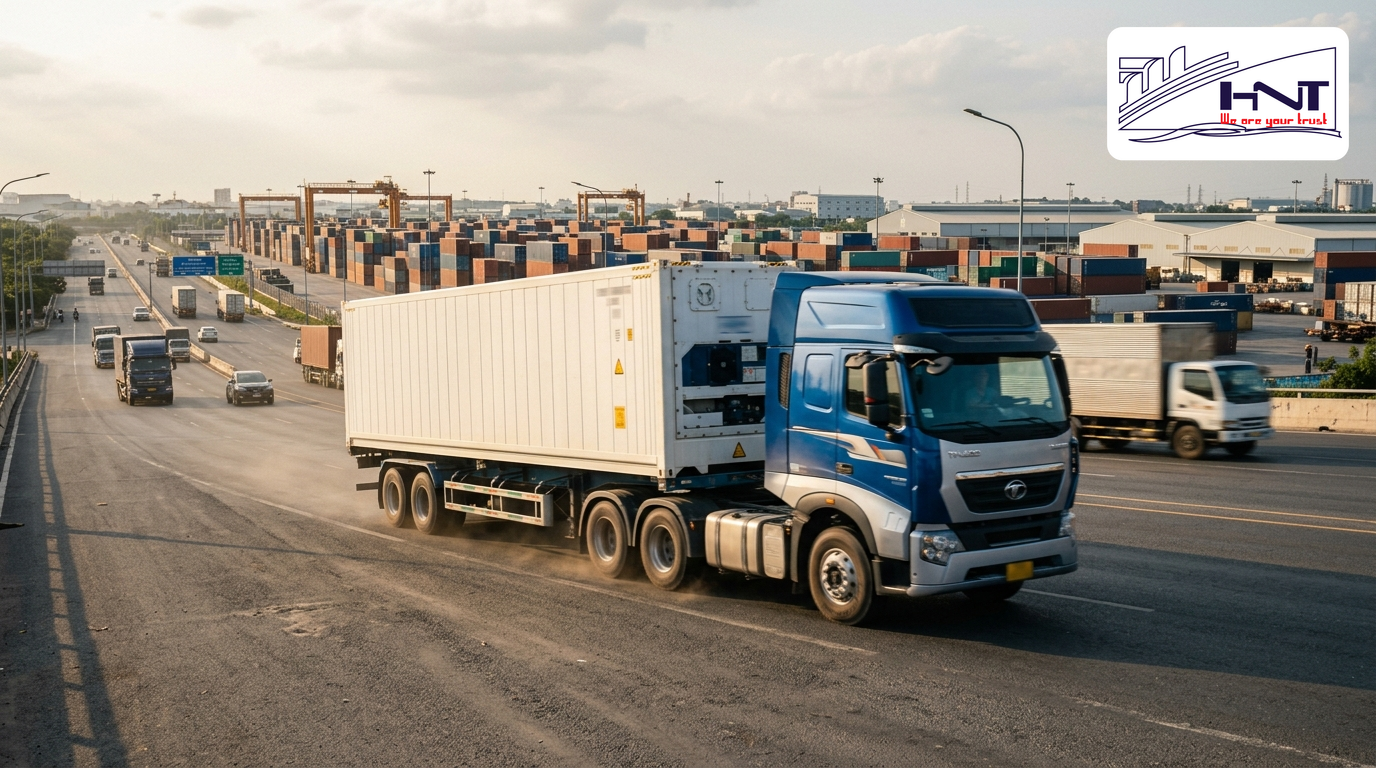
- Choose an empty container depot close to the warehouse or port to reduce empty truck mileage.
- Check truck restrictions in Ho Chi Minh City, Binh Duong, and Dong Nai before dispatching vehicles.
- Schedule container lifting at warehouses with sufficient turning space, electrical outlets, and sealing personnel.
- Confirm the delivery time to Cat Lai Port or Hai Phong Port based on the shipping line's vessel loading cutoff.
- Allow for weather conditions, ferry congestion, road traffic, and quarantine inspections to avoid missing the vessel schedule.
| Haulage route | Suitable types of goods | Control point | Cost-saving tips |
|---|---|---|---|
| Tien Giang – Cat Lai Port | Dragon fruit, mangoes | Warehouse entry time | Load in the morning, deliver in the afternoon |
| Ca Mau – Cat Lai Port | Frozen shrimp | Refrigerated container power connection point | Divide shifts between drivers |
| Binh Duong – Cat Lai Port | Processed food | Truck Restriction Hours | Schedule overnight transportation |
| Da Nang – Hai Phong Port | Refrigerated cargo from North Central Vietnam | Long-distance transportation | Check fuel levels |
| Can Tho – Cat Lai Port | Pangasius fillet | Waiting time | Prepare documents in advance |
Tan Cang – Cat Lai Port has a designated area for refrigerated containers, so shippers must arrange delivery orders and power connections accurately. Delivering containers too early increases electricity charges, while delivering them too late can result in missed vessel loading cutoffs.
For example, Nam Binh Food Company in Binh Duong transported a 40-foot refrigerated container to Cat Lai Port for a shipment of sausages destined for Japan. By switching to an overnight trucking schedule, the company reduced travel time by 90 minutes and avoided an additional round of waiting at the port gate.
Another example is Dat Mui Seafood Company in Ca Mau, which assigned two drivers to transport a shrimp shipment to Cat Lai Port. The truck maintained continuous transit, reducing the risk of temperature deviations caused by extended stops. A practical tip is to never separate refrigerated container rental quotations from the FCL haulage plan.
North–South Refrigerated Container Transportation Plan
North–South refrigerated container transportation is suitable when cargo needs to be consolidated from Southern Vietnam for shipment through Hai Phong Port, or transported from Northern Vietnam to processing factories. Long-distance routes require stricter checks of fuel levels, refrigeration units, stopping points, and temperature records than shorter routes.
Refrigerated Container Rental Rates and Customs Clearance Documents to Prepare
Refrigerated container rental rates will increase if documents contain errors or specialized inspections take longer than expected. For export shipments, businesses generally need a commercial invoice, packing list, contract, Bill of Lading (B/L), Certificate of Origin (C/O), and quarantine certificate if required by the destination market.
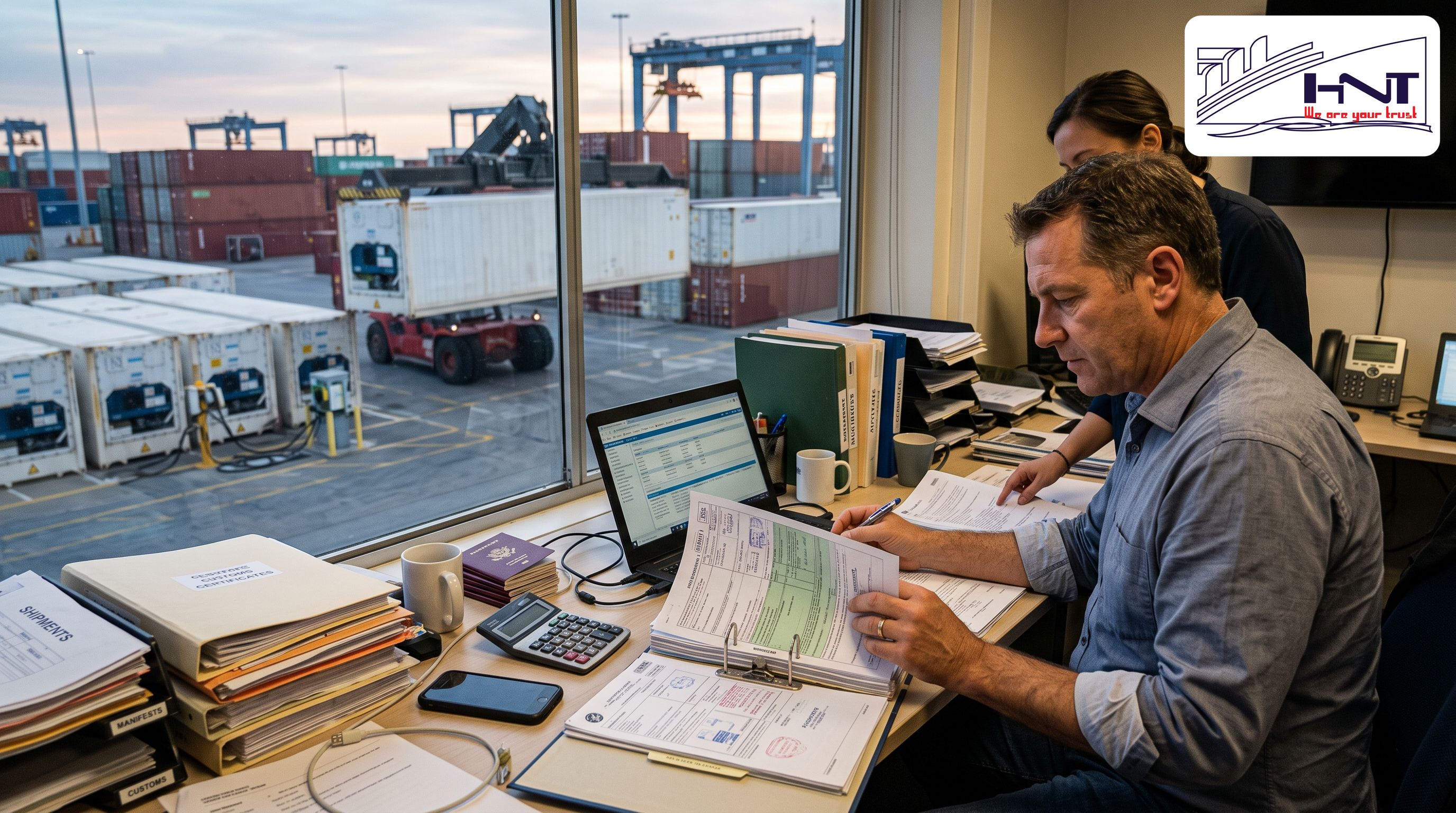
- Check the HS Code, product regulations, and quarantine requirements before booking a container.
- Prepare a packing list that matches the number of packages, weight, temperature, and pallet specifications.
- Register for phytosanitary or veterinary inspections according to the relevant export cargo category.
- Verify Bill of Lading details against the buyer's information, destination port, container number, and seal number.
- Keep temperature records, loading photos, and refrigeration unit test reports to support complaint resolution.
| Documentation | Applicable to | Preparation time | Common errors |
|---|---|---|---|
| Commercial invoice | All export shipments | Before customs declaration | Incorrect FOB or CIF Terms |
| Packing | Palletized cargo | Before loading goods | Package discrepancy |
| Certificate of origin | Markets with preferential trade agreements | Before Bill of Lading issuance | Incorrect origin criteria |
| Inspection certificate | Agricultural products, seafood | Before customs clearance | Missing growing area code |
| Temperature log | High-value refrigerated cargo | Throughout journey | No independent data available |
Regarding procedures, Decree 167/2026/ND-CP amended regulations relating to customs procedures, inspection, and supervision of goods exported and imported on the spot. Shippers should review their documentation obligations if shipments involve processing, export manufacturing, or specialized domestic delivery arrangements.
For example, Phu Quoc Spice Company exported chilled fish sauce to the United States in a 20-foot container. By preparing its Certificate of Origin and checking product labels in advance, the company saved one day of document corrections. This significantly reduced depot electricity costs.
A second example involves Hoa Loc Sand Mango Company in Dong Thap, which lacked information about its packing facility code. The shipment had to wait while additional documents were submitted before customs clearance. The company subsequently developed a checklist of import and export documents for each destination market.
Documentation Checklist Before Port Delivery
Before delivering a container to the port, the person in charge should check the container number, seal number, temperature setting, product codes, and quarantine documents. According to experts at HNT LOGISTICS, these checks should be completed before the truck leaves the warehouse, as correcting errors at the port is generally more expensive than resolving them at the warehouse.
Refrigerated Container Rental Rates Amid Fluctuating Ocean Freight Rates
Refrigerated container rental rates are indirectly affected by ocean freight rates, vessel schedules, and container availability. When international freight rates increase, shipping lines often prioritize more profitable routes. Agricultural exporters should book space earlier, especially for shipments to the United States, China, and Europe.
- Monitor ocean freight indices to anticipate when peak-season surcharges may appear.
- Book vessel space early for refrigerated cargo because the number of refrigerated power outlets on ships is always limited.
- Compare direct and transshipment routes to balance transit time and costs.
- Prepare alternative port arrangements when Cat Lai Port or Hai Phong Port becomes congested.
- Negotiate Demurrage and Detention charges before accepting the booking.
| Market situation | Impact on refrigerated cargo | Recommended response | Prioritize |
|---|---|---|---|
| Ocean freight rates increase | Bookings become more difficult | Book early | Maintain vessel schedule |
| Refrigerated container shortages | Refrigerated container rental rates increase | Confirm cargo volumes early | Secure container availability |
| Transshipment port congestion | Risk of delayed ETA | Choose a reliable route | Maintain quality |
| Fuel surcharge | Haulage costs increase | Consolidate shipments efficiently | Control budget |
| Bad weather | Delayed port delivery | Allow an additional day | Avoid missing the vessel |
On August 20, 2026, the World Container Index increased by 4% to USD 4,526 per 40-foot container, mainly driven by higher rates on trans-Pacific routes. This data reminds shippers that domestic transportation costs should be secured early when ocean freight markets are volatile.
For example, An Giang Cold Rice Company shipped lightly chilled organic rice to Los Angeles through Cat Lai Port. By booking 12 days in advance, the company secured refrigerated power capacity on the vessel and avoided a change to the transshipment route.
Another example is Cao Nguyen Banana Company in Gia Lai, which selected the Cat Lai Port–Shanghai route during peak season. By allowing an additional day for depot refrigeration and inspecting the container beforehand, the shipment maintained the required temperature even after the vessel schedule was postponed.
When Should You Confirm Refrigerated Container Rental Rates?
Businesses should confirm refrigerated container rental rates as soon as they have a cargo loading plan, an estimated vessel schedule, and reasonably confirmed shipment volumes. For seasonal cargo, the ideal time is usually 5 to 10 days before loading. The objective is to secure the container, truck, and refrigerated power connection.
Conclusion: Optimize Refrigerated Container Rental Rates Through Operational Planning
Refrigerated container rental rates can only be optimized when businesses manage containers, trucking, temperature, documentation, and vessel schedules together. A low rental rate that excludes electricity, waiting fees, or incident management responsibilities may ultimately cost more than a comprehensive quotation. Therefore, refrigerated container rental rates should be viewed as part of an operational plan, not simply as a line-item price.
- Request quotations under identical conditions to accurately compare actual costs between suppliers.
- Inspect refrigerated containers before loading, including the refrigeration unit, container body, floor, and air vents.
- Confirm FCL trucking schedules early to reduce waiting time, avoid truck restrictions, and meet port delivery deadlines.
- Prepare quarantine, origin, and shipping documents before the container leaves the warehouse.
- Monitor ocean freight rates, refrigerated container availability, and port schedules during peak export seasons.
- Use temperature data loggers for high-value cargo or shipments subject to strict complaint and verification requirements.
As exports of agricultural products, seafood, and fresh fruit continue to grow, businesses need a partner who understands both pricing and operations. HNT LOGISTICS supports Vietnamese exporters nationwide by optimizing refrigerated container rental rates, refrigerated container rentals, FCL road haulage, and safe cold-chain coordination for every shipment. As a professional transportation provider, HNT LOGISTICS is committed to delivering comprehensive supply chain solutions, helping Vietnamese businesses confidently conquer global markets. Contact us today at 8A Hoang Minh Giam, Ho Chi Minh City or via the marketing email at hntshipping.com for quotation support!