A container shipment can travel a long way by sea at a low unit cost, but if the empty container pickup, yard drop-off, vessel waiting, cargo collection from the port or delivery to the factory is delayed, total logistics costs can rise sharply through yard storage, container demurrage, truck waiting and production disruption. That is why multimodal transportation sea-road transport is not simply joining two legs of carriage, but the challenge of designing the entire cargo journey under a single coordinating point.
For import-export businesses, the cheapest freight rate on each leg does not necessarily produce the lowest total cost. A sound solution must simultaneously account for vessel schedules, cut-off times, container haulage capacity, empty container pick-up and return locations, free-time limits, customs clearance capacity, the warehouse's ability to receive cargo and risks arising at the port. HNT Logistics approaches multimodal transport services on that logic: optimising the whole journey rather than each link in isolation.
This article covers everything from the concept and contract structure to operating procedures, reefer containers, plant quarantine and cost control experience. Technical specifications and legal regulations are presented as practical references; businesses should verify documents, routes, cargo types and the requirements of the import market at the time of implementation.
What Is Multimodal Transport? An Overview of Combined Sea and Road Solutions in Logistics
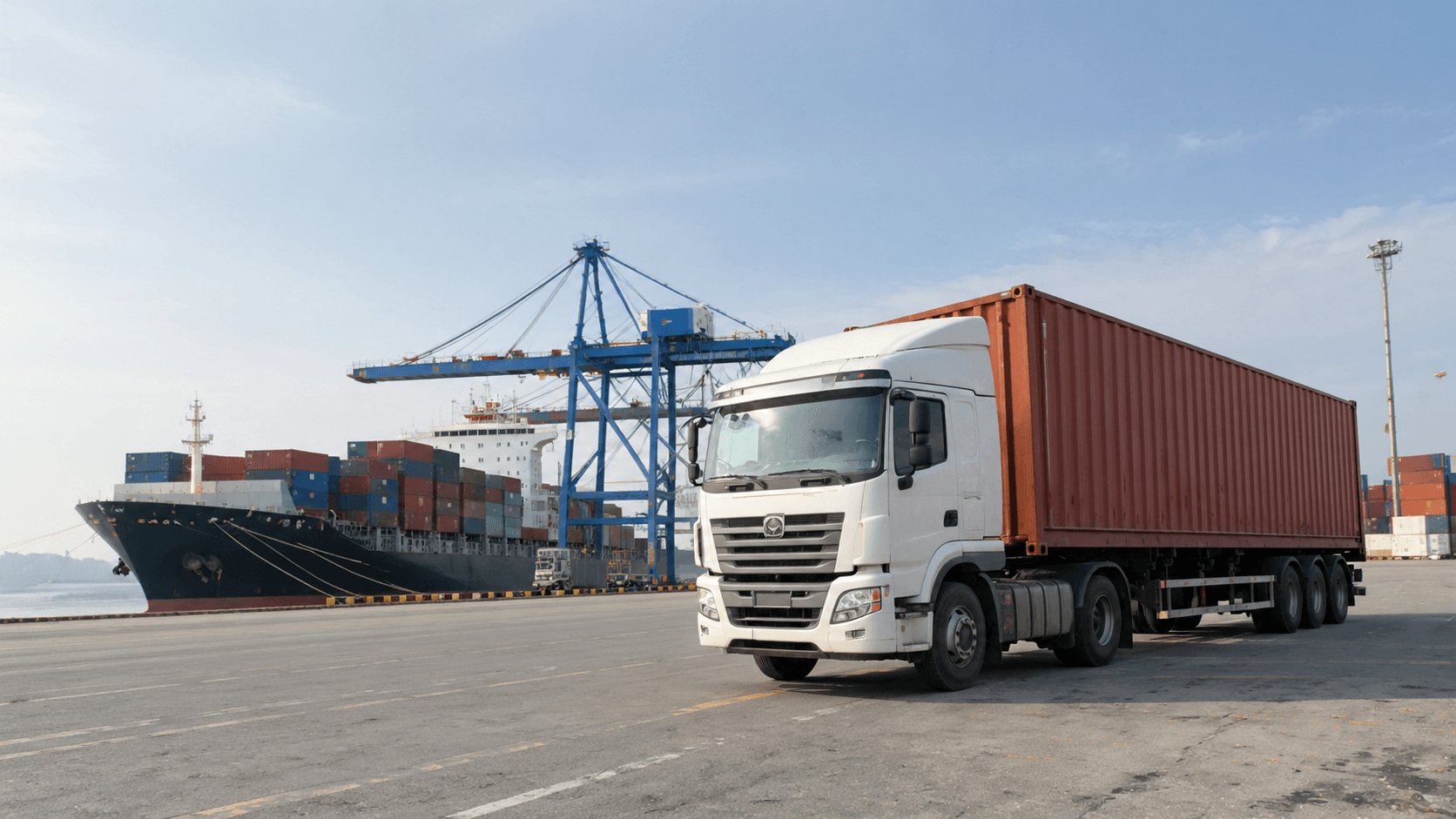
The concept of multimodal transport and how it differs from intermodal transport
Under the Vietnamese legal framework, multimodal transport means carrying goods by at least two different modes of transport on the basis of a single multimodal transport contract. The core point lies not in how many legs the cargo travels, but in the fact that the entire process is organised as one unified chain of responsibility from the place of receipt to the place of delivery. The consolidated 2026 text continues to build on the foundations of Decree 87/2009/NĐ-CP and related amending documents.
Concept intermodal transport in international practice, the emphasis is often on a single transport unit, especially a container, being moved continuously across several modes such as sea vessels, trucks or rail, with minimal direct handling of the cargo. The two terms overlap but should not be treated as fully identical legal concepts. For businesses, the more important questions are who bears end-to-end responsibility, who controls the schedule, and where the point of contact is when losses occur.
For example, an FCL container is picked up empty from a depot in Ho Chi Minh City, stuffed at a factory in Binh Duong, hauled to Cat Lai, shipped by vessel to Hai Phong and then delivered by truck to a warehouse in Bac Ninh. If the business has to sign and separately manage individual contracts with a southern trucking company, a shipping line and a northern trucking company, that is a fragmented coordination model. If a single provider designs, contracts for and takes responsibility for the entire journey under an appropriate structure, the governance has shifted to multimodal transport.
Structure of multimodal transport: one contract, several transport modes, one point of management
The structure of “one contract, multiple modes, one point of contact” helps businesses reduce the number of parties they must coordinate. A multimodal transport operator may perform some legs directly and hire actual carriers for the remaining legs, but must still organise cargo flow, documents and responsibilities according to the contract it has committed to. This is the key difference between buying several transport services and buying one integrated logistics solution.
In operations, the managing party must connect at least four data layers: the shipment's commercial information, sea transport data, road haulage scheduling data and customs document data. If any one of the four layers is out of sync, the risk spreads across the entire chain. For example, if a vessel changes its schedule but the truck plan is not updated, waiting charges may arise; a container yarded before its documents are complete may incur extra storage days; a reefer plugged in late may affect quality even when the vessel schedule is still on time.
Therefore, businesses should request multimodal quotations that clearly state the scope of responsibility: pick-up and delivery points, container type, port route, expected schedule, free-time conditions, costs included and excluded, document obligations, procedures for additional charges and the contact point for incident reporting. This turns a logistics quote from a simple price list into a risk management tool.
Why multimodal transport is becoming the optimal supply chain trend in Vietnam
Vietnam's geography stretches along a north-south axis, production is concentrated around industrial zones and the major port clusters play a large role, creating suitable conditions for combining sea and road transport. Ships suit long legs and large volumes; trucks handle door-level access. When the two modes are matched to the right schedule, businesses can avoid long-distance road haulage for the whole journey while retaining flexibility on the first and last legs.
This trend also stems from the need to manage total cost. Logistics costs include not only freight but also capital tied up in inventory, waiting times, container and yard storage charges, port surcharges, truck waiting fees and the risk of late delivery. A sea-road option with a longer transit time than a direct truck across Vietnam may still be suitable where the cargo is not time-sensitive and total cost is lower. Conversely, cargo needed on the production line immediately may be better served by road transport despite higher freight.
For multimodal transport in Vietnam, so the optimisation challenge means there is no single right route for every shipment. Businesses need to group cargo by value, weight, seasonality, urgency, temperature sensitivity and the stability of their production plan. HNT Logistics typically builds solutions based on total cost to the delivery point, rather than comparing only sea freight against truck rates.
The role of containers in connecting sea transport, road transport and the warehouse and yard system
A container is the physical link that makes multimodal transport work efficiently. Cargo is packed and sealed at the point of origin; the container can then move from the truck chassis to the port yard, onto the vessel, off at the destination port and back onto a truck without the goods being unloaded individually at each change of mode. This reduces handling, lowers the risk of loss and shortens transfer times.
For FCL, choosing the right 20-foot, 40-foot, 40-foot high cube or reefer container depends on both volume and weight. Heavy but compact cargo may reach the weight limit before the volume is full; light but bulky cargo may reach the space limit first. Beyond the container's technical specifications, the actual working payload must also fit the road vehicle's limits, bridge and road load regulations, the warehouse's lifting capacity and the shipping line's VGM requirements.
For reefer containers, the container is not just a storage unit but part of the cold chain. The set-point temperature, core cargo temperature before stuffing, ventilation, humidity, how the cargo is loaded, power interruption time during yard moves and the power supply at the port all affect quality. A well-functioning reefer container cannot compensate for cargo that was not pre-cooled properly or for loading that is packed so tightly it blocks airflow.
Sea-Road Multimodal Transport Process at HNT Logistics, From the Port to the Delivery Point
Step 1: Receive shipment information and build a multi-leg transport plan
The first step should not start with asking “how much is the freight”, but with fully defining the characteristics of the cargo. HNT Logistics needs to know the commodity name, expected HS code, pick-up and delivery locations, weight, number of packages, container type, temperature requirements if any, the date the cargo will be ready, the port of loading, the port of discharge, the Incoterms conditions and document requirements. For agricultural products, additional information is needed on the growing area, packing facility, quarantine requirements and the import market.
From this data, the operations team builds a leg-by-leg plan: picking up the empty container, stuffing, hauling to the port, gate procedures and yard drop-off, the sea leg, collecting the container at the destination port, hauling to the warehouse, unloading the cargo and returning the empty. Each milestone needs to be tied to a cut-off time, free-time limit, buffer time and a responsible person. This is the part that determines the ability to control total cost of multimodal transport services.
On high-frequency routes, businesses should split the plan into a baseline schedule and a contingency scenario. For example, if a vessel is rolled or its ETA changes, the coordination team must know whether the container will stay in the yard, whether the truck plan needs to change, how much free time remains and whether the warehouse receiving schedule or the production line is affected. Designing the contingency in advance is far cheaper than handling an incident after charges have already accrued.
Step 2: Ship containers by sea through Cat Lai and Hai Phong ports and connect to domestic routes
In the southern region, Cat Lai is the key connection point between container truck flows from Ho Chi Minh City, Binh Duong, Dong Nai, Long An and the shipping network. In the north, the Hai Phong cluster includes operating areas such as Dinh Vu, Tan Vu and Lach Huyen, enabling connections to Hai Phong, Hai Duong, Bac Ninh, Bac Giang, Hung Yen and neighbouring provinces. Port selection should not rely on sea freight alone but must consider the trucking distance at both ends and the actual port operating schedule.
In domestic north-south transport, sea freight typically performs best for FCL shipments with a stable plan, cargo that is not extremely urgent and sufficient volume. Businesses need to account for cut-off, vessel waiting time, sailing time, discharge time and the ability to collect cargo at the destination port. Looking only at the published “transit time” and ignoring both port ends often leads to an underestimate of the total lead time.
When HNT organises container trucking from Hai Phong port, synchronisation between the vessel ETA, customs clearance status, delivery orders, local charges and the factory's receiving window is decisive. A truck arriving too early causes waiting; arriving too late may miss the delivery slot or incur yard storage charges. For this reason, truck dispatch must follow the container's status, not just the expected ETA.
Step 3: Dispatch container trucks to deliver cargo to the factory warehouse
The road leg is the most flexible part but also the easiest place for costs to arise if the warehouse and port schedules do not match. Dispatch must confirm the truck type, suitable chassis, payload, container pick-up time, the warehouse's receiving hours, factory gate rules for vehicles and the ability to unload quickly. For warehouses with long unloading times, a container drop-off option or the use of a trailer for waiting may need to be planned in advance.
For import cargo, before a truck enters the port, check the delivery order status, customs clearance status, any charges that must be settled, the empty container return depot and the free detention deadline. For export cargo, control the booking, the empty container release depot, the SI/VGM cut-off required by the shipping line, the yard drop-off cut-off and the seal status. A small change to the booking can trigger a change of depot or terminal, so the truck plan must be updated immediately.
Operational experience shows that truck optimisation is not just about choosing the cheapest carrier. The fleet must have capacity in the right area, drivers familiar with the port, a fast response when gate congestion occurs, complete handover documentation and compliance with payload rules. For long north-south or inter-provincial routes, additional planning is needed for drivers, rest stops, fuel and temperature assurance if reefer containers use a generator set.
Step 4: Control documents, container status and delivery progress throughout the entire journey
A multimodal shipment needs a control mechanism for operational milestones from the moment the booking is received until the empty container is returned. The statuses to track include empty release, empty pick-up, stuffing, sealing, yard drop-off, loading onto the vessel, vessel sailing, updated ETA, vessel discharge, customs clearance, container pick-up, warehouse delivery, cargo unloading and empty return. When each milestone carries a timestamp, the business has a basis for analysing the cause if charges arise.
Container condition should also be recorded with photographs at the pick-up and delivery points. Dents, holes, wet floors, damaged door gaskets, unusual odours or refrigeration units showing faults must be identified before stuffing. For reefer containers, record the set-point, displayed temperature, times of plug-in and unplug, seal numbers and monitoring data where the service allows. This is an important layer of evidence when disputes arise over cargo quality.
At the management level, HNT should standardise exception reporting rather than only reporting normal status. Businesses need to know early when a vessel is late, a container has not been discharged, a customs declaration has been diverted to another channel, a truck cannot enter the port or reefer cargo shows abnormal temperatures. The value of a professional logistics partner lies in detecting problems early and proposing options before an incident turns into a major cost.
Multimodal Transport in Vietnam: A Cost-Optimised Solution for Import-Export Businesses
Factors affecting the cost of sea-road multimodal transport
Total cost is not limited to sea freight and truck rates. Businesses need to add the THC or port handling charges as structured in the quotation, lifting charges, documentation fees, seal fees, container pick-up or return fees at the depot, road and bridge tolls, fuel surcharges, waiting charges, yard storage charges, demurrage, detention and specialist procedure costs. For reefer cargo there are also reefer power, generator set and possibly temperature inspection or PTI charges depending on the case.
Time directly affects cost. A shipment with 7 days of free time that takes 5 days to complete documentation has only a 2-day safety margin. If the weekend, a public holiday or the factory does not accept cargo, the container may exceed its free time even though the initial freight rate was very good. Therefore, when comparing quotations, convert them to total landed logistics cost for the same scope of service.
Peak seasons and container imbalances also cause unit rates to fluctuate. When equipment is short, the depot releasing empties may be further from the stuffing point than expected, increasing haulage distance. Similarly, if the destination port requires empties to be returned to a depot far from the factory, last-leg costs will rise. HNT needs to check both the empty release end and the empty return end before finalising the plan, not only the port-to-port rate.
How to combine low-cost sea freight with flexible road transport
The basic principle is to use sea freight for the long, stable, high-volume sections of the journey, and road transport for the first and last miles where flexibility to the warehouse address is needed. This structure suits businesses that can plan a few days ahead and do not require very urgent time-specific delivery. For cargo that must be delivered within 24–48 hours on the north-south corridor, full road transport is usually more practical despite higher cost.
To combine these effectively, the outbound truck schedule must be worked backwards from the port cut-off, while the inbound truck schedule must be worked forwards from the vessel's actual ETA and discharge status. This planning approach avoids two common mistakes: outbound trucks arriving at the factory too early and increasing container holding time, or inbound trucks being dispatched before the cargo is ready for collection. The optimum lies in schedule alignment, not only in the rate of each leg.
Businesses with steady volumes can build a fixed weekly schedule: stuffing day, target vessel, expected pick-up day and warehouse receiving slot. When volumes fluctuate, an overflow option by road should be in place. This two-tier model keeps average costs low while still providing a tool to respond when demand spikes or a vessel is rolled.
Optimising FCL containers, reefer containers and transport schedules
For dry FCL, container selection should be based on cargo density. Heavy cargo such as raw materials, metals or bagged chemicals may suit a 20-foot container because it reaches the weight limit before the volume is full. Light, bulky cargo such as furniture, packaging or some consumer goods usually needs a 40-foot or 40-foot high cube container. Simulate pallet loading, door dimensions and internal height before placing the booking.
For reefer cargo, optimisation is not just about choosing a 20RF or 40HC RF. The operations team must control the cargo's pre-cooling temperature, set-point, ventilation, humidity where required, loading pattern and the time from cold store to port. The reefer systems of major shipping lines can maintain deep temperature ranges, but equipment capability does not mean every product should be set to the same temperature; each agricultural product has different post-harvest physiology.
The schedule must leave buffer time for quarantine, specialist inspection or X-ray screening. For fresh agricultural exports, waiting time affects not only charges but also shelf life. Therefore, the quarantine schedule should be tied to the container stuffing date and vessel sailing, avoiding certificates being issued too early before the cargo is ready or so late that the container misses cut-off.
Experience in choosing the right route to reduce logistics costs
The best route is usually not the one with the lowest sea freight, but the one with a reasonable total trucking distance, stable vessel frequency and enough free time for the operating model. A factory close to a minor port that requires multiple transhipments may cost more than trucking further to a port with a direct service. At minimum, compare total cost, lead time, variability and the ability to handle exceptions.
For domestic routes, businesses should calculate cost per tonne or per pallet delivered to the destination warehouse rather than per container. Two options with the same container rate but different volume utilisation will produce very different unit costs. Optimising packing, pallet configuration and the number of SKUs per container often delivers more sustainable savings than forcing a small reduction in the transport unit rate.
For businesses with regular flows through the north, container trucking from Hai Phong port should be designed together with the empty return plan and the reverse truck direction. Where inbound and outbound flows can be combined, or empty running distance can be reduced, transport efficiency improves. This is an area where a coordinating provider with volume data and a truck network typically has a clearer advantage than booking each trip individually.
Comparison Table of Multimodal Transport Options and Common Container Specifications
Comparison table: sea-road transport, single-mode road transport and air freight
The table below is intended as a guide for selection and does not replace a quotation for a specific route. Actual speed and cost depend on distance, season, vessel schedule, pick-up and delivery points and the nature of the cargo. For the same shipment, businesses should request three options with the same door-to-door scope to avoid misleading comparisons.
| Criteria | Sea + road multimodal | Road only, single mode | Air + road |
|---|---|---|---|
| Unit cost | Typically low for FCL and long legs | Medium to high depending on distance | Highest |
| Speed | Medium, depending on vessel schedule and port | Faster on direct domestic routes | Fastest for long legs |
| Suitable volume | Large, stable, containerised cargo | Flexible from small trucks to full loads | Small, high-value, urgent |
| Transshipment risk | Low if the container is kept intact but dependent on port | Few transhipment points | Multiple security and airport handling steps |
| Door-to-door capability | High when combined with truck haulage | Incabable | Requires road legs at both ends |
| Most suitable | Planned FCL, raw materials, finished goods, reefer cargo | Cargo needing flexibility and speed domestically | Samples, urgent parts, high-value goods |
Specifications of 20-foot and 40-foot dry containers and reefer containers in cargo transport
The container specifications below are reference figures from the shipping line's equipment and may differ depending on the manufacturer or container series. Where cargo is close to the height, weight or volume limits, businesses must verify the actual container dimensions before stuffing. Hapag-Lloyd also notes that dimensions may vary by manufacturer.
| Type of Container | Reference internal dimensions (L x W x H) | Reference volume | Reference maximum payload | Application |
|---|---|---|---|---|
| 20′ Dry | 5.900 x 2.352 x 2.395 mm | 33.2 m³ | 28.130 kg | Heavy, compact, standard FCL |
| 40′ Dry | 12.032 x 2.352 x 2.395 mm | 67.7 m³ | 28.750 kg | Bulky cargo |
| 40′ High Cube Dry | 12.032 x 2.350 x 2.700 mm | 76.3 m³ | 28.600 kg | Light, bulky cargo that needs extra height |
| 20′ Reefer | 5.450 x 2.280 x 2.159 mm | 28.1 m³ | 29.140 kg | Food, agricultural produce, temperature-controlled cargo |
| 40′ High Cube Reefer | 11.599 x 2.290 x 2.425 mm | 67.7 m³ | 29.580 kg | Large-volume chilled cargo |
Operational notes: The maximum technical payload of a container is not always the payload permitted on the road. The working load must simultaneously meet vehicle limits, road and bridge limits, axle load distribution, VGM, lifting capacity and the shipping line's requirements. This is a point to check before a business optimises containers on a fill-to-the-brim basis.
Reefer container storage temperature table for export agricultural products
The temperatures below are post-harvest reference points, not mandatory set-points for every shipment. Variety, ripeness, transit time, packaging, ventilation and the import market's protocols may change the configuration. UC Davis recommends around 10°C for red dragon fruit, around 13°C for mature green mango and around 13–15°C for fresh durian; frozen durian exported to China has separate processing requirements and core temperature maintenance under the Protocol.
| Item | Reference temperature | Humidity / relative conditions | Operational notes |
|---|---|---|---|
| Fresh durian | Around 13–15°C | Ripeness and appropriate ventilation must be controlled | Do not set the temperature too low if there is a risk of chilling injury; check market requirements |
| Red dragon fruit | Around 10°C | Reference RH 85–90% | Avoid dehydration, bruising and condensation |
| Mature green mango | Around 13°C | Depends on variety and ripeness | Avoid chilling injury; do not load warm produce |
| Frozen durian exported to China | Core temperature maintained at -18°C or lower after freezing, as required | The Protocol specifies the freezing process applied beforehand | Must strictly comply with the Protocol and traceability records |
Reefer containers are there to maintain cargo temperature; they are not fast-freezing equipment for large volumes of warm product. For fresh fruit, the cargo must be post-harvest treated and brought to the appropriate temperature before stuffing. Loading must leave a return-air path, not exceed the load line and not cover the T-floor channels; if airflow is blocked, the unit's displayed temperature may be correct but the temperature within the cargo will be uneven.
Cost breakdown by factor: ocean freight, port charges, container haulage and related procedures
A fixed price list should not be published for multimodal transport, because prices fluctuate by route, shipping line, season, depot, fuel and pick-up and delivery timing. The table below is more suitable for budgeting purposes: it identifies each cost component, its unit of measure and the factors that cause additional charges. When receiving a quotation, businesses can use this table to check whether the scope is complete.
| Cost group | Common units | Factors Affecting Costs | Risks to be controlled |
|---|---|---|---|
| Sea freight | USD per container or VND per container | Route, season, shipping line, container type, surcharges | GRI, peak season, schedule changes, roll |
| Port/terminal charges | Per container/per handling | Port, terminal, equipment type | Yard storage, additional lifts, terminal change |
| Container haulage | VND per trip or by distance/zone | Distance, payload, waiting time, road and bridge tolls | Warehouse waiting, port waiting, empty running, depot change |
| Container charges | Per day or per occurrence | Free time, container type, shipping line | Demurrage, detention, cleaning/repair |
| Refrigerated | Per day/hour/leg | Reefer power, genset, PTI, temperature | Power outage, inspection waiting, prolonged plug-in time |
| Customs and documents | According to the declaration/shipment | Type of declaration, number of cargo lines, records | Channel diversion, declaration amendments, missing licence |
| Quarantine/specialist inspection | Per shipment/records/regulation | Commodity, market, inspection method | Sampling, additional treatment, waiting for results |
When HNT quotes, businesses should request a clear separation between the “included” items and the “charged as incurred” items. This avoids misunderstanding between base freight and total cost. Items that cannot be fixed in advance, such as yard storage caused by a customer's delayed documentation, should have clearly defined calculation rules, a start point for charging and evidence for reconciliation.
Multimodal Transport Service Combined with Customs, Quarantine and Agricultural Export
Customs declaration and cargo clearance process within the multimodal transport chain
Customs is not an independent step at the end of the chain; it must be prepared from the moment the transport plan is built. Businesses need to determine the import/export category, HS code, commodity policy, customs value, origin and any licence or specialist inspection required. Commercial documents must be consistent across the contract, invoice, packing list, bill of lading and customs declaration; discrepancies in commodity name, quantity or weight can slow progress.
As at September 2026, businesses should cross-check the Customs Law and the current implementing documents, including Circular 38/2015/TT-BTC as amended by several documents, including Circular 39/2018/TT-BTC and Circular 121/2026/TT-BTC effective from 01/02/2026. Therefore, regulations of customs authorities must be checked according to the declaration type and timing of the declaration; a fixed, old checklist should not be used for every shipment.
For C/O, businesses must determine from the outset which agreement the shipment is claiming preferences under, the origin criteria applied, the documents proving raw material origin and the appropriate issuing authority or system. Wrong form, wrong criteria or C/O data that does not match the invoice, bill of lading and declaration can lead to loss of tariff preferences in the importing country. For this reason, C/O services should be handled in parallel with the export document set, not reviewed only after the vessel has sailed.
Operationally, the typical sequence includes checking commodity policy, standardising the document set, submitting electronic data, receiving the risk-channel result, fulfilling tax obligations or inspection requests, completing customs clearance and coordinating container pick-up or drop-off. If physical inspection is required, the trucking fleet and warehouse must be notified to adjust the schedule, especially for reefers, where container opening time and cold loss must be limited.
Plant quarantine procedures for durian, dragon fruit, mango and other fresh agricultural products
For plant-origin cargo, businesses must first determine whether the product is subject to quarantine and what specific requirements the importing country imposes. The competent authority currently publishes the procedure for issuing phytosanitary certificates for export/re-export and market requirements on the system of the Plant Protection Department. Actual documentation must follow the product, the destination country and the currently effective protocol.
On the National Public Service Portal, the procedure for issuing a phytosanitary certificate for export/re-export currently requires one set of documents, including the phytosanitary registration form in the prescribed format; the stated processing time is 24 hours for direct submission. This is an administrative procedure milestone and should not be understood as a commitment that every agricultural shipment will be completed within 24 hours, as actual time still depends on whether the shipment meets requirements, inspection schedules and the importing country's specific requirements.
For fresh durian exported to China, requirements go beyond the quarantine certificate alone. The growing area and packing facility must be on the registration system, approved under bilateral requirements and ensure traceability. The Protocol also sets requirements for pest inspection and conditions for the shipment before export. This is why businesses should check the growing area code and packing facility code at the purchasing stage, not wait until the container stuffing date.
For dragon fruit and mango, businesses must also check the list of permitted markets, requirements on growing area, packing, quarantine and food safety at the time of export. Requirements may change according to the protocol and notices of the importing country. Do not extrapolate the durian process to other fruits; each commodity may have its own list of pests, treatments and traceability conditions.
On operational scheduling, quarantine must be aligned with the harvest, primary processing, packing and container schedules. If sampling or inspection identifies an issue, handling time may cause the cut-off to be missed. HNT must build in time buffers and clearly define who is responsible for preparing the cargo for inspection, who provides growing area records, who books the quarantine authority and who updates the trucking team on results.
Reefer container solutions that keep cargo quality intact throughout the journey
A cold chain is only effective when temperature is controlled continuously from before stuffing. Post-harvest fruit still respires and generates heat; if warm cargo is loaded into a container with the expectation that the refrigeration unit will rapidly pull the entire load down to set-point, the cooling time may be far too long. Businesses need pre-cooling carried out under an appropriate procedure, core temperature checks on sample units, and should only stuff once the cargo meets the required conditions.
The container must be inspected for cleanliness, odour, gaskets, floor, evaporator and PTI status if required. When stuffing, cartons must be arranged in a pattern that allows cold air to pass under the floor, up through the cargo and back to the evaporator; do not load above the red load line. For cargo that requires ventilation, fresh air exchange settings must follow the product requirements and technical guidance, and should not be set to maximum arbitrarily, as this may increase heat load and moisture loss.
During the road leg, if the reefer must run continuously, an appropriate genset source is required. At the port, the timing of plug-in must be controlled and alarms monitored. On warehouse delivery, the receiving team should record the displayed temperature, seal and packaging condition before opening the container. This process creates a continuous chain of evidence from the origin warehouse to the receiving warehouse, which is especially important for high-value agricultural produce.
Controlling document risks and port waiting times for import-export cargo
Most unusual costs at the destination port arise from three groups: documents not ready, vessel schedule changes and mismatched truck-warehouse coordination. Businesses should set internal deadlines earlier than the shipping line's deadlines; for example, SI, VGM, invoice, packing list, C/O or phytosanitary certificate should not be left until just before cut-off. Each document must have a clear owner and status.
For import cargo, track the arrival notice, delivery order, local charges, customs declaration status and free time in parallel. For export cargo, check booking revisions, because a change of vessel may bring a new cut-off. HNT should send exception alerts based on milestones such as “hours left until cut-off” or “days of free time remaining”, instead of sending only generic status updates.
From a legal standpoint for sea transport and port operations, businesses should also monitor the guidance of the Vietnam Maritime and Inland Waterway Administration, an agency under the Ministry of Construction under the 2026 structure. Using the correct name and governing body helps the logistics team avoid referencing outdated documents when the structure of state agencies has changed.
The Benefits of Using Professional Multimodal Transport Services
Reducing the burden of managing multiple carriers within one logistics chain
When businesses manage each leg themselves, they must track multiple quotations, multiple contracts, multiple points of contact and multiple data standards. An incident on one leg often leads to disputes over responsibility with another. A multimodal coordinating provider helps consolidate operational milestones into one shared plan, allowing the client's import-export team to focus on commercial control and cargo planning.
The greatest benefit is not fewer emails but a smaller gap in responsibility. When a vessel is late, trucks cannot treat it as “the shipping line's problem”; when a warehouse changes its schedule, the sea team must know in order to adjust container pick-up. A single coordinating party responsible for the chain has the incentive to optimise the whole chain rather than only its own part.
Improving tracking, cargo safety control and delivery schedule visibility
Professional multimodal transport should create a “single source of truth timeline” for each shipment. Planned and actual milestones are continuously compared to detect delays. When the data is sound, businesses can measure on-time delivery rate, port dwell time, container days used, rate of additional charges and root causes. This is the foundation for optimising the supply chain based on data rather than perception.
Cargo safety also improves when responsibility for container inspection, seals, photos and handover documents is standardised. For reefer cargo, temperature data and plug-in times help isolate the cause if a claim arises. For dry cargo, photographs of the container before and after stuffing help prove the condition of the equipment and the lashing arrangement at the time of handover.
Flexibly expanding the Vietnam – Laos – China transport route with through-transport solutions
When a business expands into Laos or China, a multimodal mindset helps design routes that are more flexible than relying on a single mode. Depending on the origin and destination, cargo may combine cross-border road transport with seaports, ICDs, transit warehouses or domestic legs in the destination country. This structure is particularly useful when a business needs to balance time, border-crossing capacity and cost.
International through-transport routes require additional control over vehicle documents, cargo documents, border crossing rules, commodity policies and cross-border delivery conditions. Businesses should not assume the procedure is “the same as a domestic route but with one more border gate”. Each corridor has its own requirements and changes with policy; a good plan should be re-checked before each shipment.
Boosting supply chain efficiency by connecting seaports, warehouses and factories
When the port, depot, trucking fleet and factory are viewed as a single system, businesses can reduce the time containers sit idle. For example, the stuffing schedule can be adjusted to the empty release window; the receiving schedule can be tied to the time the container is discharged; the warehouse can arrange unloading staff based on the actual ETA. Every hour of reduced waiting improves equipment turnover and reduces charge risk.
On a larger scale, multimodal data helps businesses decide warehouse locations, safety stock levels, production schedules and distribution strategy. A route with a cheap rate but high volatility may force a business to hold larger inventory. Therefore, logistics optimisation must consider both transport cost and inventory cost. This is the supply chain thinking that HNT Logistics aims for when designing solutions for import-export clients.
Frequently Asked Questions (FAQ) About Sea-Road Multimodal Transport
This section focuses on four questions that businesses typically need to answer before deciding to move from booking each leg separately to an integrated service.
Frequently Asked Questions (FAQ)
What is multimodal transport, and which businesses should use it?
Q: What is multimodal transport and which businesses should use it?
A: Multimodal transport is a form of carriage using at least two different modes of transport on the basis of a single multimodal transport contract. The model suits businesses with FCL shipments, raw material imports, finished goods exports, north-south cargo, reefer cargo or shipments that need to connect a port with a factory. Businesses with steady volumes that want to reduce the number of coordinating parties usually gain the clearest governance benefits.
Does multimodal transport save more costs than traditional transport?
Q: Does multimodal transport save costs compared with traditional transport?
A: It can, but not every route is cheaper. Sea-road transport generally has an advantage on long legs and for FCL when the business accepts a longer lead time than road transport. Actual savings must be calculated on total cost, including freight, port charges, container haulage, yard storage, demurrage/detention, waiting charges and inventory costs. HNT Logistics should compare options on the same door-to-door scope before making a recommendation.
Which types of cargo are suitable for sea-road multimodal transport?
Q: Which types of cargo are suitable for sea-road multimodal transport?
A: Suitable groups include production raw materials, consumer goods, machinery, palletised goods, FCL cargo, reefer cargo and agricultural products whose schedule can be controlled. Extremely urgent, very high-value but low-volume cargo may be better suited to air freight. Dangerous goods, oversized cargo or cargo requiring special licences can still be organised as multimodal transport, but equipment and procedures must be designed separately.
Which services does HNT Logistics provide for container transport and customs clearance?
Q: Which services does HNT Logistics provide during container transport and customs clearance?
A: Depending on the service scope agreed with the client, HNT Logistics can organise FCL container transport by sea and road, container pick-up at Cat Lai and the Hai Phong port cluster, north-south transport, reefer container transport, customs declaration, C/O support, plant quarantine and Vietnam – Laos – China through-transport routes. The specific scope must be confirmed for each shipment, according to commercial terms and market requirements.
Conclusion: effective multimodal transport is not created by randomly combining one vessel sailing with one truck trip. Businesses need an end-to-end design covering the route, equipment, schedule, documents, free time, truck arrangements, warehouse conditions and exception scenarios. When these links are managed in a unified way, costs become more predictable, the risk of late delivery falls and the supply chain becomes more flexible.
HNT Logistics support businesses in building a plan multimodal transportation according to the characteristics of the cargo and the actual delivery point, from FCL containers and reefer containers to customs, C/O, quarantine and international through-transport. To receive a plan and quotation for a specific route, contact HNT Logistics today!