


A container that has been fully packed in Binh Duong but misses the drop-off slot at Cat Lai can cause the business to incur extra costs for waiting trucks, container storage, booking changes or even a missed vessel. Therefore, the question what is fcl cargo should not be understood only as the definition of full container cargo, but must be placed within the entire chain from container selection, truck dispatch, packing, port drop-off to delivery at the destination end.
When looking into what FCL cargo is, for manufacturing, distribution or import-export businesses with stable volumes, FCL usually gives an advantage in controlling shipping schedules, reducing transshipment and being more proactive in protecting goods. However, the efficiency only appears when the shipper accurately calculates load weight, packing time, sea freight, container haulage costs, lifting charges, yard storage and other charges that may arise beyond the initial quote.
For the solution of what FCL cargo is, HNT Logistics operates FCL container shipping by sea and road, hauling containers at major port clusters such as Cat Lai and Hai Phong, and coordinating reefer containers, import-export procedures and multimodal transportation for complex delivery chains. The article below goes from the nature of FCL to the actual operating process so that businesses can read quotes correctly and control total logistics costs instead of comparing just one freight line.
What is FCL cargo? Understanding the full container model before hiring a container truck to carry cargo
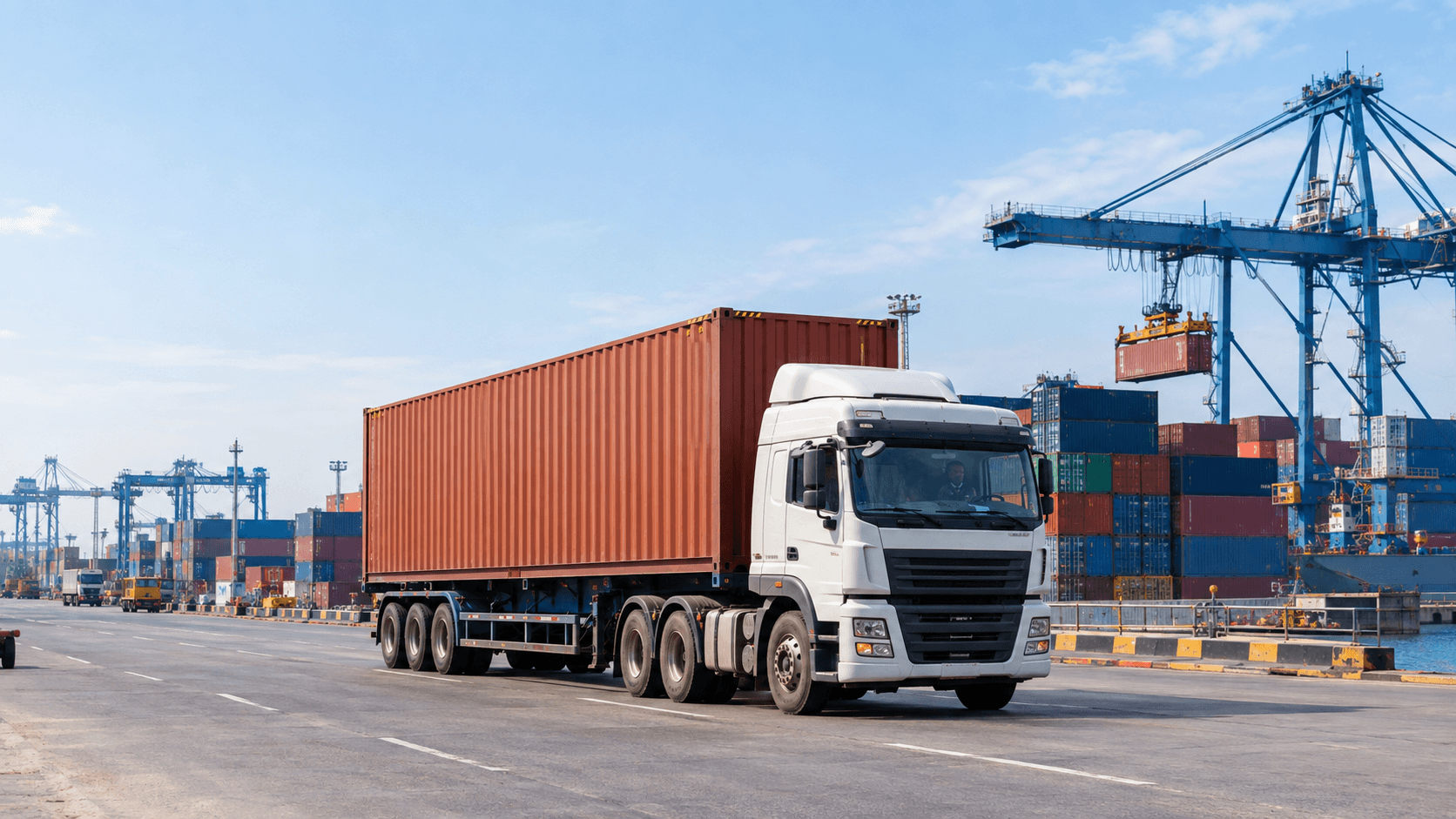
What is FCL cargo and how the full container capacity is used
What is FCL cargo? FCL stands for Full Container Load, meaning the shipper or the party booking the transport uses one container dedicated to the shipment instead of consolidating goods with several shippers as in the LCL model. The key point is that FCL describes how the container is operated; it does not mean a business must fill 100% of the volume or reach a fixed weight in kilograms before using it.
During transport and customs clearance of FCL cargo, the empty container is usually released at the depot, hauled to the warehouse for packing, sealed and then transported to the port. The container continues to travel as a single unit on the vessel to the destination port before being hauled to the receiving warehouse or unstuffed at the designated point. Reducing container openings and transshipments helps shippers better control packaging condition, quantities and the risk of loss.
How domestic sea FCL differs from international FCL and domestic container transport
To optimise the cost and schedule of what FCL cargo is, domestic sea FCL uses vessels to carry containers between ports within Vietnam, for example Hai Phong – Ho Chi Minh City or Ho Chi Minh City – Da Nang. International FCL also operates on the full-container principle but adds international booking, international bills of lading, import-export procedures and commodity policies, and may involve quarantine, C/O or specialised inspection depending on the market.
Based on the practical operating experience of HNT Logistics regarding what FCL cargo is, Domestic container transport is a broader concept than domestic sea FCL, as it can include the truck leg between depot, warehouse, port, ICD or full-route road transport. A shipment from a warehouse in Binh Duong to a factory in Hai Phong may combine truck – sea vessel – truck. In that case, the business is using FCL within a domestic transport chain with multiple modes.
When volume, cargo characteristics and delivery schedule suit FCL
When looking into what FCL cargo is, there is no mandatory threshold such as 15 tonnes, 20 tonnes or 25 CBM for a shipment to qualify for FCL. The decision should be based on total logistics cost. When the cargo volume is large enough that LCL costs plus warehouse fees, CFS charges, consolidation time and transshipment risk approach the cost of a full container, FCL is usually worth calculating even if the container is not fully utilised.
FCL is also suitable for machinery, production materials, palletised food, easily dented goods, cargo with fixed delivery schedules, or goods that the business wants to keep apart from other shipments. Refrigerated goods, fresh agricultural produce and frozen seafood usually require dedicated reefer containers, because temperature, ventilation and loading schedules must be controlled for each commodity and cannot be combined arbitrarily.
What is FCL cargo in the multimodal transport problem from warehouse to port
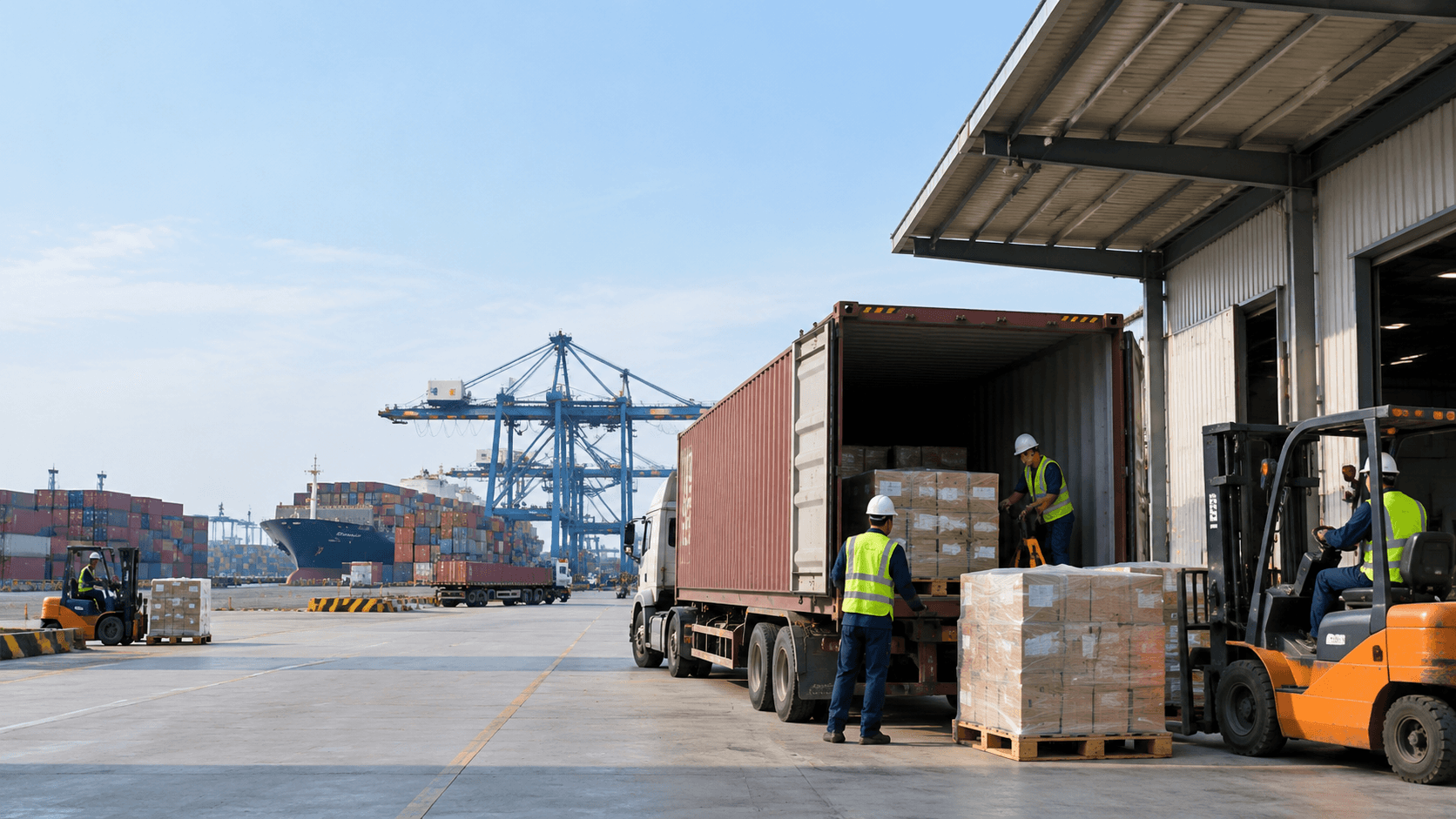
Door-to-port, port-to-port and door-to-door flows for FCL containers
With door-to-port, the logistics provider takes responsibility from the shipper's warehouse until the container is lifted at the port or the handover scope to the shipping line is completed. Port-to-port focuses on the sea leg between two ports. Door-to-door covers the entire chain from the sending warehouse to the receiving warehouse, therefore requiring simultaneous coordination of truck schedules, depot, port, vessel and tractor at the destination end.
When a business requests door-to-door, the key question is no longer how much the sea freight is, but total cost from door to door. A lower vessel freight option may be more expensive if the depot releases empty containers far from the warehouse, waiting times are long or the destination port has high haulage costs, compared with an option that has higher sea freight but a shorter and more stable operating flow.
Coordinating vessel, tractor and container yard in a single transport order
An FCL order usually links at least three schedules: the time the shipping line issues the booking and releases the container, the time the tractor picks up the empty container, loads it and drops it at the yard, and the time the port yard receives the container before the cut-off. If only one schedule changes and the other parties are not updated, the container may arrive too early, too late, or incur truck waiting charges outside the plan.
In day-to-day operations, HNT Logistics recommends locking in advance the empty pick-up depot, the packing address, the truck arrival time, the planned packing time, the drop-off port and the vessel cut-off. With multimodal transportation, managing a single coordinating point helps reduce the situation where each supplier only optimises its own part while the overall chain incurs extra costs.
Information the shipper must confirm before booking and dispatching trucks
Before requesting a booking or hiring a container truck to carry cargo, the business must accurately specify the cargo name, quantity, gross weight, volume, packaging specification, container type, pick-up and delivery address, planned packing date, together with any special requirements for temperature or lifting equipment. For heavy cargo, both the container's payload rating and the legal limit of the truck combination on the route must be checked.
For shipments related to import-export, it is advisable to also confirm the port of loading, port of discharge, delivery terms, customs clearance status, and any quarantine or specialised inspection requirements. Information missing at the booking stage usually not only makes the quote wrong but also leads to changing the container, changing the truck or revising the vessel schedule after the vehicles have already been dispatched.
What is FCL cargo when calculating freight? The cost components to control
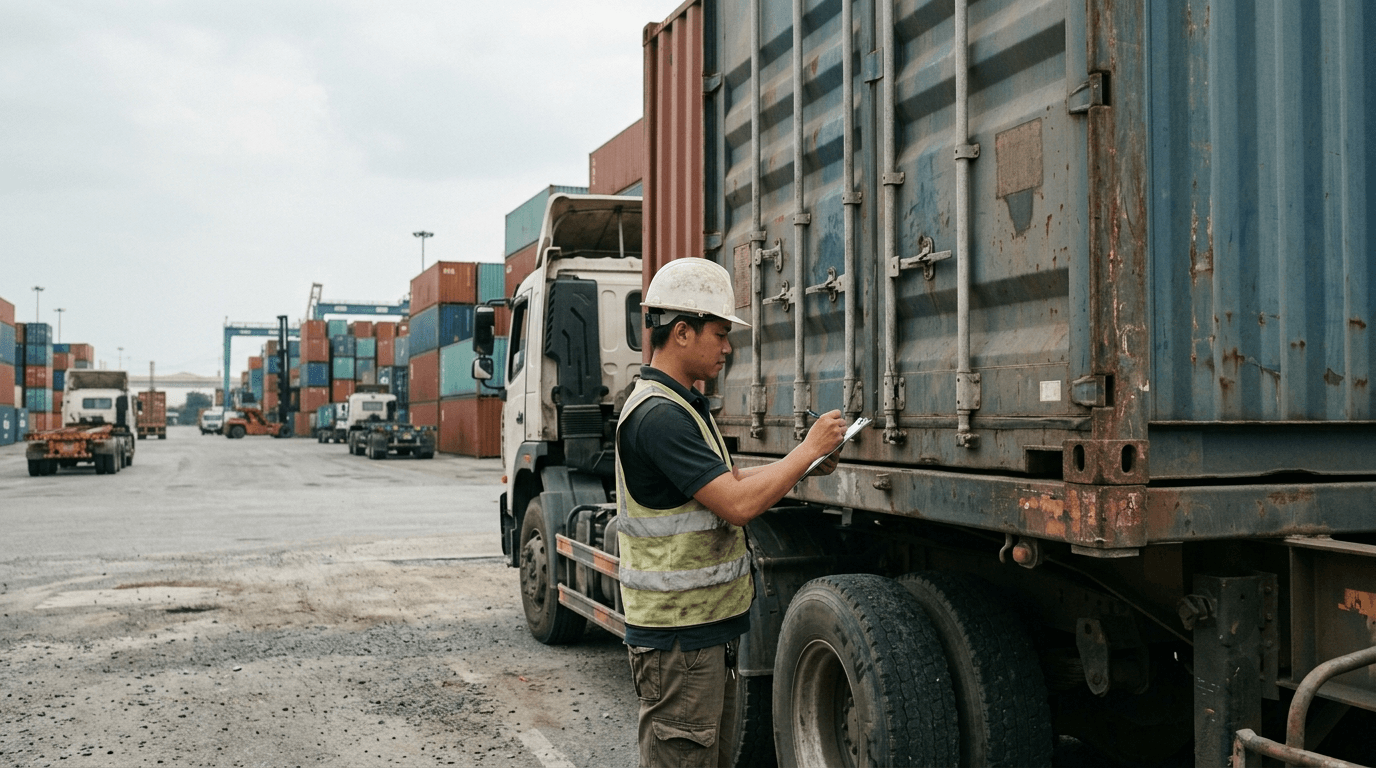
Domestic container transport rates by route, container type and distance
Domestic FCL rates should not be understood as a single unit price. On routes with a sea leg, businesses usually have to calculate sea freight per container plus truck charges at both ends. 20-foot, 40-foot, 40HC or reefer containers each carry different cost levels; reefer containers in particular are also linked to power supply, PTI, reefer fuel and the time they are plugged in at the port.
The HNT website previously published reference rates for the Hai Phong – Ho Chi Minh City route of approximately VND 6.5–8.5 million per 20GP container and VND 9.5–12.5 million per 40GP container; for the Ho Chi Minh City – Da Nang route, approximately VND 5–6.5 million for 20GP and VND 7.5–9.5 million for 40GP. These are reference figures published earlier, not a default valid quotation as at 2026; rates must be reconfirmed according to the vessel schedule, shipping line and booking date.
Costs of hiring a container truck, road tolls, lifting charges and related surcharges
When hiring a container truck, truck quotes usually depend on the empty pick-up depot, distance to the warehouse, drop-off port, chassis type, load capacity, BOT toll charges and the ability to turn around at the loading location. If the warehouse requires the truck to wait for many hours or loading takes place overnight, the carrier may charge additional waiting fees, parking fees or costs arising from losing the next operating cycle.
Besides the truck charge, businesses should check the container lifting fee at the depot, lifting at the warehouse if applicable, yard drop-off fee, container cleaning, container storage charges, yard storage and other charges related to order changes. For reefers there are also yard power charges and technical services. HNT notes that waiting time, the empty pick-up point and port drop-off conditions are the factors that usually make FCL haulage costs fluctuate.
Factors that cause price fluctuations: container pick-up and return times, handover points and cargo type
On the same route, the price can differ considerably if an empty container is picked up near the warehouse during office hours, compared with a case where it must be picked up at a distant depot, loaded overnight and then wait until the port's receiving hours. During peak season, shortage of containers, port gate congestion, changes to vessel schedules or vehicle restrictions on the route can also make actual costs higher than the initial quotation.
The cargo type also directly affects the price. Heavy cargo requires a suitable tractor configuration and load capacity; dangerous goods must be checked against their own transport conditions; refrigerated cargo needs a reefer unit operating stably; cargo subject to quarantine carries a risk of longer waiting times. Therefore an accurate FCL quotation must start from the cargo profile, not simply ask how much a 40-foot container costs on this route.
Specification and cost table for FCL cargo: containers, payload and transport options
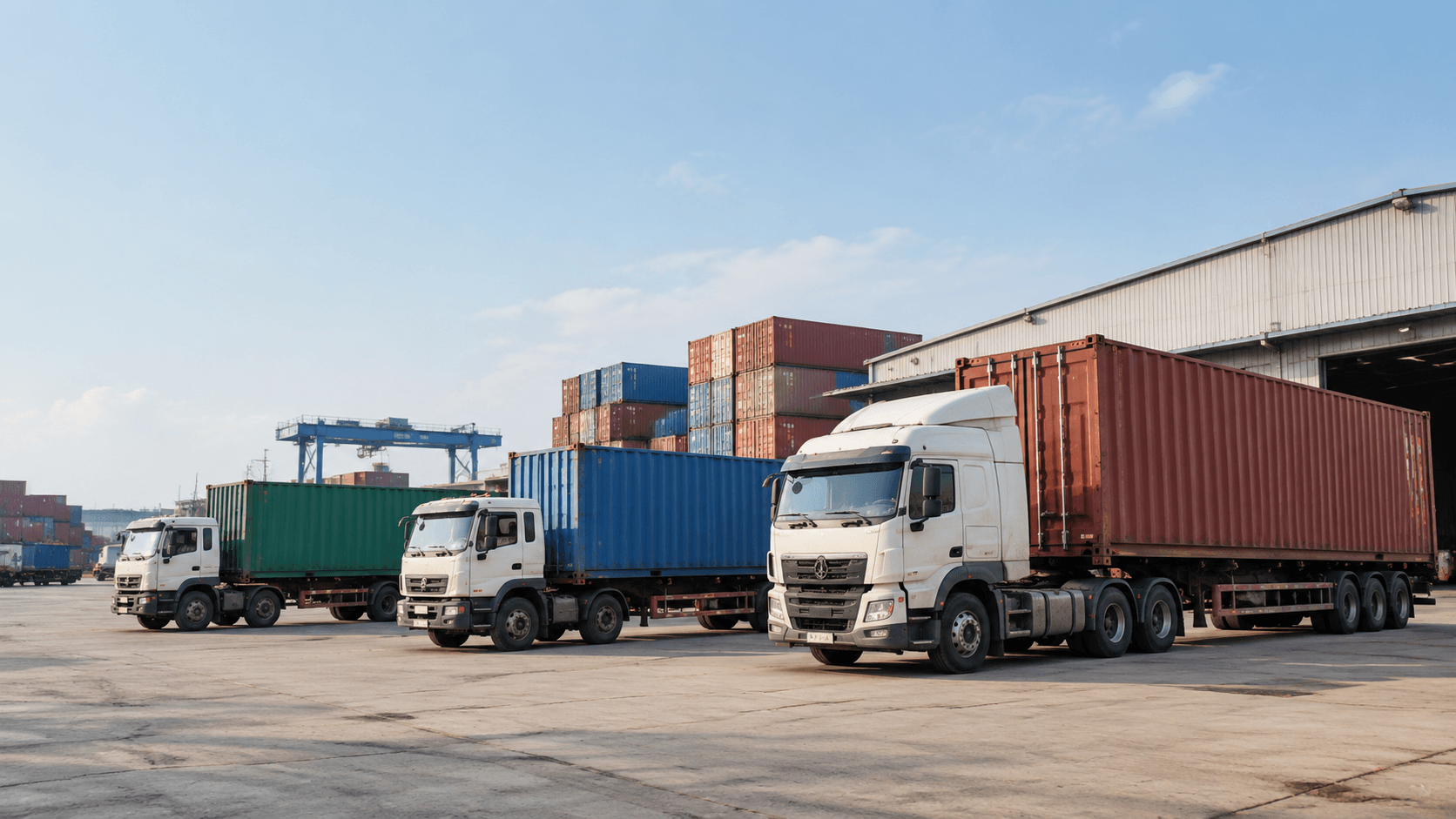
Dimensions, volume and operating payload of 20-foot and 40-foot dry containers
Actual container dimensions may differ slightly between container fleets, shipping lines and years of manufacture, so businesses must check the CSC plate and the container specifications issued before loading. The table below uses reference technical data from CMA CGM. The line also notes that the technical data is representative of the container fleet and does not commit that every container has exactly identical specifications.
| Parameters | 20 feet Standard | 40 feet Standard | 40-foot High Cube |
|---|---|---|---|
| Internal length | 5.900 mm | 12.034 mm | 12.034 mm |
| Internal width | 2.352 mm | 2.352 mm | 2.352 mm |
| Internal height | 2.393 mm | 2.395 mm | 2.700 mm |
| Nominal volume | 33.2 m³ | 67,8 m³ | 76,4 m³ |
| Maximum gross mass for reference | 30,480 kg | 30.480–32.500 kg | 30.480–32.500 kg |
| Average tare weight | 2.230 kg | 3.720 kg | 3.900 kg |
| Maximum reference payload | 28.250 kg | 26.760–28.780 kg | 26.760–28.780 kg |
The technical payload of the container shell does not mean that businesses are permitted to load exactly that amount and haul it on every route. In Vietnam, the gross mass of the truck combination, axle loads and route conditions must also comply with road traffic regulations. Circular 12/2026/TT-BXD currently regulates load, clearance limits, loading and the circulation of overloaded or oversized vehicles.
Comparison of dry and reefer containers by cargo characteristics
Dry containers suit cargo that does not require temperature control, such as packaging, components, household goods, dry raw materials or ordinary palletised goods. Reefer containers have insulated walls and an integrated refrigeration unit, suitable for frozen food, fresh produce, chilled goods or cargo groups that need to maintain a stable temperature throughout the entire journey.
| Criteria | Dry container | Refrigerated container |
|---|---|---|
| Consolidated (LTL) | No | Yes, depending on the machine configuration |
| Common cargo groups | Palletised goods, machinery, dry raw materials, FMCG | Agricultural produce, seafood, frozen food, chilled goods |
| Requirements before packing | Check the shell, floor, doors, dryness and odour | Check the shell, refrigeration unit, ventilation, set temperature and PTI where applicable |
| Specific costs | Cleaning, repairs if incurred | Yard power, refrigeration fuel, reefer technical services |
| Main risks | Moisture, shell puncture, cargo shifting | Power failure, wrong set point, obstructed airflow, temperature deviation |
According to Maersk, standard 20-foot and 40-foot High Cube reefer containers in common use can operate in a range of roughly -30°C to +30°C, while some specialised models have a wider range. This is the equipment capability, not the default temperature for every type of cargo; the set point must be determined by product, packing specification, customer requirements and storage instructions.
Cost component table for businesses budgeting FCL transport
A good budget table should break down each component rather than only recording a total container price. This helps the purchasing department identify which items are fixed, which depend on time and which can be avoided through operational management. It also makes it easier for businesses to compare two suppliers on the same scope of service, instead of choosing a low quote that omits some items.
| Cost group | Calculation basis | When they usually arise | Points to confirm |
|---|---|---|---|
| FCL sea freight | Container/route/voyage | Vessel booking | Container type, vessel schedule, quote validity period |
| Empty pick-up and truck loading | Voyage or route | Before port drop-off | Depot, distance, load, truck time |
| Destination-end truck | Voyage or route | After vessel discharge | Pick-up port, delivery warehouse, empty return time |
| Handling | Times/container | Depot, port or warehouse | Whether included in the quote |
| Road toll/BOT charges | By route | Road leg | Whether included in the quote or charged separately |
| Vehicle waiting fee | Hour or shift | Packing warehouse / waiting for port | Free waiting time |
| Container storage / yard storage | Date | Exceeding free time | Charging start point and number of free days |
| Reefer power | Hour/day | Reefer container at yard | Set point, plug-in time |
| Document fees | Set/batch | According to the scope of services | Booking, bill of lading, C/O, customs if applicable |
When an actual quote is needed, HNT Logistics should receive the same set of data, including container type, cargo name, weight, pick-up and delivery addresses, planned dates, port of loading and port of discharge, and any special requirements. Businesses can contact the hotline 096 309 78 19 or email marketing@hntshipping.com to check rates against the actual shipping schedule, instead of mechanically applying a historical price table.
What is FCL cargo in the delivery process? From packing to completing container return
Container inspection, packing planning and weight distribution
Before packing, check the floor, walls, ceiling, doors, rubber seals, signs of puncture, unusual odours and standing water. A simple check for a dry container is to close the doors in sufficiently bright conditions and observe any abnormal light leaks. If the shell does not meet requirements, record it in a report and request a replacement before the cargo is loaded.
The packing plan must be based on the weight of each pallet or each package group. Heavy goods should not be concentrated in one area, as this may create localised load, affect the container floor and distribute load unevenly on the chassis. Tall cargo or machinery must be checked against the container door dimensions, not only the internal dimensions, because a piece may fit inside the compartment but not pass through the door.
Sealing, documentation and handover of the container to the transport provider
After packing is complete, the shipper should check the quantity, take photos of the loading condition if needed, close the doors and affix the seal. The container number and seal number must be recorded consistently on the delivery note, transport instructions and related documents. For cargo at risk of dispute, photos of the seal before the truck leaves the warehouse are very useful operational evidence.
If the shipment only moves domestically in the ordinary way, import-export procedures do not automatically arise simply because the container travels by sea. However, cargo under customs supervision, transit cargo, cargo from special zones or shipments linked to import-export procedures must be handled in accordance with their legal status. Businesses should check the current guidance of Customs authorities before dispatching the container to the port.
Hauling containers from warehouse to port, controlling yard drop-off time and cut-off
Cut-off is an operational milestone that must be treated as a hard deadline. Businesses need to distinguish the container receiving cut-off, the documentation cut-off and the separate milestones of the shipping line or port. Trucks leaving the warehouse only close to cut-off mean that any small incident, such as traffic jams, ePort errors, re-weighing of loads or port gate congestion, can cause the business to miss the vessel.
In the Ho Chi Minh City area, the truck schedule must take into account the route, vehicle restriction hours, possible congestion around the port and the time needed for gate procedures. In Hai Phong, choosing the correct port such as Dinh Vu, Tan Vu or the Lach Huyen area is also important, because dispatching trucks to the wrong terminal can create an unnecessary additional transport leg. Port and vessel information should be checked against the notices of the shipping line and the port operator.
Tracking container status, handling incidents and confirming completion of delivery
After the container is dropped at the yard, the coordination team should confirm its receiving status rather than treating the truck leaving the port as completion. The container may be placed on hold, rolled to another voyage, moved to another vessel or require documentary adjustments. For reefer containers, both plugging in and temperature status must be checked within each party's scope of responsibility.
At the receiving end, the process should only be closed once the container has been delivered and unloaded, a condition report has been made if any damage occurred, and the empty container has been returned to the correct depot within the permitted time. Retaining the EIR, delivery receipts, seal photos, warehouse gate-in and gate-out times and empty return documents helps businesses resolve disputes on detention or shell condition quickly.
What is FCL cargo from the perspective of cargo safety and risk control
Load distribution, lashing and limiting cargo movement during transport
A container is not a sealed box that makes cargo safe by itself. When the truck accelerates, brakes or turns, the packages still bear inertial forces; on the vessel, the container also experiences rolling motion in sea conditions. Therefore pallets must be arranged in a balanced way, large gaps must be filled with suitable dunnage materials, and heavy machinery must be locked, lashed or secured according to a technical plan.
For cargo with a high centre of gravity, steel coils, industrial machinery or special packages, a single general lashing formula should not be applied. The packing party must assess the centre of gravity, the floor load-bearing points, lashing positions and the load capacity of the materials. More importantly, the technical payload of the container must be checked against current vehicle and road limits, to avoid a situation where the container complies with standards but the truck is overloaded in circulation.
Monitoring the condition of the container shell, seal, temperature and any abnormal signs
For dry containers, signs to watch include holes, bent doors, damaged seals, damp floors, chemical odours and oil stains. For reefers, besides the container shell, the refrigeration unit, power cables, air vents, T-bar floor and set-point settings must also be checked. Cargo must not block the areas needed for air circulation, because a correct set point with wrong airflow can still cause uneven temperature in the cargo.
The operating range of the refrigeration unit does not mean that it will freeze a warm product down to the required temperature during the journey. A reefer essentially maintains the environment according to its design; frozen cargo should be pre-cooled or frozen to the required standard before packing. For high-value shipments, an independent data logger helps verify temperature history if a claim arises.
The risks that commonly arise when hiring a container truck and how to prepare a response plan
When hiring a container truck to carry cargo, three common risks are: the truck arrives but the warehouse is not ready with cargo, the container does not meet quality standards, and the vessel schedule changes after the cargo has been packed. If the free waiting time and responsibility for container replacement are not clearly defined, the business may both bear truck waiting charges and spend time handling many different counterparties.
Risks that arise from overweight loads, wrong terminal address, wrong container or seal numbers, and late empty return. For refrigerated cargo, there is also the risk of power loss, a shortage of generator fuel or the wrong temperature. The effective control method is to issue a transport order with complete pick-up and delivery locations, time slots, load weights, contact numbers and an escalation plan for incidents, instead of only giving the driver one receiving address.
For maritime operations, port operating schedules and specialised regulations may change from one period to another. Businesses should check information from the shipping line, the port and Vietnam Maritime and Inland Waterway Administration when drawing up a transport plan, especially regarding changes to port operations, maritime safety or weather conditions affecting the vessel schedule.
Frequently Asked Questions (FAQ) About Domestic Sea Transport of Full Container (FCL) Cargo
What is FCL cargo and what is the minimum amount of cargo a business needs to use FCL?
Question: What is FCL cargo, and what is the minimum amount of cargo needed before a shipment can go as a full container?
Answer: FCL is a method in which one shipper uses a dedicated container for one shipment. There is no general rule requiring a certain tonnage or CBM before FCL can be used. Businesses should compare the total cost of FCL with LCL, and also consider cargo value, risk of damage, delivery schedule and the need to control the container, in order to decide.
What information must be provided to receive a quote for hiring a container truck?
Question: What information should be sent so that HNT Logistics can provide an accurate quote for hiring a container truck?
Answer: At minimum you need the container type, cargo name, gross weight, number of containers, empty pick-up depot if already known, packing address, port of discharge or delivery address, planned date and packing time. For refrigerated cargo, the temperature must be added; for heavy or special cargo, the dimensions, load weight and lifting requirements must be provided so that HNT can check suitable equipment.
Is domestic container transport rate calculated per container or per cargo weight?
Question: Is domestic container transport charged per tonne of cargo or per container?
Answer: Most FCL rates are quoted per container or per voyage, but the cargo weight still affects the ability to transport, the truck configuration and the legal permissibility of the load on the road. Therefore two containers of the same type on the same route may not have the same operating conditions if one is light while the other is close to the load limit of the vehicle combination.
What to do when a container arrives at the port but is delayed in lifting, waiting for yard space or the vessel schedule changes?
Question: The container has arrived at the port but cannot yet be lifted, or the vessel schedule has changed, so how should it be handled?
Answer: First determine where the container is, and whether the hold is caused by the port, the shipping line, documents or customs, along with the new cut-off. Then check the truck waiting cost, the possibility of moving the container to a suitable yard and the remaining free time. For reefers, the first priority is to maintain power supply and temperature during the waiting time; all changes should be confirmed in writing or through a traceable exchange.
Correctly understanding what is fcl cargo helps businesses avoid a common mistake: comparing only sea freight and ignoring costs before and after the port. A good FCL plan must solve at the same time the problems of load, container, truck, vessel schedule, free time, cargo risk and responsibility for handling when plans change.
HNT LOGISTICS support businesses in building FCL plans for domestic sea transport, domestic container haulage, container trucking, reefer containers and combined sea–road transport chains. To receive a quote matching the actual cargo type and schedule, contact HNT Logistics today!