
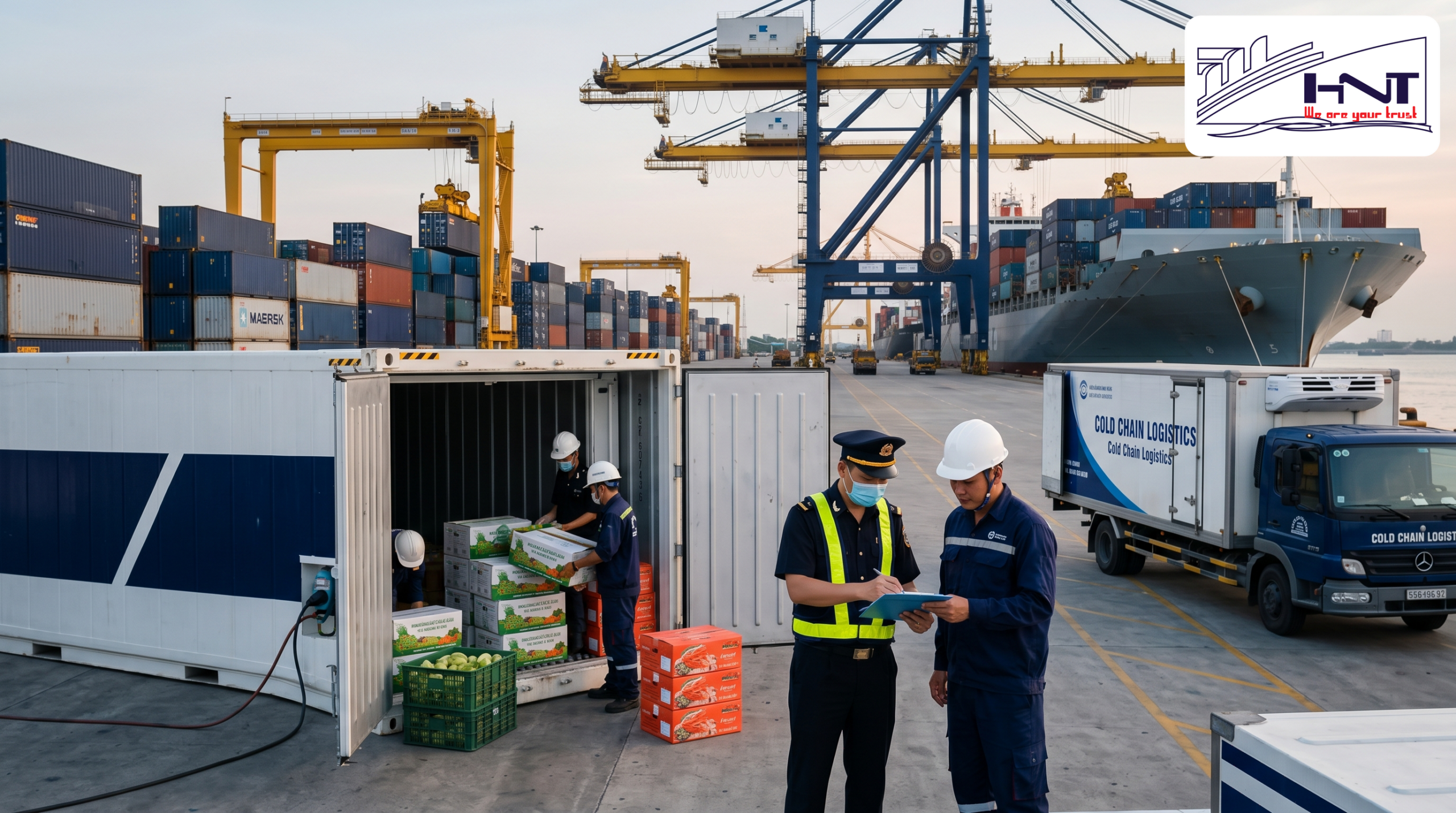
The procedure for returning cleared imported goods is becoming an urgent issue as many businesses encounter defective goods, incorrect specifications or non-conforming products after completing customs clearance.
In 2026, total import and export turnover of Vietnam is estimated at 920 billion USD, the highest level ever recorded. The strong increase in cargo volume requires stricter compliance for import and export businesses. Regulations on quarantine, traceability and post-clearance inspection are also tightened in many major markets such as the United States, EU and China.
This article helps businesses understand management policies, import procedures for goods, sales activities of imported goods after customs clearance and the proper return export process to reduce logistics costs, avoid tax risks and protect cash flow.
Import and export goods management policies for the period 2026–2026 and impacts on businesses
Import and export goods policies during the 2026–2026 period focus on digitizing customs procedures, strengthening specialized management and improving traceability capabilities. Businesses must regularly monitor changes in HS codes, tax rates and import conditions.
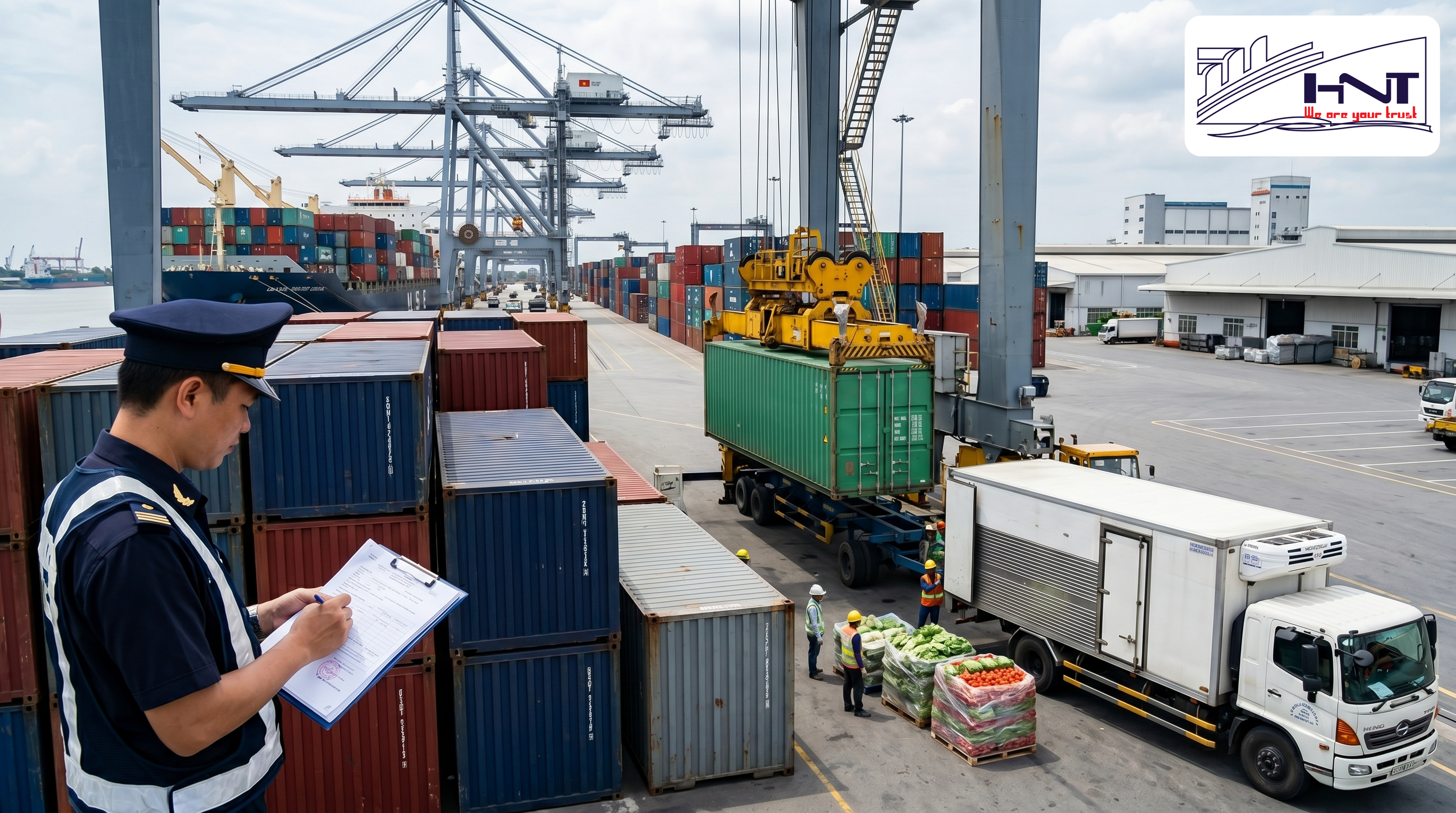
Update on customs regulations and specialized management
According to data from the Customs Department, total import and export turnover in 2026 reached approximately 920 billion USD. This causes management authorities to strengthen compliance inspections for high-risk shipments.
Businesses importing food, seafood, agricultural products or industrial equipment need to pay special attention to requirements for quarantine, conformity certification and quality standard declaration.
| Group of goods | Check | Management authority | Main risks |
|---|---|---|---|
| Food | Food safety | Ministry of Health | Customs clearance delay |
| Seafood | Quarantine | Ministry of Agriculture | Import rejection |
| Machinery | Quality | Ministry of Science and Technology | Post-clearance inspection |
| Chemicals | Specialized permits | Ministry of Industry and Trade | Administrative penalties |
- Check HS codes before signing foreign trade contracts.
- Assess quarantine requirements of the import market.
- Prepare a complete Certificate of Origin.
- Monitor changes in preferential import taxes.
- Check goods labeling regulations.
- Review quality declaration documents.
For example, Mekong Fruits Company in Tien Giang imported a packaging line from Japan. Correctly determining the HS code helped the business save nearly 180 million VND in additional taxes.
A seafood business in Ca Mau importing frozen materials from Ecuador avoided 6 days of container storage by completing quarantine documents before the vessel arrived at Cat Lai port.
According to the experience of HNT LOGISTICS, businesses should review specialized requirements from the contract negotiation stage to avoid additional storage costs and delayed deliveries.
Import procedures for goods from declaration to customs clearance
Import procedures for goods are currently mainly carried out on the VNACCS system. Businesses need to ensure data accuracy before transmitting declarations.
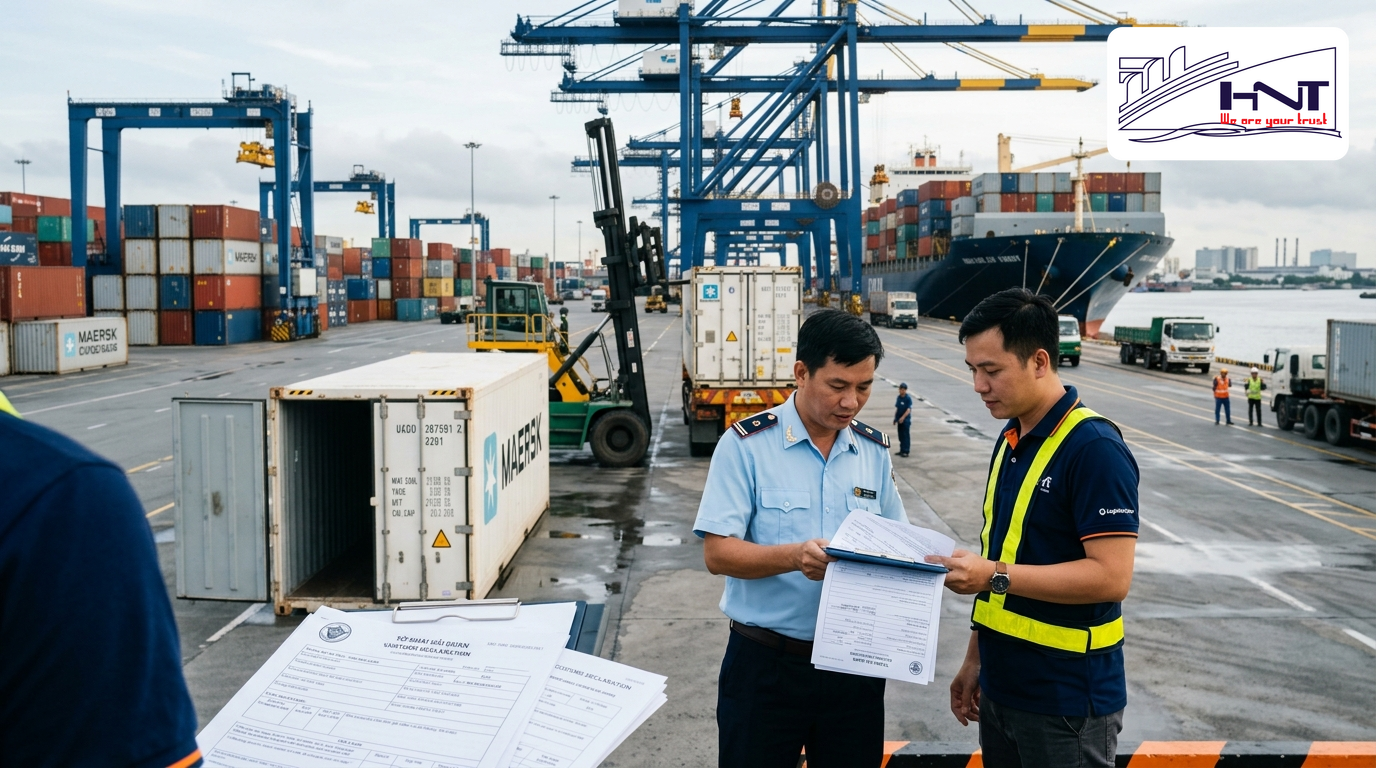
Import documents and customs clearance process
The basic document set includes foreign trade contracts, Commercial Invoice, Packing List, Bill of Lading, specialized licenses if any and certificates of origin.
- Declare data on VNACCS.
- Receive the customs clearance channeling result.
- Submit additional documents as requested.
- Carry out physical inspection if required.
- Pay import duty and VAT.
- Receive the customs clearance decision.
- Transport the goods to the bonded warehouse.
| Channel | Inspection level | Duration | Risk of occurrence |
|---|---|---|---|
| Green | Inspection exempt | Within the day | Low |
| Yellow | Document inspection | 1-2 days | Standardized, inspected |
| Red | Physical inspection | 2-5 days | Infrastructure |
| Specialized inspection | Combine multiple steps | 3-10 days | Incabable |
An electronics company in Binh Duong imported components from Busan to Cat Lai. Standardizing the customs declaration data reduced customs clearance time from 4 days to 24 hours.
Green Agro Company in Long An imported fertilizer from China. Thanks to accurately declaring the HS code, the company avoided prolonged physical inspection and saved nearly VND 70 million in container storage costs.
HNT LOGISTICS recommends using specialized customs declaration consulting specialized import-export services for high-value shipments or those requiring complex specialized inspections.
Selling imported goods after customs clearance and legal compliance requirements
The sale of imported goods does not end after customs clearance. Businesses must still fulfill document retention obligations, prove the origin of goods, and be prepared for post-clearance audits.
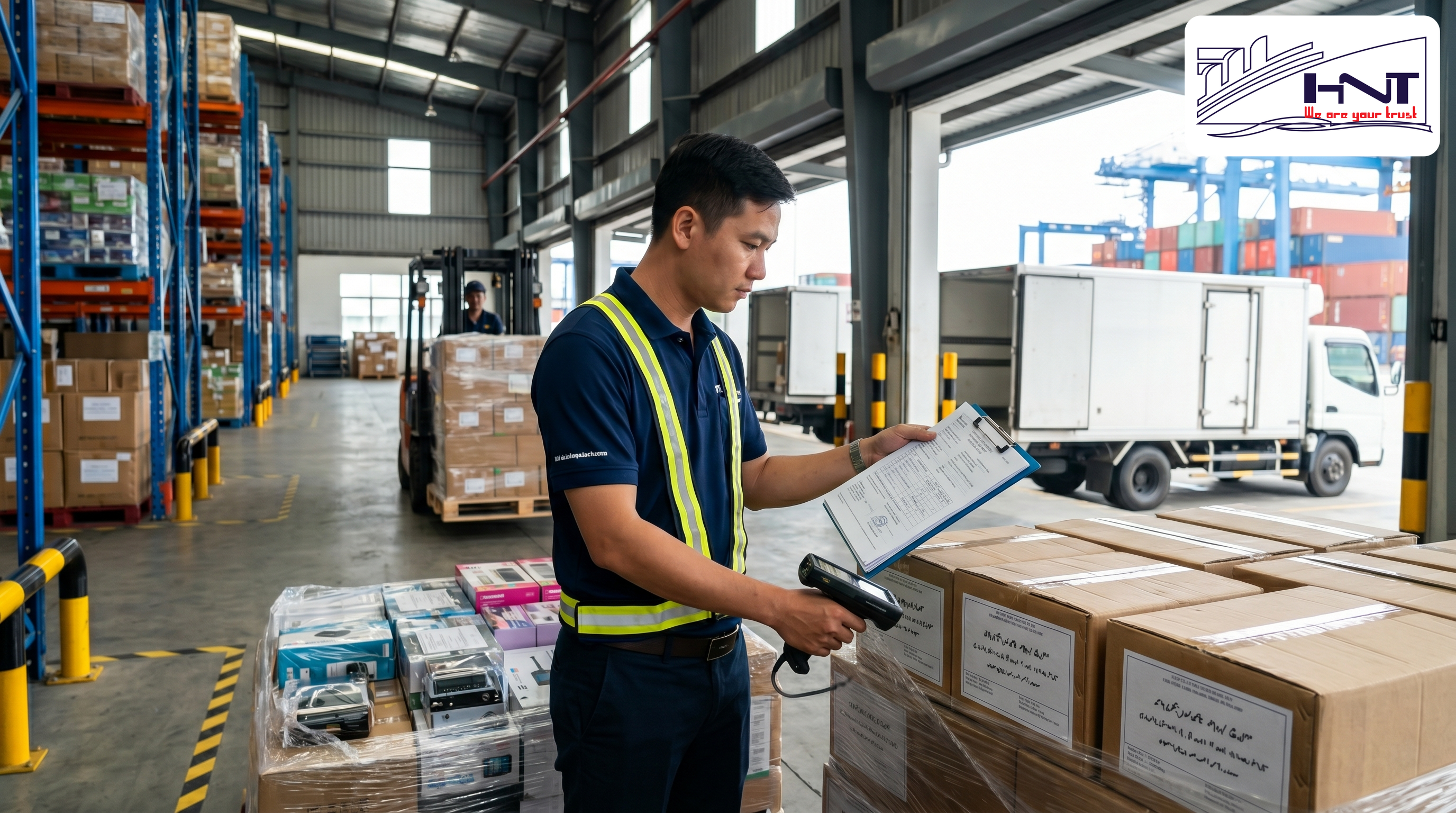
Document management and traceability
Businesses must retain documents for at least the legally required period. Records must be consistent across customs data, invoices, and internal accounting systems.
- Store electronic customs declarations.
- Preserve original import documents.
- Reconcile inventory quantities periodically.
- Control labels and traceability codes.
- Monitor the expiration dates of food products.
- Inspect cold storage conditions.
Fresh Market Company in Ho Chi Minh City imported fruit from New Zealand. The QR traceability system helped the company pass a post-clearance audit within one working day.
A food distributor in Hanoi was subject to additional tax collection due to discrepancies between inventory data and import records. After standardizing the management system, the error rate decreased by more than 90%.
Businesses should establish dedicated internal control procedures for imported goods sales to reduce the risk of administrative penalties or additional tax assessments.
A to Z procedures for returning customs-cleared imported goods
The procedures for returning customs-cleared imported goods apply when goods are found to have technical defects, do not comply with the contract, violate standards, or are rejected by the customer.
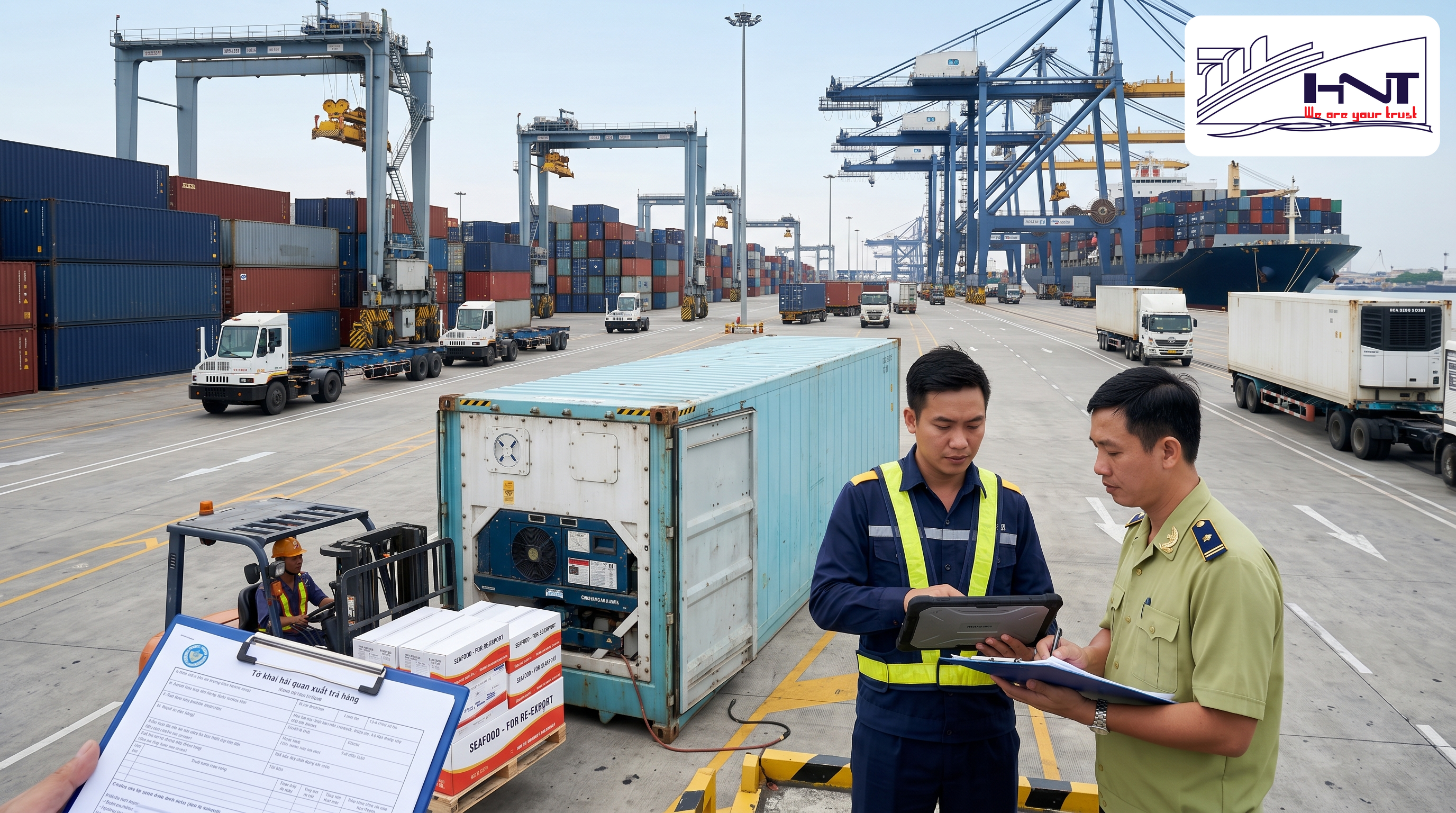
Conditions for applying the procedures for returning customs-cleared imported goods
Businesses must prove the reason for returning the goods with technical documents, defect confirmation reports, or agreements with foreign partners.
Preparing complete documentation helps shorten processing time and increase the likelihood of obtaining an import duty refund in accordance with regulations.
| Documentation | Purpose | Mandatory | Notes |
|---|---|---|---|
| Import declaration | Verify origin | Yes | Electronic copy |
| Defect report | Prove the reason | Yes | Attach images |
| Return agreement | Confirmation with the partner | Yes | Bilingual |
| Return invoice | Customs declaration | Yes | Based on the actual value |
| Bill of lading | International shipping | Yes | According to the shipping line |
- Review the return conditions.
- Prepare technical documents.
- Declare the return export declaration.
- Submit customs documents.
- Carry out physical inspection if requested.
- Load the goods onto the means of transport.
- Track the import duty refund.
A mechanical engineering company in Dong Nai imported a laser cutting machine from Germany. After discovering incorrect technical specifications, the company completed the return process within 12 days and received a refund of more than VND 1.2 billion in taxes.
A seafood company in Soc Trang imported freezing equipment from China. Early coordination with the shipping line reduced re-export costs by 40% and avoided detention charges.
According to experts at HNT LOGISTICS, businesses should clearly determine the return export procedure code from the outset to avoid repeated declaration amendments and prolonged document processing time.
Optimize logistics costs and minimize risks in import-export operations
Logistics costs are not limited to freight charges. Businesses must also manage storage fees, physical inspection costs, quarantine fees, and additional expenses caused by delayed document processing.
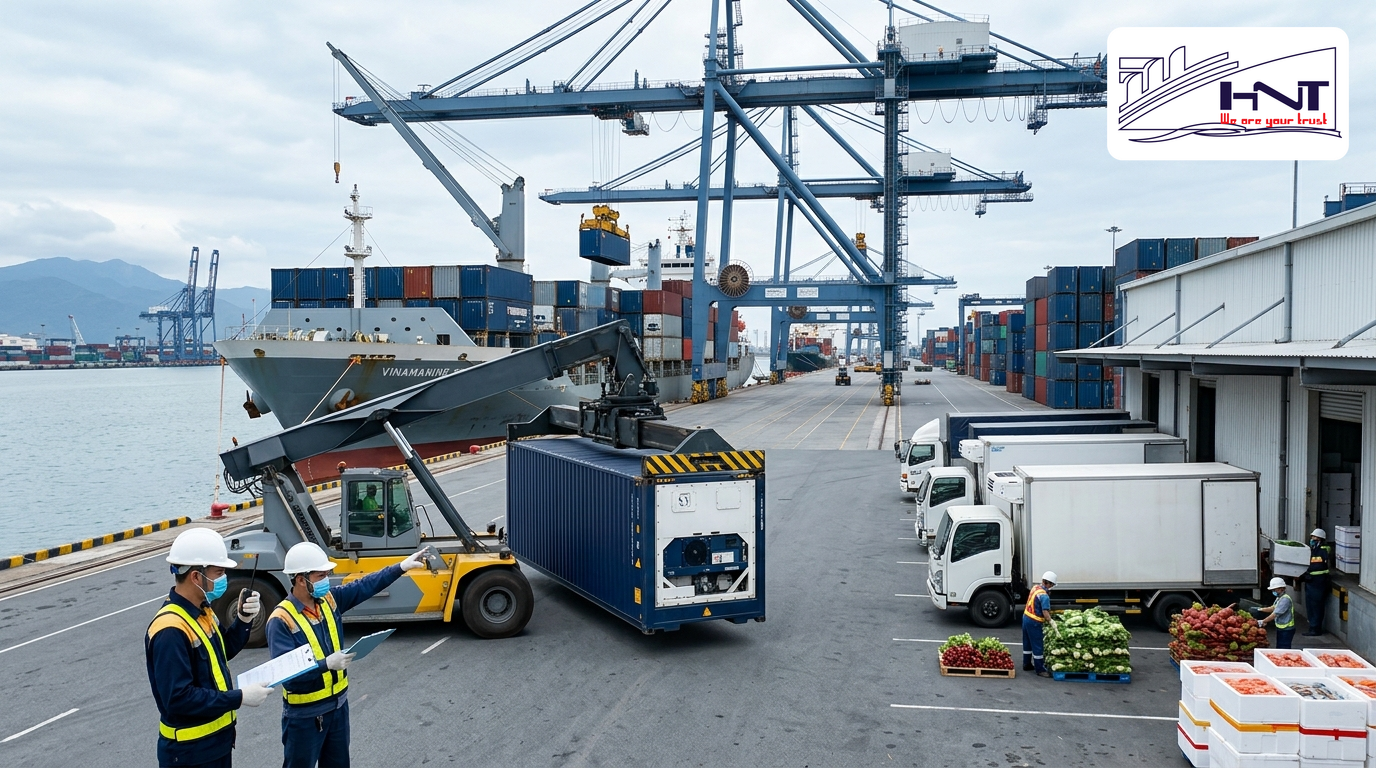
Control the transportation and container supply chain
Fluctuations in the maritime transport market have caused many Asia and North America routes to frequently change sailing schedules. This directly affects cargo delivery plans.
- Book vessel space early during peak season.
- Prioritize shipping lines with stable schedules.
- Inspect container conditions before loading goods.
- Monitor container free time.
- Maintain standard temperatures for refrigerated cargo.
- Prepare contingency plans for port congestion.
A fruit company in Ben Tre exported frozen durian to Shanghai in a refrigerated container. The temperature monitoring system maintained a stable temperature of minus 18 degrees Celsius throughout the journey.
A shrimp processing factory in Ca Mau shipped goods to Long Beach. Choosing a direct shipping route shortened transit time by 5 days and reduced the risk of cold chain disruption.
Based on HNT LOGISTICS' practical experience, businesses should evaluate logistics costs together with legal risks and import market requirements instead of choosing only the lowest freight rate.
As Vietnam's import-export sector continues to grow strongly, understanding the procedures for returning customs-cleared imported goods, managing post-clearance documentation, and optimizing the logistics chain have become vital factors for businesses.
- Carefully review documents before declaration.
- Fully comply with specialized regulatory requirements.
- Retain documents for post-clearance audits.
- Handle defective goods promptly with an appropriate return process.
- Strictly control additional logistics costs.
- Regularly monitor changes in import-export policies.
- Coordinate with a professional logistics provider.
Businesses need to establish an integrated import-export management process covering customs clearance, imported goods sales, and the re-export of defective goods. This helps protect cash flow, reduce trade disputes, and maintain competitiveness in the international market. HNT LOGISTICS is ready to accompany Vietnamese businesses in customs, international transportation, cold storage, and cross-border supply chain optimization.