


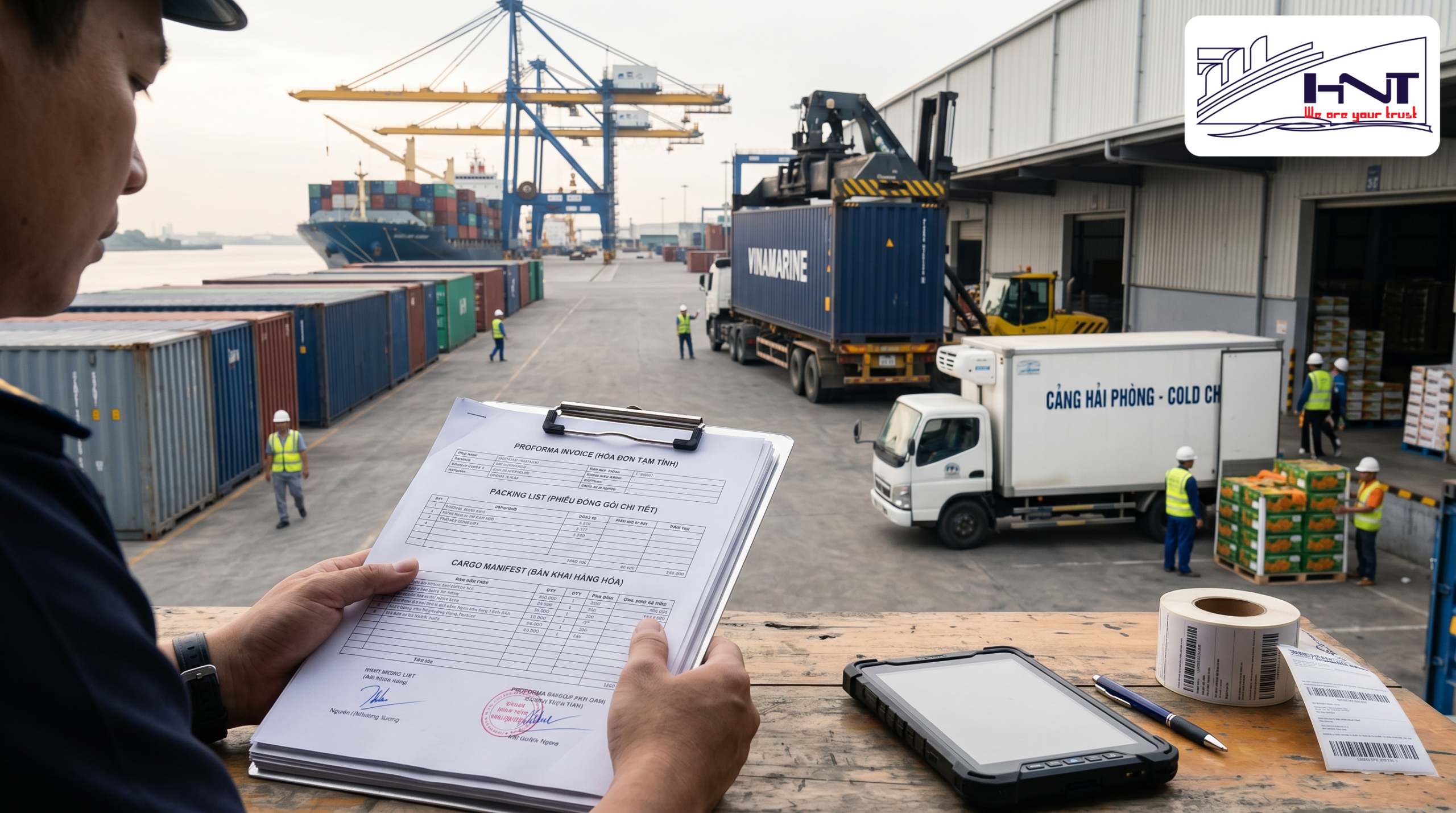
What is a proforma invoice is a question that often appears when the business has finalized the price but the warehouse is preparing to load the goods, while the buyer requests a change in delivery terms. Just one wrong product code or consignee can lead to corrections of the bill of lading, Manifest declaration and delays in receiving goods at the destination port.
In 2026, Vietnam's seafood exports reached approximately 11.3 billion USD, up more than 12% compared to 2026. In the first four months of 2026, seafood turnover continued to reach about 3.656 billion USD. When cargo volume increases and vessel schedules fluctuate, document control must be carried out before the cut-off time.
This article helps businesses correctly understand the functions of Proforma Invoice, Packing List and Manifest. The focus is on how to reconcile data, prevent late document corrections and reduce the risk of arising container detention, storage or inspection fees.
Where do the three documents Proforma Invoice, Packing List, Manifest appear in the import-export process?
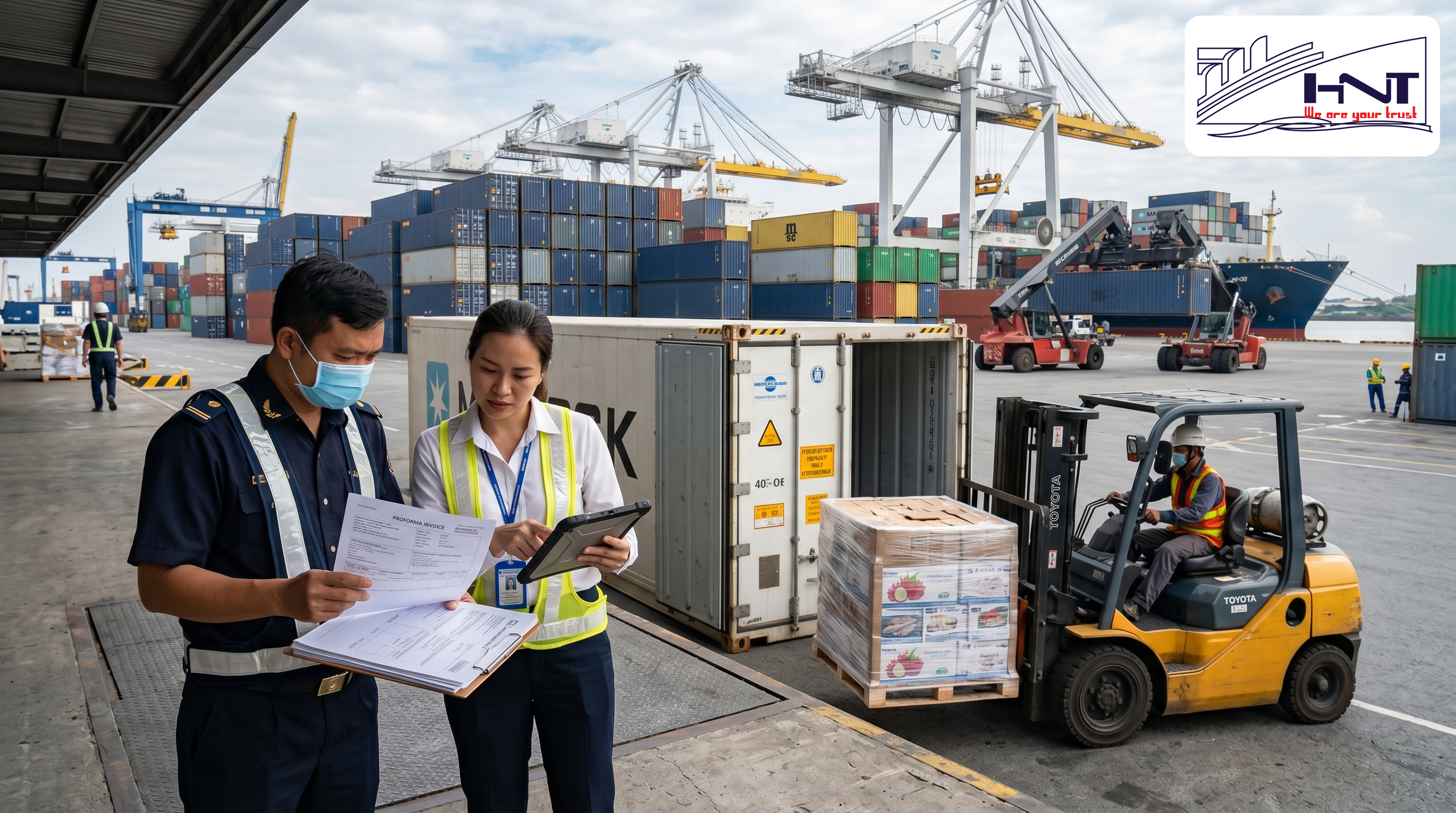
Document journey from quotation stage until goods arrive at the port
The process starts with quotation and Proforma Invoice, then moves to order confirmation, production, packaging and preparation of Packing List. When booking transportation, the data is used to prepare the bill of lading and declare Manifest. The three documents do not replace each other, but must use the same original data source.
- Finalize the buyer, seller, goods and delivery terms before issuing Proforma Invoice.
- Lock product codes, quantities, unit prices and payment terms after both parties confirm.
- Pack the goods physically, weigh each package and prepare Packing List according to the warehouse record.
- Send delivery instructions to the shipping line or agent before the transport declaration deadline.
- Compare the draft bill of lading with Packing List and Commercial Invoice before declaring Manifest.
- Save the approved version for customs clearance, settlement and post-audit purposes.
| Phase | Main documents | Data must be locked | Risks if incorrect |
|---|---|---|---|
| Quotation | Proforma Invoice | Unit price, delivery terms | Price dispute |
| Packing | Packing List | Packages, weight, dimensions | Extended inspection |
| Booking | Delivery instructions | Shipper, consignee | Bill of lading amendment |
| Before arrival | Manifest | Cargo description, discharge port | Customs clearance delay |
For example, Minh Phuc Agricultural Company in Tien Giang exports 18 tons of mangoes by 40-foot reefer container from Cat Lai Port to Shanghai. By locking the product code from Proforma Invoice, the business detects the wrong unit of measure early and fixes it before loading, avoiding having to amend three documents later.
When should Proforma Invoice be issued to avoid order discrepancies?
Proforma Invoice should be issued after verifying supply capability, delivery terms and packaging requirements. It should not be issued just to “hold a customer” when product codes, seasonality or delivery schedules have not been confirmed. What is a proforma invoice in practice? It is the commercial foundation for both parties to lock their commitments before implementation.
Timing for preparing Packing List and data that must match the actual packaging
Packing List is prepared after packages are completed, not before the warehouse is finished. Number of packages, net weight, gross weight, dimensions and marks must have evidence from weighing slips and packing records. For cold goods, add the set temperature and loading arrangement.
Role of Manifest before the vessel or flight arrives at the destination port
Manifest is cargo declaration data with the managing authority at the destination port. Manifest must match the bill of lading and import documents. According to Maersk market updates at the beginning of 2026, container demand on some Asian corridors remains volatile, so the deadline for sending delivery instructions must be strictly controlled.
Relationship between the three documents and other import-export documents
The three documents are linked with commercial invoices, bills of lading, certificates of origin, quarantine certificates and customs declarations. Import-export documents are only reliable when the cargo name, HS code, quantity and consignee do not conflict. A practical tip is to create a master data table, then generate each document from that table.
How to check Proforma Invoice before confirming an order?

Checklist of buyer, seller and transaction terms before issuance
Check the legal status of the buyer before sending Proforma Invoice. Legal name, address, tax registration number, contact person and consignee must be separated clearly. If the payer is different from the consignee, the business needs to specify each party's role.
- Check the legal entity name according to the contract or the partner's business registration records.
- Confirm whether the document receiving address and delivery address are the same location.
- Specify quotation number and date to track versions between sales and import-export departments.
- Compare product code, specifications, quality grade and brand with purchasing requirements.
- Show payment currency, validity period and consistent delivery terms.
- Require the buyer to respond in writing before issuing production orders.
| Check field | Request | Verification source | Action when deviating |
|---|---|---|---|
| Buyer | Correct legal entity | Contract | Stop issuance |
| Recipient | Correct address | Delivery instructions | Reconfirm |
| Delivery terms | Compliant with Incoterms | Service cost | Amend terms |
| Currency | Clear exchange rate and method | Payment agreement | Lock the price |
For example, Dong Nam Mechanical Company in Binh Duong sells 12 packaging machines to Long Beach. The buyer requested delivery under FOB terms but the Proforma Invoice stated CIF. The document team detected it before booking, avoiding disputes over insurance and sea freight.
Check product price, Incoterms and payment terms to limit disputes
The price on Proforma Invoice must clearly state the price unit, chargeable quantity and included costs. International trade terms Incoterms 2026 need to specify the exact delivery location, for example FOB Cat Lai Port. Do not write generally “FOB Vietnam” because risks and costs have no clear transfer point.
Points to review when trading by L/C or T/T
For letters of credit L/C, Proforma Invoice data must be compatible with the L/C opening conditions. For T/T transfer, deposit ratio, payment milestones and bill of lading issuance conditions must be locked. The sales department should not edit product names after the bank or customer has confirmed.
Errors at the quotation stage causing Commercial Invoice to be amended many times
Common errors include using commercial names instead of consistent descriptions, missing packaging fees and incorrect delivery terms. What is a proforma invoice if not the blueprint of a commercial invoice? The later the correction, the higher the risk of discrepancy between Packing List and bill of lading. HNT LOGISTICS recommends businesses apply two-level approval before sending documents to customers.
How should Packing List be built to support customs clearance and delivery?
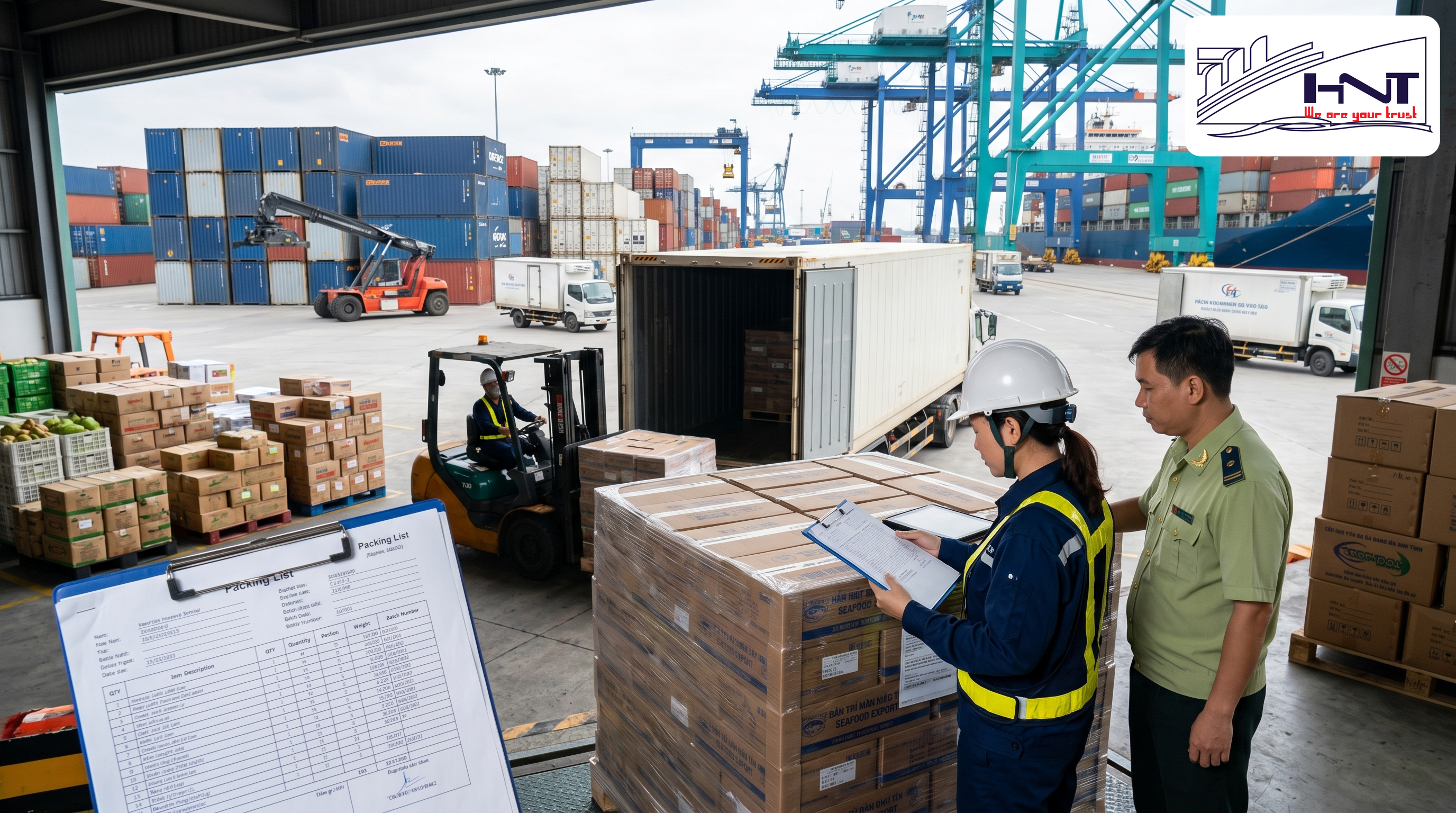
How cargo package descriptions help warehouses and carriers process faster
What is packing list? It is a document describing how goods are packed into each package so warehouses, ports and customs can identify them. Each line should show number of packages, packaging type, marks, product code, weight and dimensions. Goods with many types need continuous package numbering.
- Record packaging type based on reality such as cartons, wooden pallets or foam boxes.
- Number packages in a continuous sequence to avoid omissions during warehouse counting.
- State net and gross weight using the same measurement unit.
- Record dimensions of each package group if using LCL cargo or oversized cargo.
- Describe marks matching the labels outside the packages.
- Attach loading diagrams when containers contain many product codes or fragile goods.
| Information | Good entry | Should not write | Impact |
|---|---|---|---|
| Number of packages | 250 cartons | Many cartons | Easy counting |
| Weight | 4.500 kg gross weight | About 4.5 tons | Correct declaration |
| Marks | MP-2026-01 to 250 | According to product labels | Fast traceability |
| Size | 50 x 40 x 30 cm | Standard | Accurate load calculation |
For example, An Hoa Fruit Company in Dong Thap exports 1,200 boxes of passion fruit to Singapore. The warehouse recorded dimensions by pallet instead of by box type. When the airline requested volumetric weight calculation, the company had to remeasure and lost one warehouse delivery trip.
Compare quantity, weight and dimensions before warehouse release
Before sealing, the warehouse department must compare Packing List with release orders, weighing slips and site photos. For cold goods, also check set temperature, pre-cooling time and ventilation status. Cold container size standards need to be referenced before preparing the loading plan.
Why are many shipments inspected due to differences between Packing List and actual goods?
Differences usually come from additional loading, packaging changes or splitting part of an order into another container. Customs may request physical inspection if figures are unreasonable compared with declarations and bills of lading. Create a change record immediately when the warehouse detects discrepancies instead of editing the file at the end of the day.
Self-checklist for Packing List before sending to partners and forwarders
Check total packages, packages per product code, weight, volume, marks, container number and seal number. A finalized copy should be sent to the logistics provider before the instruction receiving deadline. Based on HNT LOGISTICS experience, agricultural goods should include loading photos and temperature logs to handle complaints quickly.
How does Manifest affect customs clearance progress at the destination port?

Data on Manifest needs to be synchronized with the bill of lading and import documents
What is Manifest? It is a declaration of shipment information used for management before the transport arrives. Shipper, consignee, notify party, cargo description, number of packages, weight, container number and discharge port must match the bill of lading. A single character difference in a legal entity name can also prevent the importer from obtaining the delivery order on time.
- Compare consignee name with import license or business registration at the destination country.
- Check discharge port, delivery location and location code are not confused with the transshipment port.
- Unify cargo description with bill of lading, commercial invoice and quarantine certificate.
- Check container number, seal number and total packages before sending instructions.
- Set an internal deadline at least one day earlier than the shipping line deadline.
- Save evidence that the customer confirmed consignee data before transport declaration.
| Manifest data | Comparison source | Risk | Control |
|---|---|---|---|
| Recipient | Contract | Unable to get delivery order | Confirm by email |
| Cargo description | Commercial invoice | Enhanced checking | Use master data |
| Number of packages | Packing List | Counting discrepancy | Lock warehouse data |
| Discharge port | Booking | Wrong route | Review draft bill of lading |
For example, Nam Hai Seafood Company in Ca Mau exports frozen shrimp to Rotterdam by reefer container. The documentation team found the consignee on Manifest was missing the legal entity name. They corrected it before the declaration deadline, avoiding the risk of cargo being held while temperature had to be maintained continuously.
Situations requiring Manifest amendment and common arising costs
Manifest amendments usually occur when changing consignee, package count, cargo description or discharge port. Costs depend on the carrier, timing and destination port regulations. Corrections after the vessel sails are usually more difficult than before departure. Businesses should treat amendment fees as operational risks, not random expenses.
Risk of customs clearance delays when declaring incorrect consignee or cargo description on Manifest
Incorrect consignee information can make import documents inconsistent with the customs declarant. Incorrect cargo description can cause authorities to question the HS code or request additional inspection. Circular 121/2026/TT-BTC is a clear signal of the direction toward digitization and standardization of customs procedures, so input data control is increasingly important.
How shippers, carriers and forwarders coordinate to minimize Manifest errors
The exporter is responsible for confirming commercial data. The carrier or agent is responsible for receiving, preparing the bill of lading and declaring according to instructions. The logistics provider needs to check consistency before the deadline. A tip is to assign one person only to give final confirmation for each consignment.
Distinguish the functions of Proforma Invoice, Packing List and Manifest to avoid using the wrong document
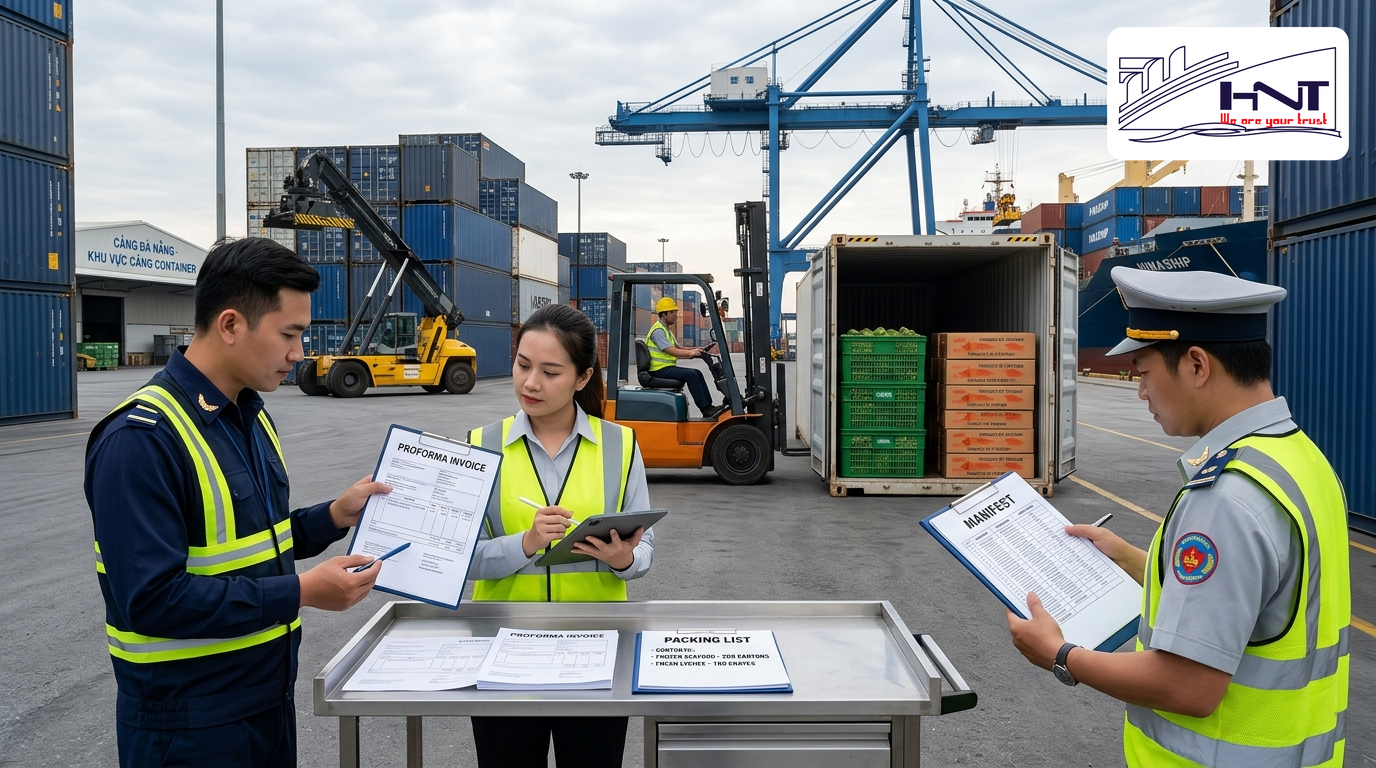
Which document is used for commercial negotiation, which document serves transportation?
Proforma Invoice serves negotiation and confirmation of commercial terms. Packing List serves identification and counting of actual goods. Manifest serves advance transport data declaration before arrival. Businesses must not use Packing List to replace commercial invoice, nor consider Manifest as payment evidence.
- Use Proforma Invoice to confirm price, specifications, delivery terms and payment deadline.
- Use Packing List to show the physical structure of each packed package.
- Use Manifest to declare shipment data in advance to destination port authorities.
- Use commercial invoice to prove transaction value in payment and customs records.
- Use bill of lading to confirm receipt of transported goods and the right to receive goods under the terms.
- Use certificates of origin and quarantine when the import market requires preferences or specialized control.
| Documentation | Purpose | Creation time | Core data |
|---|---|---|---|
| Proforma Invoice | Sales offer | Before order | Price and terms |
| Packing List | Inspection count | After packing | Packages and weight |
| Manifest | Transport declaration | Before arrival | Consignee and description |
| Bill of lading | Transport certificate | After receipt | Route and receiving rights |
For example, Viet Tin Wood Company in Da Nang exports furniture to Sydney. By using package number 86 on Packing List but 68 on delivery instructions, the draft bill of lading was incorrect. By comparing the master data table, the business corrected it within the day and did not incur correction fees after departure.
When can documents be replaced or cross-referenced?
No document completely replaces another document. However, order numbers, product codes and marks can be used for cross-reference. What is a proforma invoice in this flow? It is the starting point for the commercial invoice to inherit data, but final package count is only confirmed by Packing List.
Quick comparison table of commonly confused information fields
Commonly confused fields include buyer and consignee, net weight and gross weight, discharge port and delivery location, and commercial description and customs description. Businesses should define a unified terminology list between sales, warehouse and import-export teams.
Connection with consignment concepts and actual cargo flow
What is consignment? It is a shipment delivered to the consignee under a certain set of transport instructions. One order can be divided into many consignments, or many orders can travel in one container. Therefore, container numbers cannot be inferred only from one Proforma Invoice.
Managing document risks after issuance to reduce logistics costs and customs inspections

Establish a document reconciliation process between purchasing, import-export and accounting departments
A good process must have a data creator, checker and approver. The sales department confirms selling conditions. The warehouse confirms packing data. Import-export checks transportation and customs. Accounting checks value, currency and payment terms.
- Set a unique order code appearing on all documents and related correspondence.
- Clearly define who is authorized to edit commercial data after customer confirmation.
- Require warehouse to issue packing records before preparing the official Packing List.
- Compare draft bill of lading with commercial invoice and Packing List before the transport declaration deadline.
- Keep customer confirmation of consignee and notify party in shipment records.
- Evaluate root causes when document amendments occur to prevent repeated errors.
| Warning indicator | Threshold | Handler | Response |
|---|---|---|---|
| Amend Proforma Invoice | From two times | Business | Lock terms |
| Package discrepancy | From one package | Warehouse | Stop sending documents |
| Late delivery instructions | Within 24 hours | Import export | Urgent reminder |
| Change consignee | Any time | Order management | Legal verification |
For example, Viet Thanh Garment Company in Dong Nai exports 9,600 jackets to Hamburg. The alert system detected gross weight on Packing List increased 8% compared to the original quotation. The operations team rechecked pallets and adjusted booking before the cut-off time.
Store electronic records for settlement and post-audit purposes
Store records by shipment code, not only by customer name. Each folder should contain Proforma Invoice, order confirmation, Packing List, commercial invoice, bill of lading, specialized certificates and revision history. This helps explain quickly when customers complain or customs authorities request comparison.
Digitization applications help control document versions and revision history
Digitization is not only saving PDFs. The system needs to identify versions, editors, editing time and reasons for changes. Do not send files through multiple channels without a controlled version. According to experts at HNT LOGISTICS, businesses handling fresh goods should set internal document deadlines at least 24 hours earlier than the vessel schedule.
Early warning indicators when documents may cause customs clearance delays
Businesses need to monitor document amendment rates, warehouse data mismatch frequency, near-deadline submissions and days incurring container storage fees. What is a proforma invoice will no longer be a theoretical question when businesses view it as the first risk control point. Protect shipments with consistent data, not last-minute corrections.
In summary, Proforma Invoice defines the transaction, Packing List reflects actual goods and Manifest opens the way for customs clearance. Businesses need to control the three documents using the same master data.
- Issue Proforma Invoice after verifying goods, price, delivery terms and buyer.
- Prepare Packing List from weighed warehouse data, not estimated figures.
- Compare Manifest with bill of lading, commercial invoice and consignee information before the deadline.
- Do not allow the sales department to edit data after documents have been approved.
- Store all change history by shipment code for post-audit purposes.
- Set warning indicators for package discrepancies, late instructions and consignee changes.
For exporters of agricultural products, seafood and fresh goods, document accuracy determines both delivery speed and the ability to preserve shipment value. HNT LOGISTICS is a reliable freight forwarding and logistics partner for Vietnamese exporters nationwide, supporting document control, transportation and customs coordination for each cargo route. As a professional transport provider, HNT LOGISTICS is committed to delivering comprehensive supply chain solutions, helping Vietnamese businesses confidently conquer global markets. Contact us today at 8A Hoang Minh Giam, Ho Chi Minh City or via the marketing email at hntshipping.com for quotation support!