

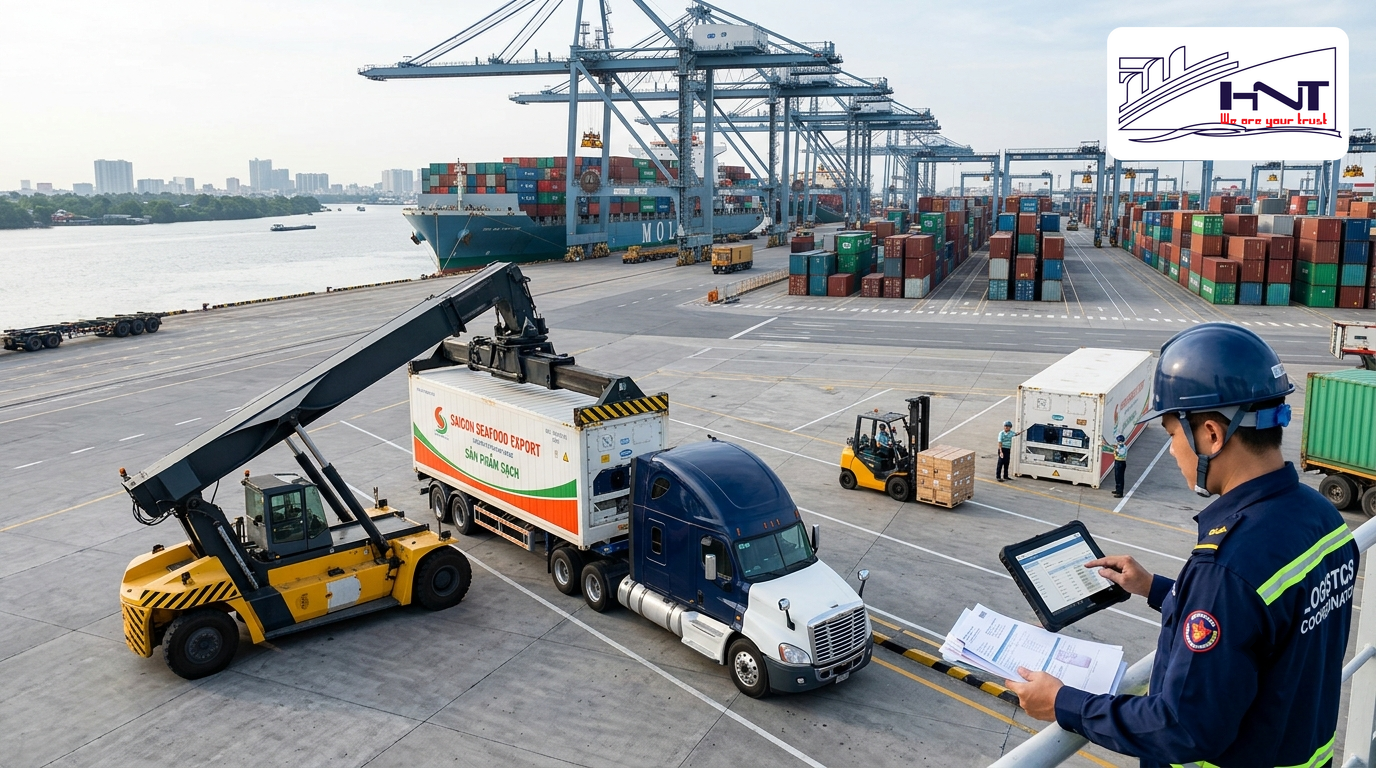
What is CIF is a question that arises as soon as businesses receive international quotations but do not know who bears the freight, insurance and risks. A shipment of mangoes from Tien Giang to Shanghai may be profitable on the contract, but still lose money due to choosing the wrong delivery point.
In 2026, Vietnam's seafood exports reached approximately 11.3 billion USD, up 12% compared to the previous year. This makes the ability to control delivery terms a trade issue, not just a matter for the documentation department.
The Customs sector is applying new regulations according to Decree 167/2026/ND-CP and Circular 121/2026/TT-BTC. Businesses need to clearly determine which party declares, pays taxes and is responsible for documents in each market.
This article helps buyers, sellers and import-export managers compare CIF, FOB, EXW, DAP, DDP based on actual costs, control rights and real risks.
How to choose CIF, FOB, EXW, DAP or DDP to avoid increasing costs right from the negotiation stage
Do not choose delivery terms because the quoted price sounds low. Choose based on the ability to book space, handle procedures, pay taxes and manage delivery at the destination country. A suitable term must reduce the total cost to the warehouse, not just reduce the price on the invoice.
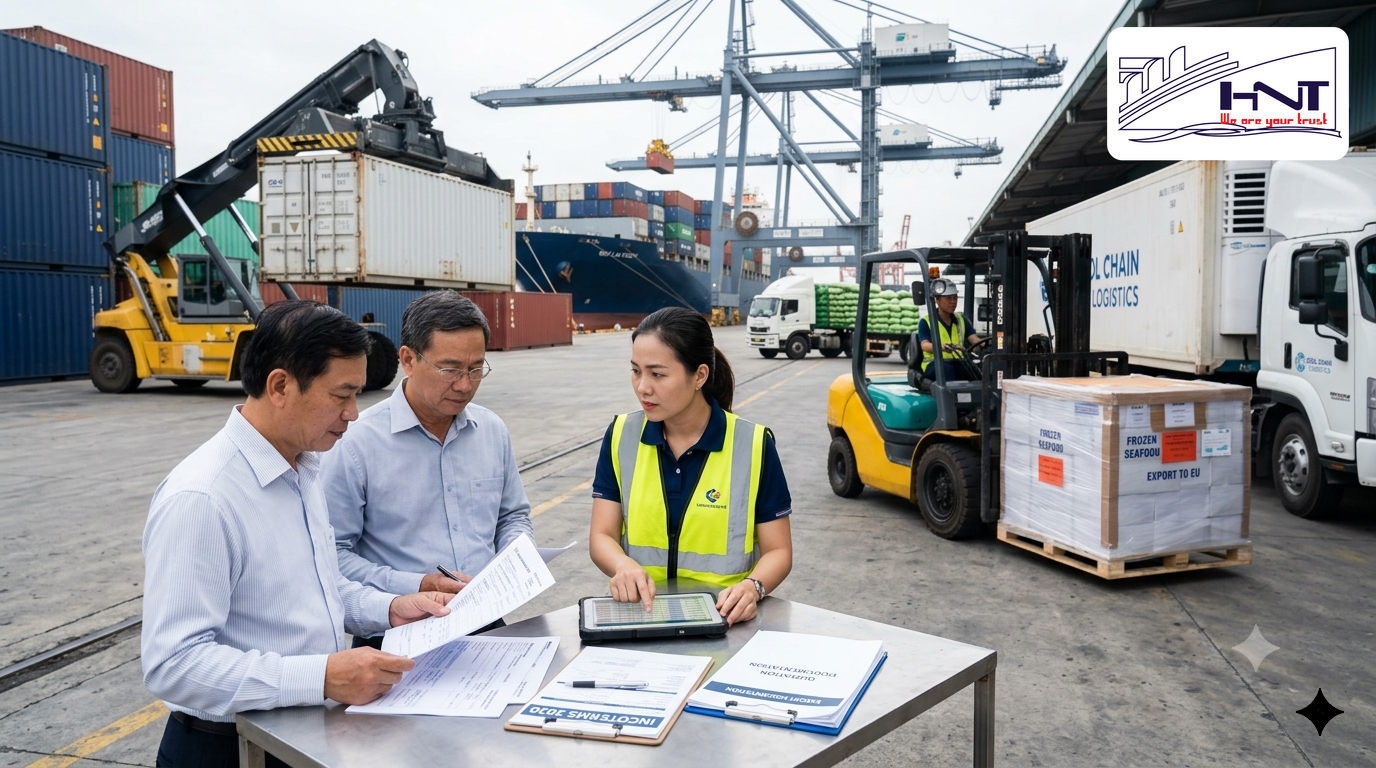
Incoterms selection matrix by buyer and seller roles
New exporters often choose CIF to control shipping schedules and provide clear service levels. Buyers with strong logistics teams often choose FOB to take control of ocean freight. For perishable goods, control over the cold chain is more important than the initial freight rate.
| Role | Condition to consider | Main reason | Risk to control |
|---|---|---|---|
| New seller | CIF | Easy to quote to port | Minimum insurance |
| Buyer with strong agents | FOB | Control freight and schedule | Late booking |
| Customers with low localization | DAP | Delivery to specified point | Import customs clearance |
| Seller controls the market | DDP | Door-to-door experience | Taxes and permits |
- Assess the partner's customs clearance capability before accepting delivery in the destination country.
- Compare total cost to warehouse instead of only comparing goods price or ocean freight.
- Clearly identify whether the port, yard, warehouse or address is the delivery point in the contract.
- Check the ability to purchase insurance suitable for the value and nature of the goods.
- Evaluate the shipping schedule, transit time, and temperature maintenance capability for refrigerated goods.
When to prioritize CIF over FOB to reduce international shipping risks
CIF is suitable when the buyer does not yet have a reliable freight forwarder in Vietnam or needs the seller to arrange the shipment to the destination port. CIF is only used for sea transport or inland waterway transport. The risk still transfers to the buyer when the goods have been loaded onto the vessel.
For example, Minh Phu Fruit Company in Tien Giang sells a 40-foot refrigerated container of mangoes to Shanghai. Since the buyer does not yet have an agent at Cat Lai Port, the company chooses CIF Shanghai, sets the temperature at 13°C, and directly controls the shipping schedule. The shipment arrives as planned after six days.
Situations where EXW, DAP, or DDP should be avoided despite attractive quoted prices
EXW can easily cause misunderstandings because the buyer must organize the pickup at the seller's premises, including moving the goods out of the export territory. DAP is not suitable when the seller does not understand procedures in the importing country. DDP is especially risky when the seller is not qualified to pay taxes or obtain import licenses.
HNT LOGISTICS recommends that seafood exporters only use DDP after verifying the importer, tax code, tax rates, and quarantine requirements in the destination country. A quoted price for “door-to-door delivery” has no meaning if the goods are held at the port due to missing documents.
Common mistakes when only comparing product prices and ignoring delivery terms
The biggest mistake is comparing CIF with FOB as if they are two prices with the same nature. CIF includes sea freight and insurance arranged by the seller. FOB only ends the seller's obligations when the goods are loaded onto the vessel. Therefore, a lower FOB price does not mean a lower total cost.
Practical suggestion: request quotations that separately state the product price, freight, insurance, port surcharges, and delivery-to-warehouse costs.
What is CIF from the perspective of costs, responsibilities, and the risk transfer point
What is CIF? CIF is the term “Cost, Insurance and Freight”, where the seller pays the costs of bringing the goods to the designated destination port. However, the seller does not bear all risks until the destination port. The risk transfers to the buyer immediately after the goods are loaded onto the vessel at the departure port.
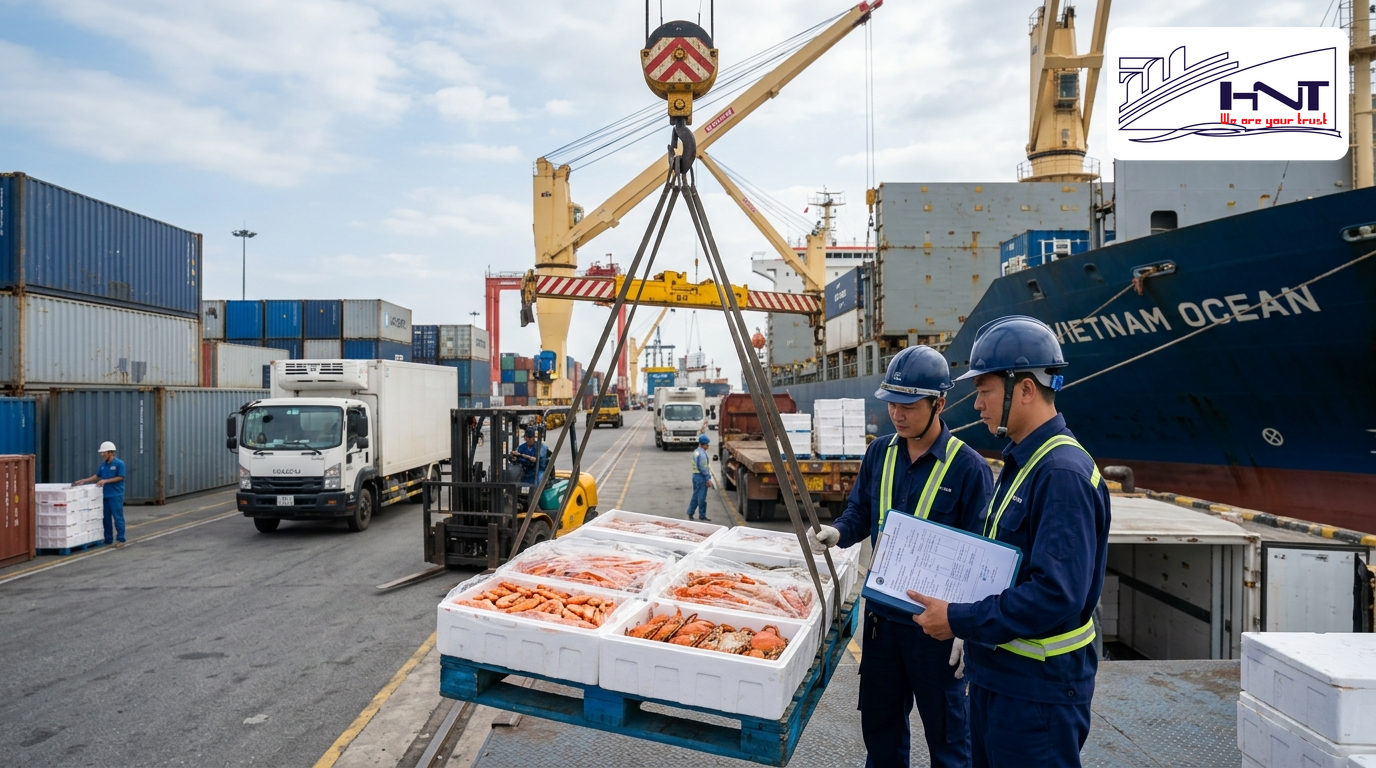
What costs are included in the CIF price
The CIF price usually includes the product price, packaging, inland transport at origin, export procedures, costs of loading goods onto the vessel, sea freight, and minimum insurance. Unloading costs, local charges, import duties, and inland transport at destination are usually paid by the buyer.
| Cost item | Party paying under CIF | Point to clarify | Risk of occurrence |
|---|---|---|---|
| Export packaging | Seller | Destination market standards | Cargo damage |
| Sea freight | Seller | Route and shipping line | Peak season surcharges |
| Insurance | Seller | Insurance coverage | Insurance with insufficient coverage |
| Import tax | Buyer | HS Code | Additional tax assessment |
| Destination port fees | Buyer | Local charges | Container demurrage fees |
- Request the quotation to clearly state whether the sea freight includes fuel surcharges or not.
- Check whether the insurance is calculated on the CIF value plus an additional contingency amount.
- Confirm whether unloading fees at the destination port are included in the vessel freight or charged separately.
- Budget for taxes, quarantine inspection fees, and container storage fees in the import market.
- Compare the delivery terms with the type of goods, whether full container load or less than container load.
What must the seller do before the goods are loaded onto the vessel
The seller must prepare the goods in accordance with the contract, package them appropriately, complete export procedures, and load the goods onto the vessel. They must also arrange a contract of carriage to the destination port, purchase minimum insurance, and provide the documents to the buyer. This does not change the point at which risk transfers.
For example, Blue Sea Seafood Factory in Ca Mau exports frozen shrimp from Cai Mep Port to Rotterdam. The company uses CIF, checks the backup generator for the refrigerated container, and sends the bill of lading immediately after the vessel departs. The temperature is maintained at minus 18°C throughout the 27-day voyage.
When does the buyer begin to bear the risk in a CIF transaction
The buyer bears the risk once the goods are loaded onto the vessel at the port of departure. This differs from the common misconception that the seller bears the risk until the destination port. Therefore, the buyer should request the loading notice, bill of lading documents, and insurance certificate immediately after the vessel departs.
Documents to check when receiving a CIF quotation
The buyer should check the commercial invoice, packing list, bill of lading, insurance certificate, certificate of origin, and phytosanitary or quarantine certificate if the goods are subject to specialized regulatory control. For agricultural products, the documents must also match the growing area code, packing facility, and the importing country's requirements.
- Compare the product name, quantity, and unit price on the commercial invoice with the contract.
- Check the port of loading, port of discharge, and vessel name on the bill of lading.
- Confirm that the insurance certificate correctly states the insured party and the cargo value.
- Compare the container number, seal number, and weight with the packing list.
- Check whether the payment terms require an original bill of lading or an electronic bill of lading.
Compare CIF with FOB, EXW, DAP, and DDP in different import and export scenarios
A proper comparison must be based on three variables: who controls the shipment, who pays the costs for each leg, and when the risk transfers. Each term creates a different profit structure. This becomes even more important when ocean freight rates fluctuate or ports face congestion risks.
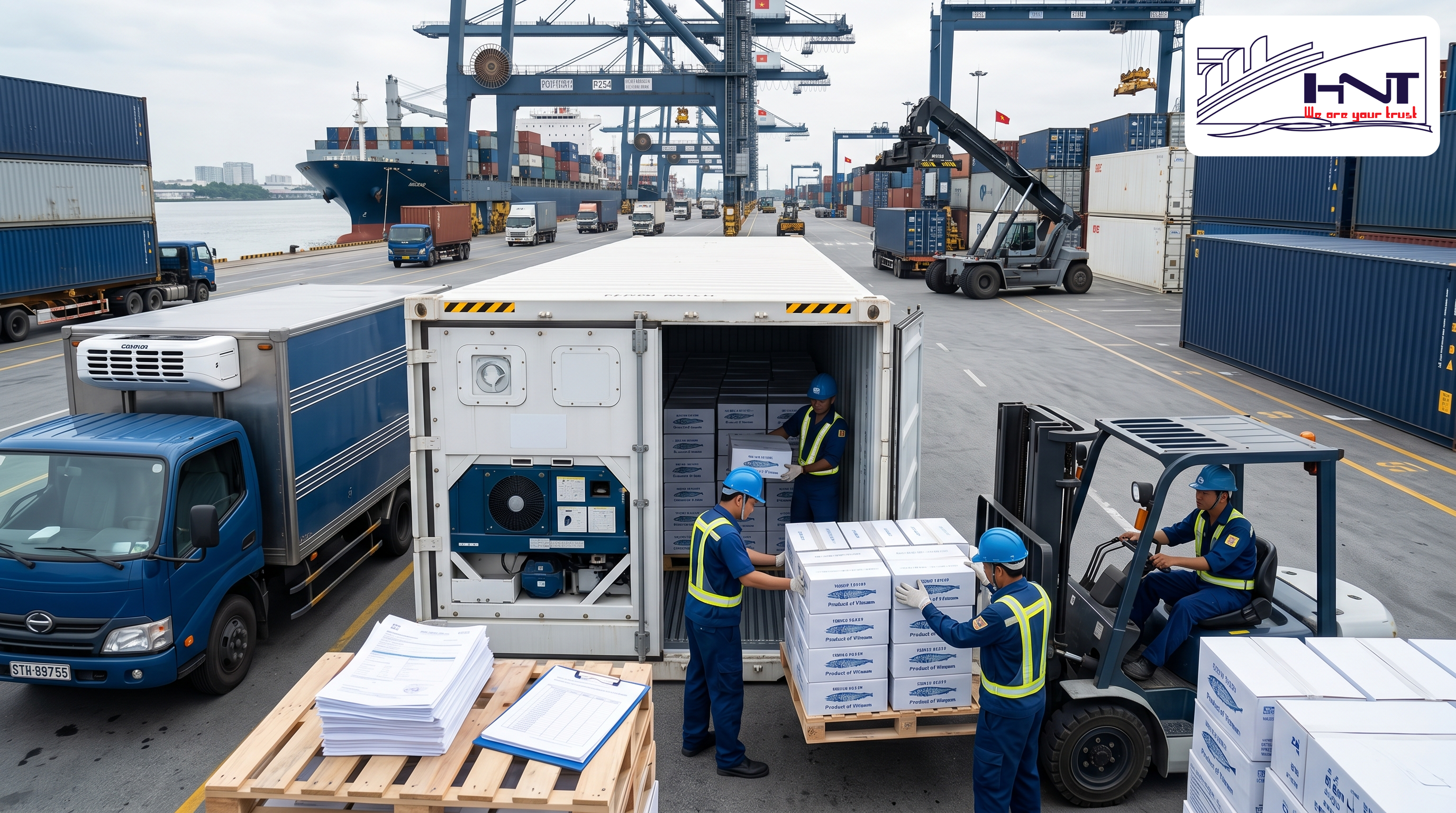
How do CIF and FOB differ in ocean freight and insurance
What is FOB? FOB is the term under which the seller delivers the goods on board the vessel nominated by the buyer at the port of departure. The buyer arranges the vessel and purchases insurance. Under CIF, the seller arranges the vessel and purchases minimum insurance, but the risk still transfers when the goods are loaded onto the vessel.
For example, Dong Nam Wood Company in Binh Duong purchases freight on the Cat Lai Port to Long Beach route under FOB to consolidate multiple shipments. After three months, the company reduces transport costs by 8% thanks to a framework agreement. However, it must book space at least ten days in advance.
How do CIF and EXW differ in upstream logistics responsibilities
What is EXW? EXW is the term under which the seller delivers the goods at their premises or another named place. The buyer bears almost all upstream logistics responsibilities. EXW may be disadvantageous for foreign buyers because they find it difficult to directly complete export procedures in Vietnam.
Based on HNT LOGISTICS’s experience, importers should prioritize FOB or FCA instead of EXW when they need full control over export declarations in Vietnam. This approach reduces the risk of missing documents for tax refunds, claiming origin preferences, or handling customs disputes.
How do DAP and DDP differ in import duty responsibilities
What is DAP? DAP means delivery at the named place of destination, unloaded is not included and import customs clearance is not completed. What is DDP? DDP means delivery after import customs clearance, with the seller bearing both import duties and import obligations. DDP should only be used when the seller understands the laws and has a compliance structure in the destination country.
| Condition | Who arranges the main transportation | Who purchases insurance | Who pays import duties |
|---|---|---|---|
| EXW | Buyer | Buyer | Buyer |
| FOB | Buyer | Buyer | Buyer |
| CIF | Seller | Seller | Buyer |
| DAP | Seller | As agreed | Buyer |
| DDP | Seller | As agreed | Seller |
Quick comparison table of 5 terms by cost and level of control
Businesses should not consider any term as always better. CIF is convenient for port-to-port transactions. FOB increases the buyer's control. DAP and DDP are suitable when delivery deep into the inland area is needed. EXW is only suitable when the buyer can truly operate the origin-side process.
- Choose CIF when the buyer needs the seller to arrange the vessel and basic insurance.
- Choose FOB when the buyer has strong freight purchasing power and a good logistics network.
- Avoid EXW when the buyer cannot handle export declaration in Vietnam.
- Choose DAP when the seller controls transportation but the buyer handles customs clearance.
- Only choose DDP after verifying taxes, permits and legal responsibilities for import.
Checklist before signing a contract under CIF terms
A good CIF contract must fully describe the delivery point, destination port, insurance type, documents and excluded costs. General phrases like “CIF destination port” are often not enough to determine local fees. Turn each assumption into a verifiable clause.
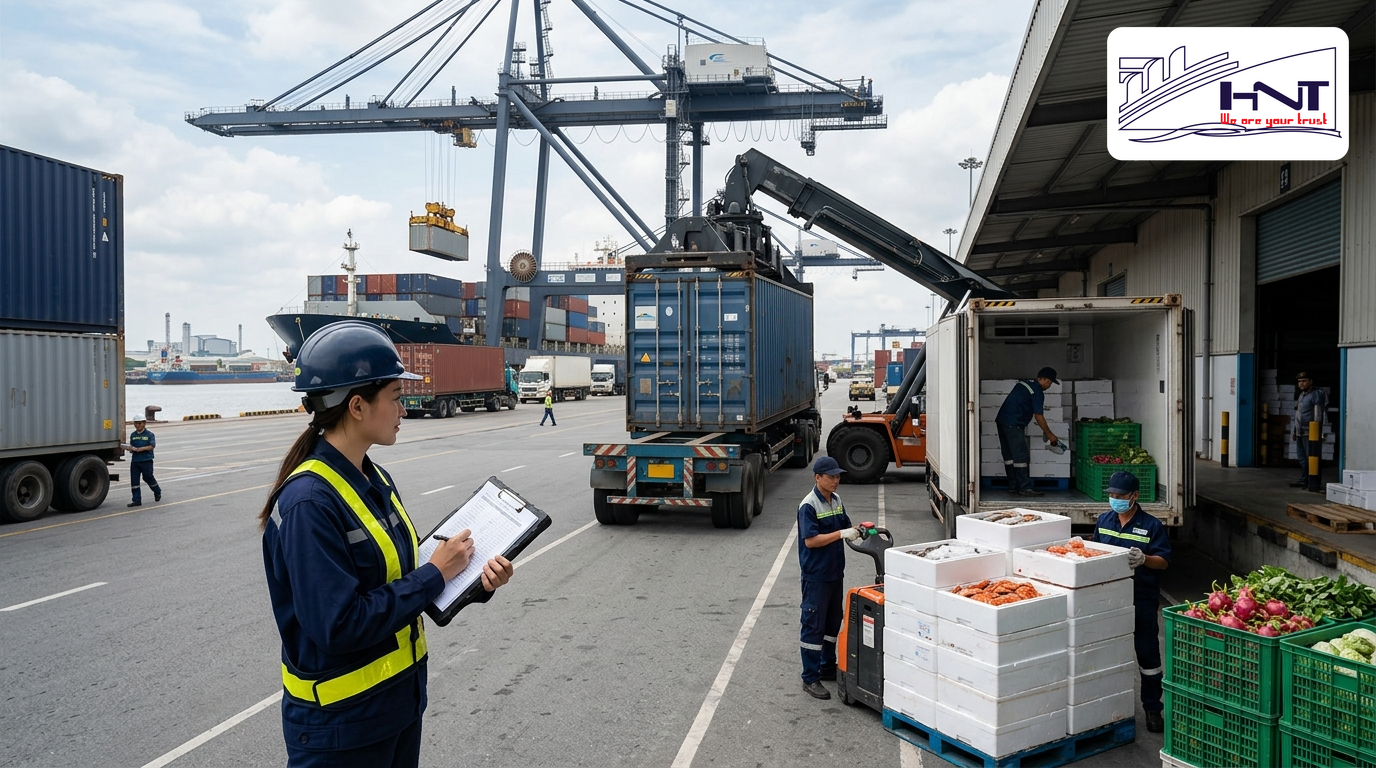
Verify the scope of cargo insurance before finalizing the terms
CIF insurance under common practice only requires minimum coverage, so it may not be enough for refrigerated goods, fragile goods or high-value goods. The buyer needs to check insured risks, deductible amount, transport route, claim conditions and damage notification period.
Check the departure port, destination port and unquoted surcharges
The specific port name must be stated, not vaguely by city name. Ask clearly about documentation fees, container cleaning fees, reefer electricity fees, unloading fees, delivery order fees and container storage fees. Ocean freight may decrease but local fees can still significantly increase the total cost.
| Checklist content | Contract recording requirements | Party responsible for fees | Consequences if missing |
|---|---|---|---|
| Origin port | Specific port name | Seller | Wrong route |
| Destination port | Port and yard name | Buyer | Port transfer fee |
| Insurance | Scope and value | Seller | Missing compensation |
| Local surcharges | Separate list | As agreed | Cost increase |
| Document deadline | Date for sending originals | Seller | Delayed cargo receipt |
Compare export and import customs procedure responsibilities between the two parties
Under CIF, the seller handles export procedures. The buyer handles import procedures and pays taxes in the destination country. If goods require plant quarantine, animal quarantine or food safety inspection, the contract must clearly state which party prepares each certificate.
According to Decision 702/QD-CHQ, customs procedures for exported and imported goods consist of five basic steps. Businesses need to clearly assign the responsible party for each step to avoid interrupted documentation.
Contract terms that can easily cause disputes if not clearly stated
Commonly disputed terms include insurance standards, bill of lading type, document delivery deadlines, carrier selection rights, responsibilities during transshipment and late delivery penalties. For refrigerated goods, specify the set temperature, tolerance, data monitoring mode and damage report procedure.
- Clearly state the applicable Incoterms version and the fully specified location or designated port.
- List the surcharges excluded from the CIF price to avoid assumptions.
- Specify the insurance coverage, insured risks, and the party responsible for receiving claims.
- Agree on the deadline for sending copies of documents before the vessel arrives at the destination port.
- Document the procedure for handling shortages, damage, or temperature deviations during transit.
Real-life situations that cause businesses to lose money when using CIF
CIF does not mean “the seller pays for everything”. This misunderstanding leaves many buyers unprepared when the vessel arrives, unable to pay port charges, handle quarantine procedures, or obtain the delivery order. The risks are often not in the CIF price, but in the items that were never asked about.
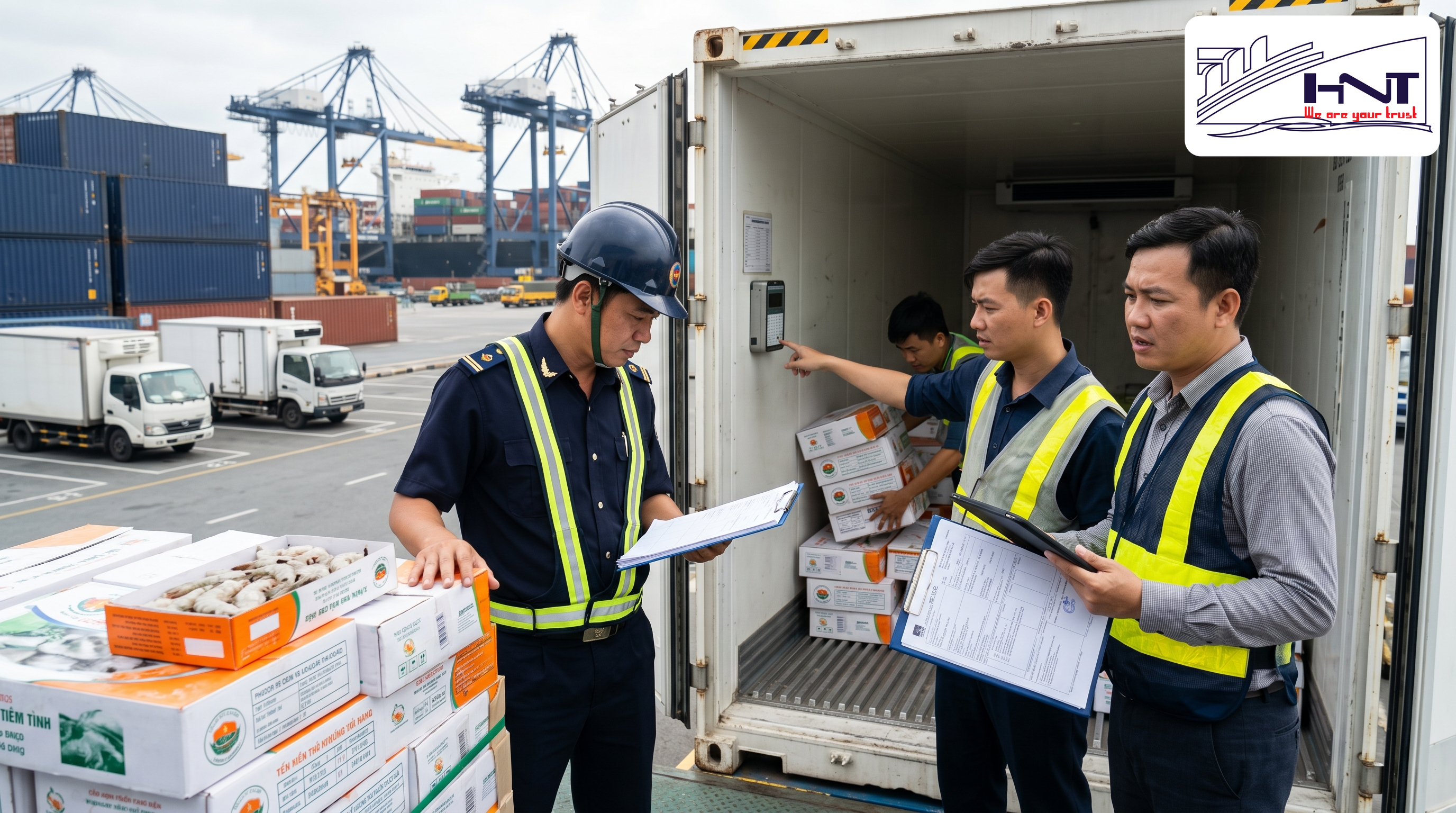
Risks arising from believing that the seller is fully responsible until the destination port
For example, Hung Thinh Agricultural Products Company in Dong Nai purchases cashew kernels CIF Hamburg. The goods become damp after being loaded onto the vessel due to a technical issue with the container. The buyer believes the seller must fully compensate, but the insurance only provides minimum coverage. The dispute lasts 45 days.
Local charges at the destination port are often overlooked in CIF quotations
Unloading fees, delivery order fees, reefer electricity charges, quarantine fees, yard storage fees, and container detention charges may arise at the destination port. Tracking these costs before the vessel arrives is more important than arguing after the cargo has been held. Buyers should estimate costs for the specific port.
Insurance disputes when the insurance coverage is not appropriate for the value of the goods
For example, An Phat Food Company in Da Nang imports frozen raw materials CIF Busan. The insurance provides only basic coverage, while losses caused by delayed power supply to the container are not fully covered. The business incurs additional re-inspection costs and must dispose of part of the shipment.
According to experts at HNT LOGISTICS, seafood and fruit and vegetable shipments should have extended insurance coverage checked before signing a CIF contract, especially for routes involving transshipment or waiting time at ports. Insurance should accurately reflect the nature of the goods, not just the invoice value.
How to handle goods damaged after the risk transfer point
The buyer should keep the goods in their original condition, request an independent inspection, notify the insurer within the required time, and collect temperature data if a refrigerated container is used. Then compare the bill of lading, delivery receipt, site photos, and port report to determine the cause of the loss.
| Situation | Take immediate action | Documents to retain | Target |
|---|---|---|---|
| Dented container | Take photos and prepare a report | Delivery note | Determine when the damage occurred |
| Temperature deviation | Download device data | Temperature report | Prove the loss |
| Missing goods | Count under supervision | Inspection report | File a compensation claim |
| Delayed document delivery | Request electronic confirmation | Correspondence | Reduce container detention charges |
- Notify the insurance company of the loss as soon as any abnormal signs are detected.
- Do not voluntarily destroy the goods before there is a conclusion from the surveyor.
- Request the port to make a report if the container shows signs of external damage.
- Store temperature data and operating logs for all refrigerated cargo shipments.
- Check the claim deadline stated in the bill of lading and insurance contract.
Manage costs and risks after choosing Incoterms terms
Choosing a delivery term is only the first step. Businesses need to measure the difference between planned and actual costs after each shipment. This data determines when to keep CIF, switch to FOB or develop a controlled DDP model.
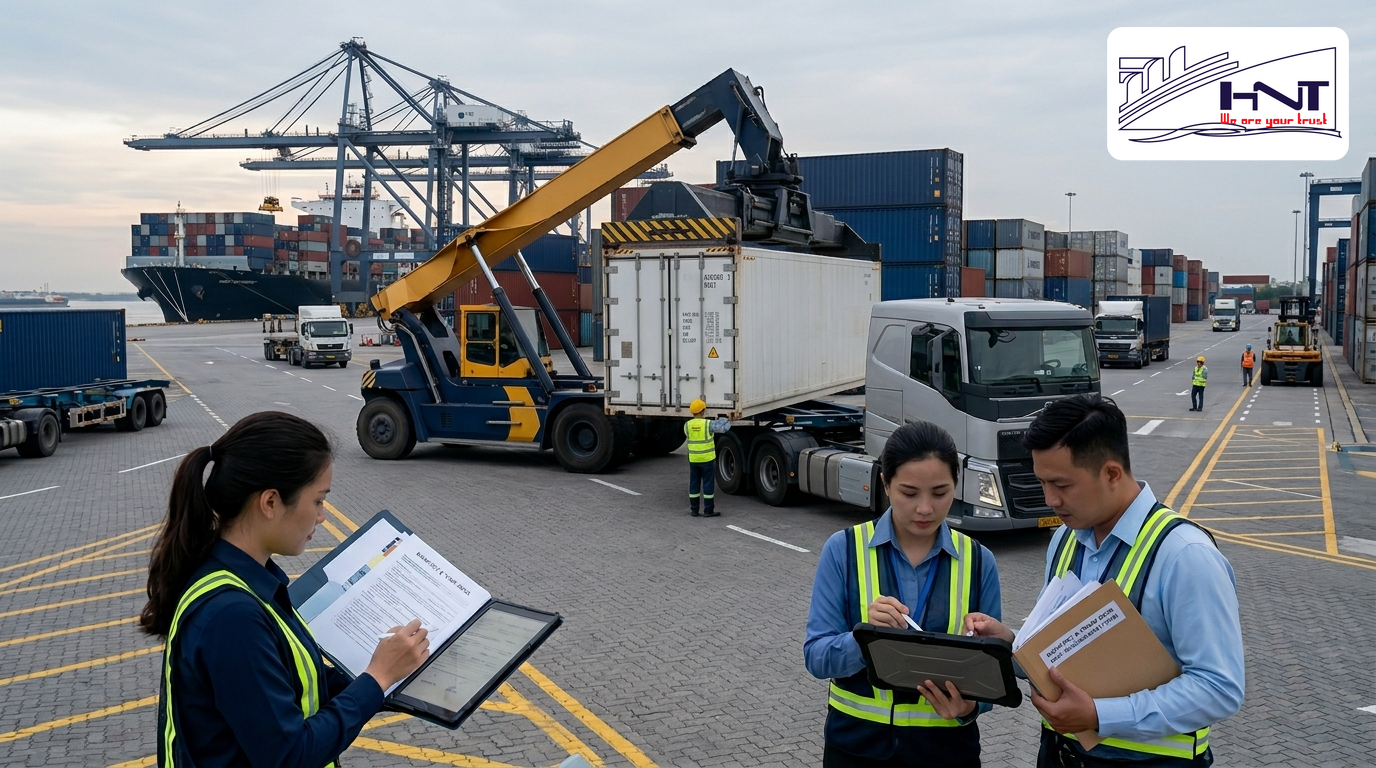
Track the total landed cost instead of only looking at the CIF price
The total cost to the warehouse includes the goods price, transportation, insurance, taxes, quarantine, port fees, inland transportation, losses and capital costs. For refrigerated goods, add electricity fees, customs clearance delay risks and quality inspection costs. This is the only basis for fairly comparing delivery terms.
| Cost group | CIF | FOB | DAP or DDP |
|---|---|---|---|
| Goods price | Yes | Yes | Yes |
| International freight | Seller quotes | Buyer purchases | Seller organizes |
| Import tax | Buyer | Buyer | DAP: buyer; DDP: seller |
| Local fees | Usually buyer | Usually buyer | According to delivery location |
| Transportation risks | Buyer after loading onto the vessel | Buyer after loading onto the vessel | According to delivery point |
Store documents for settlement and insurance claims
Businesses should store contracts, invoices, packing lists, bills of lading, insurance, declarations, tax payment documents, quarantine reports and temperature data in one shipment file. Complete records help accounting settle quickly and protect claim rights when losses occur.
Review the delivery terms after each shipment to optimize profits
After each quarter, compare actual freight, surcharges, delivery times, losses and customs clearance costs between CIF and FOB. If the buyer has large volume, FOB can increase freight purchasing power. If the customer is small, CIF can help simplify quotations and increase the ability to close orders.
When to switch from CIF to FOB or DDP when the business expands
Switch from CIF to FOB when the business has an advantage in purchasing freight, wants to control vessel schedules or needs to consolidate goods from multiple suppliers. Switch to DDP when it has built tax, legal and delivery capabilities in the destination market. Do not use DDP only to compete on price.
- Measure the total warehouse cost for each shipment, route and delivery term.
- Evaluate delay days, additional fees and loss rates after each trip.
- Standardize the document set so accounting, trade and logistics teams can check together.
- Renegotiate terms when volume increases or market structure changes.
- Check legal capacity before providing DDP services in a new market.
- Prioritize ocean freight route to the United States when it is necessary to design a long-term FOB plan.
What is CIF not just a definition of freight and insurance. This is a choice for allocating control, risks, and profits between the two parties. Businesses need to view delivery terms as part of their commercial strategy, especially for agricultural products, seafood, and fresh goods.
- CIF is suitable when the seller arranges sea freight, but the risk transfers when the goods are loaded onto the vessel.
- FOB allows the buyer to control freight and insurance, but requires booking capacity.
- EXW can disrupt export procedures if the buyer lacks capacity in Vietnam.
- DAP delivers to the specified location, but the buyer is still responsible for import procedures and taxes.
- DDP is only safe when the seller can manage taxes, permits, and legal requirements in the destination country.
- Always monitor total costs to the warehouse, local charges, and insurance coverage before signing.
HNT LOGISTICS is a reliable freight forwarding and logistics partner for Vietnamese businesses exporting agricultural products, seafood, and fresh goods nationwide. Businesses should evaluate each route, cost structure, and cold chain requirements before deciding on CIF, FOB, or DDP. As a professional transport provider, HNT LOGISTICS is committed to delivering comprehensive supply chain solutions, helping Vietnamese businesses confidently conquer global markets. Contact us today at 8A Hoang Minh Giam, Ho Chi Minh City or via the marketing email at hntshipping.com for quotation support!