

Khi nhận báo giá vận chuyển container đường biển, doanh nghiệp thường nhìn trước vào ocean freight mà chưa kiểm tra kỹ điểm nhận và điểm giao hàng. Đây là nguyên nhân khiến hai báo giá có cùng tuyến tàu nhưng tổng chi phí logistics thực tế khác nhau đáng kể. Hiểu đúng CY CY là gì, CY-DOOR bao gồm đến đâu và trách nhiệm chuyển giao tại vị trí nào giúp chủ hàng dự toán đúng chi phí từ trước khi booking.
Khi tìm hiểu về CY CY là gì, trong nghiệp vụ vận tải container, CY-CY không đồng nghĩa với door-to-door và cũng không có nghĩa hãng tàu chịu toàn bộ trách nhiệm từ kho người bán đến kho người mua. CY xác định một điểm giao nhận container trong chuỗi vận tải. Vì vậy, doanh nghiệp cần đọc đồng thời booking confirmation, Bill of Lading, điều kiện thương mại, biểu phí địa phương và phạm vi dịch vụ của forwarder thay vì chỉ nhìn tên cảng đi và cảng đến.
Đối với giải pháp CY CY là gì, với kinh nghiệm tổ chức hàng FCL, kéo container tại các cụm cảng lớn và kết nối multimodal transportation, HNT Logistics tiếp cận CY-CY dưới góc độ tổng chi phí logistics. Một phương án có cước biển thấp chưa chắc tối ưu nếu container phải chờ thông quan, phát sinh lưu bãi, demurrage, detention hoặc xe đầu kéo không được điều phối kịp trong thời gian miễn phí.
CY CY Là Gì? Giải Mã Phương Thức Giao Nhận Container Từ Bãi Cảng Đến Bãi Cảng Trong Vận Tải Biển
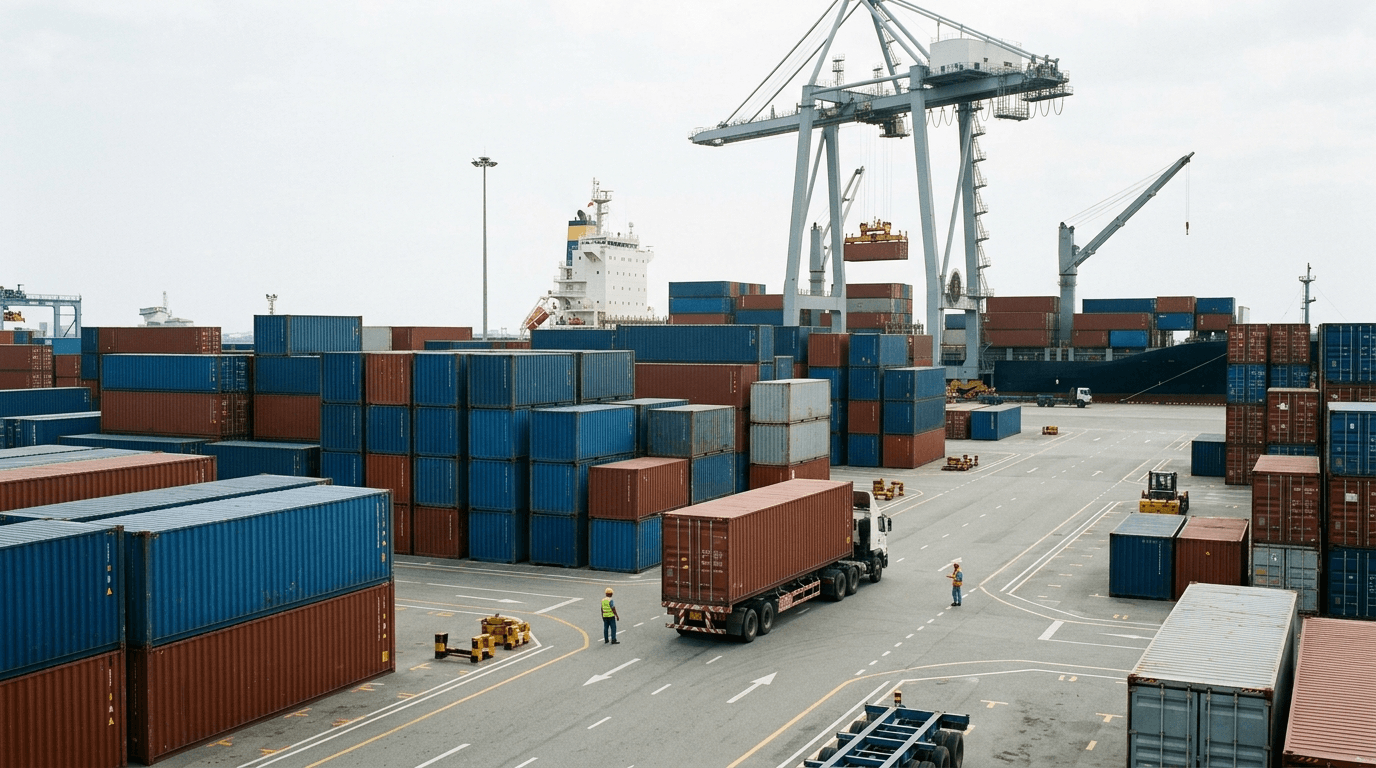
Khái niệm CY (Container Yard) và vai trò của bãi container trong chuỗi logistics xuất nhập khẩu
Trong quá trình vận chuyển và thông quan CY CY là gì, cY là viết tắt của Container Yard, tức bãi container tại cảng, terminal, ICD hoặc địa điểm được chỉ định để tiếp nhận, lưu giữ, sắp xếp và giao container. Đối với hàng xuất khẩu, container FCL sau khi đóng hàng và niêm phong được đưa vào CY chờ xếp tàu. Đối với hàng nhập khẩu, container được dỡ khỏi tàu và đưa về CY để chờ hoàn thành thủ tục và giao cho bên nhận.
Để tối ưu chi phí và tiến độ CY CY là gì, về vận hành, CY là điểm kết nối giữa vận tải đường bộ và vận tải biển. Container được quản lý theo số container, kích thước, loại thiết bị, trọng lượng, trạng thái hàng, vị trí trong bãi và lịch tàu. Vì vậy, quy trình giao nhận container tại cảng liên quan trực tiếp đến kế hoạch xe đầu kéo, thời điểm hạ container, cut-off, thủ tục hải quan và khả năng xếp container lên đúng chuyến tàu.
CY CY là gì và ý nghĩa của điểm giao nhận “Container Yard – Container Yard” trên vận đơn đường biển
Theo kinh nghiệm vận hành thực tế của HNT Logistics về CY CY là gì, CY-CY hay Container Yard to Container Yard là cơ sở giao nhận mà người vận chuyển tiếp nhận container nguyên tại CY đầu đi và giao container nguyên tại CY đầu đến theo phạm vi hợp đồng vận chuyển. Nói đơn giản, phần vận chuyển biển được tổ chức từ bãi container cảng đi đến bãi container cảng đến; các chặng vận chuyển nội địa ngoài phạm vi này cần được xác định và bố trí riêng.
Khi tìm hiểu về CY CY là gì, khi ký hiệu CY/CY xuất hiện trên booking hoặc vận đơn, doanh nghiệp không nên suy luận rằng mọi chi phí nằm giữa hai địa điểm đều mặc nhiên được bao gồm trong ocean freight. THC, phí chứng từ, nâng hạ, local charges, lưu bãi và các khoản dịch vụ khác phụ thuộc tariff, hợp đồng và điều kiện báo giá. Phạm vi trách nhiệm cuối cùng phải đối chiếu với điều khoản vận chuyển và chứng từ do carrier hoặc forwarder phát hành.
Sự khác biệt giữa CY CY, CY Door và các mô hình giao nhận container phổ biến khác
Đối với giải pháp CY CY là gì, điểm khác nhau cơ bản nằm ở địa điểm bắt đầu và kết thúc dịch vụ. CY-CY kết nối bãi container đầu đi với bãi container đầu đến. CY-DOOR kéo dài chặng giao nhận từ CY đầu đi đến địa chỉ kho hoặc nhà máy tại đầu đến nếu dịch vụ được booking theo phạm vi đó. Ngược lại, DOOR-CY bắt đầu từ địa chỉ lấy hàng và kết thúc tại CY đích, còn DOOR-DOOR mở rộng cả hai chặng nội địa.
Trong quá trình vận chuyển và thông quan CY CY là gì, doanh nghiệp cũng có thể gặp CY-CFS, CFS-CY hoặc CFS-CFS. CFS là Container Freight Station, thường gắn với hoạt động giao nhận, gom hoặc tách hàng lẻ. Vì vậy, không nên đánh đồng CY và CFS. CY chủ yếu quản lý container như một đơn vị vận tải, trong khi CFS có thể trực tiếp xử lý hàng hóa bên trong container theo mô hình khai thác tương ứng.
Vì sao phương thức CY CY thường được lựa chọn cho hàng FCL nguyên container đường biển
Để tối ưu chi phí và tiến độ CY CY là gì, CY CY phù hợp tự nhiên với FCL vì hàng được đóng thành một container nguyên, niêm phong trước khi giao vào bãi và tiếp tục di chuyển như một đơn vị vận tải đến CY đích. Mô hình này hạn chế công đoạn tháo, gom lại hàng tại CFS, đồng thời giúp doanh nghiệp chủ động thuê xe đầu kéo ở từng đầu nếu đã có hệ thống kho, nhà vận tải hoặc đại lý logistics tại địa phương.
Theo kinh nghiệm vận hành thực tế của HNT Logistics về CY CY là gì, ưu điểm quan trọng là doanh nghiệp có thể tách riêng cước biển và vận tải nội địa để đàm phán. Tuy nhiên, khi đánh giá ưu nhược điểm của vận tải đường biển, cần tính thêm thời gian vận chuyển dài, biến động lịch tàu, chuyển tải, ùn tắc cảng và chi phí sử dụng container. CY-CY hiệu quả nhất khi các chặng trước và sau vận tải biển được điều phối đồng bộ.
CY CY Là Gì Trong Quy Trình Giao Nhận Hàng Hóa Bằng Đường Biển? Các Giai Đoạn Vận Hành Thực Tế
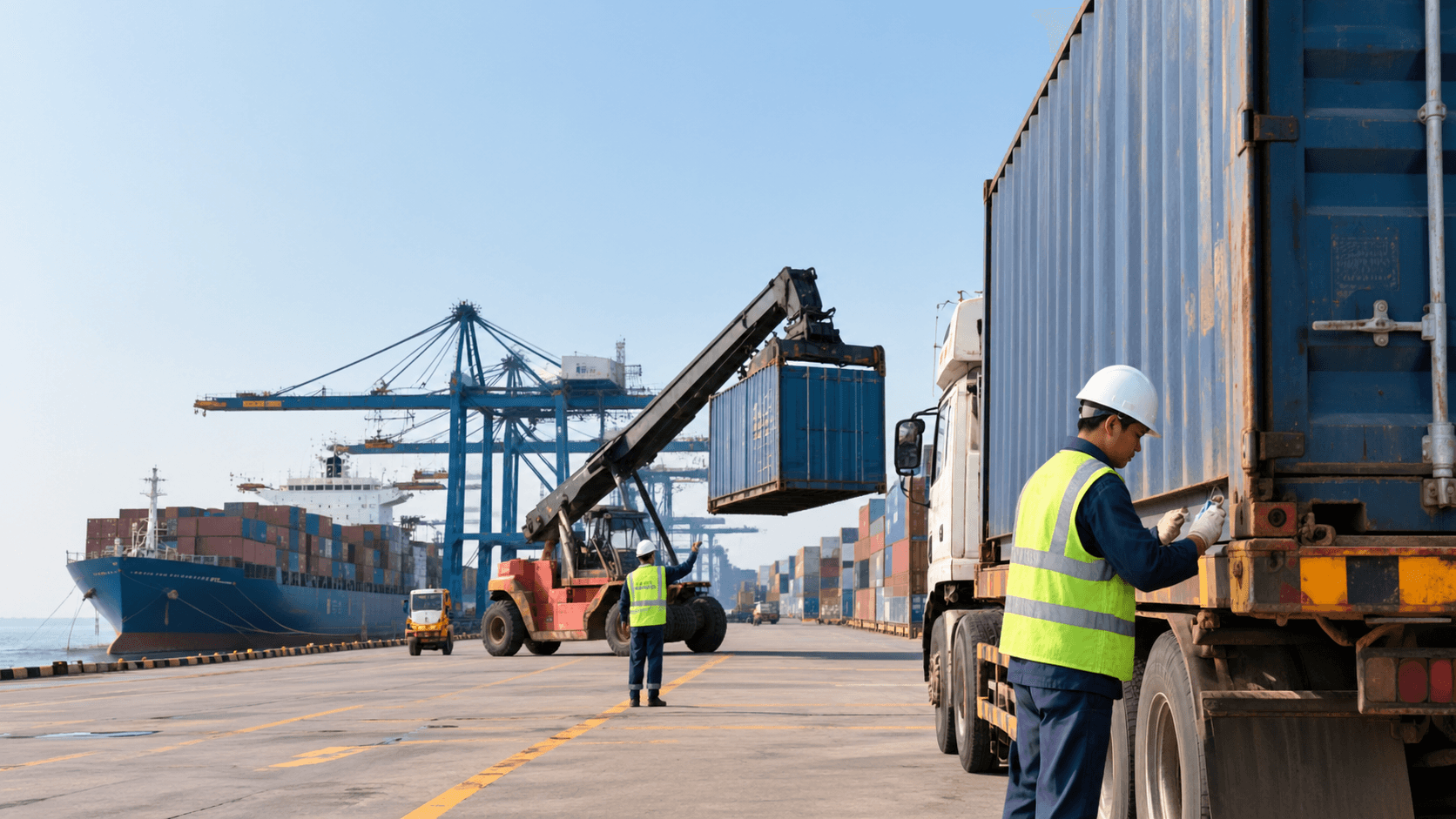
Giai đoạn xuất khẩu: Shipper đóng hàng, niêm phong container và bàn giao tại bãi CY cảng đi
A sea freight delivery process FCL usually starts with booking. After confirming the shipping line, vessel, port of loading, port of discharge and container type, the carrier collects an empty container from the designated depot. The container needs to be inspected for floor, walls, roof, doors, seals, cleanliness, dryness and watertight condition before being delivered to the shipper's warehouse for loading.
After loading, the cargo must be properly secured to minimize movement during lifting, handling or vessel vibrations. The shipper seals the container and accurately records the container number and seal number. For refrigerated containers, the set point, ventilation, humidity if required, power supply and refrigeration unit condition must be checked. The transport temperature range does not have a single standard level but must follow the characteristics of each product and the corresponding technical guidelines.
The loaded container is then hauled to the terminal and must complete gate-in within the deadline specified by the shipping line. The shipper must also meet VGM requirements. According to SOLAS regulations on Verified Gross Mass, the total gross mass of a packed container must be verified before loading onto the vessel. Missing valid VGM or submitting information after the deadline may cause the container to be ineligible for the planned voyage.
International transportation stage: The shipping line manages the container from the port of loading to the port of discharge
When the container is received at the CY and is eligible for vessel loading, the terminal organizes yard planning and coordinates with the shipping line to load the container. The container may go directly to the destination port or be transshipped through one or more intermediate ports. Therefore, transit time should be understood as the estimated transportation time, not an absolute commitment that the container will definitely arrive and be delivered on a specific fixed date.
During this process, businesses need to monitor ETD, ETA, vessel departure status, transshipment and schedule change notices. For refrigerated containers, monitoring power supply and operating parameters is especially important. High-value, temperature-sensitive or short commercial-life goods should have additional cargo insurance options and contingency plans in case of vessel rollover or congestion at transshipment ports.
Import stage: Consignee receives the container delivery order and picks up cargo at the destination port CY yard
After the vessel arrives, the container is discharged to the CY. The consignee or authorized party performs necessary tasks such as receiving the Arrival Notice, completing documents, paying payable charges, obtaining the delivery order according to the shipping line's process and carrying out import procedures. Only when meeting the requirements of the shipping line, port and authorities can the container be arranged for transport out of the terminal.
Customs documents depend on the type of import and goods, but data on the declaration must be consistent with the commercial invoice, packing list, bill of lading, permits or specialized inspection documents when subject to management. Businesses should update customs authority regulations at the time of implementation instead of using one fixed set of documents for every shipment.
Document, container seal and cut-off time control points in the CY CY process
The four data points that need to be cross-checked throughout are booking number, container number, seal number and bill of lading information. A small error in the container number or seal can lead to manifest amendments, document adjustments or handling issues at the port. During actual delivery and receipt, the person in charge should save images of the container, seal and delivery records as a basis for determining equipment condition at each handover point.
At the export stage, businesses must distinguish between CY cut-off, SI cut-off and VGM cut-off because these three milestones may differ. A container delivered to the yard on time but with late SI or VGM may still affect the vessel loading plan. Therefore, truck coordination should not run too close to cut-off time; buffer time is needed for traffic congestion, loading delays, container weighing, port gate congestion or depot return changes.
What Is CY Door? Comparing the Scope of Responsibility Between CY CY and CY Door in Logistics
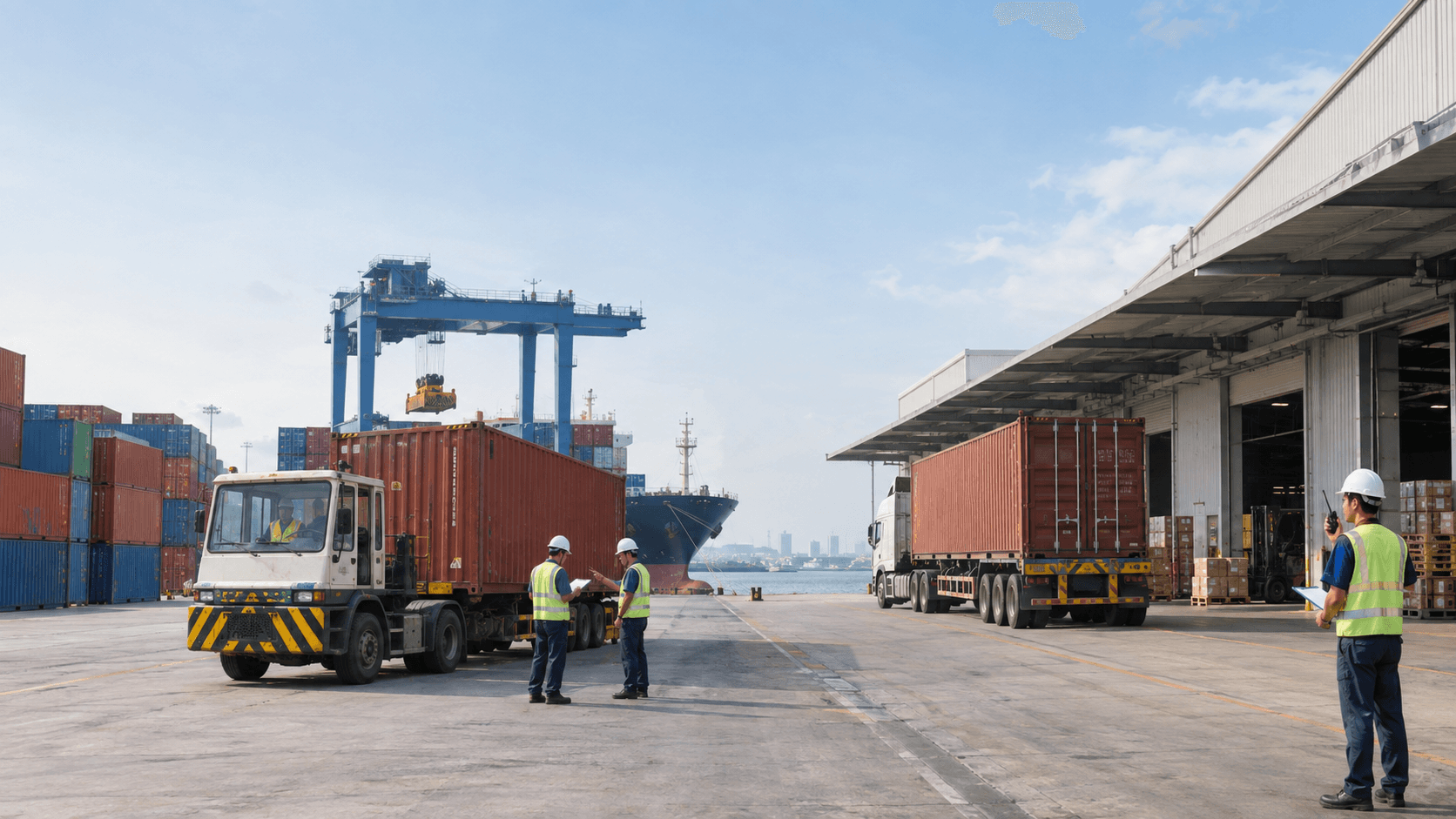
The concept of CY Door and container transportation model from port to consignee warehouse
If a business is learning about what is cy door, this can be understood as a model where the service scope at the destination end is extended from CY to the agreed delivery address. Instead of the consignee hiring a truck to haul the container from the port, the carrier or logistics provider organizes the inland delivery leg according to the specific booking and contract. The delivery address must be clearly determined before quotation.
CY-DOOR does not automatically mean the service includes import duties, customs clearance, unloading cargo from the container or returning empty containers in all cases. Each quotation must clearly specify inclusions and exclusions. This is an important point businesses need to check carefully because transport scope terminology cannot replace commercial terms and cost allocation tables.
Differences in transport responsibility, delivery points and risk allocation between CY CY and CY Door
In CY-CY, the receiving business must proactively organize the transport leg from the destination CY to the warehouse. With CY-DOOR, this leg is integrated into the service scope of the carrier according to the agreement. This changes the coordination point, but it should not be understood that all commercial risks or ownership of goods automatically transfer according to the CY-DOOR term.
Need to separate shipping service term and Incoterms. CY-CY or CY-DOOR describes delivery points within the transportation service; FOB, FCA, CFR, CIF, CPT, CIP, DAP or DDP allocate obligations between seller and buyer under the commercial contract. These two layers of conditions must be read together to avoid cases where the buyer thinks the seller covers trucking but the shipping line booking does not include that leg.
When should businesses choose CY Door instead of CY CY to optimize operations
CY-DOOR is suitable when businesses want to reduce the number of suppliers and assign one party to control both sea transportation and final delivery. This model is especially useful for importers without their own container transport team, warehouses far from ports, receiving schedules requiring close coordination or refrigerated containers needing continuous cold chain maintenance from terminal to unloading point.
Conversely, businesses with large container volumes, good trucking rates and experienced port operations teams can choose CY-CY for more control. The decision should be based on total landed logistics cost rather than only comparing ocean freight. Trucking costs, handling, waiting time, container usage fees and incident handling capability should all be included in the same calculation model.
The role of container trucks, warehouses and logistics providers in the CY Door method
Tractor trucks are the key link determining the ability to move containers from CY to warehouses on time. Coordination teams need to check container pickup schedules, order validity periods, free time, permitted weight limits, warehouse access conditions and vehicle turning capability. 40-foot or 40HC containers require businesses to carefully check warehouse space, turning radius and loading or unloading positions.
Logistics providers not only arrange trucks but also coordinate with shipping lines, terminals, depots and receiving warehouses. When using multimodal transportation, vessel schedules and truck schedules need to be placed in the same plan. If a container is picked up early but the warehouse is not ready for unloading, the business may shift risk from demurrage at the port to detention outside the port without actually reducing total costs.
What Is CY CY When Calculating Costs? How to Control Fees in Sea Container Transport

The cost components of CY CY include ocean freight, port fees, handling charges and container storage fees
CY-CY costs should be broken down by each stage instead of using a single ocean freight figure representing the entire logistics process. Cost groups may include ocean freight, THC and local charges according to tariff, documents, seals, lifting and handling or terminal services, trucking at origin and destination if purchased separately, customs declaration, specialized inspection, storage and container usage costs beyond the free period.
| Cost group | CY-CY | CY-DOOR | Points to confirm |
|---|---|---|---|
| Ocean freight | Available according to booking | Available according to booking | Base freight, surcharge and price validity |
| Trucking at destination | Usually arranged separately | Usually within the door scope if the quotation includes it | Address, weight capacity, waiting time |
| THC/local charges | According to tariff and contract | According to tariff and contract | Cannot be inferred only from the service term name |
| Demurrage/detention | May occur | May occur | Free time and carrier calculation method |
| Customs clearance | According to the scope of purchased services | According to the scope of purchased services | Not automatically included in CY-DOOR |
The table above represents a cost structure, not a fixed price list. Fees vary by shipping line, terminal, route, container type, timing and customer contract. Therefore, when comparing quotations, businesses need to request the same service scope, the same free time and the same delivery terms; otherwise, a lower price on the quotation table may result in a higher total cost after the goods arrive.
Additional fees businesses should note when receiving containers at the port
Hai khái niệm thường gây nhầm là demurrage và detention. Theo cách áp dụng phổ biến của hãng tàu, demurrage liên quan thời gian container nằm trong terminal vượt free time, còn detention liên quan thời gian container của carrier được giữ ngoài terminal vượt thời gian miễn phí. Một số hãng hoặc thị trường áp dụng combined D&D, vì vậy phải kiểm tra tariff cụ thể của booking thay vì sử dụng một công thức chung.
Ngoài D&D, doanh nghiệp còn có thể gặp storage của terminal, phí sửa chữa container nếu thiết bị được trả trong tình trạng hư hỏng thuộc trách nhiệm người sử dụng, phí chờ xe, nâng hạ bổ sung, đổi lệnh, chỉnh chứng từ hoặc các khoản phát sinh từ kiểm hóa. Cách kiểm soát tốt nhất là lập timeline từ ETA đến ngày trả container rỗng và giao rõ người chịu trách nhiệm từng mốc.
How to optimize transportation budgets by choosing the right container delivery method
Businesses with strong trucking capabilities at the destination can purchase CY-CY and optimize the inland segment themselves. Conversely, if import frequency is low or they are unfamiliar with port procedures, CY-DOOR can reduce management costs and coordination risks among multiple suppliers. The option should be compared by the total cost per container delivered to the warehouse, not only by the ocean freight price on the booking.
An effective budget control model should simultaneously record ocean freight, local charges, trucking, customs clearance costs, free time, unloading time and inventory capital costs in transit. This is also a practical way to evaluate ưu nhược điểm của vận tải đường biển: the advantage of transport capacity and unit costs must be balanced with lead time and schedule risks.
Combining CY CY with multimodal sea and land transport to reduce total logistics costs
CY-CY does not require businesses to view sea transport and inland transport as two separate systems. Forwarders can design combined chains using sea freight with tractor trucks, trucks, ICDs or other suitable methods. The goal is to synchronize empty container pickup, loading, CY delivery, customs clearance, import container receipt and empty return to reduce equipment waiting time.
For North-South routes or cargo connecting ports with industrial zones, optimization multimodal transportation needs to be based on volume, warehouse location, delivery time and consolidation capability. A low trucking rate but many hours of waiting at warehouses or ports can eliminate the price advantage. Therefore, HNT Logistics prioritizes calculating total operating costs instead of optimizing each individual price point.
Comparison Table of CY CY and CY Door in Sea Container Transportation
Table comparing service scope, delivery points and responsibilities between CY CY and CY Door
| Criteria | CY-CY | CY-DOOR |
|---|---|---|
| Starting point | CY at origin | CY at origin |
| Service end point | CY at destination | Agreed door address |
| Trucking from destination port | Usually arranged separately by the cargo owner | Organized within the door scope according to the quotation |
| Level of trucking control | Infrastructure | Dependent on the service provider |
| Suitable | Businesses with transportation management capabilities | Businesses needing integrated destination services |
The most important point of the comparison table is that CY-CY and CY-DOOR determine the scope of transportation services, and do not automatically determine who pays taxes, who handles import procedures or the time of transfer of commercial risk. These contents must be checked against the commercial contract, Incoterms and bill of lading terms. This principle helps purchasing, import-export and accounting departments avoid different understandings of the same quotation.
Container transportation cost analysis table by delivery model
| Category | CY-CY | CY-DOOR | Risk to control |
|---|---|---|---|
| Ocean freight | Needs confirmation | Needs confirmation | Price fluctuations, surcharge |
| Destination trucking | Commonly separated | Usually integrated according to quotation | Waiting fees, weight restrictions, difficult-to-access addresses |
| Free time | According to carrier | According to carrier/contract | D&D |
| Terminal storage | May arise | May arise | Delayed customs clearance or cargo pickup |
| Customs | Depending on scope | Depending on scope | Specialized inspection, documents |
When preparing a budget, a quotation should be requested that shows the currency, VAT or related taxes if applicable, validity period, payment terms and any excluded charges. For international freight, surcharges may change depending on the timing. Therefore, the internal cost table should include additional columns for estimated, confirmed and actual costs so the business can evaluate variances after each shipment instead of only checking the final total invoice.
Comparison table of suitability levels between CY CY and CY Door for FCL cargo, refrigerated containers and exported agricultural products
| Group of goods | CY-CY | CY-DOOR | Operational notes |
|---|---|---|---|
| Dry FCL cargo | Highly suitable | Highly suitable | Choose based on two-end trucking capacity |
| Refrigerated container | Suitable if inland is controlled | Convenient when an integrated service chain is needed | Control temperature, power supply and timing |
| Export agricultural products | Suitable for FCL shipments | Depends on market and delivery address | Quarantine, quality, and transit time |
| LCL cargo | Not a typical model | Do not evaluate only by the CY terminology | Need to review CFS and consolidation options |
For agricultural products and refrigerated containers, the choice of delivery method is only one part of the problem. Businesses must determine quarantine requirements, import market standards, pre-cooling if needed, set temperature, ventilation and the time from loading to delivery. A general temperature range should not be applied to all fruits because each product has different respiration characteristics and storage thresholds.
Checklist of factors to confirm before vessel booking and container truck coordination
Before confirming a booking, businesses should standardize a short checklist for the sales, documentation and operations departments to use together. This approach significantly reduces situations where the booking has the correct route but the wrong equipment, the empty container pickup address is too far away, or the loading schedule does not meet the vessel cut-off.
- POL, POD, final delivery address and service term CY-CY or CY-DOOR.
- Container type 20DC, 40DC, 40HC, reefer or special equipment.
- Commodity, expected HS code, gross weight and VGM requirements.
- ETD, ETA, CY cut-off, SI cut-off and VGM cut-off.
- Free time at origin and destination; rules for demurrage, detention and storage.
- Empty pickup depot, cargo drop-off terminal and empty container return location.
- Customs requirements, permits, quarantine and specialized inspection.
- Scope of prices included and excluded in the quotation.
Regarding dimensions, standard containers have many series and manufacturers, so actual measurements must be checked on the equipment. Common references: a 20DC has an external length of about 6.06 m, width of 2.44 m, and height of 2.59 m; a 40DC is about 12.19 m long and a 40HC is about 2.90 m high. Payload and maximum gross weight must be based on the CSC plate of the specific container, not a default figure for loading.
What Is CY CY From the Perspective of Cargo Safety Control and Supply Chain Management
Control container condition, seal numbers and documents at each handover point
Cargo safety starts before stuffing the container. For dry containers, it is necessary to check the condition of the floor, walls, roof, doors and water tightness; for reefers, the machinery condition and PTI requirements must be checked according to the relevant procedures. After loading, the seal number must be accurately recorded and compared with the shipping instruction, bill of lading and delivery documents.
Weight declaration is also a safety requirement, not just a documentation procedure. Under SOLAS, the VGM of a packed container must be verified and provided early enough for vessel stowage planning; containers without the required VGM are not eligible for loading onto vessels. Businesses should control gross cargo weight, tare weight and the VGM determination method from the loading plan stage.
In Vietnam, import and export procedures must be carried out in accordance with current laws and guidance from management authorities. The documentation department needs to check customs authority regulations for electronic documents, commodity policies and specialized inspections; while also monitoring guidance from Vietnam Maritime and Inland Waterway Administration along with applicable international safety regulations for maritime transport operations.
Managing risks of vessel schedule delays, port congestion and container storage time charges
The major risks of CY-CY are not only at sea. Containers can be delayed right from empty pickup, cargo loading, VGM weighing, yard entry or customs clearance. At the import end, goods arriving on the correct ETA but with incomplete documents can still incur costs. Therefore, businesses need to manage shipments by milestones instead of only two simple statuses: “loaded on vessel” and “arrived at port”.
Free time cần được quản lý như một nguồn lực tài chính. Demurrage thường liên quan container nằm trong terminal quá thời gian miễn phí, detention thường liên quan việc giữ thiết bị ngoài terminal quá free time; storage là chi phí sử dụng không gian terminal hoặc depot theo cơ chế áp dụng. Các định nghĩa và thời điểm tính cụ thể phải căn cứ tariff của carrier, terminal và booking vì có thể áp dụng combined D&D.
Một dashboard vận hành nên theo dõi ETD, actual departure, ETA, actual arrival, ngày container available, ngày thông quan, gate-out, ngày giao kho và ngày trả rỗng. Khi sản lượng tăng lên hàng chục container mỗi tháng, dữ liệu này cho phép doanh nghiệp phát hiện tuyến, carrier hoặc kho nào thường xuyên gây D&D và từ đó đàm phán free time hoặc điều chỉnh kế hoạch nhập hàng.
Solutions connecting CY CY with customs declaration, clearance and domestic transportation services
The value of a CY-CY solution increases when booking data, customs documents and trucking plans are connected. If the trucking department only receives instructions after goods are cleared, businesses may lose time finding vehicles during peak periods. Conversely, booking trucks too early while documents are not ready creates waiting charges. Therefore, plans need to be updated according to actual customs clearance status.
HNT Logistics can coordinate FCL sea freight, container drayage, customs declaration, C/O, phytosanitary inspection and domestic transportation according to the requirements of each shipment. The phrase customs declaration should not be understood as one identical procedure for all commodities; the document scope changes according to HS code, management policies, import-export type, market and specialized inspection requirements.
For exported fruits, the transport plan must also be linked with phytosanitary inspection, import market requirements and loading time. For North-South refrigerated cargo or Vietnam – Laos – China international cargo, maintaining temperature, controlling waiting time and transferring data between stages are factors that directly affect cargo quality upon arrival at the consignee.
HNT Logistics accompanies businesses in building suitable container delivery solutions for each sea transport route
Correctly understanding CY CY là gì helping businesses identify the delivery points, but optimizing logistics requires one more step: determining who coordinates each stage, which costs are included in the quotation and which risks may arise after ETA. CY-CY is suitable when businesses want to proactively manage trucking; CY-DOOR is suitable when they need to integrate the delivery leg from port to receiving address through a single service provider.
HNT Logistics develops solutions based on transport routes, container types, cargo characteristics, vessel schedules, warehouse addresses and actual procedure requirements. Service capabilities include FCL sea and road container transportation, container drayage at port clusters in Ho Chi Minh City and Hai Phong, North-South refrigerated transport, import-export procedures and Vietnam – Laos – China international multimodal transport.
Logistics costs should not be optimized by choosing only the lowest sea freight rate. An effective solution is one that controls total costs from the origin point to the delivery point, container usage time and the responsibilities of each party in the supply chain.
Businesses requesting CY-CY, CY-DOOR or combined sea-road transport quotations should provide the route, destination port, commodity, number of containers, equipment type, gross weight, expected loading date and delivery address. HNT Logistics will separate the service scope and reserve items so businesses have a basis for comparison before booking.
Contact HNT Logistics để được tư vấn phương án giao nhận container phù hợp.